On this day: Agatha Christie is born
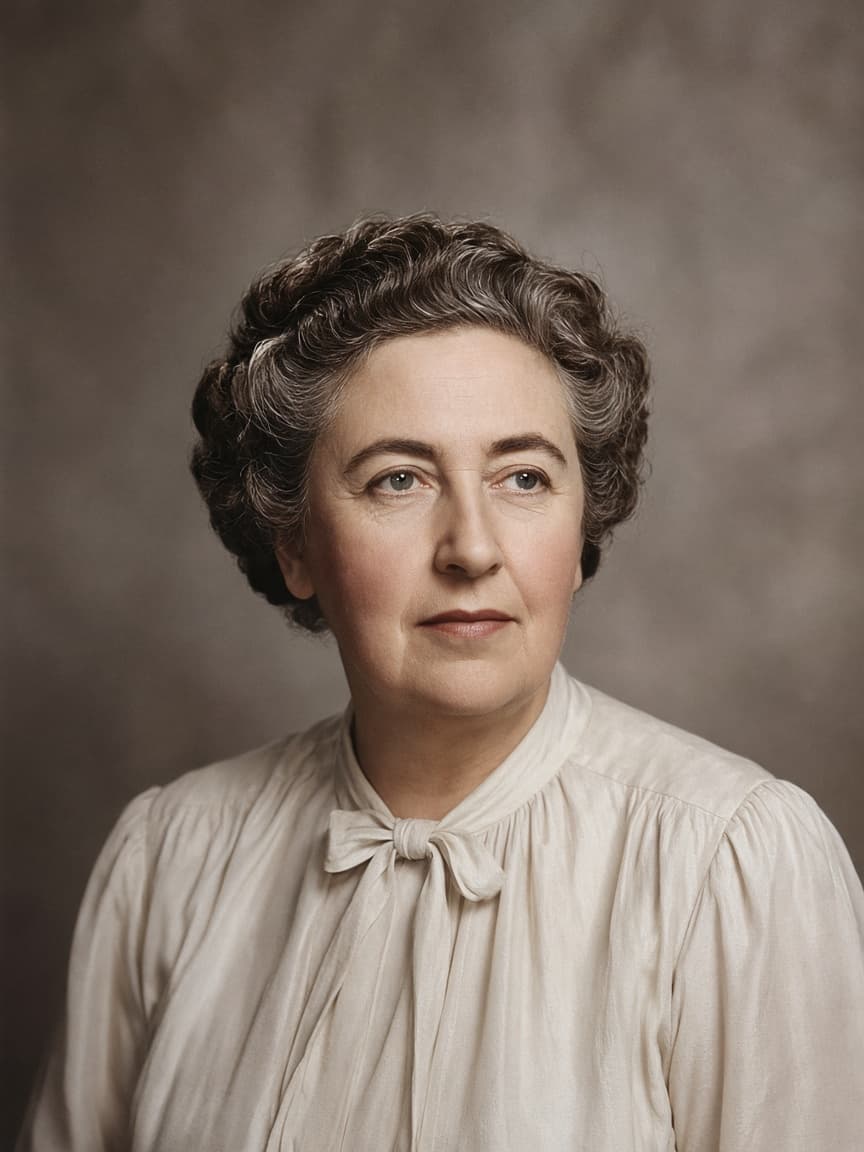
On 15 September 1890, Agatha Christie was born in Torquay. She became one of the world's bestselling novelists, creator of Hercule Poirot and Miss Marple and a model for fair-play detective puzzles that readers still try to solve.
On 15 September 1890, Agatha Mary Clarissa Miller was born in Torquay, on the Devon coast of England. Under her married name, Agatha Christie, she became one of the bestselling novelists in history. Crime fiction readers still meet her two most famous detectives: the exacting Belgian Hercule Poirot and the sharp-eyed village sleuth Miss Jane Marple.
Christie grew up in a bookish household in a seaside town that later fed settings and moods in her work. During the First World War she served as a nurse and then worked in a hospital dispensary (pharmacy). That training taught her how medicines and poisons behave in the body. The knowledge shows up in plots where a cup of tea or a garden plant is not as harmless as it looks. Practical chemistry joined a storyteller's interest in how ordinary rooms hide extraordinary motives.
Her first published detective novel, The Mysterious Affair at Styles (1920), introduced Poirot after the war and set a pattern: a closed circle of suspects, careful clues and a final gathering where the detective explains what everyone missed. Poirot works through order, psychology and the little grey cells. Marple, who arrived later, works through village analogy: she has seen human weakness in small places and recognizes the same patterns among the gentry. Both detectives invite the reader to compete. That invitation is the fair-play tradition in practice.

She wrote through decades of changing taste without abandoning the puzzle. Country houses, trains, Nile steamers and London flats became stages for murder that readers could try to solve. Titles such as The Murder of Roger Ackroyd, Murder on the Orient Express, Death on the Nile and And Then There Were None remain fixtures because the construction is tight: fair clues, misdirection and a solution that feels earned when you look back. Under the name Mary Westmacott she also published non-crime novels, a reminder that her range was wider than the detective brand alone.
In December 1926 Christie vanished for about eleven days after a personal crisis that included the breakdown of her first marriage. The police search became a national news story before she was found at a hotel in Harrogate. She rarely discussed the episode later. Biographers still debate details. What is not debated is the work rate that followed: novels, stories and plays produced with professional regularity.
Her second marriage, to archaeologist Max Mallowan, took her on digs in the Middle East. Travel and excavation life fed settings and atmosphere in several books. On stage, The Mousetrap opened in London in 1952 and became a byword for longevity in commercial theatre, running for decades in the West End. Film and television adaptations keep introducing new audiences to her plots, sometimes faithful and sometimes loosely inspired.
Why do the puzzles last? Because they treat the reader as a partner. Clues are planted in plain sight. Red herrings are fair if you were paying attention. The brand is now larger than any single book, yet the craft remains the same: hide the truth in ordinary detail, then pay it off. Torquay's birth date is therefore a literature date as much as a biography date.
Fair play is a contract. The detective may know more than the reader for a while, but the clues that matter should have been visible. Christie became the mass-market teacher of that contract. When a solution depends on a fact never shown, readers feel cheated. When the solution reorders facts already on the page, readers feel the click that keeps the genre alive.
Torquay, the wartime dispensary, the 1926 disappearance, Mallowan's digs and The Mousetrap's long West End life are chapters of one professional story. The through line is craft under deadline: another closed circle, another planted clue, another audience trying to beat the detective to the answer. That habit is why 15 September 1890 still belongs on a reading calendar.
Poirot and Marple also differ in social method. Poirot enters as a foreign specialist whose fussiness disarms suspects. Marple enters as someone easy to overlook until she connects a drawing-room lie to a village precedent. Christie used both masks to hide how carefully she had arranged the evidence. The pleasure is watching the mask come off in the last chapter without feeling the author cheated.
Eagle Frame's takeaway: 15 September 1890 is the birth date of a writer who made detective fiction a mass habit of fair play. Read a Poirot or Marple with a pencil if you like, notice the pharmacy-trained poisons and the Mousetrap's long run and see how often modern mysteries still borrow her closed-circle rules.