On this day: a bomb explodes in Atlanta's Centennial Olympic Park
On 27 July 1996, a pipe bomb detonated in the crowded public park at the heart of the Atlanta Olympics. Two people died and more than a hundred were injured. A security guard was wrongly treated as a suspect before the real bomber was identified.
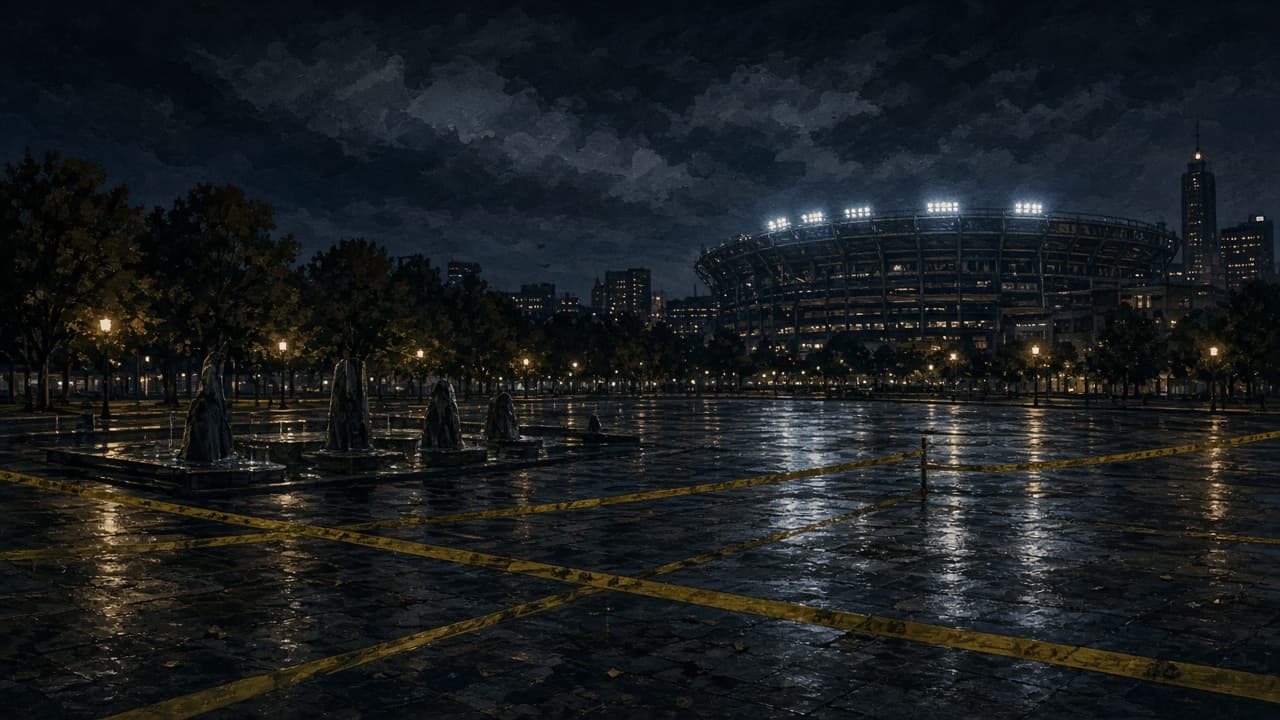
At 1:20 on the morning of 27 July 1996, a bomb went off in Centennial Olympic Park in downtown Atlanta. The park was the free public gathering space of the Summer Olympics, open late, with a concert running and thousands of people in it. Alice Hawthorne, a 44-year-old Georgia businesswoman who had brought her daughter to see the Games, was killed. Melih Uzunyol, a Turkish cameraman running toward the scene, died of a heart attack. More than a hundred people were injured.
The device was a set of pipe bombs packed with nails inside a military-style knapsack left under a bench near a sound tower. A security guard working the concert, Richard Jewell, noticed the unattended bag and alerted police. Officers began clearing people from the immediate area. A 911 call warning of a bomb in the park was made from a pay phone nearby but was not connected quickly to the officers on the ground. The bomb detonated before the area was empty.
Two things are worth saying plainly about the casualties. The toll would have been far worse without the partial evacuation, and the nails and the angle of the blast are why so many of the injuries were to legs. This account keeps the medical detail short on purpose. The point of the record is what happened and what followed, not the damage to individual bodies.
The Games did not stop. Olympic officials and the city decided within hours to continue competition, and the park reopened on 30 July after a memorial service. The reasoning was the standard one after an attack on a public event: closing down would hand the bomber the outcome he wanted. Security was visibly tightened, bag searches expanded and the remaining week of the Games ran under a heavier police and federal presence.
The investigation then went badly wrong in public. Within days, Richard Jewell moved from being described as a hero to being named in press reports as the focus of the FBI's attention. He was never charged. He fitted a behavioural profile of a lone-wolf bomber who seeks attention by discovering his own device, and that profile was allowed to drive coverage. For 88 days he lived under siege: reporters camped outside his mother's apartment, his life was picked apart on television and his name became a punchline.
In October 1996 the Justice Department formally cleared him. Jewell sued several news organizations and settled with some. He later worked as a police officer and died in 2007 at 44. His case is now taught in journalism schools and in law enforcement training as a study in how a leak, a profile and competitive deadlines can combine to ruin someone who did nothing wrong. The Georgia Bureau of Investigation and the FBI both faced lasting criticism over the handling.
The actual bomber was Eric Rudolph, an anti-abortion and anti-government extremist. He went on to bomb two abortion clinics and a lesbian bar in the Atlanta and Birmingham areas between January 1997 and January 1998. The Birmingham clinic bombing killed an off-duty police officer, Robert Sanderson, and severely injured a nurse, Emily Lyons. A witness noted Rudolph's truck there, which finally gave investigators a name.
Rudolph then vanished into the mountains of western North Carolina. One of the largest manhunts in American history failed to find him for five years. He was arrested in May 2003 by a rookie police officer in Murphy, North Carolina, who found him behind a grocery store going through a dumpster. In April 2005 he pleaded guilty to all four bombings in a deal that removed the death penalty. He is serving consecutive life sentences without parole.
The Atlanta bombing sits in a specific American context. It came 15 months after the Oklahoma City bombing of April 1995, which killed 168 people. In the mid-1990s the most lethal attacks on American soil were being carried out by domestic extremists motivated by anti-government, racist or anti-abortion ideology rather than by foreign groups. The Olympic bombing helped push federal attention toward that category, though the emphasis shifted sharply after 2001.
Practical changes followed too. Open-access festival spaces at major events, which had been treated as the friendly public face of a Games, were rethought. Later Olympics fenced and screened their equivalent zones. Emergency call routing at large events was reworked so that a warning reaching a 911 operator would get to officers on the ground faster. Centennial Olympic Park itself remains open in Atlanta with a memorial to the people who were killed and hurt there.
Eagle Frame's takeaway: 27 July 1996 is the night a domestic extremist attacked the public square of an Olympic Games, killed two people and injured more than a hundred. Two things should stay attached to the date. Eric Rudolph was not caught for almost seven years, and Richard Jewell, who spotted the bag and helped clear the area, was tried in the press for a crime he did not commit.