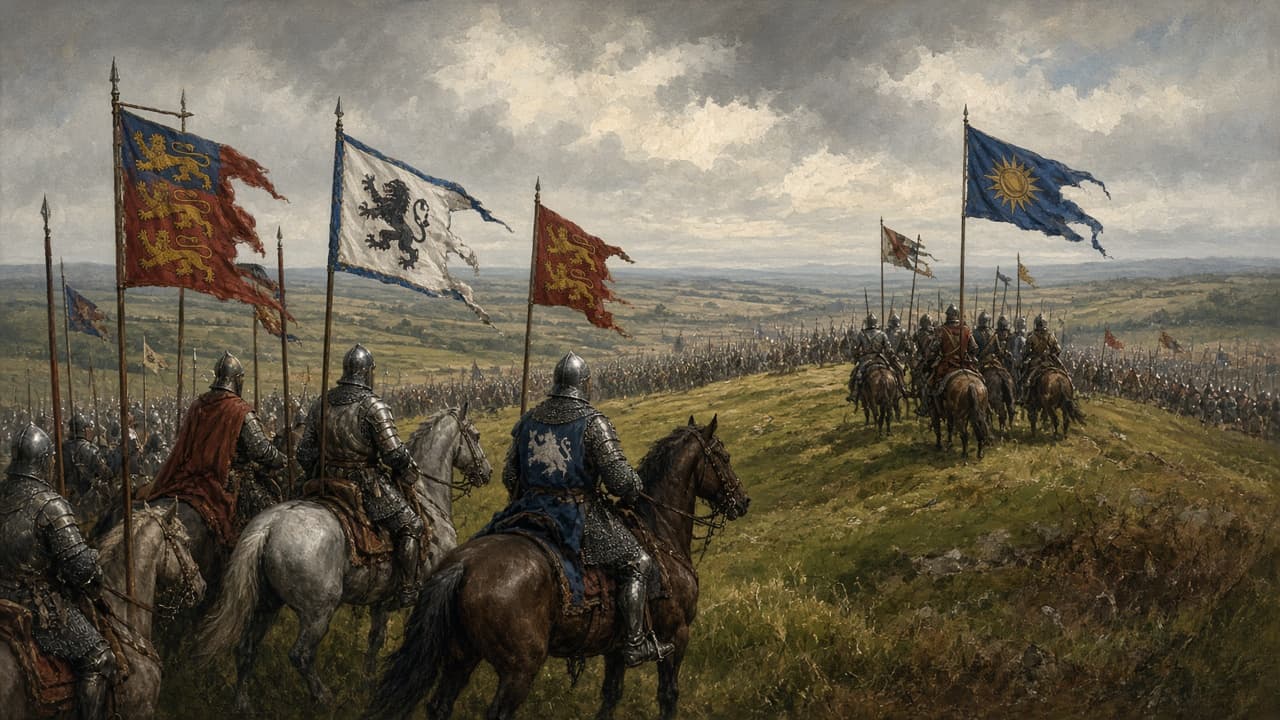
On this day: Richard III falls at Bosworth Field
On 22 August 1485, Henry Tudor's forces defeated and killed Richard III at Bosworth Field. The battle ended Plantagenet rule and opened the Tudor dynasty in England.
On 22 August 1485, armies clashed near Bosworth in Leicestershire, England, in the battle that ended the Wars of the Roses and killed King Richard III. Henry Tudor, earl of Richmond, led a rebel force that included French-backed troops and English nobles who had turned against Richard. When Richard was cut down in the fighting, Henry became Henry VII, first monarch of the Tudor dynasty that would rule England for more than a century.
Richard III rode into Bosworth Field on 22 August 1485 as the last Plantagenet king of England, defending a crown won after the disappearance of his nephews and years of Yorkist conflict. Contemporary and later portraits made him a villain or a competent ruler depending on the dynasty telling the tale. On the field, key desertions and the charge toward Henry Tudor's standard decided the day. Richard died fighting in the melee. His death ended the direct male Plantagenet line on the English throne.
Henry Tudor, soon crowned Henry VII, had returned from exile with a mixed force of Lancastrian loyalists and foreign support. Victory at Bosworth let him marry Elizabeth of York and market a new Tudor peace after the Wars of the Roses. Propaganda then reshaped Richard's reputation for centuries. Modern archaeology under a Leicester car park recovered a skeleton identified as Richard, renewing debates about scoliosis, burial and character. Pairing the two portraits keeps the battle as a clash of claimants, not only a Shakespeare scene.
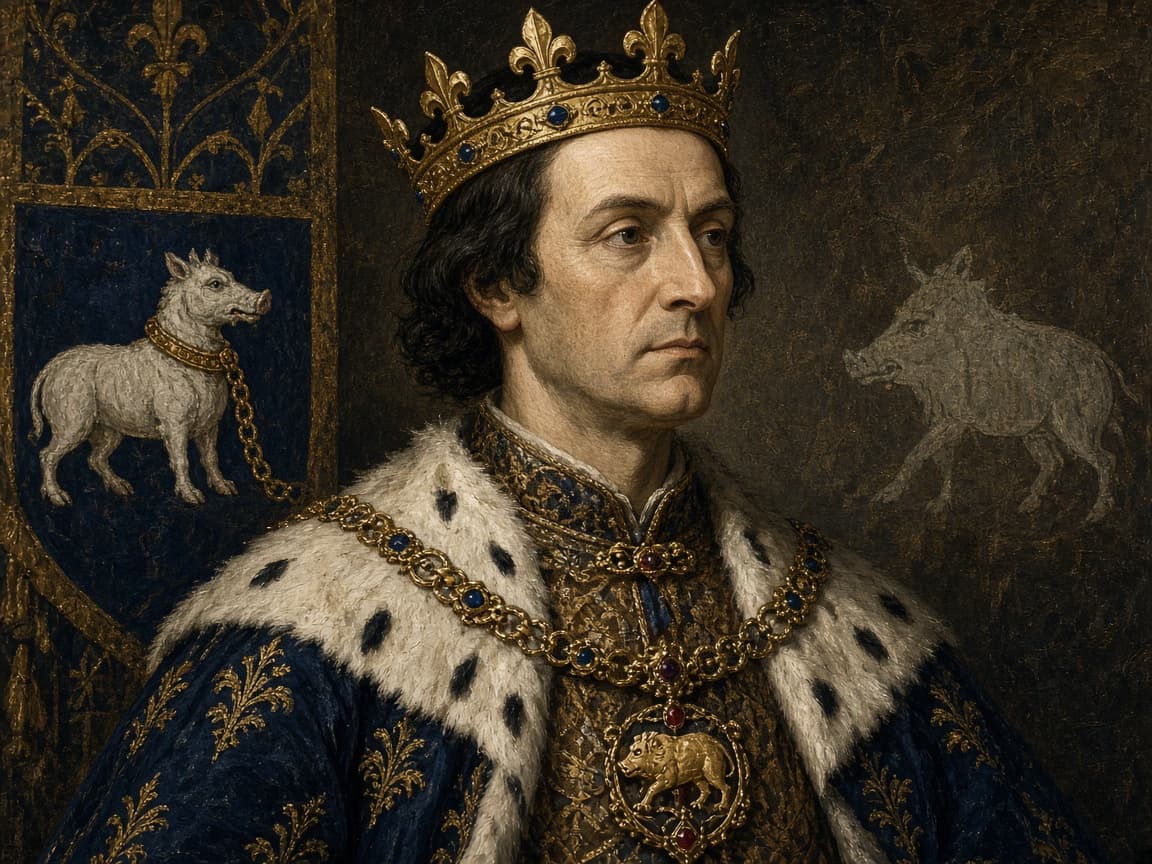
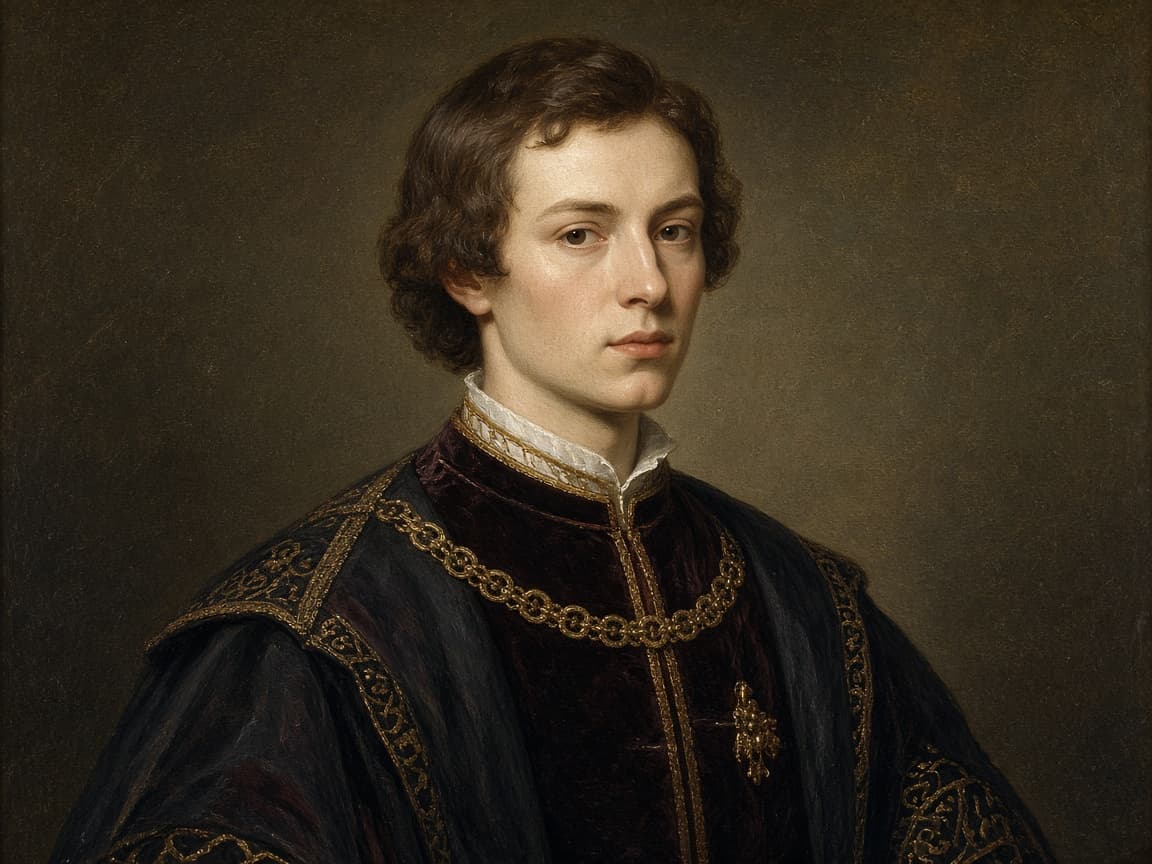
Richard III had taken the crown in 1483 amid controversy over the disappearance of his young nephews, the Princes in the Tower. Shakespeare later painted him as a villainous hunchback; archaeology and revisionist history complicate that portrait without clearing every charge. By 1485 his support was brittle. Stanley family loyalties were uncertain. Henry Tudor, exiled in Brittany, landed in Wales with a claim through Lancaster kinship and a promise to marry Elizabeth of York, uniting the rival rose symbols.
The battlefield mechanics mattered. Richard held the high ground with a larger force on paper. Henry's vanguard engaged while Richard sought a decisive charge at Henry's own position. William Stanley's troops, held in reserve, entered on Henry's side at a critical moment. Richard fought on horseback in the royal tradition and was killed in the melee. His crown, legend says, was found in a bush and placed on Henry's head on the field.
Why did Bosworth end a dynasty? The Plantagenet line had spent decades tearing itself apart in civil war between Yorkist and Lancastrian factions. Richard was the last Yorkist king on the throne. His death left no adult heir ready to rally the nobility. Henry's marriage to Elizabeth of York was meant to heal the split symbolically. Practical politics still required years of careful patronage, rebellions and financial discipline to make the Tudor crown secure.
Richard's body was buried at Greyfriars in Leicester. In 2012 archaeologists excavated a skeleton under a parking lot, identified it through DNA and wounds consistent with battle trauma and reinterred it in Leicester Cathedral. That rediscovery fed public fascination with a king who had been a footnote for some and a Shakespearean monster for others.
Henry VII's reign emphasized stability over glamour: rebuilding royal finances, controlling overmighty nobles and avoiding expensive foreign wars when possible. His son Henry VIII and granddaughter Elizabeth I would dominate popular memory, but Bosworth is the hinge. Without 22 August 1485 there is no Tudor propaganda, no English Reformation timeline as it unfolded and no Elizabethan age as schoolbooks frame it.
For readers who know the Wars of the Roses only from television dramas, Bosworth is the ending shot. Armored knights, gunpowder artillery in supporting roles, betrayals on the sidelines and a king who died in the press rather than on a distant throne. Medieval politics was personal: names on banners, marriages as treaties and one afternoon's violence resetting succession law.
The field today is a heritage landscape with walking routes and interpretation boards. Sheep graze where chroniclers once described carnage. Standing there is a reminder that English constitutional history has muddy, bloody mornings, not only parchment acts in quiet rooms.
Chroniclers loyal to Henry Tudor wrote Richard as a tyrant to legitimize the new dynasty. Yorkist survivors fled or conformed. Parliament later passed acts that strengthened Tudor claims and weakened rival titles. Bosworth was one afternoon of violence embedded in years of legal tidying that made Henry's crown harder to challenge in court. Henry dated his reign from 22 August, erasing Richard's hours on the throne from official timelines. Tudor roses on badges and buildings advertised unity after civil war. Shakespeare's Richard III, written a century later, colored popular memory more than any battlefield tally. Bosworth's facts and its myths diverged almost immediately. Anniversaries work best when readers return to primary sources, survivor testimony and later scholarship instead of trusting a single headline from the day.
Eagle Frame's takeaway: 22 August 1485 is Bosworth Field, where Richard III died and Henry Tudor began Tudor rule. Know the Stanley turn, know the York-Lancaster marriage plan and know why a parking-lot skeleton could still make headlines five centuries later.