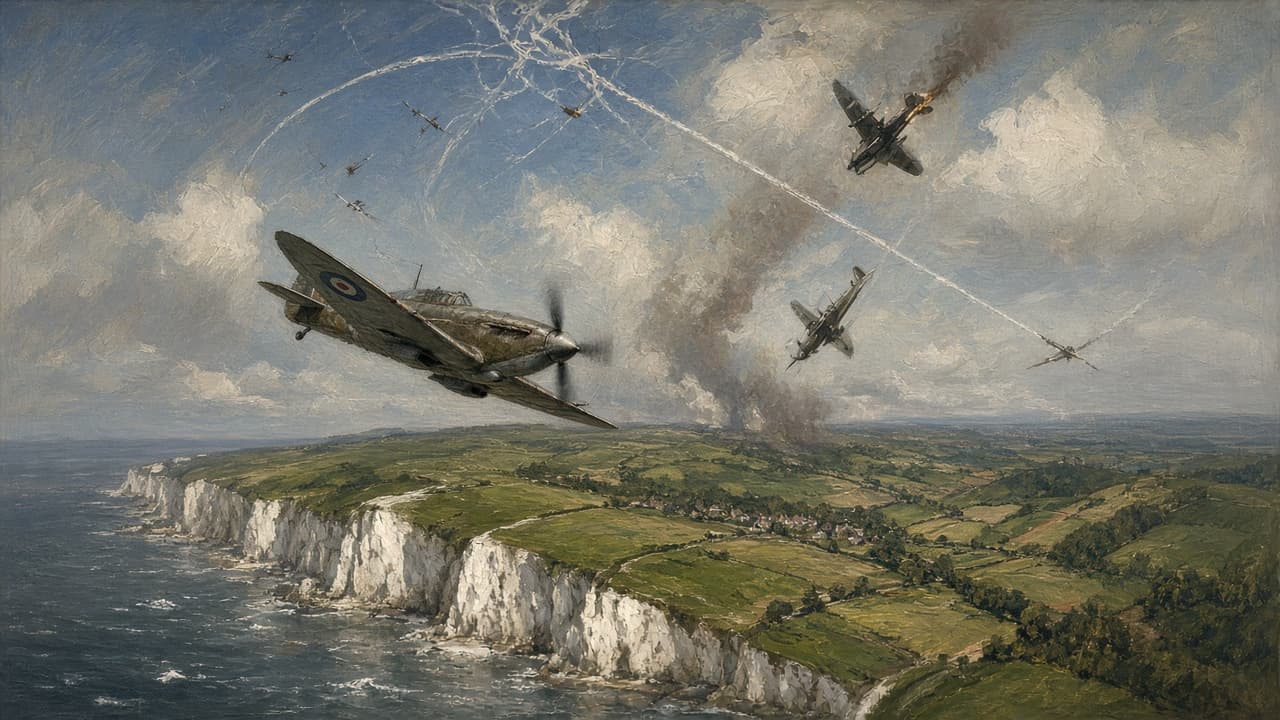
On this day: Battle of Britain Day
On 15 September 1940, the Luftwaffe launched major daylight attacks on Britain and RAF Fighter Command fought them off. The date is commemorated as Battle of Britain Day, a climax in a campaign that ran from July into October.
On 15 September 1940, German air fleets mounted some of the heaviest daylight raids of the Battle of Britain. RAF Fighter Command scrambled squadrons again and again over southern England and London. British memory later fixed the date as Battle of Britain Day: not the only day of the campaign, but a visible climax when the Luftwaffe failed to break the fighter force that stood in the way of invasion plans.
The wider battle ran roughly from July to October 1940, after France had fallen. Germany needed air superiority over the Channel and southern England before a seaborne invasion (Operation Sea Lion) could be risked. Bombers alone were not enough. Escorts and fighters had to clear the sky. Britain's job was to keep enough fighters, pilots and airfields alive to deny that clearance. Weather, tides and barge preparations on the continental coast all depended on that air question.
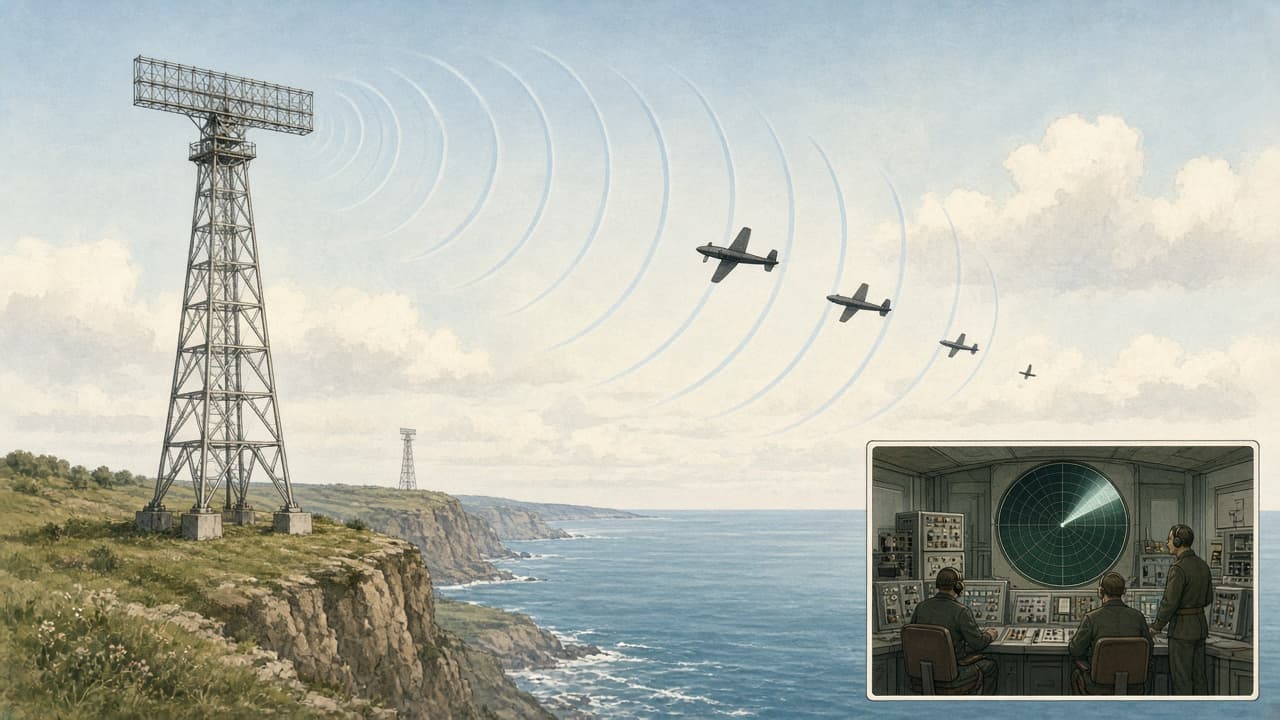
The mechanism that made defense possible was not only brave pilots. Britain had built Chain Home, a line of radar stations along the coast. Radar sends out radio pulses and reads the echoes that bounce back from aircraft, giving range and rough direction even when eyes cannot see far. Those plots fed telephone networks and filter rooms. Under Air Chief Marshal Hugh Dowding's Fighter Command system, sector controllers radioed squadrons where to climb and when to engage. The Dowding system turned scattered planes into a directed force instead of a blind patrol.
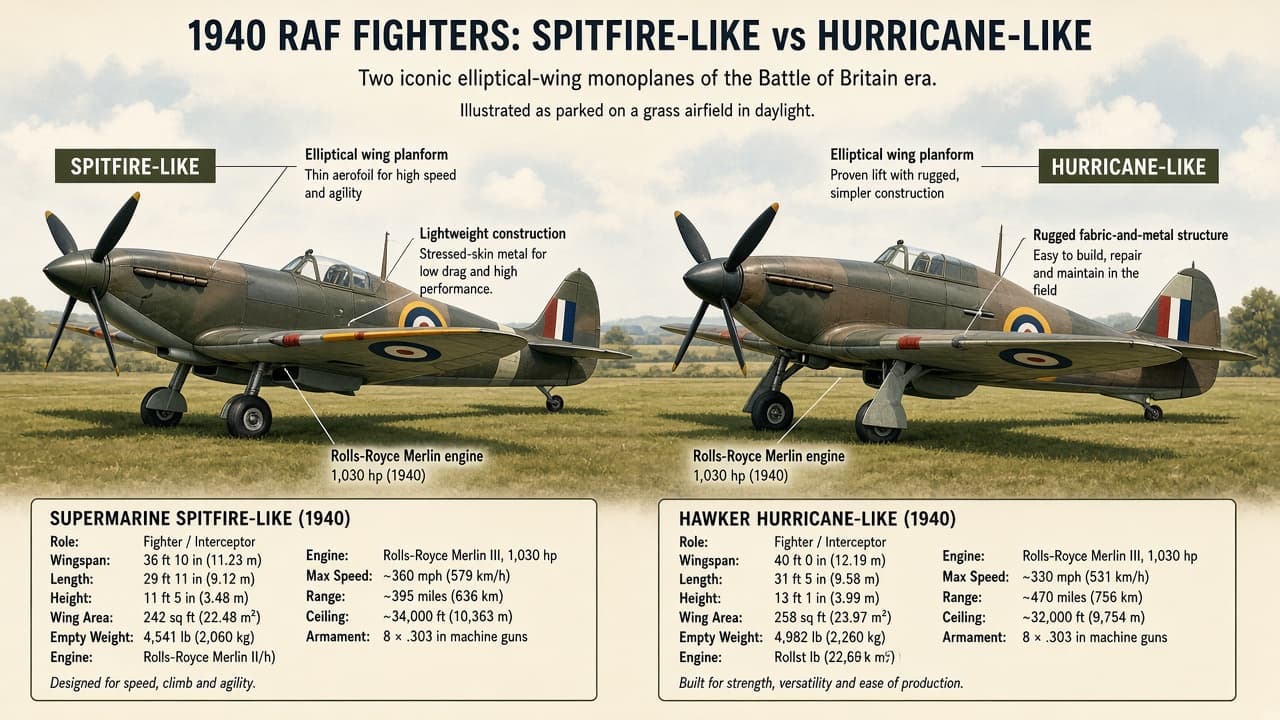
Hawker Hurricanes and Supermarine Spitfires did most of the day fighting. Hurricanes were numerous and rugged against bombers. Spitfires were prized in fighter-versus-fighter duels. Both depended on ground crews who refueled and rearmed under time pressure. Women's Auxiliary Air Force plotters and other ground staff moved counters on plotting tables as radar and observer reports arrived. Pilot losses hurt more than airframe losses because training took months the calendar did not spare. Churchill's phrase "the Few" honored aircrew; the system behind them was many hands.
On that mid-September Sunday, raid waves toward London met coordinated interception. German losses were serious enough to discourage repeating the same pattern of massed daylight assault. Night bombing and the Blitz against cities continued for months and killed many civilians. What 15 September marked was not the end of British suffering. It marked the failure to destroy Fighter Command in the air as a prelude to invasion weather and Channel crossings.
Invasion conditions failed for linked reasons. Without air superiority, barges and warships would have been exposed. Fighter Command still had bases, pilots and an unbroken detection chain. German strategy had also shifted between attacking airfields and attacking cities, which gave British squadrons breathing room at critical moments. Sea Lion stayed a threat on paper longer than it stayed a realistic timetable.
Walk the detection chain once more in order. A Chain Home station paints a raid. Filter rooms clean duplicate reports. Observer Corps eyes fill gaps radar misses. Sector stations scramble and vector fighters. Pilots climb on radio instruction rather than hunting blindly. That sequence is why a smaller fighter force could meet larger raids without burning all its fuel on useless patrols.
15 September's waves on London tested that chain under maximum load. Controllers had to decide which raids were feints and which were the main weight. Squadrons landed, rearmed and went up again. German crews faced longer flights, limited escort endurance and an opponent who still had a system. Night Blitz bombing afterward proved cities could still burn. It did not give Germany the daylight air superiority Sea Lion required.
Remember the calendar around the Sunday raids. July and August had already tested airfields, convoys and nerve. September shifted weight toward London in ways that shocked civilians and eased some pressure on sector stations. October brought more night work as daylight mass attacks lost their promise. Battle of Britain Day sits inside that arc as a daylight peak, not as a neat final whistle.
Eagle Frame's takeaway: Battle of Britain Day honors a campaign won by Chain Home plots, Dowding's control network, ground crews, WAAF plotters and fighter pilots together. Know the Hurricane and Spitfire roles and why Sea Lion needed a clear sky and 15 September makes engineering sense as well as national memory.