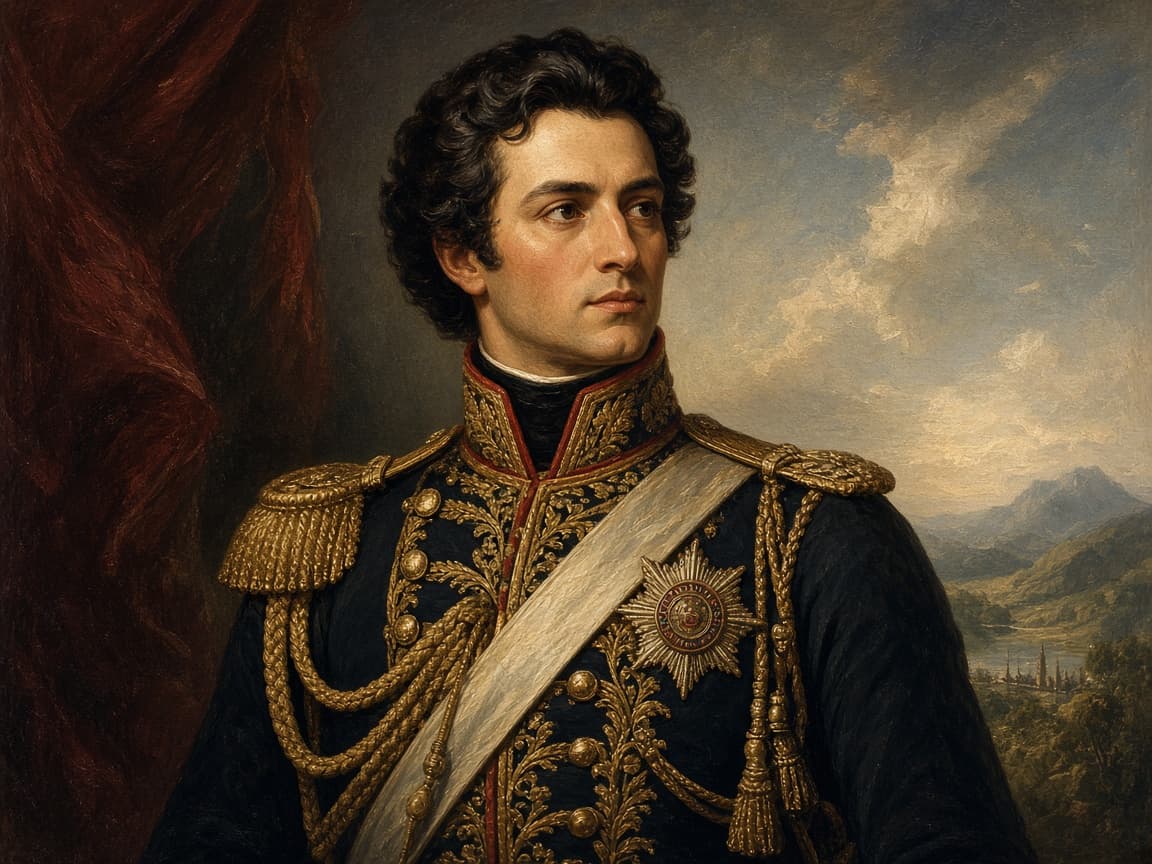
On this day: Brazil declares independence
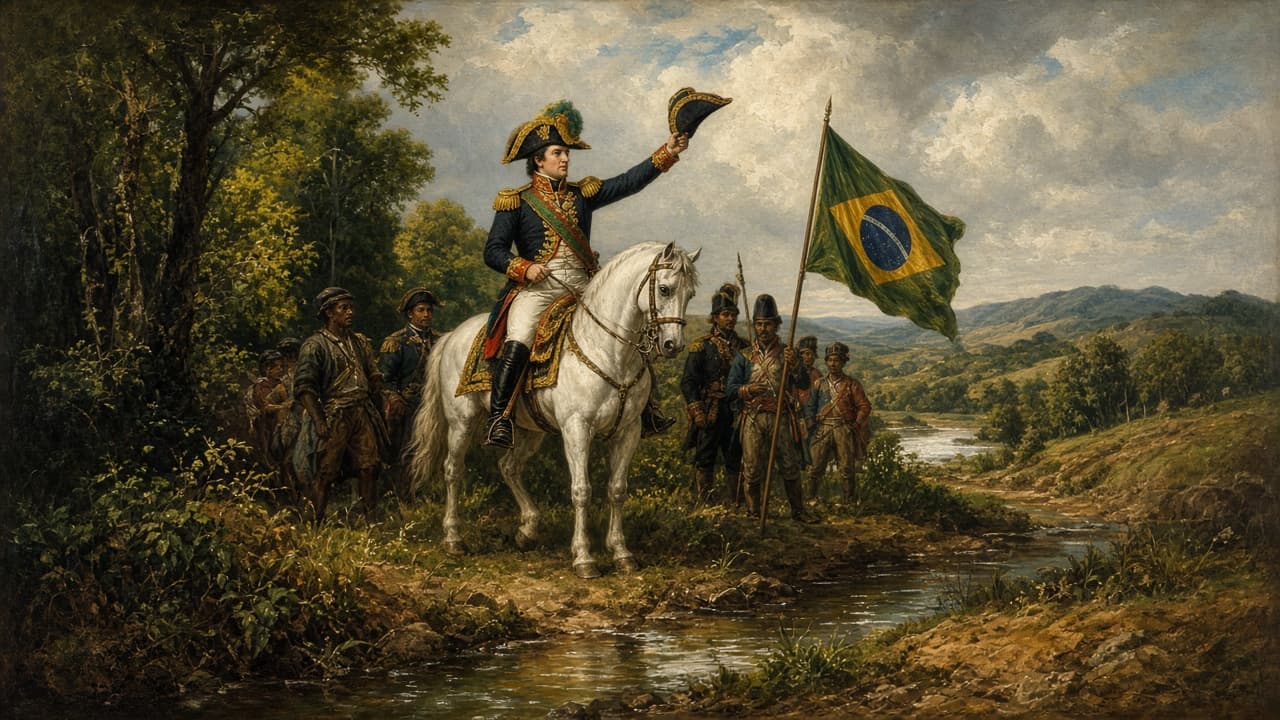
On 7 September 1822, Dom Pedro declared Brazil's separation from Portugal along the Ipiranga brook near São Paulo. The Cry of Ipiranga opened an imperial Brazilian path rather than a fragmented set of republics.
On 7 September 1822, Dom Pedro, prince regent of Brazil, declared that the vast Portuguese colony would separate from Portugal. Tradition places the moment by the Ipiranga brook near São Paulo, remembered as the Cry of Ipiranga. Whether every shouted word matches later painting, the political fact holds: Brazil's break into an independent empire is dated to that September day. Within months he was acclaimed Emperor Pedro I, tying independence to a Braganza throne rather than to an immediate republic School calendars still treat the date as the nation's birthday.
On 7 September 1822, Dom Pedro declared Brazil's independence from Portugal near the Ipiranga stream, a moment later painted as the Cry of Ipiranga with the prince on horseback. Unlike many American independence wars, Brazil's break kept a monarchy under Pedro I rather than immediately forming a republic. The scene's drama served nation-building art. Politics on the ground included elite negotiation, military pressure and the risk of Portuguese reconquest. Pedro's break with Lisbon followed the Portuguese court's return to Europe and rising Brazilian elite anger.
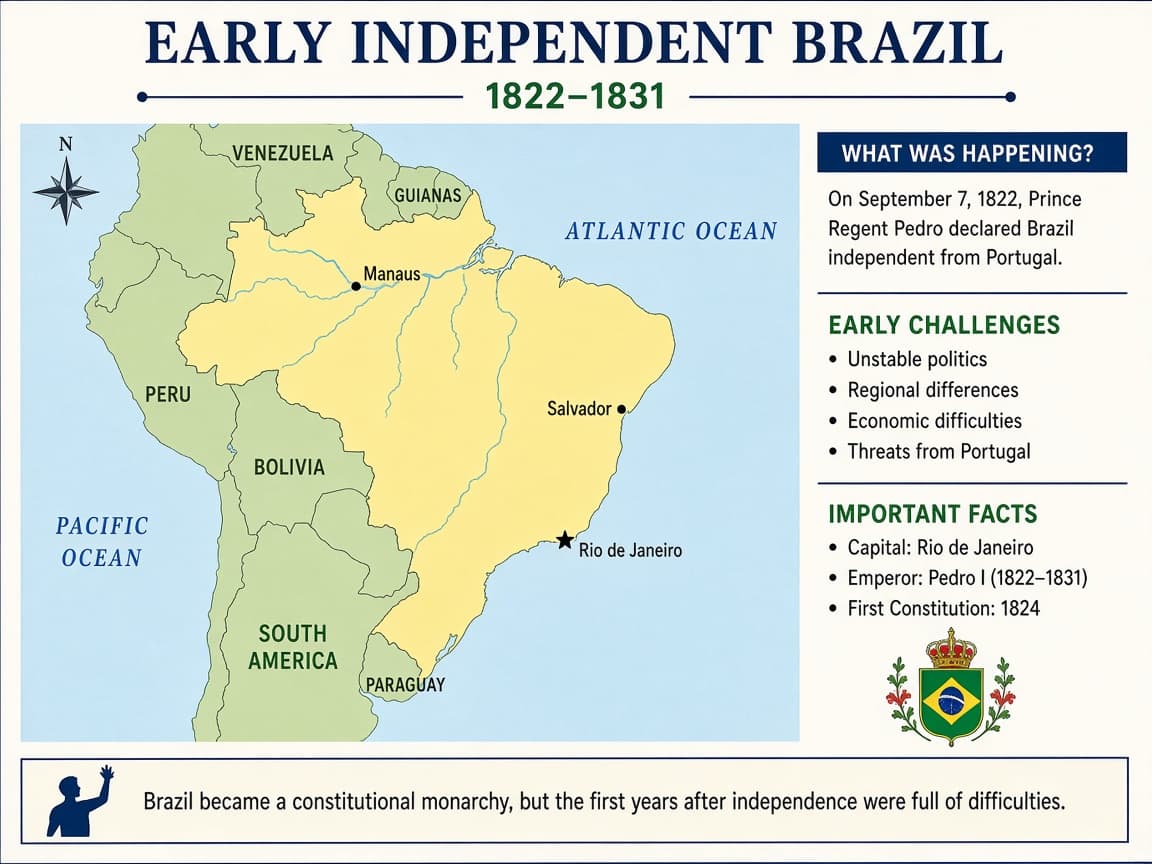
An early empire map shows a huge Portuguese-American territory becoming a single independent state under the Braganza crown, while Spanish America splintered into many republics. Slavery continued. Regional revolts tested unity. Recognition by foreign powers arrived unevenly. The map beside the horseback proclamation reminds readers that independence was a change of sovereignty across a continental landmass, not only a poetic shout by a river. Army and militia units that backed the prince forced wavering provinces to accept the new empire.
Context begins with the Napoleonic Wars. When French armies invaded Portugal in 1807, the Portuguese court fled to Rio de Janeiro under British naval protection. For more than a decade Brazil was the seat of the Portuguese monarchy, raised in status and filled with European institutions. Returning the court to Lisbon later reopened the question of whether Brazil would sink back into ordinary colonial subordination.
Lisbon's Cortes (parliament) pressed to reverse Brazilian autonomy and recall Pedro. Brazilian elites who had tasted capital-city power resisted. Pedro's motherland ties pulled one way; his local alliances and marriage into Habsburg politics pulled another. On 9 January 1822 he had already refused a summons to return to Europe ("Fico," I am staying). September's declaration completed the rupture. Portuguese merchants and officials who rejected the break faced expulsion or defeat as provincial juntas lined up behind the new imperial project.
Independence did not instantly create a republic of equal citizens. Pedro became Emperor Pedro I of Brazil. The country kept a monarchical constitution, a plantation economy dependent on enslaved African labor and deep regional inequalities. Compared with Spanish America's fragmenting wars, Brazil's path preserved a huge territorial unit under a Braganza crown. That unity is part of why the map of Brazil still looks continental.
Fighting still occurred against Portuguese garrisons in some provinces. Diplomacy with Britain and other powers mattered for recognition. Pedro's reign later tangled with constitutional conflicts and his dual claims in Portugal; he abdicated the Brazilian throne in 1831 in favor of his son. The independence date remained a founding myth even as emperors and then republicans argued over the nation's meaning. Paintings of the cry later taught schoolchildren a single heroic instant; archives show weeks of letters, councils and troop movements around that instant. For enslaved people, 1822 did not mean freedom. Abolition came only in 1888, after decades of struggle. Indigenous nations continued to face expansion and violence. Honest teaching of Independence Day holds the anti-colonial claim against Lisbon beside the empire's reliance on slavery and frontier conquest. National memory paints Pedro on horseback with a dramatic gesture. Useful history adds Lisbon's demands, Rio's elevated wartime status and the elite bargain that preferred an emperor to a shattered set of provinces. The cry was theater and strategy together.
7 September is Brazil's Independence Day holiday. Parades and school lessons retell Ipiranga. Outside Brazil the date is less familiar than 4 July or 14 July, yet it marks one of the Western Hemisphere's pivotal separations from European empire: a Portuguese prince choosing a New World crown.
São Paulo's role in the Ipiranga story mattered to regional pride, yet Rio remained the political center where courts, ministers and foreign envoys clustered. Independence had to be secured in multiple provinces, not only proclaimed on one roadside. Naval actions and local juntas filled out the map through 1823.
Britain's commercial interest in an independent Brazil open to trade shaped recognition diplomacy. Portuguese weakness after the Peninsular War limited Lisbon's ability to reconquer the colony wholesale. International context greased a separation that local elites already wanted.
Later Brazilian republicans would criticize the empire even while keeping 7 September as the national birthday. The holiday proved flexible: monarchists and republicans both could claim the break with Portugal. What they could not honestly claim was that independence had freed the enslaved. Provincial elites bargained for local privileges even as they toasted the emperor.
Eagle Frame's takeaway: 7 September 1822 is when Dom Pedro's Cry of Ipiranga opened Brazilian independence as an empire. Keep the court's Rio years that raised Brazil's status in view and that slavery outlasted the break with Lisbon. Territorial unity under Pedro is the outcome that shaped the modern map.