On this day: Britain and France declare war on Germany
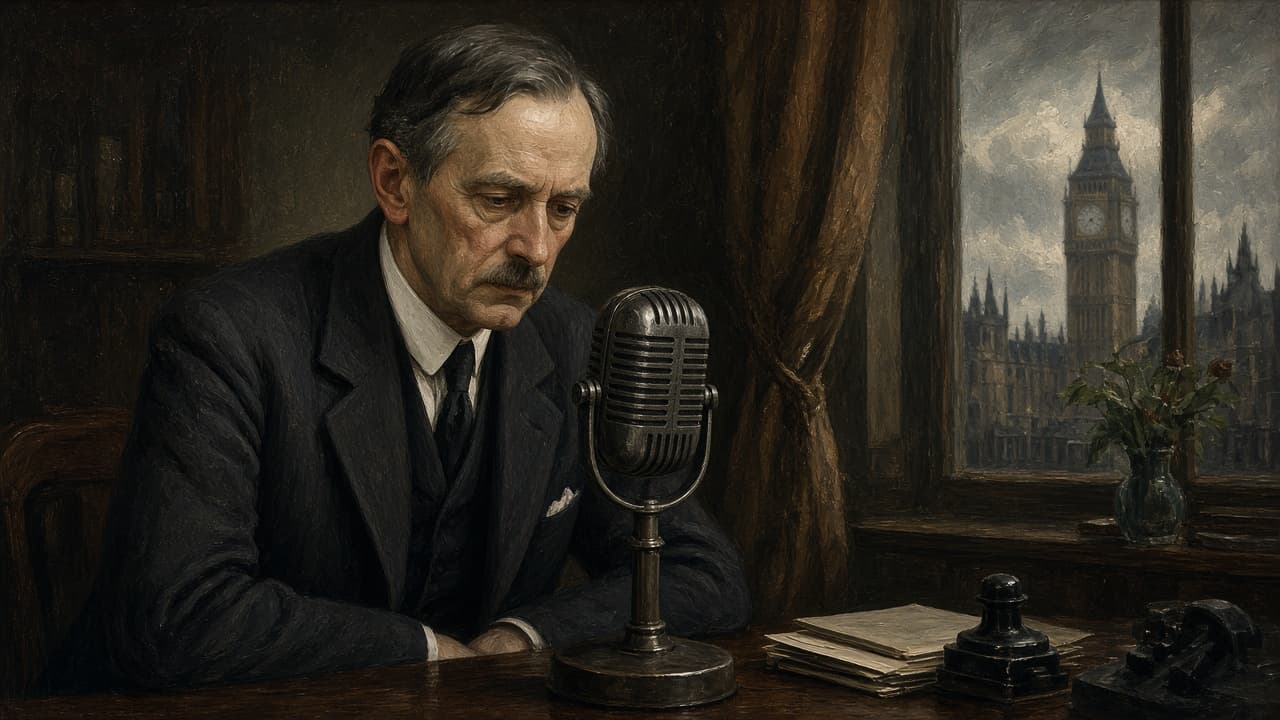
On 3 September 1939, Britain and France declared war on Nazi Germany after the invasion of Poland. Neville Chamberlain's radio broadcast told Britons that negotiations had failed and that a state of war existed.
On 3 September 1939, the United Kingdom declared war on Germany. France followed the same day. Two days earlier German armies had invaded Poland. Ultimatums demanding a German withdrawal expired without compliance. The declarations turned a Central European invasion into a war between Europe's major western democracies and Hitler's Reich. Church bells and radio bulletins carried the news into kitchens that still remembered the last war's casualty lists.
Prime Minister Neville Chamberlain spoke to the British public by radio from Downing Street. His voice was flat with strain. He said that no such undertaking to withdraw had been received and that consequently Britain was at war with Germany. The same man who had returned from Munich in 1938 talking of peace now had to admit that appeasement had failed. Listeners heard disappointment as clearly as resolve.
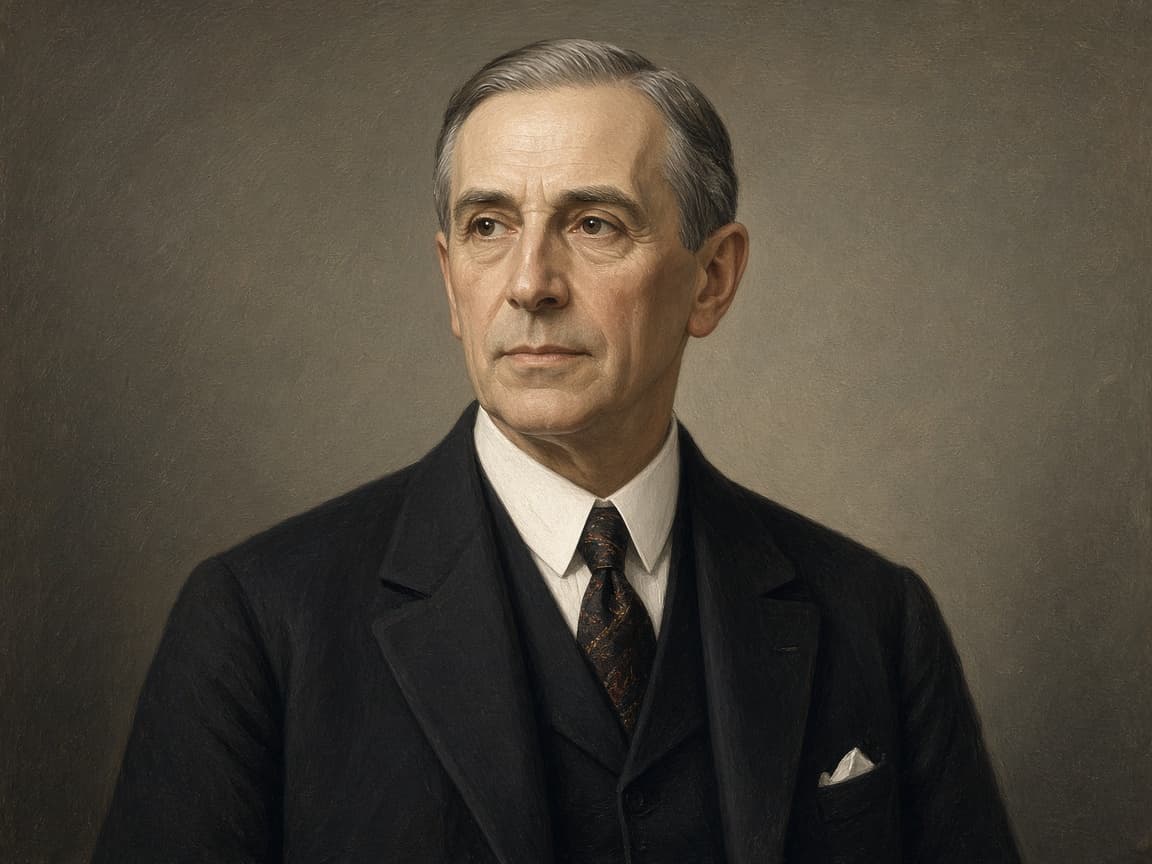
Neville Chamberlain's government declared war on Germany on 3 September 1939 after the invasion of Poland and the expiry of an unmet ultimatum. France followed the same day. Chamberlain, once associated with appeasement at Munich, now told Britons that Hitler's aggression left no choice. The radio announcement ended illusions that the crisis would stay Eastern. His portrait marks the pivot from delay to belligerency, whatever later critics said about his earlier policy. Sirens and shelter drills made the declaration feel immediate even when bombers did not come at once.
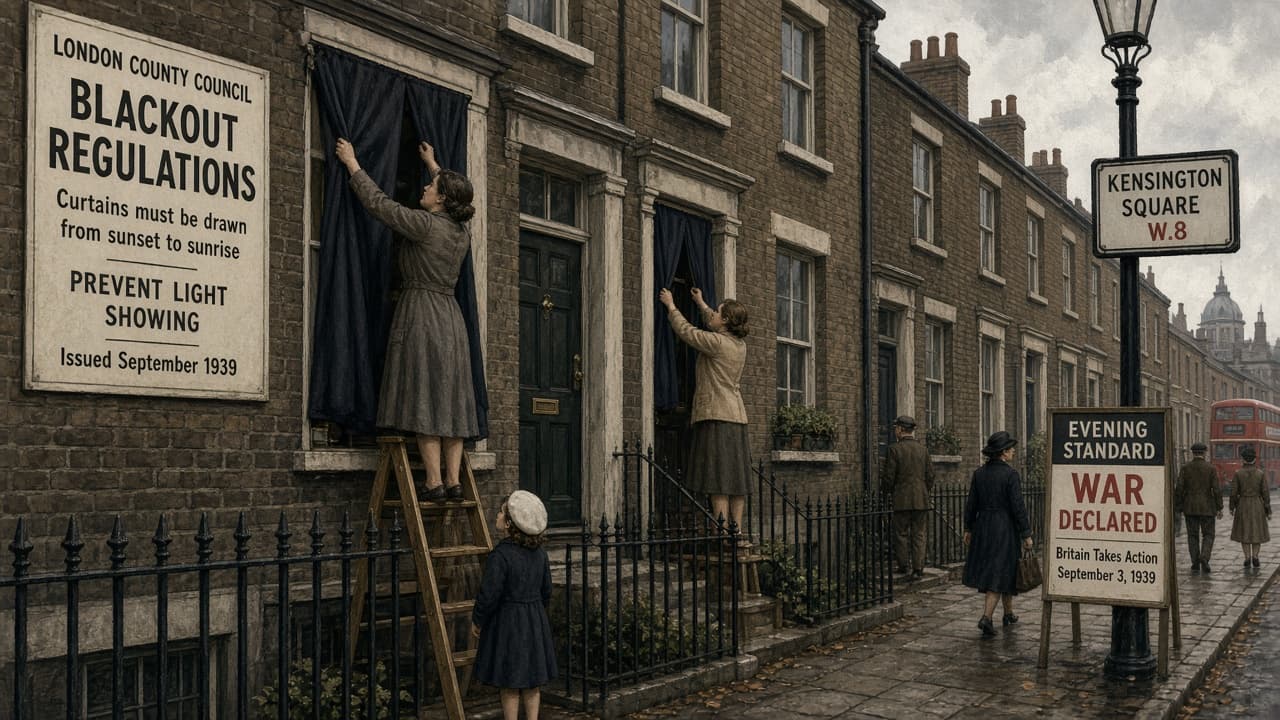
Londoners prepared blackout curtains, taped windows and waited for air raids that did not immediately match the worst fears (the early months earned the nickname Phoney War). Still, the blackout changed nightly life: darkened streets, stricter rules and a sense that the home front had begun. Children faced evacuation schemes. Factories shifted toward munitions. The curtain image teaches that declaring war is also a domestic reorganization, not only a note to an embassy. Dominion governments issued their own war statements as the British Empire lined up behind London.
Why declare war if armies could not reach Poland in time? Guarantees given earlier in 1939 were meant to deter Hitler by promising a wider war. When deterrence failed, honor and credibility still demanded action. British and French planners expected a long struggle, not an instant rescue of Warsaw. The strategic hope was to hold in the west, blockade Germany and build strength. The immediate reality for Poland was catastrophe. Military timetables still assumed months of buildup. Factories shifted toward aircraft and munitions while staff officers stared at maps of a Poland they could not reach in time.
The months that followed were nicknamed the Phoney War in English and drôle de guerre in French: declarations without the massive western front battles people feared. There were naval clashes, leaflet raids and mobilization. Then in spring 1940 Germany smashed into Scandinavia, the Low Countries and France. Chamberlain's government fell; Winston Churchill became prime minister. The 3 September decision still framed who the enemies were when the storm finally broke in the west.
France's declaration mattered equally. The two allies moved in concert after years of uneasy coordination. Maginot Line thinking and political caution shaped French strategy. Defeat in 1940 would shatter the Third Republic and produce occupation and Vichy collaboration. None of that was visible in the formal notes of 3 September, yet the date tied Paris and London to the same war from the start. For ordinary families the day meant blackout curtains, gas-mask drills and the knowledge that sons would soon wear uniforms. Children were evacuated from cities. Newspapers printed maps of Poland beside notices about ration books still to come. A diplomatic act became a social reorganization. Historians still weigh Chamberlain. Critics call Munich a moral and strategic failure that emboldened Hitler. Defenders note Britain's unreadiness in 1938 and the need to buy rearmament time. The 3 September broadcast is the hinge in that argument: the moment the peace policy ended in public words.
Place the date beside 1 September. Invasion started the killing. Allied declarations defined the coalition that would eventually, with other powers and years of industrial war, destroy the Nazi regime. The gap between those two September days is the gap between aggression and the choice to answer it.
Air-raid sirens sounded in London on the day of the declaration after a false alarm that still trained nerves for the Blitz to come. Children filed into trenches and basements. The psychological war began before the bombers did. Chamberlain's government also moved to detain some enemy aliens and to tighten censorship, the early administrative face of total war.
Dominion governments linked to Britain faced their own decisions. Australia, New Zealand and others entered the conflict in parallel with London's lead. Canada's parliament made a separate formal declaration days later. Empire logistics would matter enormously once the fighting widened.
French politics carried scars from World War I's mass death. Many leaders feared another bloodbath on French soil and hoped defensive strategy plus blockade could spare a generation. That hope shaped the strange quiet of 1939-1940 as much as German timing did.
Eagle Frame's takeaway: 3 September 1939 is when Britain and France entered World War II after Poland's invasion. Keep Chamberlain's broadcast and the gap between guarantees and immediate military help in view. Read the Phoney War as a pause before the 1940 storm rather than as proof the declarations were empty.