On this day: 33 Chilean miners are trapped underground
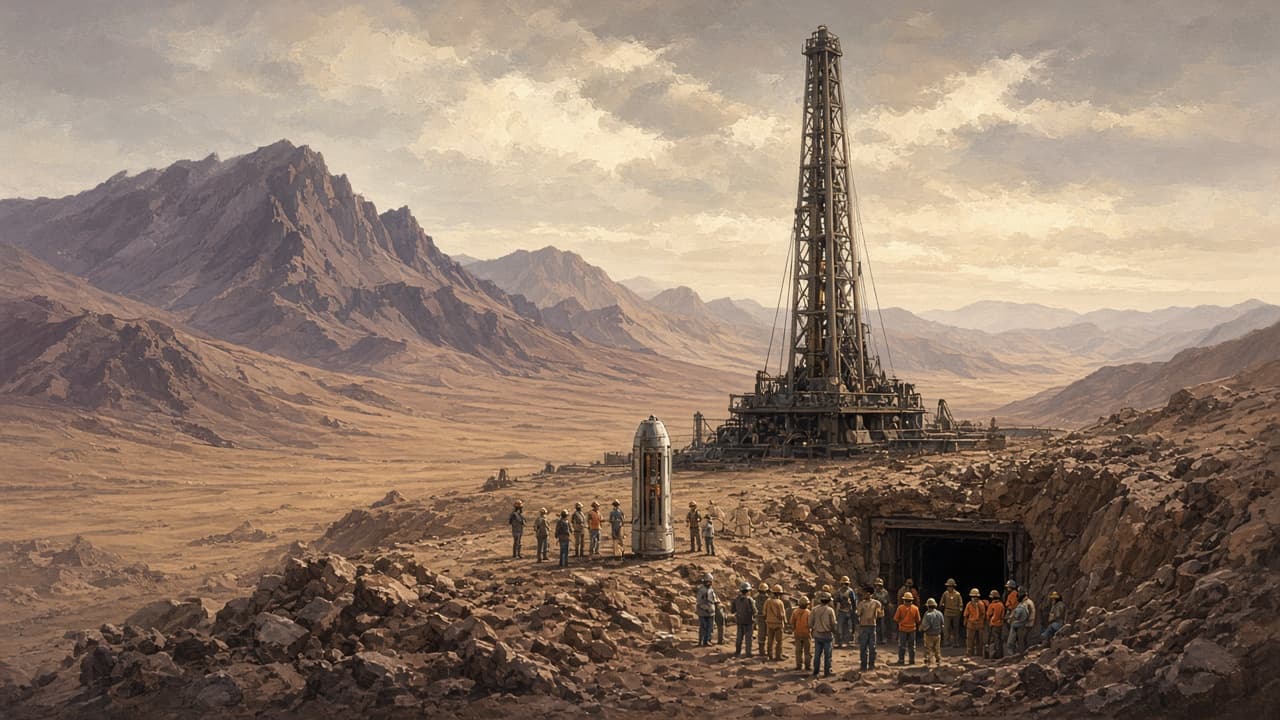
On 5 August 2010, a single block of rock sheared inside the San Jose mine near Copiapo in northern Chile and sealed 33 men about 700 metres below the surface. Nobody heard from them for 17 days. All 33 came out alive after 69.
Just after lunchtime on 5 August 2010, the men working the San Jose copper and gold mine in Chile's Atacama Desert heard what several of them later described as thunder inside the rock. A slab of diorite estimated at around 700,000 tonnes, roughly twice the mass of the Empire State Building, had sheared away from the wall of the mine and dropped into the spiral ramp that was the only vehicle route to the surface. Thirty-three men were below the blockage, about 700 metres down and around five kilometres from the entrance along the ramp. Two days later a second collapse closed the ventilation shafts they had hoped to climb. From that point they had no way out and no way to tell anyone they were alive.
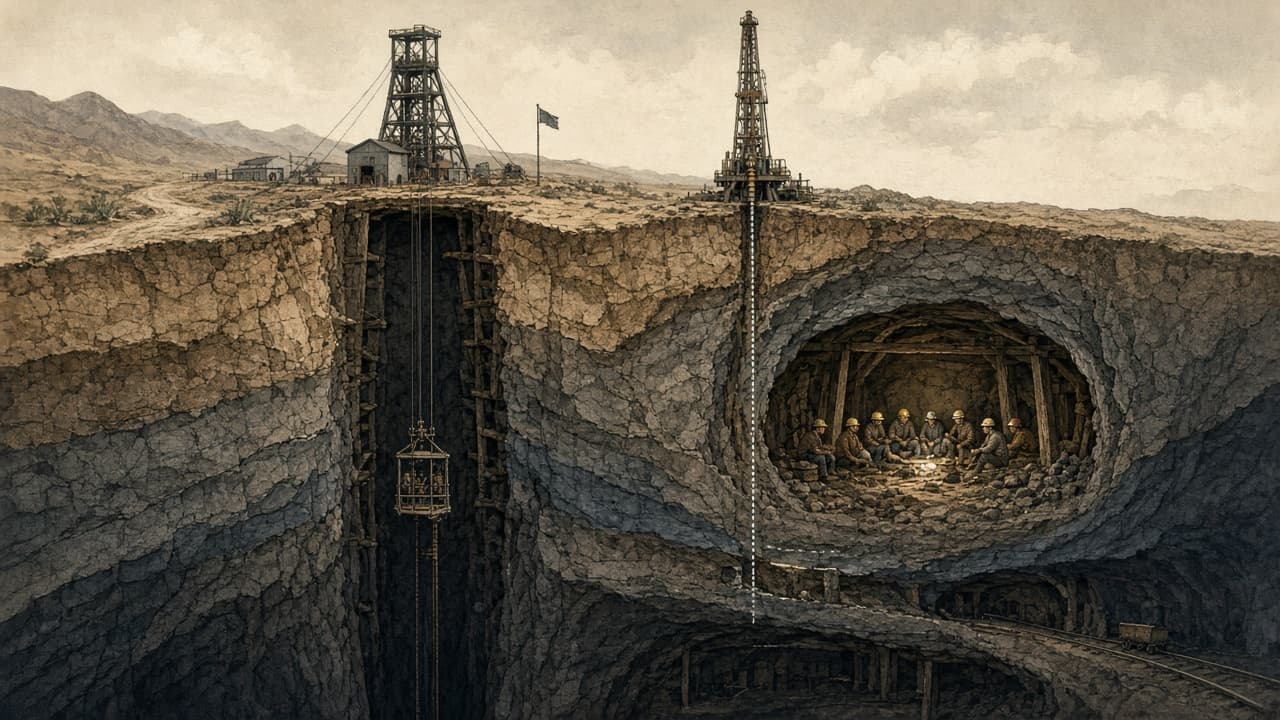
The mine needs explaining, because its design is why 33 men were sealed in rather than 33 men walking out. San Jose was an old operation about 45 kilometres north of the city of Copiapo, owned by the Chilean firm Empresa Minera San Esteban. It had no vertical hoisting shaft. Instead a single ramp wide enough for trucks corkscrewed down through the deposit, so ore came up on wheels and so did people. Chilean rules required ladders in the ventilation shafts as a secondary escape route. San Jose's ladders did not reach the surface. The company had a record of accidents, including a death that closed the mine in 2007 before it reopened the following year, and miners had complained about falling rock for months.
What the men had was a refuge, a reinforced room of about 50 square metres near the 700 metre level stocked for a short emergency. Chilean regulations of the time assumed rescue within days. The shift supervisor, Luis Urzua, a surveyor by training, organized the group on the first night, put the food under collective control and ran decisions by a vote in which every man had one. They ate two spoonfuls of tuna, half a biscuit and a mouthful of milk every 48 hours. They drank industrial water kept in tanks for machinery, ran lights off truck batteries and slept in shifts. By the time contact came, the group had lost an average of around eight kilograms per man.
Above ground, drillers were guessing. Plans of the mine were incomplete and the rock was hard, so narrow exploratory boreholes bent as they went down and missed their targets by metres. Eight holes failed. On 22 August, day 17, a drill broke through into a gallery near the refuge. When the bit was pulled back to the surface, a note in red marker was taped to it. It said, in six words of Spanish, that the 33 of them were well in the shelter. Mining Minister Laurence Golborne held the paper up to cameras that night. The operation stopped being a search and became a rescue.
The narrow holes then became a lifeline. Engineers built long thin capsules, about 1.5 metres each and nicknamed palomas after carrier pigeons, and sent them down on winches with water, glucose gel, rehydration salts, high-calorie food, medicine, clean clothing, letters from families and eventually a fibre-optic cable for video calls. Feeding had to be reintroduced slowly because starved bodies cannot process a normal meal. NASA sent a doctor, a psychologist and an engineer to advise, on the grounds that long-duration spaceflight is the closest analogue to a small group confined in a hostile environment for months with no exit.
Three drilling plans ran at once, and the reason was simple: no single method was reliable enough to bet 33 lives on. Plan A used a Strata 950 raise borer, accurate but slow. Plan B used a Schramm T130XD, an oil and gas service rig fitted with cluster hammer bits from an American manufacturer, which widened one of the existing boreholes in stages from about 14 centimetres to 30 and then to 71. Plan C brought in a heavy oil rig, the fastest driller on paper but needing weeks of platform construction first. Plan B won. On 9 October, after 33 days of drilling led in part by the American driller Jeff Hart, the bit punched through into the ramp at 622 metres and the men underground cheered loudly enough to be heard on the intercom.
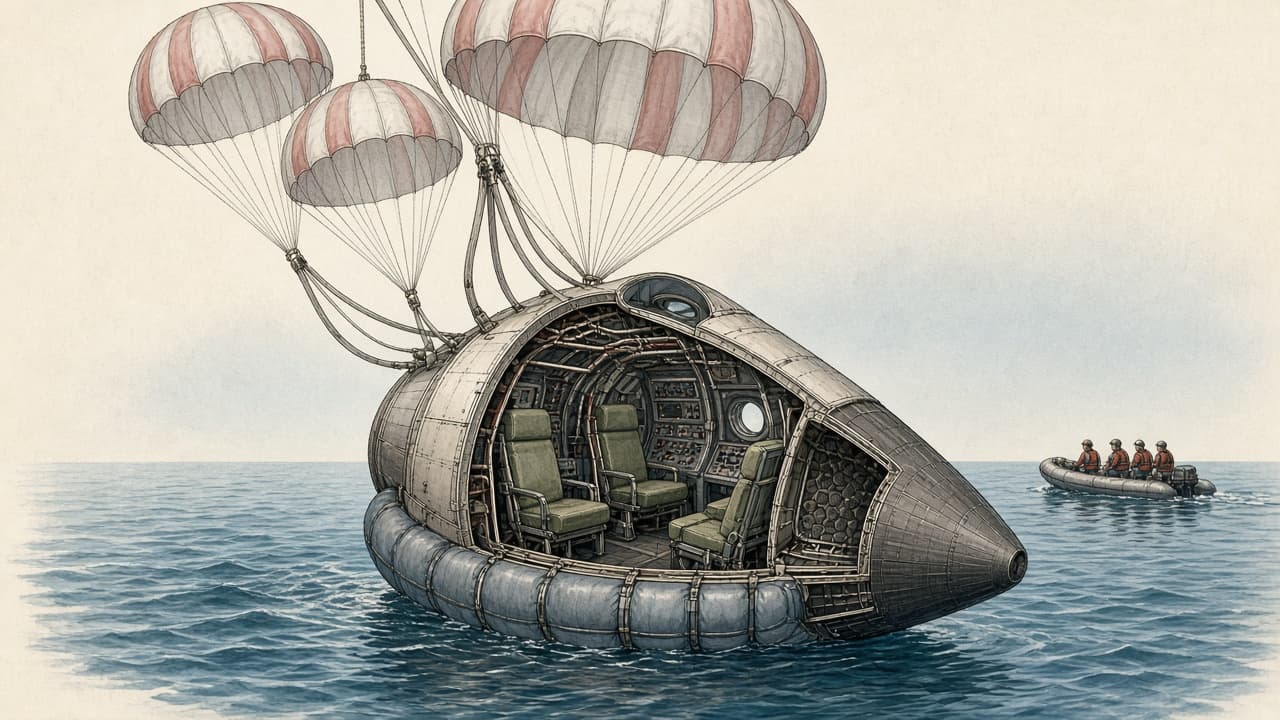
The capsule was built for the job in six weeks. Chilean Navy engineers at the ASMAR shipyard in Talcahuano made three units, working from a German mine rescue design of the 1950s with input from NASA. Fenix 2, the one used, was 3.95 metres tall, 54 centimetres in external diameter and weighed about 460 kilograms. It carried a bottled oxygen supply, an intercom, lighting, a harness and retractable wheels that ran along the borehole wall to stop it spinning. Critically it had an escape hatch in the floor, so a man could be lowered back down if the capsule stuck. Each rider wore a biometric belt to transmit heart rate, compression socks to prevent a blood pressure crash on the way up and dark glasses for eyes that had seen nothing but lamplight for ten weeks.
The lift ran through the night of 12 October and all of 13 October. A rescuer, Manuel Gonzalez, went down first. Florencio Avalos came up just after midnight. Each journey took about 15 minutes, slower than the engineers had hoped because the borehole had a slight bend. Mario Sepulveda, the second man out, handed rocks to the president as souvenirs. Luis Urzua, the shift supervisor, insisted on being last and reached the surface at about 9:55 in the evening on 13 October, 69 days after the collapse, and formally handed his shift back to President Sebastian Pinera. An audience estimated at around one billion people watched some part of it live.
The years afterwards were harder than the coverage suggested. The families' tent settlement at the mine head, Campamento Esperanza, broke up. Medical checks in Copiapo found dental damage, eye problems, lung damage and, in most of the group, post-traumatic stress. Several men never worked underground again and some could not hold any job. A book contract and the 2015 film The 33 brought money to some and disputes to others. In August 2013 Chilean prosecutors closed the criminal investigation without charging the mine's owners, citing insufficient evidence of a specific act of negligence, a decision the miners' lawyers fought and lost. San Jose has stayed shut.
Regulation did change, though unevenly. Chile's mining safety agency, Sernageomin, had fewer than 20 inspectors for thousands of mines in 2010. Its budget and staff were increased, a presidential commission rewrote parts of the safety code and Chile ratified the International Labour Organization convention on safety and health in mines in 2011. The underlying pattern held: the large state and multinational operations run to international standards, and the risk sits in the small and mid-size mines that supply them.
Eagle Frame's takeaway: 5 August 2010 is a rescue story that worked because of redundancy, not luck. Three drills ran in parallel, narrow boreholes kept 33 men fed while the wide one was cut and a purpose-built capsule was given an escape hatch in case it failed. The same mine also shows the other half of the lesson, because a second exit that actually reached the surface would have made the whole 69 days unnecessary.