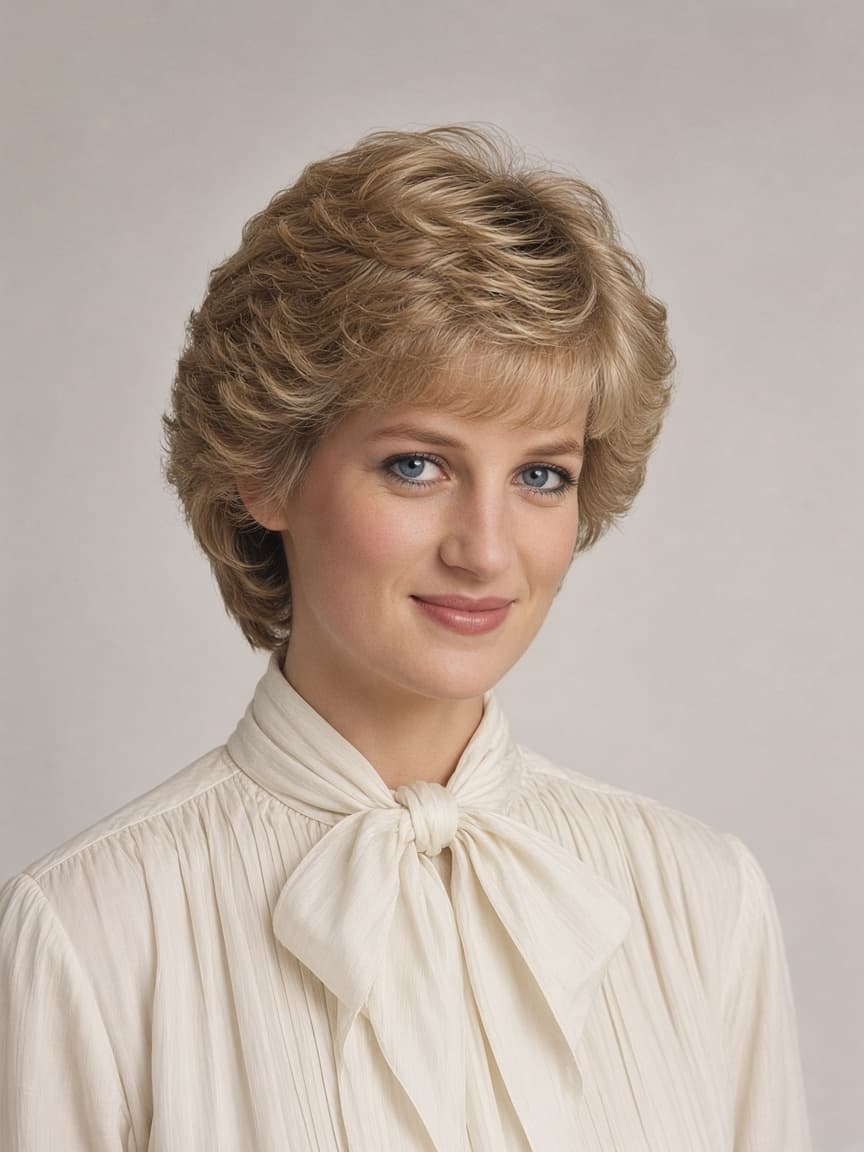
On this day: the funeral of Diana, Princess of Wales
On 6 September 1997, Westminster Abbey held the funeral of Diana, Princess of Wales. About 2,000 people sat inside the church and an estimated 2.5 billion watched on television, one of the largest shared audiences in broadcast history.
On 6 September 1997, Westminster Abbey held the funeral of Diana, Princess of Wales. Six days earlier she had died in a car crash in Paris. The service began just after 11 in the morning British time. About 2,000 people sat inside the Abbey. Outside, crowds filled the streets of London. Television audiences around the world were later estimated at roughly 2.5 billion people, a figure that remains one of the largest shared audiences in broadcast history. The day was not a state funeral in the strict constitutional sense, yet it carried the weight of a national and international farewell.
Diana Frances Spencer was born on 1 July 1961. She married Charles, Prince of Wales, in 1981 and became the mother of Princes William and Harry. She lived much of her adult life under intense public attention. After the marriage ended she kept the style of Princess of Wales and continued charity work that ranged from hospital visits to campaigns against landmines. Her death on 31 August 1997 had already produced a week of flowers at palace gates, queues for books of condolence and an unusual public argument about how the royal household should show grief. The funeral was the formal close of that week.
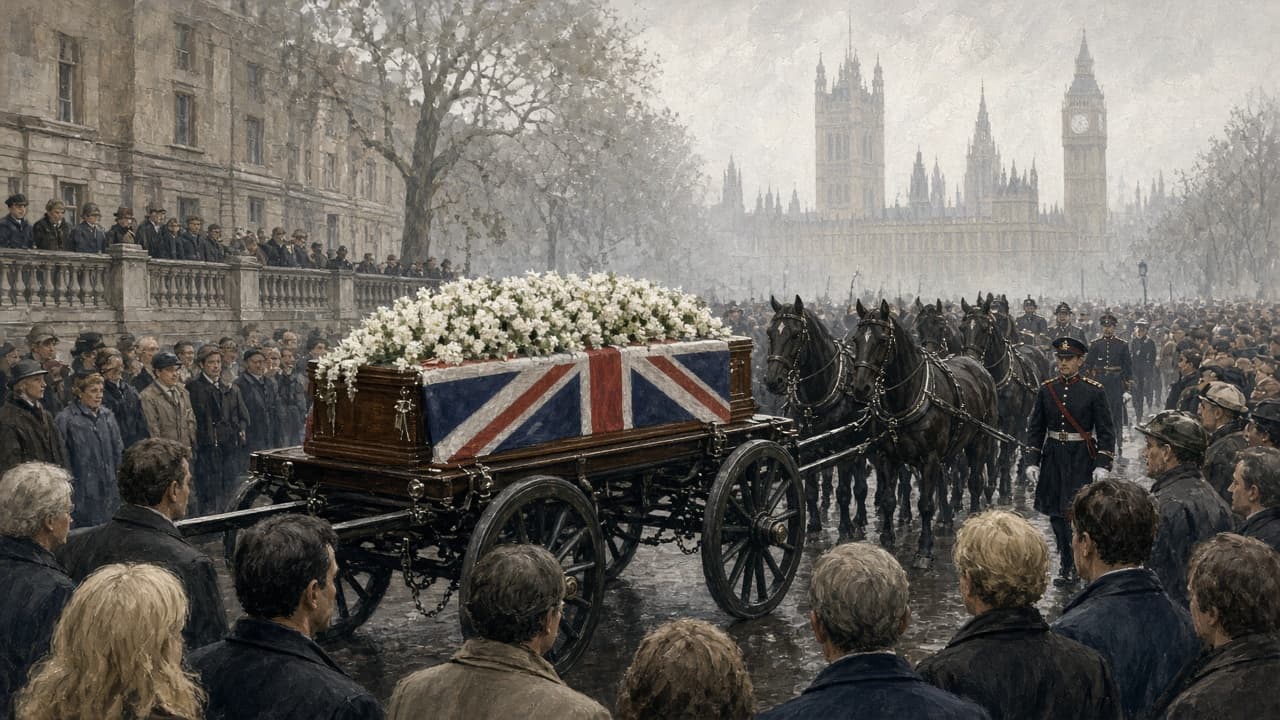
The cortege left Kensington Palace and moved through central London toward the Abbey. The coffin was draped in the Royal Standard and carried flowers from her sons. Behind it walked Prince Charles, Prince William, Prince Harry, Earl Spencer and Prince Philip. The route was lined with people who had waited for hours, many of them silent. Cameras followed the procession but the dominant sound reported from the pavement was applause when the coffin passed, a gesture that mixed mourning with gratitude rather than celebration.
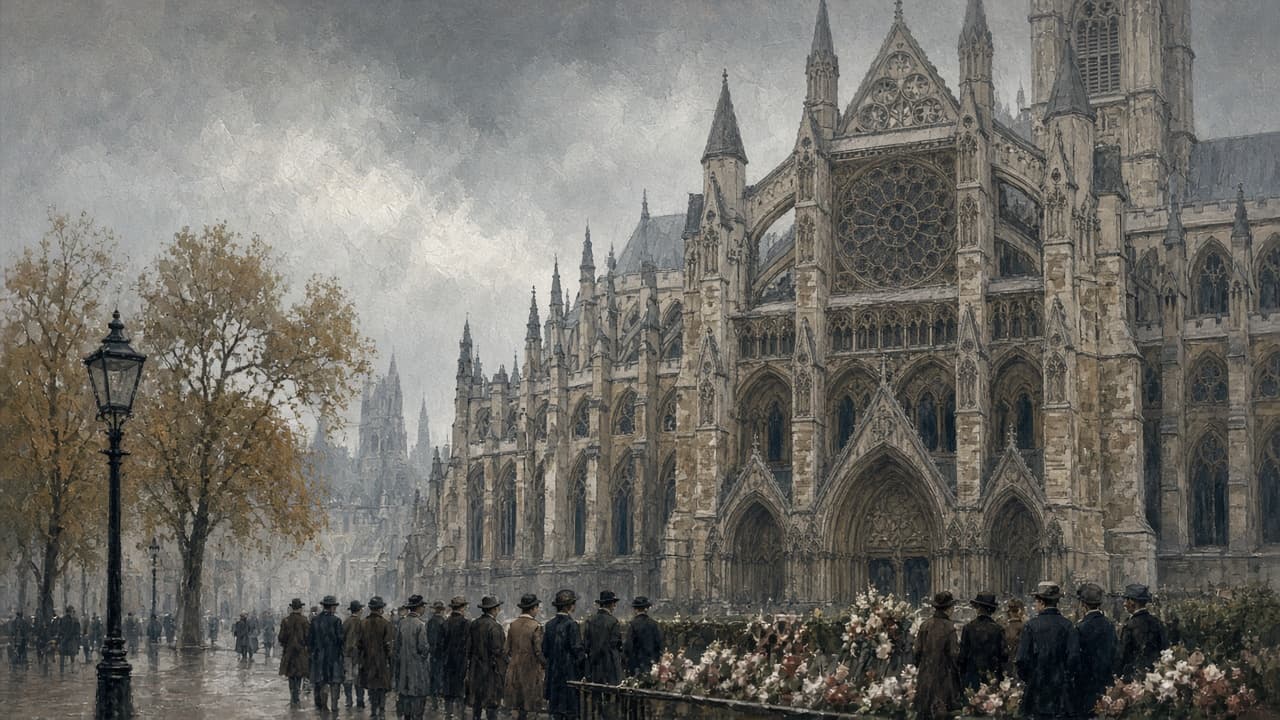
Westminster Abbey is the church where English and later British monarchs have been crowned for centuries and where many royal weddings and funerals have taken place. For this service the seating mixed the British royal family with representatives of other royal houses, political leaders, charity colleagues and friends from Diana's private life. The guest list itself was a statement about who she had become after the divorce: not only a former royal wife but a public figure with her own networks.
The liturgy followed Anglican funeral form, with hymns, readings and prayers that kept the service within the Church of England's familiar frame. What made the hour distinctive were two moments that cut through ceremony. Elton John performed a rewritten version of Candle in the Wind, addressed to England's rose, a popular song remade for a funeral that millions already knew by melody. Earl Spencer then delivered a eulogy that praised his sister's instinct for ordinary people and criticized the press that had pursued her. The Abbey audience heard both the polish of a rehearsed broadcast and the friction of a family speaking in public.
Outside the Abbey and along the Mall, people watched on giant screens or simply stood in the streets. Many carried flowers. Some wept openly. Others described a strange quiet for a capital city on a Saturday. The scale of the audience mattered less as a ratings boast than as evidence of how widely Diana's image had traveled. Viewers in countries with no constitutional link to Britain still felt they had followed her story for years through magazines and television.
After the Abbey service the coffin was driven north to Althorp, the Spencer family estate in Northamptonshire. She was buried on an island in a lake on the grounds, a private resting place rather than a royal vault in London. The choice kept the final burial within her birth family and away from the tourist circuits that would have formed around a more public tomb. Visitors later came to a memorial on the estate, but the grave itself remained closed to casual sightseeing.
The funeral also became a case study in media ethics. Editors and politicians argued about how far pursuit photography could go and about the line between public interest and private harassment. Later inquiries into the Paris crash focused on speed, alcohol and the chase rather than on conspiracy theories that spread online and in print. The funeral day itself, however, was less about the crash mechanics than about how a country performs grief when cameras are everywhere and when the dead person was both intimate and distant to strangers.
For the two sons the day was personal before it was historic. William was 15 and Harry was 12. They walked behind their mother's coffin in view of the world, then faced years in which anniversaries, documentaries and press speculation would return to the same week. Their later public comments about press intrusion and protection grew out of that experience. The funeral fixed an image of childhood grief inside a ceremonial machine that could not pause for privacy.
Historians of modern Britain often treat early September 1997 as a hinge in the relationship between the monarchy and public feeling. Queen Elizabeth II had returned to London earlier in the week, spoken on television and met mourners. The funeral completed a sequence in which institutions that usually preferred reserve had to answer a demand for visible shared mourning. Whether that shift was lasting or temporary is still debated. What is not debated is the size of the audience that watched the Abbey service and the seriousness with which many people took it. For a lifestyle history of celebrity and ceremony, the day shows how television turned a private family's grief into a shared civic event without making the grief less real for those walking behind the coffin.
Eagle Frame's takeaway: 6 September 1997 is remembered for a funeral that mixed Anglican liturgy, a rewritten popular song and a brother's eulogy before an audience measured in billions. Keep the day respectful and concrete: a procession through London, a service at Westminster Abbey and a private burial at Althorp, closing a week in which public grief pressed hard on private institutions.