On this day: John Dillinger is killed outside a Chicago cinema
On 22 July 1934, federal agents shot John Dillinger as he left the Biograph Theater in Chicago. His thirteen-month run of bank robberies and jail breaks had made him the most famous criminal in America and helped build the modern FBI.
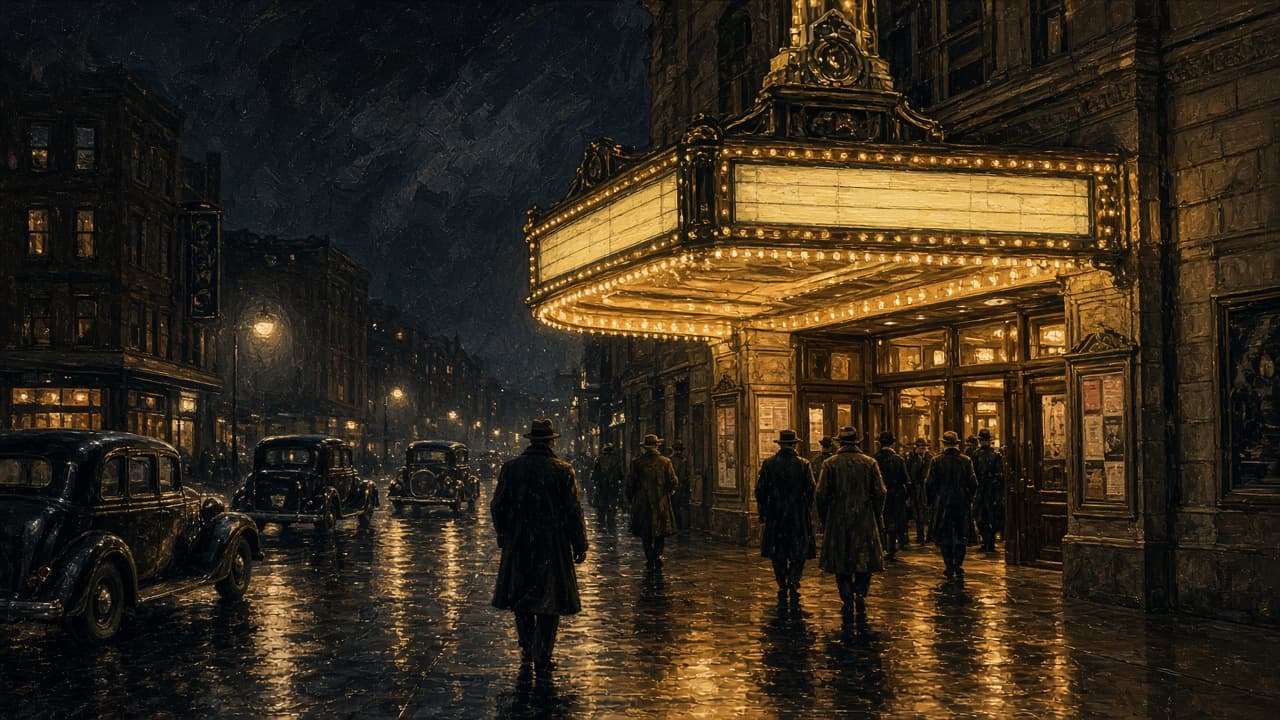
On the evening of 22 July 1934, John Dillinger walked out of the Biograph Theater on North Lincoln Avenue in Chicago after watching the gangster film Manhattan Melodrama. Agents of the Bureau of Investigation were waiting in the crowd. He ran toward an alley, and three shots hit him. He died at 31. The killing ended a criminal career that had lasted barely over a year and that had dominated American front pages for most of it.
Dillinger was not a career criminal for most of his life. He grew up in Indianapolis and then on a farm in Mooresville, Indiana, joined the Navy briefly and deserted. In 1924, aged 21, he and an older accomplice attempted to rob a grocer in Mooresville. He confessed on his father's advice, expecting leniency, and received a sentence of 10 to 20 years. He served nine, and by his own account prison is where he learned the trade. He came out in May 1933 into the worst year of the Great Depression.
The robbery spree that followed lasted from mid-1933 to July 1934. The gang hit banks across Indiana, Ohio, Wisconsin and Iowa, taking sums that were substantial but not extraordinary, and operating with a military approach: casing the building beforehand, timing the job to the minute, using stolen fast cars and crossing state lines immediately. Dillinger was responsible for a police officer's death in East Chicago in January 1934, and members of his gang killed others.
What made him famous was not the money but the escapes. In October 1933 his associates broke him out of the jail in Lima, Ohio, killing the sheriff. In March 1934 he escaped from the supposedly escape-proof county jail in Crown Point, Indiana, using what most accounts describe as a wooden gun he had carved and blackened with shoe polish. He then drove a stolen sheriff's car across the state line into Illinois, which turned a state matter into a federal crime and put the Bureau formally on his trail.
He also had an image, and he cultivated it. He was photographed grinning with his arm around the Crown Point prosecutor. He was reported to have vaulted over bank counters and to have told customers to keep their own money. In a country where banks had foreclosed on farms and closed with people's savings inside, a man robbing banks attracted a sympathy that appalled law enforcement. Newspapers ran his movements as serial entertainment.
The Bureau's pursuit went badly before it went well. In April 1934, agents led by Melvin Purvis surrounded the Little Bohemia Lodge in northern Wisconsin, where the gang was staying. Agents opened fire on a car leaving the property and killed an innocent civilian, a Civilian Conservation Corps worker, and wounded two others. The gang escaped through a back window. An agent was killed elsewhere on the property. The debacle was a serious embarrassment for J. Edgar Hoover's Bureau and increased the pressure to get a result.
The result came through an informant. Anna Sage, a brothel keeper born in Romania who was facing deportation, contacted the Bureau through an East Chicago police officer. She was with Dillinger and his girlfriend Polly Hamilton at the Biograph and had agreed to signal which man he was. She has been remembered as the woman in red, though her skirt was in fact orange and looked red under the marquee lights. She was deported anyway in 1936.
The killing itself has attracted decades of scrutiny. Dillinger had undergone crude plastic surgery and acid treatment on his fingertips in an attempt to change his appearance, which fed later conspiracy theories that the man shot outside the Biograph was somebody else. The Bureau's identification rested on fingerprints and physical marks. Bystanders dipped handkerchiefs and newspapers in the blood on the pavement, which tells you as much about 1934 celebrity as anything else.
The institutional consequences were the lasting part. The 1930s crime wave, including Bonnie and Clyde, Pretty Boy Floyd and Baby Face Nelson, prompted Congress to pass a package of federal crime laws in 1934 making bank robbery, interstate flight and the killing of a federal officer federal offences, and authorizing Bureau agents to carry firearms and make arrests. The Bureau was renamed the Federal Bureau of Investigation in 1935. Hoover used the Dillinger case relentlessly in publicity, and the Public Enemy list evolved into the Ten Most Wanted.
Melvin Purvis, the agent who ran the operation, became a public figure and was pushed out of the Bureau within a year, reportedly because Hoover disliked sharing credit. He died in 1960 of a gunshot wound generally recorded as suicide. The pattern of a director who controlled the story and outlasted everyone in it would define the FBI for another four decades.
The romanticizing has never fully stopped. Dillinger has been played on screen by Warren Oates, Lawrence Tierney and Johnny Depp, usually as a charming outlaw. The record is less flattering: people died in his robberies and escapes, including police officers, and the wooden gun trick that made him folklore was followed by a stolen car and two more killings within months. The Biograph still operates as a theatre in Chicago.
Eagle Frame's takeaway: 22 July 1934 is the day the Bureau of Investigation shot its most famous target and, in doing so, largely made itself. Dillinger's thirteen months mattered less for the money taken than for what they triggered: federal crime statutes, armed federal agents and a publicity machine under J. Edgar Hoover that turned a manhunt into an institution.