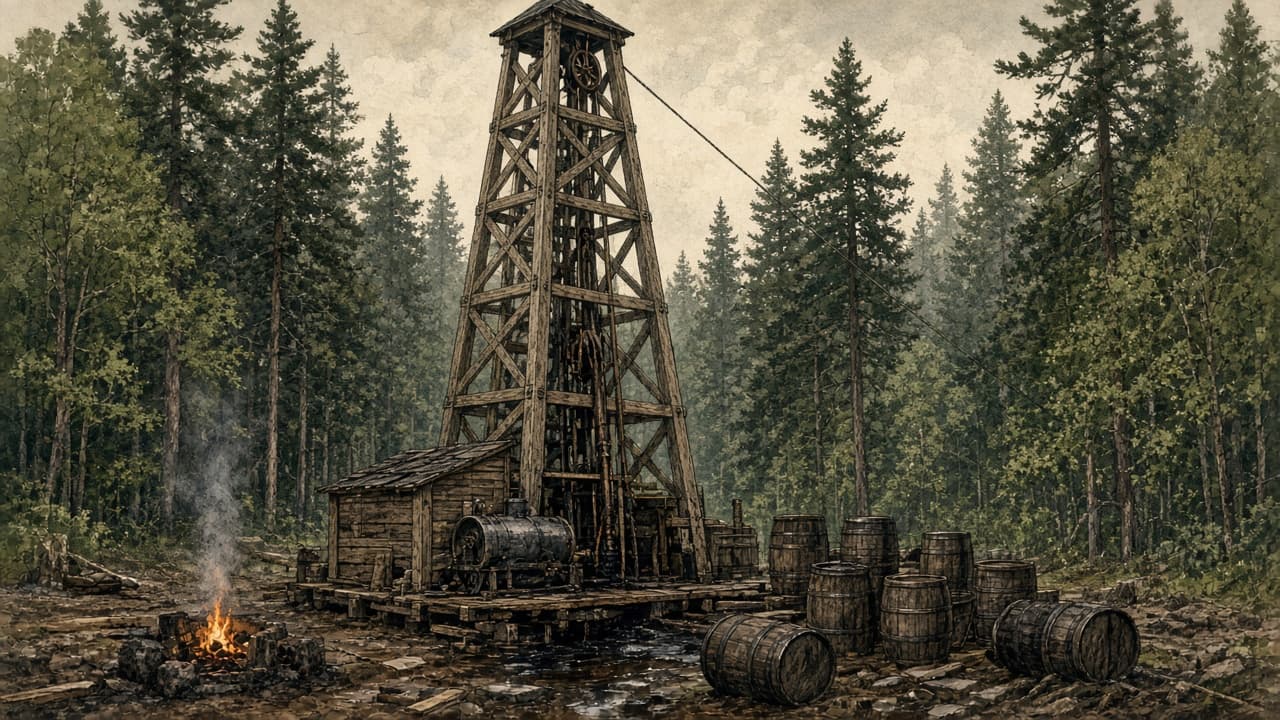
On this day: Drake strikes oil in Pennsylvania
On 27 August 1859, Edwin Drake's well near Titusville, Pennsylvania, struck oil at depth. The drilled borehole helped launch the modern petroleum industry.
On 27 August 1859, a well drilled under the direction of Edwin L. Drake near Titusville, Pennsylvania, reached oil at about 69 feet. The Seneca Oil Company had hired Drake to find a steady supply of rock oil for refining into kerosene lamp fuel. Surface seeps and hand-dug pits already showed petroleum in Oil Creek country. Drake's team proved you could drill for it like salt water and pipe it into barrels. That practical success kicked open the modern oil industry.
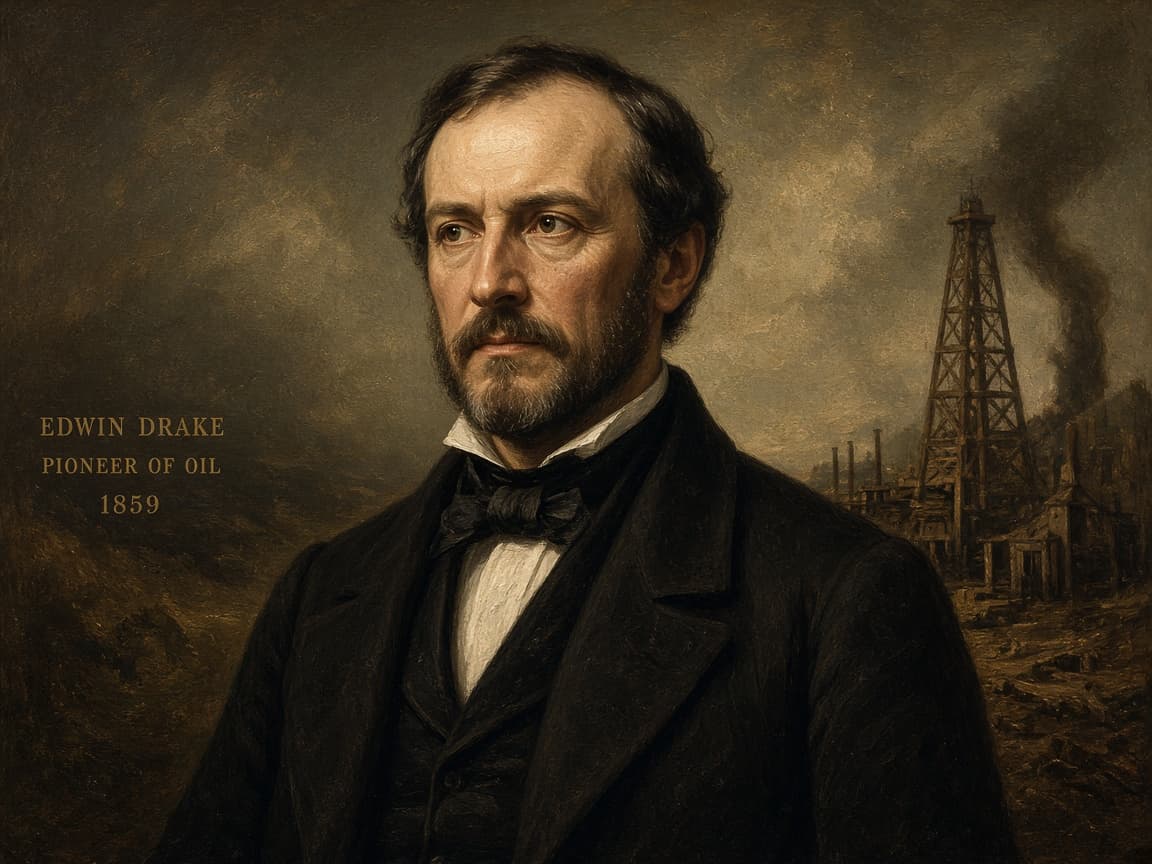
Who was Drake? He was not a trained geologist. A former railroad conductor with the honorary "Colonel" that newspapers liked, he brought persistence, a drill crew and an idea borrowed from salt-well practice: drive an iron pipe down through loose ground so the borehole would not collapse, then drill inside that casing. Local disbelief was strong enough that the project was mocked as "Drake's Folly" until oil rose in the hole. Method mattered more than myth.
Edwin Drake, hired by Pennsylvania investors, supervised drilling at Titusville that struck oil in August 1859 using a drive pipe to keep the borehole from collapsing. He was not a trained geologist. He was a former railroad conductor willing to keep pounding when neighbors mocked the project. The well proved that rock oil could be produced in commercial volume instead of skimmed from seeps. Drake's name stuck to the boom even though he later struggled financially as others raced ahead.
Barrels on railcars turned a local strike into an industrial supply chain. Refineries distilled kerosene for lamps. Teamsters and trains moved casks toward cities hungry for brighter light than whale oil. Boomtown speculation, price crashes and environmental mess arrived almost as fast as the first gushers. The portrait names the persistent operator. The barrel train shows the commodity logic that followed: once oil could be drilled, it had to be moved, stored and sold at scale. Chemists learned to fractionate the crude into lamp fuel, lubricants and waste that fouled creeks.
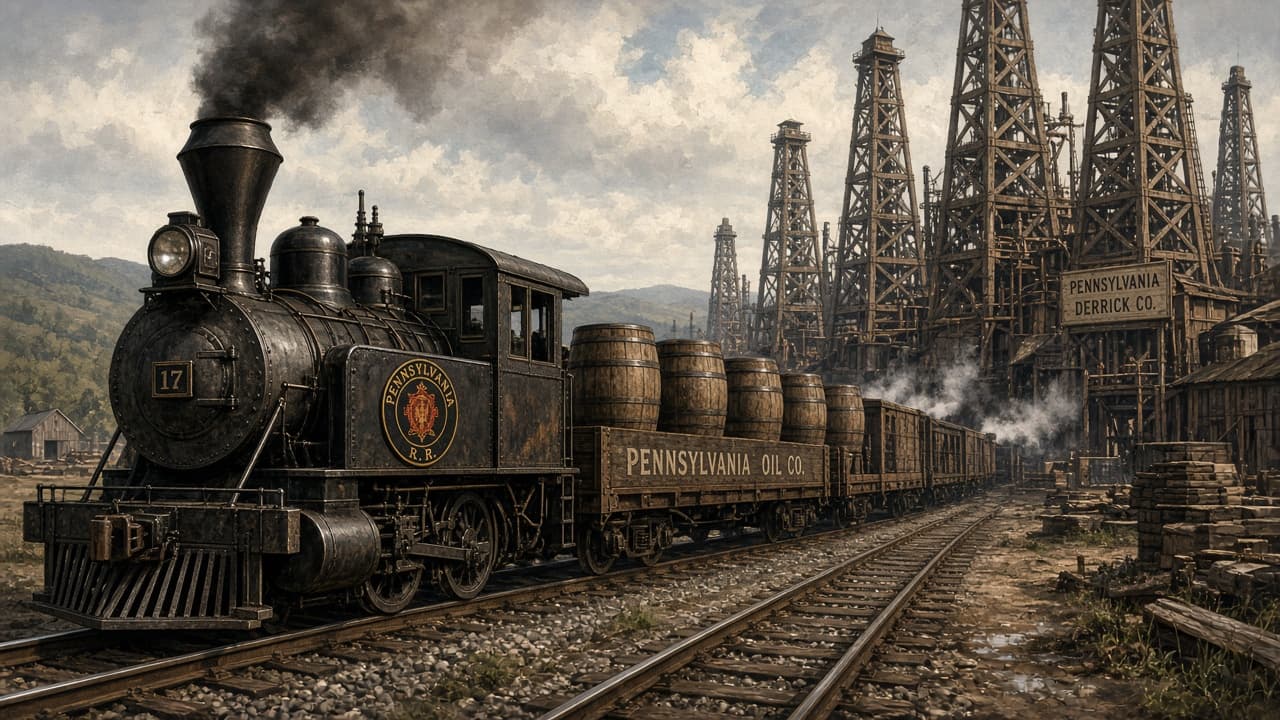
Why oil and why then? Whale oil and other lamp fuels faced price and supply pressure. Distillers had learned to make illuminating oil from petroleum seeps. A drilled well promised volume. Within months, prospectors crowded Oil Creek. Derricks, boomtown hotels and spilled crude remade the valley. Prices swung wildly as new wells flooded the market. The pattern of boom, bust and pipeline politics began in northwestern Pennsylvania before it moved to Ohio, Texas, Baku and the Middle East.
How a cable-tool well worked, in plain steps. A derrick suspended a heavy bit on a cable. Engines or people lifted and dropped the bit to pound rock. Bailers removed cuttings. Casing kept soft soil from choking the hole. When the bit entered an oil-bearing sand, petroleum and gas could enter the borehole. Early teams stored oil in wooden barrels (the barrel unit still used in energy markets has roots in that trade). Refineries nearby cooked crude into kerosene, lubricants and byproducts.
Environmental and social costs arrived immediately. Creeks ran iridescent. Fires started. Workers faced dangerous rigs and unstable wages. Land titles and leases spawned lawsuits. Drake himself did not die rich from the industry he unlocked; later wells and refiners captured more fortune than the first successful hole. Innovation and inequality often shared the same lease map. Global energy history pivots on this scale-up. Petroleum later fed internal combustion engines, plastics and geopolitics Drake could not have pictured while watching a wooden derrick. Museums at the Drake Well site still teach the cable tool and the casing trick. The anniversary is less about one lucky day than about a method that made fossil energy industrial.
Readers who only meet oil as a gasoline price on a phone screen can still use 27 August as a grounding date. Before pipelines and tankers, there was a pounded hole beside a Pennsylvania creek and a market hungry for brighter lamps. The climate dilemmas of later centuries grow from that same thirst for dense, portable fuel.
Teamwork under the derrick included drillers such as William Smith ("Uncle Billy") whose cable-tool skill made Drake's plan real. Popular history likes a single surname on the anniversary. Labor history remembers the crew that kept the bit pounding through bedrock and the blacksmiths who kept tools alive. Oil country folklore still argues over credit; the hole in the ground is the shared fact.
From Titusville the industry climbed a learning curve: wooden tanks, teamster wagons, early pipelines that leaked and competing refiners in Cleveland and beyond. John D. Rockefeller's later consolidation grew from this Appalachian cradle. When drivers fill a tank today they are downstream of a Pennsylvania experiment that treated the subsurface as a fuel mine.
Refining chemistry sat one wagon ride away from the wellhead. Simple stills cooked crude into lamp oil and left heavier residues that inventiveness later turned into more products. Without that industrial afterstep, a gusher is only a dirty fountain. Drake's date matters because production and refining learned to talk to each other in the same Pennsylvania valleys.
Eagle Frame's takeaway: 27 August 1859 is when Drake's Titusville well showed that drilled petroleum could supply a fuel industry. Know the casing method, know kerosene demand and know how fast boomtowns followed and the oil age has a clear starting bell.