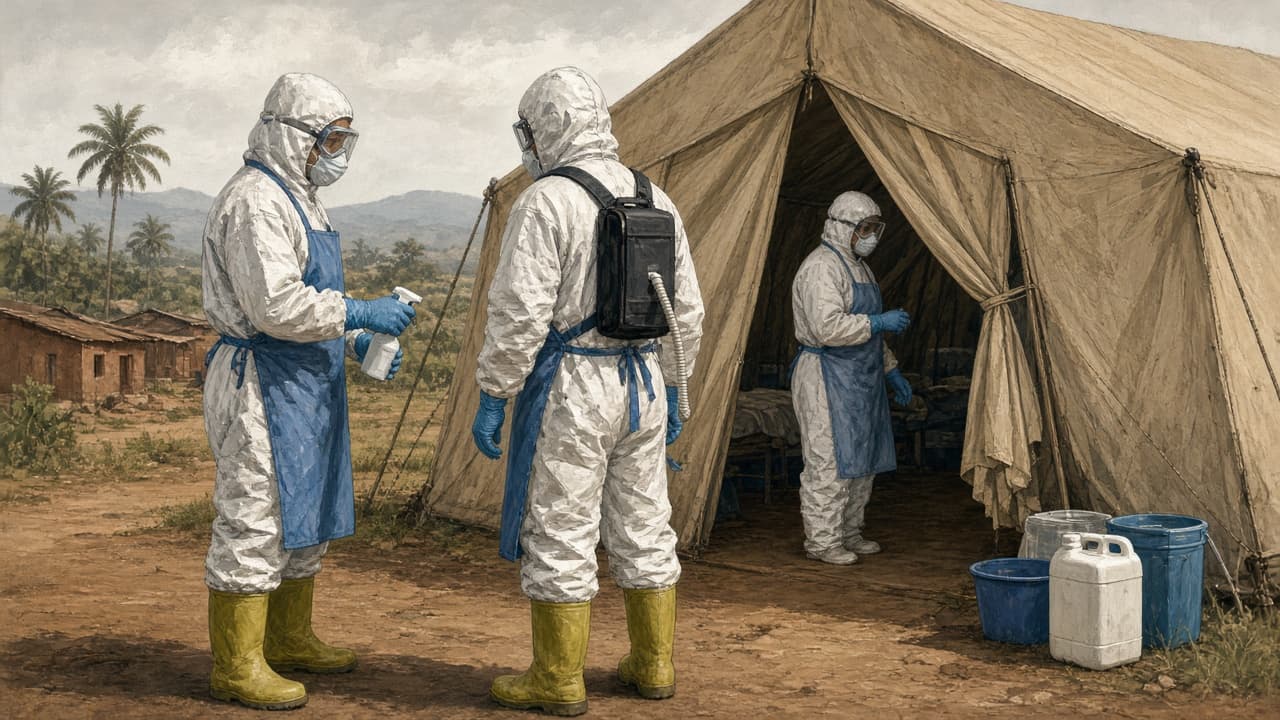
On this day: the West Africa Ebola outbreak becomes the largest on record
By late July 2014, health agencies confronted an Ebola epidemic in Guinea, Liberia and Sierra Leone that had already passed every previous outbreak in size. WHO counted 1,323 cases and 729 deaths as of 27 July, and the curve was still rising.
In the last days of July 2014, the Ebola outbreak in West Africa stopped looking like a regional emergency and started looking like an epidemic that could run out of control. The World Health Organization's update for 27 July counted 1,323 cases and 729 deaths across Guinea, Liberia, Sierra Leone and newly affected Nigeria. That was already the largest recorded Ebola outbreak by cases, deaths and geographic spread. It was also still accelerating: 122 new cases were logged in the four days to 27 July alone.
Several events in that same week pushed governments to act. A Liberian-American official, Patrick Sawyer, had flown while infectious to Lagos and died there on 25 July, showing that the virus could move by air into a city of more than 20 million. Liberia announced border closures and screening on 27 July. On 29 July, Sierra Leone's leading Ebola doctor, Sheik Umar Khan, died of the disease he had been treating. Two American aid workers in Liberia, Kent Brantly and Nancy Writebol, were also infected and would soon be evacuated.
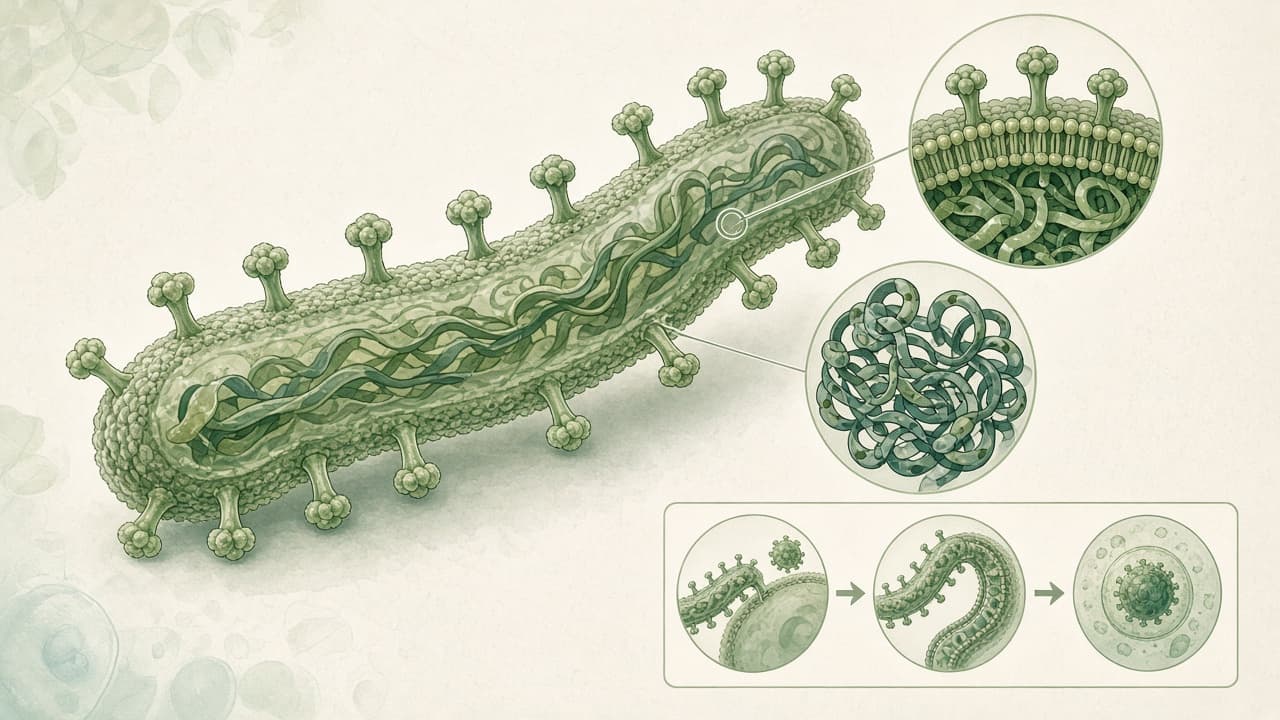
Start with the biology, because the transmission rules explain almost everything about the response. Ebola is a filovirus, named for its long thread shape under an electron microscope. It carries its genetic instructions as RNA. Spikes of a surface protein called glycoprotein bind to receptors on human cells, the virus is drawn inside and the cell is turned into a factory that makes more virus. The strain driving this epidemic was Zaire ebolavirus, historically the most lethal of the group.
Crucially, Ebola does not spread through the air like measles or flu. It spreads through direct contact with the blood, vomit, stool, sweat, saliva, breast milk or semen of a person who is already sick, or with surfaces and bedding contaminated by those fluids. A person is not infectious during the incubation period, which runs about 2 to 21 days. Infectiousness rises as symptoms worsen, and a body is at its most infectious just after death. That single fact sets up much of the tragedy of 2014.
The disease begins with fever, headache, muscle pain, sore throat and deep fatigue, which look like malaria or typhoid in the same region. Vomiting and diarrhoea follow and are the main killers, because they drain fluid and electrolytes fast. Bleeding occurs in a minority of patients, despite the old name haemorrhagic fever. Case fatality in this epidemic averaged around 40 to 50 percent overall and was far higher where patients arrived late and could not get aggressive fluid replacement.
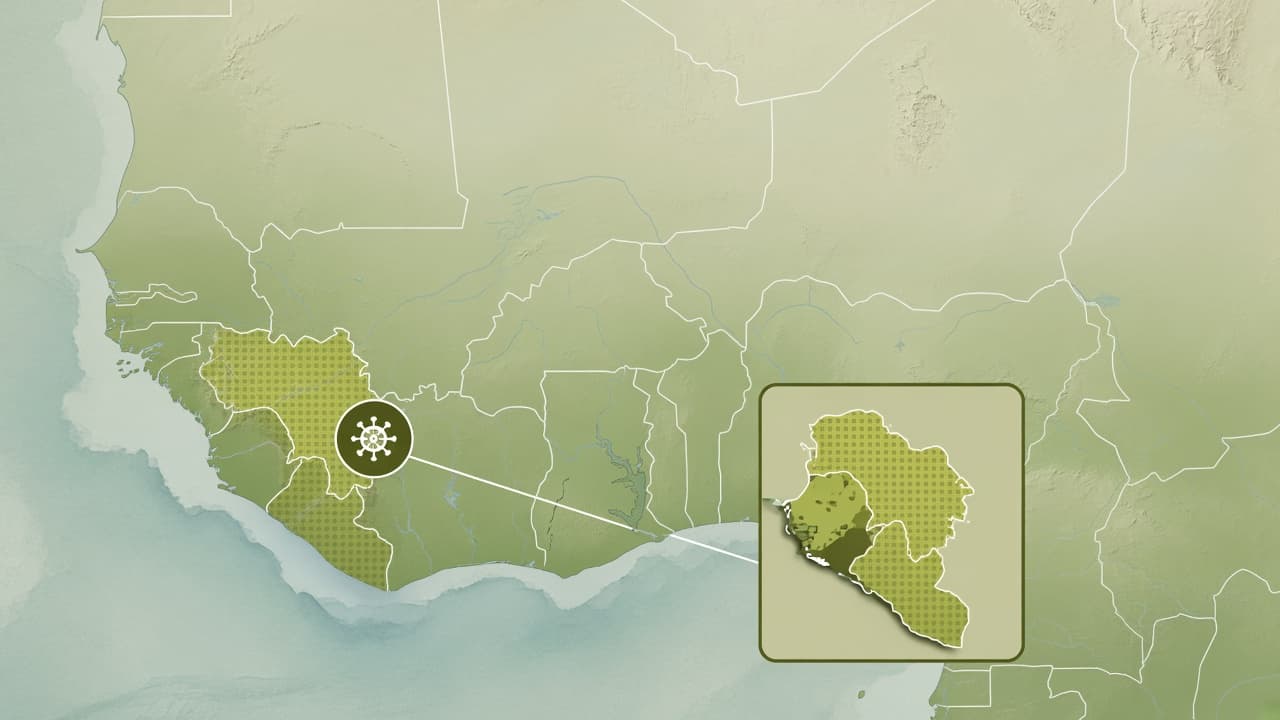
The outbreak had begun quietly in December 2013 in Meliandou, a village in southeastern Guinea, with a toddler named Emile Ouamouno. Fruit bats are the likely natural reservoir. Guinea did not notify WHO until 23 March 2014. By then the chain had already crossed into Liberia and Sierra Leone. Earlier Ebola outbreaks had burned out in isolated central African villages within weeks. This one began at a point where three countries meet, in a region where people cross borders daily to farm, trade and see relatives.
Three other conditions turned the spark into a fire. The health systems of all three countries had been hollowed out by civil war and poverty; Liberia had roughly 50 doctors for a population over four million. Care of the sick and washing of the dead are family duties, which put relatives in contact with the most infectious fluids. And trust in government was thin, so early official messages were read as threats. Clinics without gloves, gowns or isolation space became amplifiers, infecting the nurses who staffed them.
The response caught up slowly. Medecins Sans Frontieres had warned in June that the outbreak was out of control and beyond its capacity. WHO declared a Public Health Emergency of International Concern on 8 August 2014, which many later reviews judged too late. Through the autumn, treatment units were built, burial teams were trained, contact tracing was scaled up and community leaders were recruited to change funeral practice. Those unglamorous measures, rather than any drug, bent the curve.
By the time the epidemic was declared over in 2016, WHO recorded 28,652 cases and 11,325 deaths. Beyond the direct toll, routine health care stopped: malaria, maternal care and childhood vaccination all suffered, and some studies estimate the indirect deaths rivalled the direct ones. More than 500 health workers died. Schools closed for months. Economies in all three countries shrank.
The epidemic did leave durable tools. Trials run under emergency conditions in Guinea produced the vaccine later licensed as Ervebo, approved in 2019 and now used in ring vaccination around new cases. Monoclonal antibody treatments followed. WHO was restructured with a new health emergencies programme after its own review found it had been too slow. When Ebola reappeared in the Democratic Republic of the Congo and in Guinea again in 2021, those tools cut outbreaks short.
Eagle Frame's takeaway: late July 2014 is when the numbers made it plain that West Africa faced the largest Ebola epidemic ever recorded. The virus spreads by fluids, not air, which means it is stoppable with gloves, isolation, contact tracing and safe burial. What let it run was the state of the clinics and the delay in believing the data. Speed of response, not exotic medicine, is the variable that decides the toll.