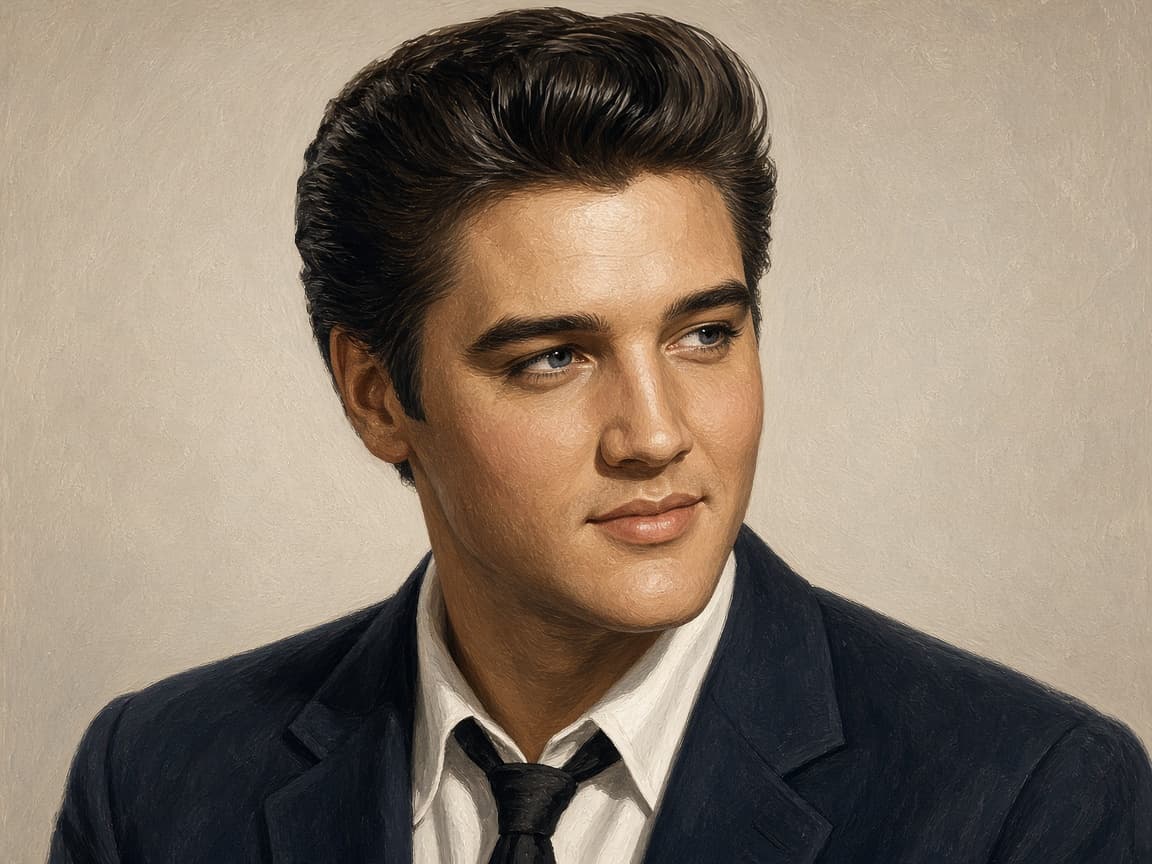
On this day: Elvis Presley dies at Graceland
On 16 August 1977, Elvis Presley died at Graceland in Memphis at age 42. Fans worldwide mourned the singer who helped define rock and roll.
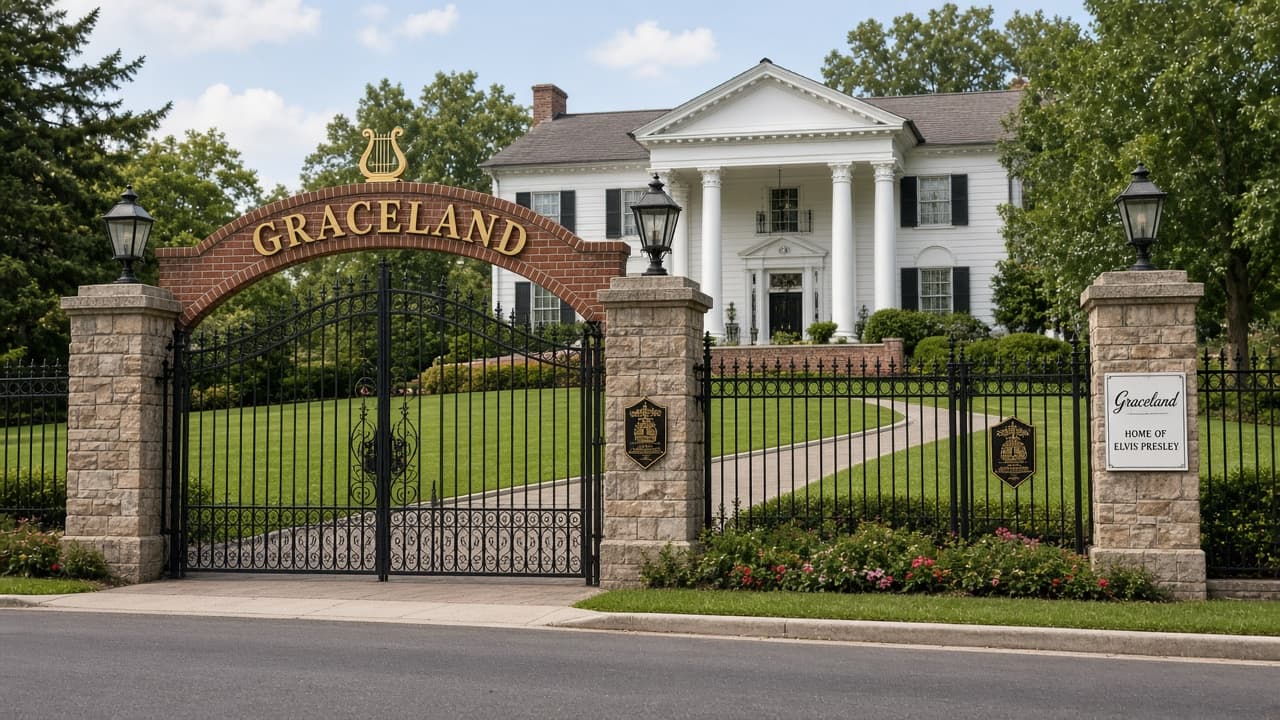
On 16 August 1977, Elvis Aaron Presley died at his Graceland home in Memphis, Tennessee. He was 42. Emergency crews responded after he was found unresponsive; he was pronounced dead at Baptist Memorial Hospital. News wires flashed the story across the planet within hours. Fans gathered outside the Music Gates on Elvis Presley Boulevard. Radio stations dropped playlists to spin "Heartbreak Hotel," "Hound Dog" and "Suspicious Minds" in unbroken loops. For a generation that had watched him shake television morals in the 1950s, the king of rock and roll was suddenly mortal.
Elvis Presley died at Graceland in Memphis on 16 August 1977, age 42. The mansion gates on Elvis Presley Boulevard became an instant pilgrimage site as fans left flowers, notes and tears. Graceland had been his home, studio-adjacent retreat and brand headquarters for two decades of fame. Mourning there turned private grounds into a public shrine almost overnight. Radio stations played his catalog without pause. Later tourism formalized what grief began: a house that still teaches how one singer's life and image fused with a Southern street address.
The 1950s stage Elvis (hip-shaking, television controversy, Sun-to-RCA ascent) is the figure many mourners still held in 1977, even after Hollywood films, the Army years and the jumpsuit Vegas era. His early mix of blues, country and gospel on a national teenage stage helped invent rock-and-roll stardom as mass culture. Death froze the contrast between that kinetic young performer and the exhausted late career. Holding the gates beside the stage image keeps both the myth factory and the musician who first lit it.
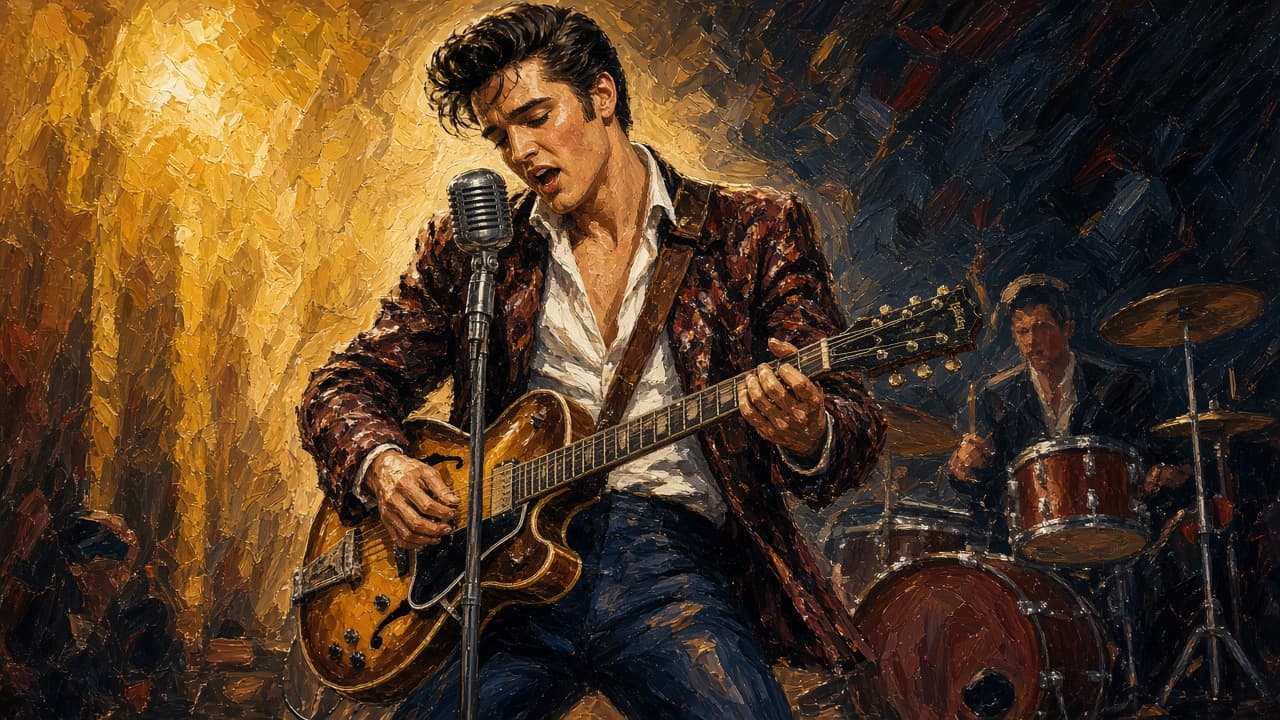
Who was Elvis before the myth hardened? Born in 1935 in Tupelo, Mississippi and raised largely in Memphis, he fused Black American blues and gospel sounds he heard in the South with country and pop phrasing. Sun Records' Sam Phillips recorded early sides that startled local audiences. Manager Colonel Tom Parker pushed him toward national television, Hollywood films and a merchandising machine. The hips, the sneer and the voice became a cultural argument about race, youth and sexuality in postwar America.
Military service in Germany (1958-1960) paused the first wave. The 1960s film schedule often preferred safe musicals over musical risk. A 1968 television comeback special reminded viewers he could still cut live. Las Vegas residencies and arena tours in the 1970s packed houses even as his health declined under prescription drug use, exhaustion and weight fluctuation. The jumpsuit era is easy to parody. The vocal power on a good night still explains the ticket lines.
Cause of death was reported as heart-related; toxicology and later discussion also focused on polypharmacy. The private pain behind the public smile became part of the cautionary tale. Fans who only wanted the music still had to hear that the man who seemed immortal onstage had been medically fragile off it.
Cultural accounting after 16 August was immediate. President Jimmy Carter issued a statement on Elvis's American myth. Record shops sold out. Impersonators multiplied. Graceland later opened as a pilgrimage site, one of the most visited private homes in the United States. Debates over cultural appropriation (a white star profiting from Black musical forms) sharpened in later decades even as many Black and white musicians continued to cite his recordings as doorways they walked through as kids.
What did he change, practically? He showed that youth culture could dominate mass media. He made television performance a national referendum. He proved a regional Southern sound could sell globally. None of that erases Sister Rosetta Tharpe, Chuck Berry, Little Richard, B.B. King and others whose innovations preceded and fed his fame. Honest listening keeps the lineage visible.
Memphis still wears the date. Candlelight vigils mark August anniversaries. Tour buses idle on Elvis Presley Boulevard. The city's musical identity (blues, soul, rock and roll) uses Graceland as a gateway even when serious fans spend more hours on Beale Street history. Death turned a house into a shrine; the shrine keeps sending people back toward the wider story.
For readers who know Elvis only as a Halloween costume, 16 August 1977 is a useful reset. Put on an early Sun side and a 1970 live cut. Notice the voice, not only the lore. The mourning made sense because the sound had already moved into people's ordinary lives: weddings, cars, kitchen radios.
Record labels reissued catalog titles within days. Television networks ran specials. Biographers began the long shelf of books that still argue about Colonel Parker, race, religion and prescription drugs. Graceland tours turned mourning into an industry without fully resolving the man behind the jumpsuit. The 1977 death date marks when a living voice became archival audio heard in every grocery store speaker decades later. Aerobic sales of his records after death showed how catalog value can exceed a living career's late years. Impersonator contests, tribute acts and licensing deals turned one Memphis death into an ongoing revenue stream. Cultural critics asked whether mourning or merchandising won the week. Listeners kept buying either way.
Eagle Frame's takeaway: 16 August 1977 is when Elvis Presley died at Graceland and a global audience felt pop history skip. Know the Tupelo-to-Memphis path, know the Black musical roots under the fame and know why the gates on Elvis Presley Boulevard still draw mourners and listeners.