On this day: Tenochtitlan falls to Spanish forces
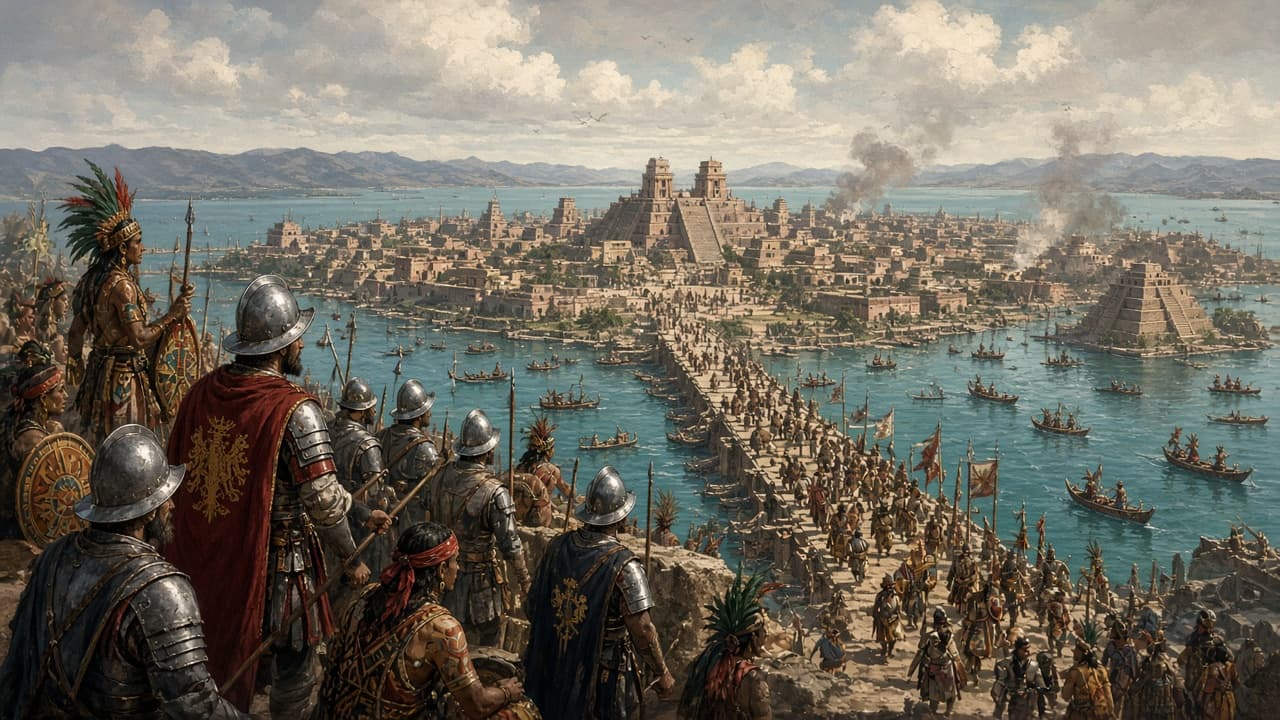
On 13 August 1521, after a long siege, Tenochtitlan fell to Hernan Cortes and his Indigenous allies. The Aztec capital's ruin cleared ground for Mexico City.
On 13 August 1521, the island capital of Tenochtitlan fell after months of siege. Spanish forces under Hernan Cortes, joined by tens of thousands of Indigenous allies who opposed Aztec rule, took the last resisting districts. Cuauhtemoc, the young tlatoani (speaker-ruler) who had led the defense after earlier leaders died, was captured. The city that had dominated the Valley of Mexico lay ruined by war, starvation and smallpox. On its wreckage the Spanish would raise Mexico City, the capital of New Spain.
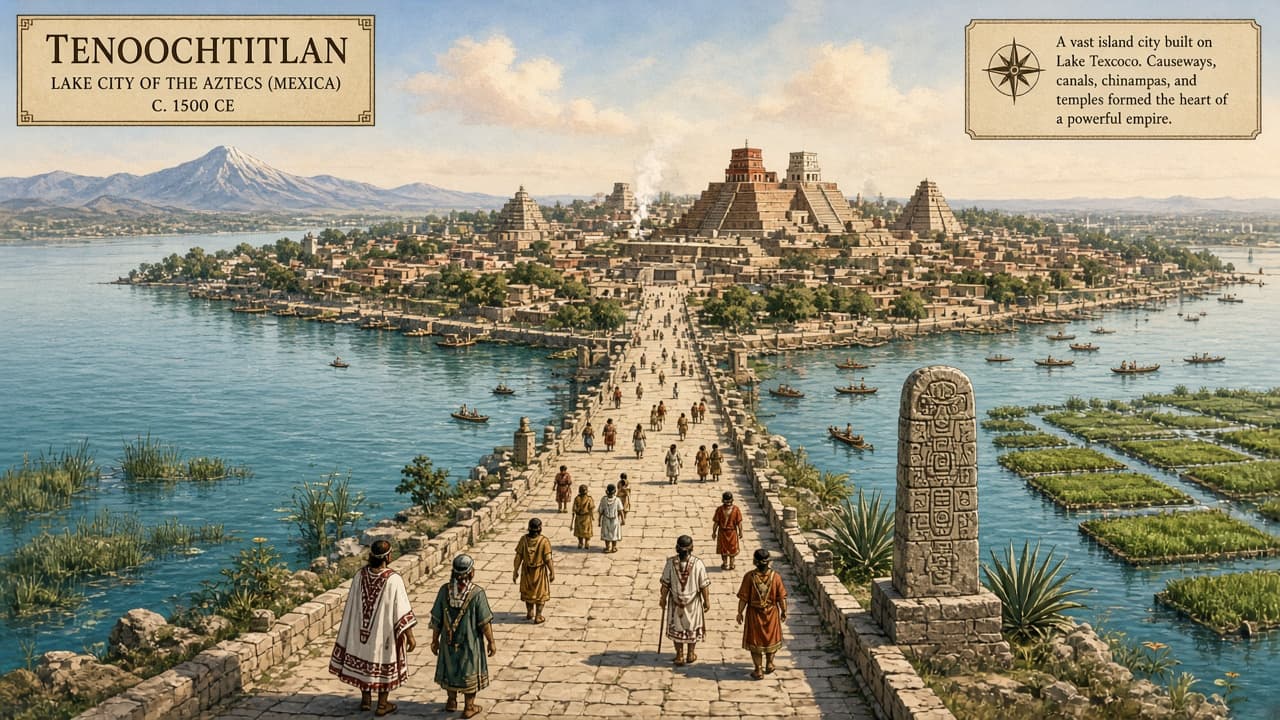
What was Tenochtitlan? Founded in the 1300s on an island in Lake Texcoco, it grew into a planned city of canals, causeways, chinampa farm plots and temple pyramids. Markets drew goods from across Mesoamerica. Tribute empires under the Triple Alliance (Tenochtitlan, Texcoco and Tlacopan) extracted food, luxury materials and captives from subject peoples. To enemies of that system, Cortes looked like a useful weapon. To the Spanish, those alliances looked like a path to gold and converts.
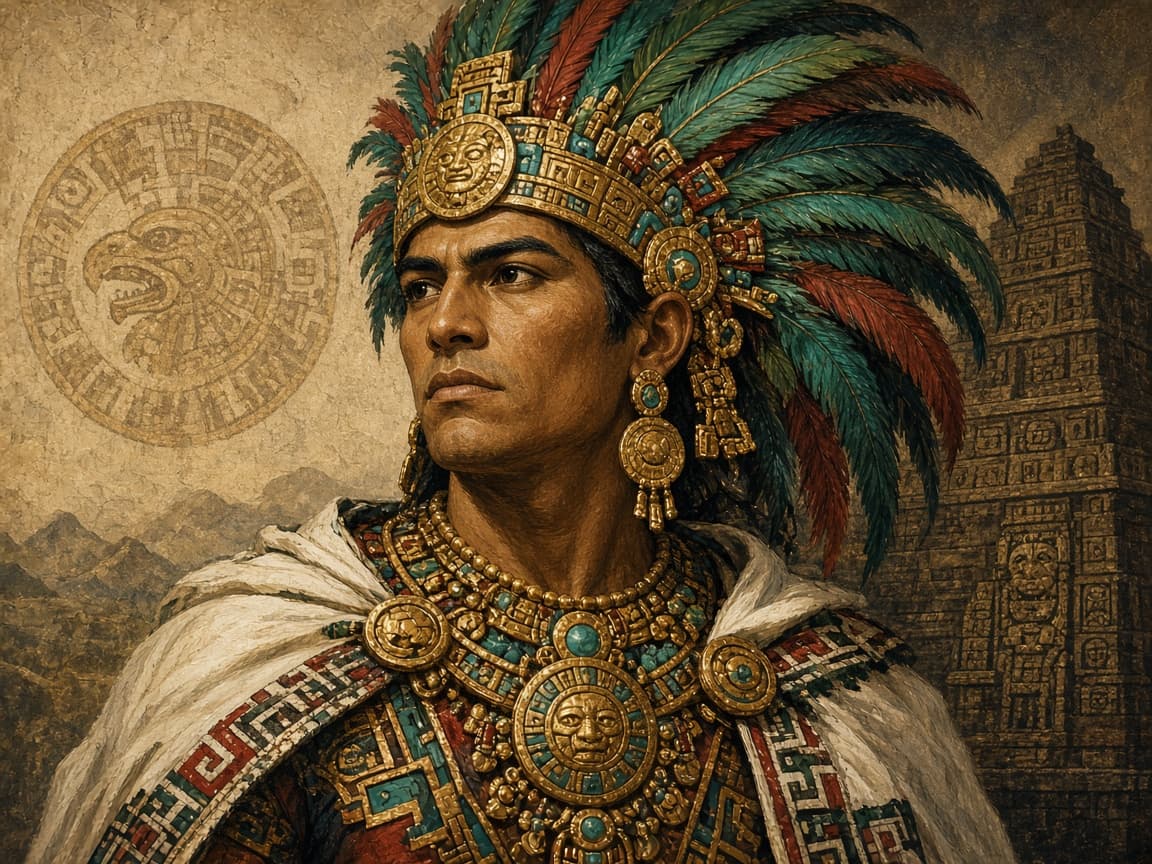
Cuauhtémoc became the last tlatoani of Tenochtitlan during the final Spanish-Mexica war, after earlier leaders died in the chaos of invasion and epidemic. He organized defense of a city already weakened by smallpox and by Cortés's alliances with rival Indigenous polities. Captured after the city fell on 13 August 1521, he remains a figure of resistance in Mexican historical memory. Naming him keeps the conquest from reading as only European biography. An empire's end still had Mexica commanders making impossible choices under siege.
Tenochtitlan sat on an island in Lake Texcoco, linked to the shore by causeways that could be cut or controlled. Temples rose above canals and chinampa gardens. Spanish brigantines and Indigenous allies fought along those water roads until hunger and disease broke the defense. Understanding the causeway geography explains why the siege was slow and lethal rather than a single field battle. The lake city that became Mexico City was first a hydraulic capital, then a ruined prize rebuilt under colonial rule.
The conquest was not a simple story of a few hundred Spaniards toppling an empire alone. Cortes arrived in 1519, marched inland, entered Tenochtitlan as guests and then as occupiers, fled during the Noche Triste in 1520 after fighting erupted and returned with a rebuilt coalition. Epidemic disease, especially smallpox, killed huge numbers of Mexica and their neighbors who had no prior immunity. Siege tactics cut causeways and choked supply. Brigantines built for lake combat controlled the water.
Cuauhtemoc's role matters for Mexican memory. He took power in 1520 as catastrophe closed in, refused easy surrender and became a symbol of resistance in later national storytelling. Spanish sources describe his capture on 13 August as the effective end of organized Mexica defense. He was later tortured for information about treasure and eventually executed during Cortes's Honduras expedition. The man and the myth both deserve care: he was a wartime leader in impossible conditions, not a modern nationalist.
Aftermath reshaped a continent's politics. Colonial institutions, Catholicism, forced labor systems and caste hierarchies grew from the conquest's violence. Nahuatl speakers and other Indigenous nations continued to live, adapt and resist under Spanish rule; they were not erased on a single August day. Yet the fall of the capital remains a hinge: imperial Mexica power ended and a new imperial center answered to Spain.
Archaeology under Mexico City still finds the Templo Mayor and offerings buried beneath colonial streets. Museums display stone gods that once crowned the sacred precinct. Standing in the Zocalo, a visitor is standing on layered capitals. 13 August 1521 is one of the dates that explains why those layers exist.
Honest teaching avoids two cartoons. One cartoon makes the Spanish uniquely demonic and the Mexica only victims, forgetting the empire's own tribute violence and the Indigenous allies who fought beside Cortes. The other cartoon celebrates conquest as inevitable progress and shrugs at massacre, enslavement and cultural destruction. The siege was a coalition war inside a pandemic. Morality does not collapse into a team jersey.
For readers outside Mexico, the date is a reminder that modern megacities can sit on Indigenous urban achievements older than many European capitals. Tenochtitlan's engineers managed water, food and density with skill. The siege destroyed that civic machine. Rebuilding under a different empire did not make the earlier city imaginary.
Spanish chronicles and Nahuatl accounts both describe starvation, thirst and disease inside the besieged city. Canals that once carried trade became barriers. Temple precincts that anchored Mexica ritual life burned. When scholars debate numbers of dead, they are counting a civic catastrophe, not only a battle tally. The fall ended one imperial center and began another under a different language of law, faith and tribute. Colonial administrators reused Mexica aqueducts, stones and labor systems even as they dismantled temples. Nahuatl remained a language of market and home under Spanish rule. The 1521 date marks military defeat. Cultural continuity across centuries is the longer story any honest museum label must include.
Eagle Frame's takeaway: 13 August 1521 is when Tenochtitlan fell after siege, disease and a Spanish-Indigenous alliance war. Know Cuauhtemoc's last defense, know the lake city's engineering and know that Mexico City rose from that ruin without erasing the people who remained.