On this day: the Geneva Accords divide Vietnam
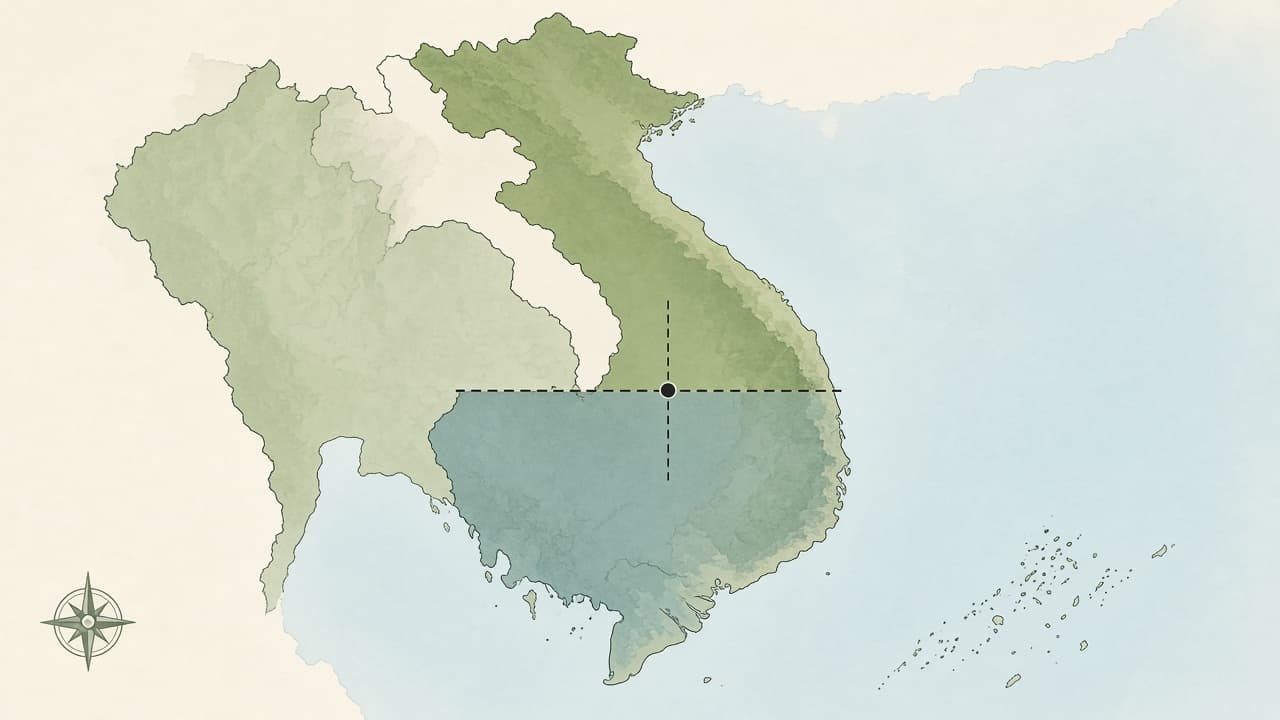
On 21 July 1954, the Geneva Conference closed with agreements that ended the First Indochina War and split Vietnam at the 17th parallel. The division was meant to be temporary, pending elections in 1956. Those elections never took place.
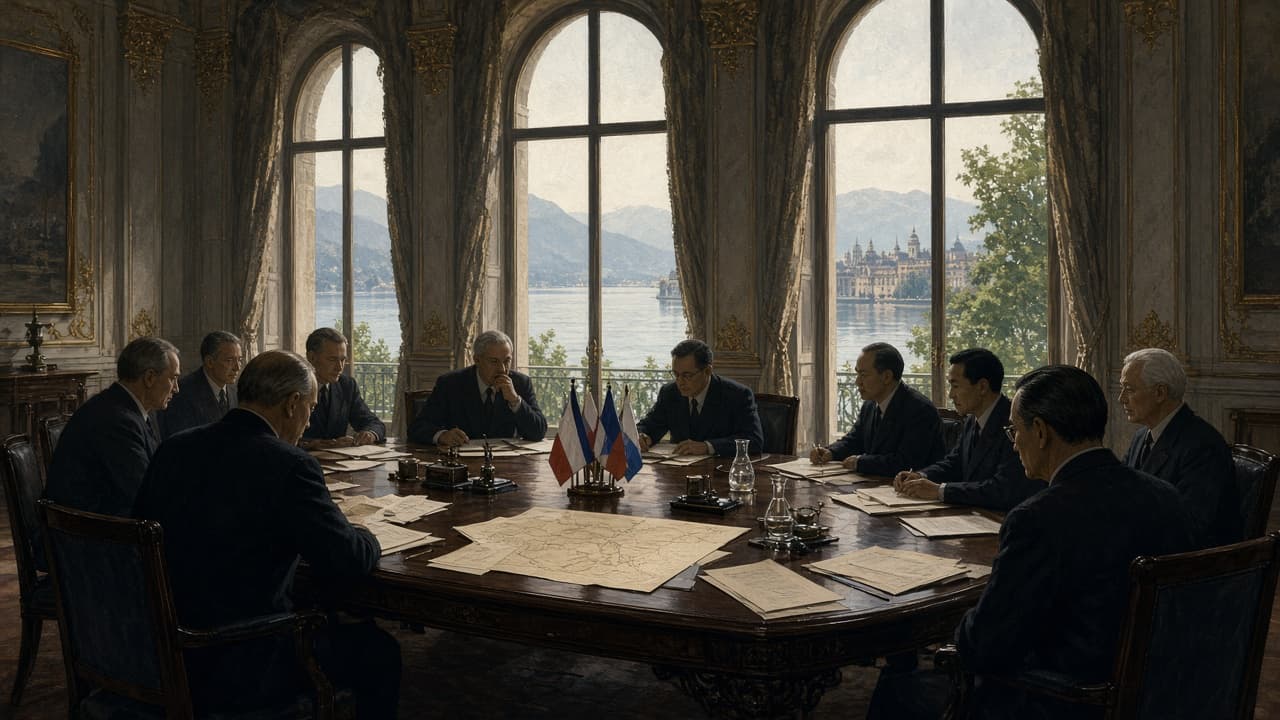
On 21 July 1954, the Geneva Conference on Indochina finished its work. A ceasefire agreement for Vietnam had been signed in the early hours, along with agreements for Laos and Cambodia, and the conference issued a Final Declaration setting out the political framework. France agreed to withdraw its forces. Vietnam was divided at the 17th parallel, with the Viet Minh regrouping north of the line and French Union forces south of it. Nationwide elections to reunify the country were envisaged for July 1956.
The war that ended there had run since 1946. Ho Chi Minh had declared Vietnamese independence in September 1945, quoting the American Declaration of Independence in the text. France, restoring its colonial position after the Japanese occupation, refused to accept it. Eight years of fighting followed between French forces and the Viet Minh, a communist-led nationalist front commanded militarily by Vo Nguyen Giap.
France lost the war at Dien Bien Phu. In late 1953 the French command placed a large garrison in a remote valley near the Laotian border, expecting to draw the Viet Minh into a conventional battle French artillery and airpower would win. Giap instead hauled artillery through mountains by hand and bicycle, dug it into the surrounding hills and shelled the airstrip until resupply was impossible. The garrison surrendered on 7 May 1954, the day before the Indochina phase of the Geneva Conference opened. The timing was not a coincidence.
The conference itself involved nine delegations and a great deal of pressure applied out of the room. Britain and the Soviet Union co-chaired. China, represented by Zhou Enlai, and the Soviet Union both pushed the Viet Minh to accept less than its battlefield position justified, because neither wanted a wider war with the United States so soon after Korea. The Viet Minh controlled far more than half the country in practice and settled for half on paper.
The legal detail that mattered most is in the wording. The agreement states that the demarcation line is provisional and "should not in any way be interpreted as constituting a political or territorial boundary." It was drawn as a military measure to separate two armies. The Final Declaration then set the political timetable: consultations from July 1955 and general elections throughout Vietnam by July 1956, supervised by an international commission of India, Canada and Poland.
The Final Declaration was never signed by anyone. It was noted verbally by the delegations at the closing session. The State of Vietnam, the French-backed administration in the south, formally objected to partition and refused to endorse it. The United States did not sign either, though it stated it would not use force to disturb the agreements. That unsigned status became the legal hook for everything that followed: if nobody signed the election clause, nobody was bound by it.
The agreement allowed 300 days for civilians to move between zones, and roughly 800,000 to a million people went south, a large proportion of them Catholics encouraged by warnings about life under a communist government and assisted by a French and American naval operation. Tens of thousands moved north. The movement reshaped the politics of both halves and gave the southern government a large constituency with a direct stake in resisting reunification.
Ngo Dinh Diem became prime minister and then, after a referendum in 1955 that he won with an implausible margin, president of the Republic of Vietnam. He refused to hold the 1956 elections, arguing that his government was not bound by accords it had not signed and that a free vote was impossible in the north. American officials, including President Eisenhower in his memoirs, assessed that Ho Chi Minh would have won a nationwide vote comfortably. The elections were cancelled and the provisional line began to harden.
What followed is the American war. Insurgency in the south grew through the late 1950s, the National Liberation Front was formed in 1960, American advisers arrived in growing numbers, Diem was overthrown and killed in 1963 and full American combat deployment began in 1965. The conflict killed somewhere between one and three million Vietnamese and more than 58,000 Americans before North Vietnamese forces took Saigon in April 1975 and the country was reunified the following year.
Laos and Cambodia got their own agreements at Geneva, and neither held. Laos slid into a civil war in which the Pathet Lao eventually prevailed in 1975. Cambodia was drawn into the Vietnamese conflict through cross-border sanctuaries and bombing, and the Khmer Rouge took power in 1975. The conference that was supposed to settle Indochina settled the French departure and very little else.
Geneva is often used as a case study in the limits of negotiated partition. The 17th parallel was explicitly labelled provisional and explicitly not a border, and it became a border within two years and a war zone within ten. The pattern is familiar: a line drawn to stop fighting acquires institutions, armies, populations and foreign patrons, and then nobody can remove it without another war.
Eagle Frame's takeaway: 21 July 1954 ended France's war in Indochina and created a temporary line that lasted twenty-one years. The clause worth remembering is the one saying the 17th parallel was not a political boundary, and the fact that the Final Declaration promising 1956 elections carried no signatures at all. That gap between what was agreed and what was binding is where the next war came from.