On this day: gold is discovered in the Klondike
On 16 August 1896, prospectors found rich placer gold near Bonanza Creek in the Yukon. The strike set off the Klondike Gold Rush that pulled tens of thousands toward Dawson City.
On 16 August 1896, prospectors working a creek that fed the Klondike River in what is now Yukon, Canada, found gold rich enough to change a continent's travel maps. The party usually named in the discovery story includes Skookum Jim Mason (Keish), his nephew Dawson Charlie (Káa Goox) and George Carmack. They were testing gravel on a stretch soon famous as Bonanza Creek. The metal in the pans was not a faint rumor of color. It was payable ground that could support claims, supply trains and a boomtown.
Start with the country. The Klondike sits deep in the Yukon River system, far from Pacific ports and locked by cold for much of the year. Hän communities already lived with that geography and its seasons. A thin scatter of traders and prospectors had poked northern streams for years without turning the district into a stampede. What 16 August supplied was a discovery rich enough, once word moved, to rewrite shipping schedules, newspaper headlines and family plans from San Francisco to Seattle to the Canadian interior.
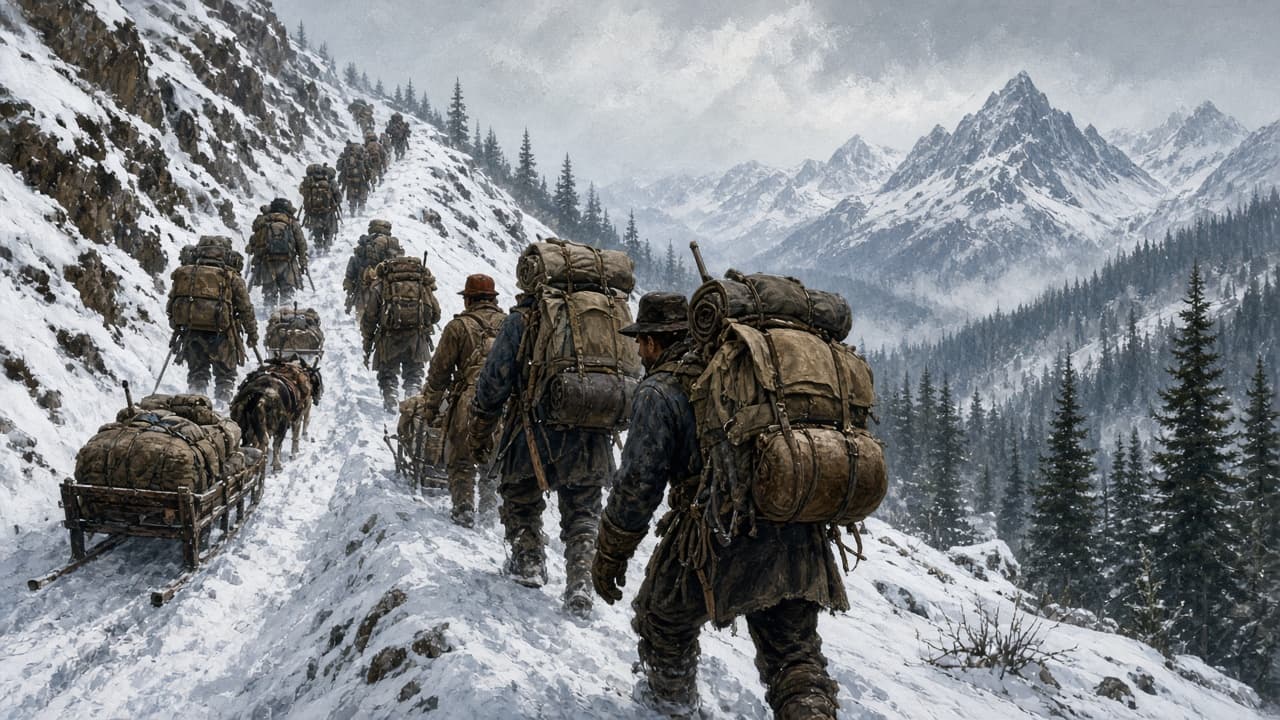
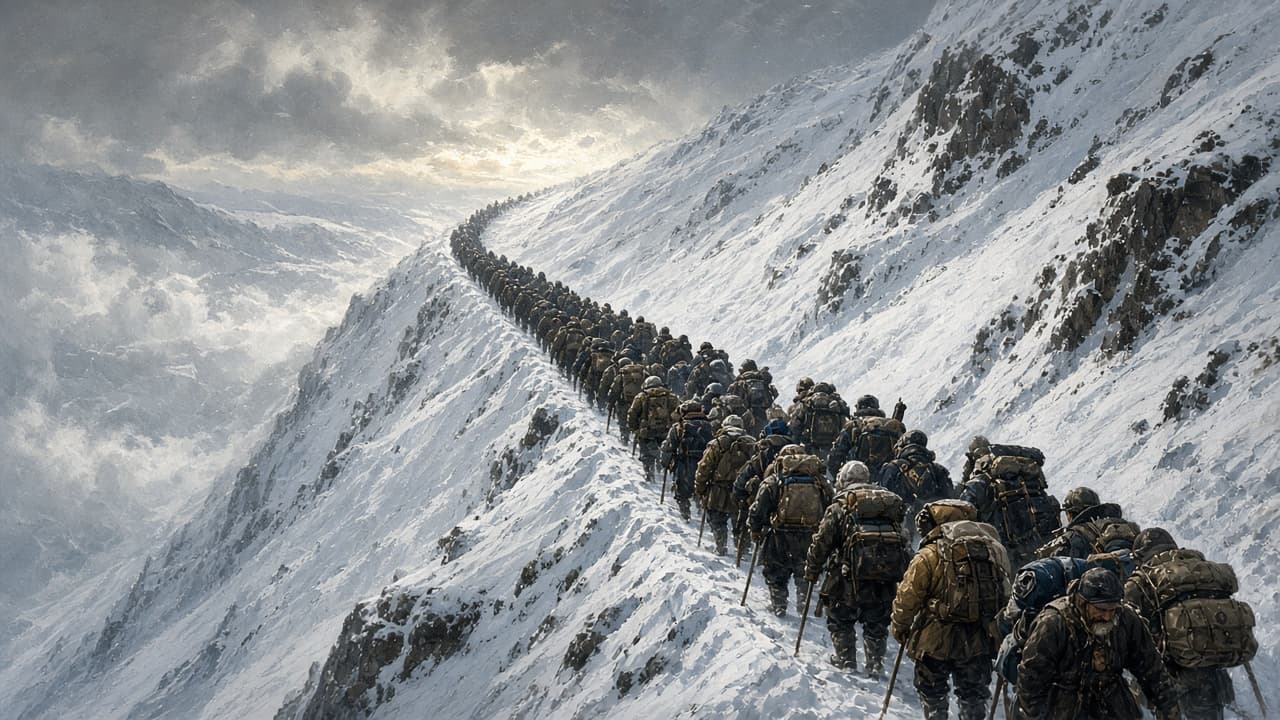
News of gold in the Klondike drainage drew tens of thousands north after 1896, but geography filtered who arrived rich. The Chilkoot Pass climb forced stampeders to haul a year's supplies over ice steps in repeated trips. Canadian rules and avalanche risk turned the trail into a sorting machine: strong backs and cash for outfits survived; underprepared dreamers turned back or died. Photographs of the human chain on the snow face remain the rush's clearest diagram of effort before any pan hit pay dirt.
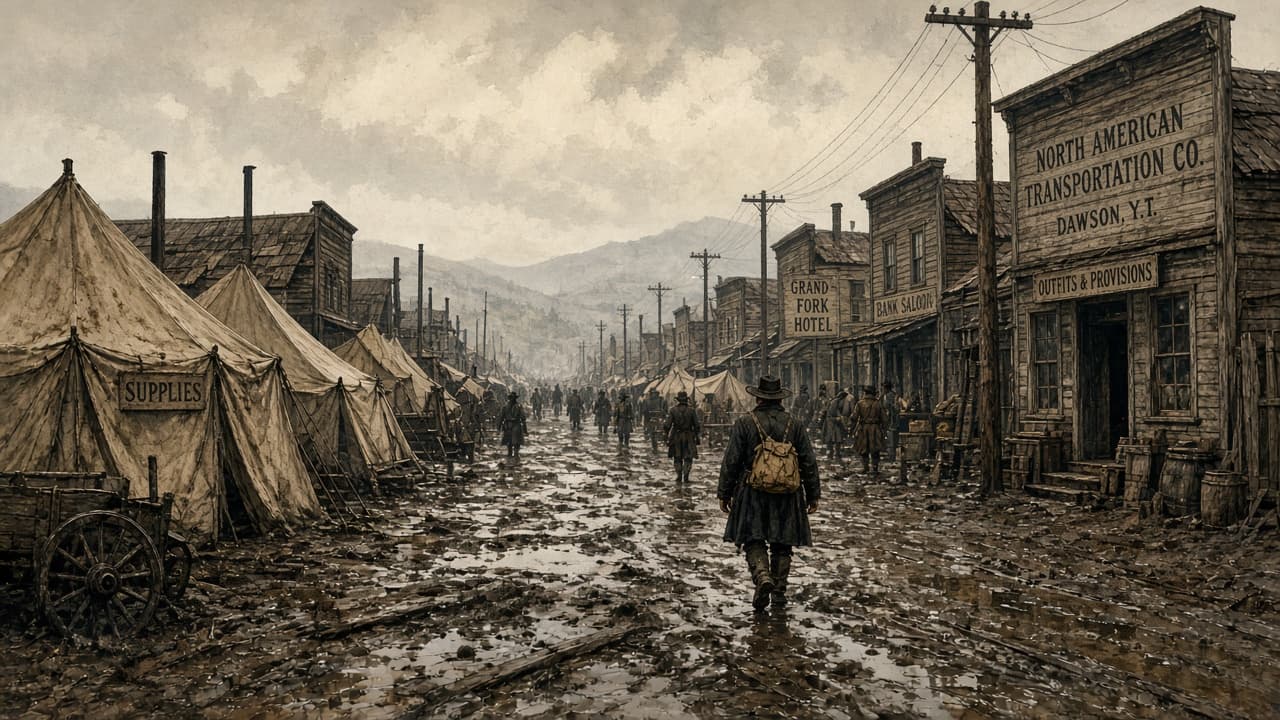
Dawson City boomed where the Klondike meets the Yukon: muddy streets, tent saloons, price gouging and a thin crust of sudden wealth over scurvy and cold. Most late arrivals found claims already staked. Merchants, transport companies and governments often took steadier profits than miners. Indigenous Han people faced displacement and resource pressure as the boomtown rose on their river world. The rush legend sells nuggets. The boomtown street sells the likelier fate: commerce, crowding and a short season of fever.
Placer gold is loose metal mixed into river gravel, not a deep hard-rock vein you blast open on day one. Miners dig benches and bars, then wash sediment so heavy gold settles while lighter sand washes away. That is why creek bends, old channels and gravel bars mattered more than mountain skylines in the early rush. A well-placed claim could out-earn years of wage work. An empty claim meant debt, scurvy risk and a long walk home. Bonanza proved the district could pay at the scale that feeds industrial rumor.
News did not circle the globe the same afternoon. Claims had to be recorded under Canadian rules. Winter closed trails. Steamers and word of mouth carried stories before they carried proof. The public explosion came in 1897, when ships reached West Coast ports with Klondike gold and returning miners. Editors treated the Yukon like a lottery anyone might enter. Outfitters sold gear by the ton. Steamship companies sold tickets. Cities competed to brand themselves as the gateway north.
Getting there was the real filter. Many stampeders landed at Skagway or Dyea in Alaska, then faced the Chilkoot Pass or White Pass over the Coast Mountains into the Yukon drainage. Canadian authorities required each person to bring roughly a ton of supplies, enough to survive a northern year. The rule saved lives and also priced out the poorest dreamers. Those who made the summit still had to build boats or wait for breakup ice, then float toward Dawson City at the mouth of the Klondike.
Dawson City ballooned into a muddy boomtown of tents, saloons, claim offices, theaters and winter shortages. Most arrivals never struck virgin rich ground. Claims near the original discovery were already staked by the time the mass migration crested. Latecomers worked for wages, sold services, ran laundries or went home poorer than they started. A minority left wealthy. The pattern is the classic gold-rush machine: a few early finds, a flood of migrants and a long tail of disappointment sold later as romance.
Politics and Indigenous life shifted under the same pressure. The Northwest Mounted Police tightened order on the Canadian side of the trails. Boundary arguments with Alaska sharpened. Hän people faced sudden competition for land, game and river access as outsiders poured in with tools, alcohol and legal claims written in a foreign system. Rail and steam later made the north less remote, but the human cost of the stampede belongs beside every postcard of a golden pan.
By the early 1900s the easy placer cream was thinning and attention drifted to other fields. The Klondike myth outlived the peak boom in songs, novels, tourist hikes and museum displays. Honest history keeps both layers. Fortune favored a few early and lucky claimants. Geography, cold and the ton-of-goods rule weeded out many more. The creek discovery was a hinge. The rush was a social storm that turned rumor into migration.
If you mark only one sequence, mark this one. Discovery on 16 August 1896. Public stampede cresting in 1897 and 1898. Trails, supply rules, Dawson boom and then decline. Travel readers still chase the Chilkoot photograph. The date that started it sits on a quieter August gravel bar where a pan first ran heavy.
Eagle Frame's takeaway: 16 August 1896 is the Klondike discovery date, not the day every stampeder arrived. Know Bonanza Creek, know the Chilkoot filter and know that most who chased the gold found hard travel more reliably than wealth.