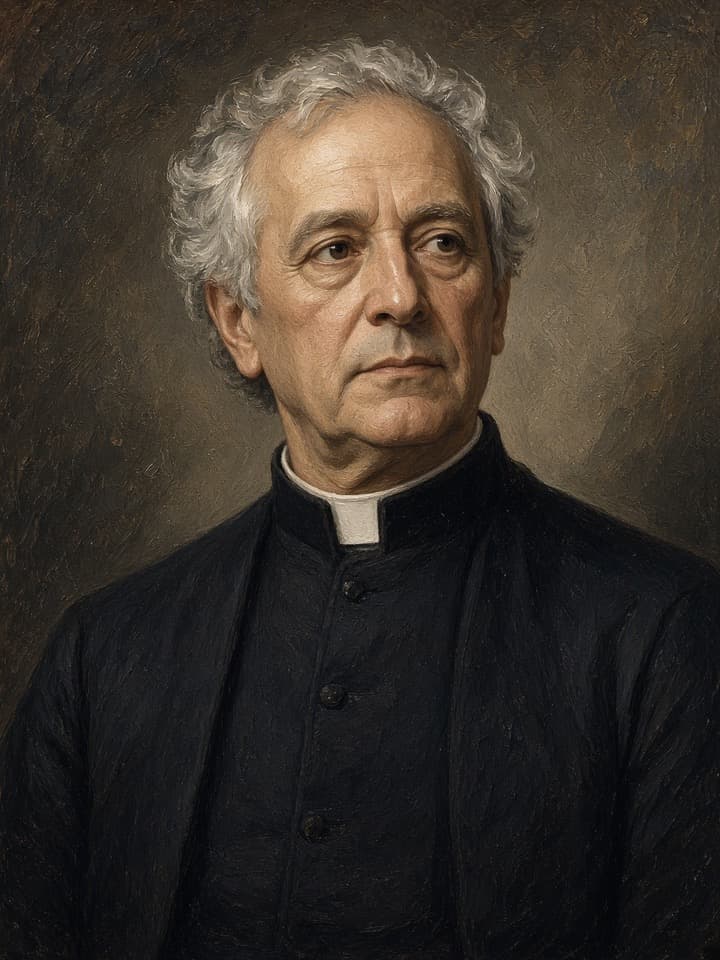
On this day: the Grito de Dolores launches Mexico's independence war
On 16 September 1810, Father Miguel Hidalgo y Costilla called parishioners in Dolores to rise against Spanish rule. The spoken Cry of Dolores became Mexico's independence day even though full sovereignty took another decade.
Early on 16 September 1810, in the town of Dolores in New Spain (today Dolores Hidalgo, Guanajuato), the parish priest Miguel Hidalgo y Costilla rang the church bell and urged his largely Indigenous and mestizo congregation to take up arms against Spanish colonial rule. The spoken appeal is remembered as the Grito de Dolores, the Cry of Dolores. Mexico still marks 16 September as Independence Day.
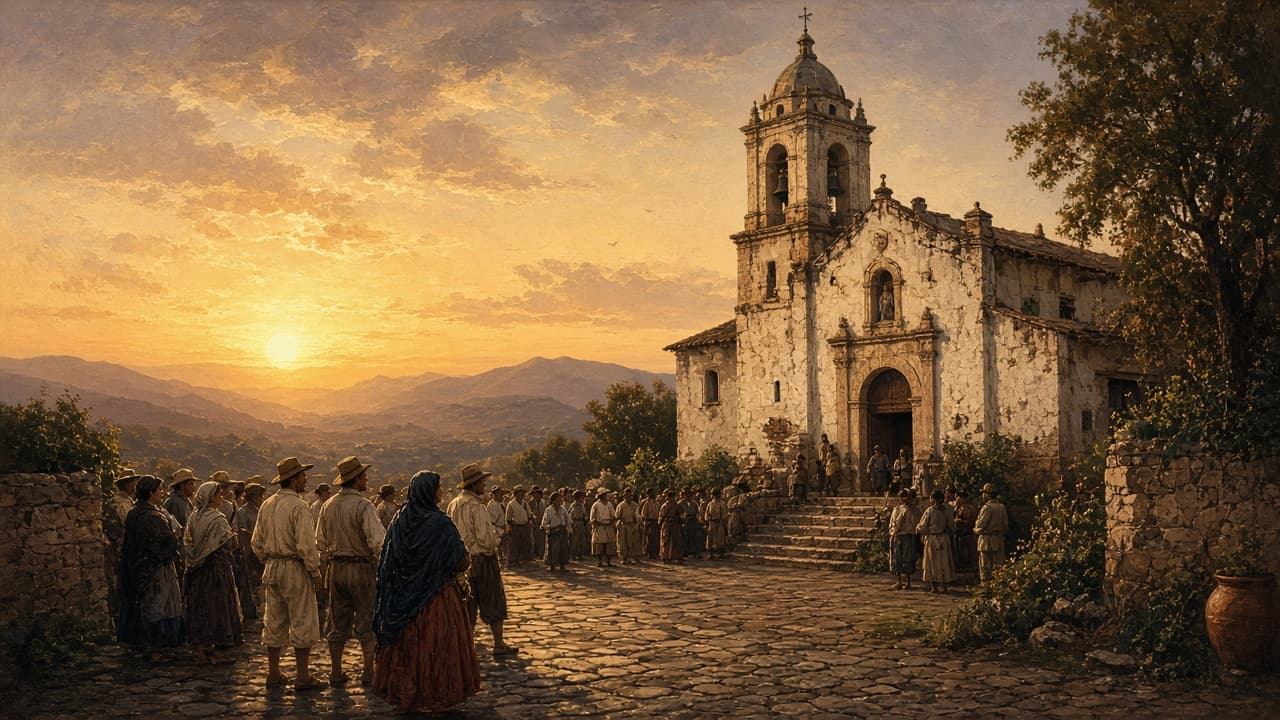
Hidalgo was not a professional general. He was a Creole priest educated in theology, interested in economic ideas that challenged monopolies and open to parishioners whom colonial law ranked below Spanish-born elites. By 1810 a conspiracy of reformers in Querétaro and nearby towns planned a rising. When Spanish officials uncovered weapons and the plot risked collapse, Hidalgo moved first. The Grito was improvisation under pressure as much as a drafted manifesto.
What did the Cry ask for? Versions differ because it was spoken, not published as a fixed text. Themes that survive in memory include ending bad government, defending the Catholic faith as Hidalgo framed it and recovering land and dignity for people who worked the countryside. Support surged among Indigenous communities and mixed-heritage towns. The rebel column grew quickly as it moved toward San Miguel and then Guanajuato.
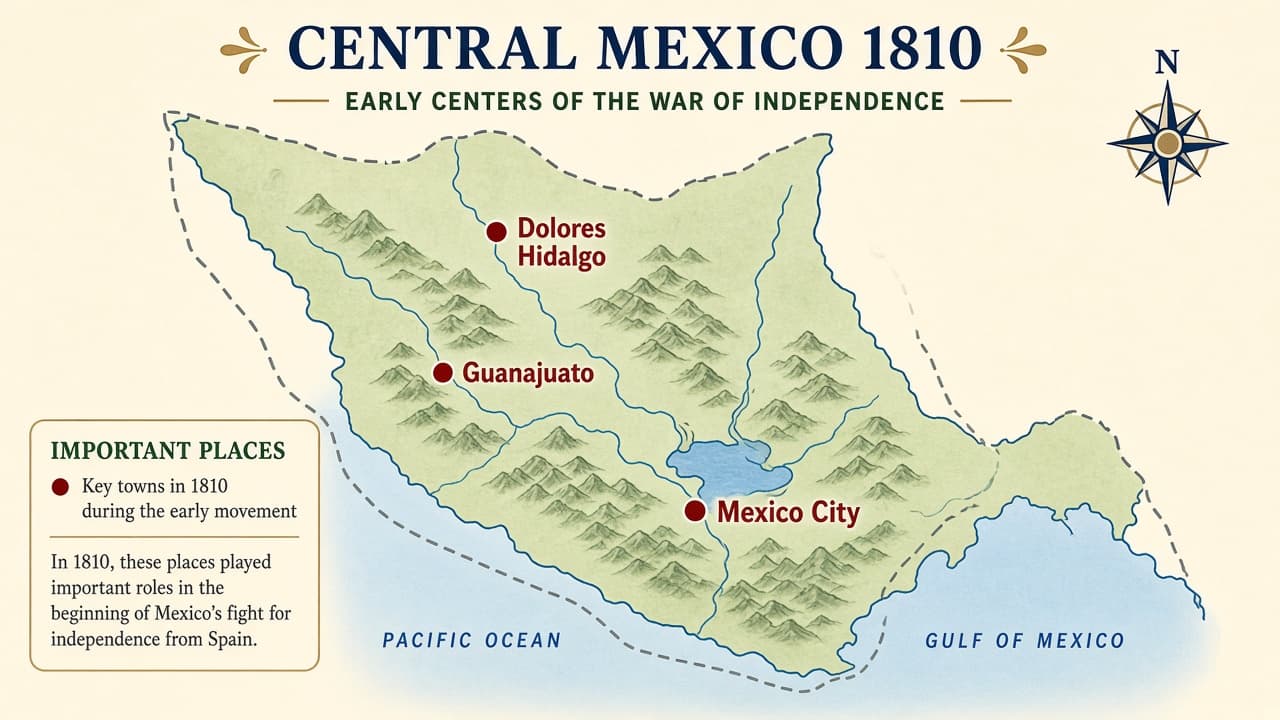
At Guanajuato the rebels stormed the Alhóndiga granary in a bloody fight. Spanish loyalists and civilians died in large numbers. The violence shocked elites who might otherwise have negotiated. Hidalgo's army later approached Mexico City, then turned aside. Historians still argue over fear of a massacre in the capital, supply limits and divided counsel. Retreat northward ended in capture. Hidalgo was executed in 1811.
Independence did not arrive with the Grito. It arrived after years of guerrilla war, royalist counterattacks and a final political bargain in 1821 under the Treaty of Córdoba, when a weakened Spain accepted Mexican sovereignty. Hidalgo became a founding symbol anyway: the priest who opened the door even if he did not live to walk through it. Later leaders such as José María Morelos carried the military and constitutional fight further.
Modern Mexico hears the Grito reenacted each year from the National Palace balcony in Mexico City and in town squares nationwide. The ritual compresses a decade of war into a single dawn. For readers abroad the useful distinction is simple. 16 September 1810 starts the independence struggle. 1821 completes the legal break. Both dates matter. Only one is the national holiday.
Class and race shaped the rising. Peninsulares (Spain-born officials) sat atop the colonial order. Creoles (American-born people of Spanish descent) wanted more power. Indigenous and mestizo majorities supplied most of the fighters and most of the dead. Hidalgo's call crossed those lines in a way that frightened conservatives and inspired the poor. That social heat is why the early campaign felt like both a political revolt and a rural upheaval.
Eagle Frame's takeaway: 16 September 1810 is when Hidalgo's Cry of Dolores turned a threatened conspiracy into a mass rising. Follow the map from Dolores to Guanajuato, remember that independence waited until 1821 and treat the holiday as the start of a war, not the signing of peace.