On this day: the Battle of Guadalcanal begins
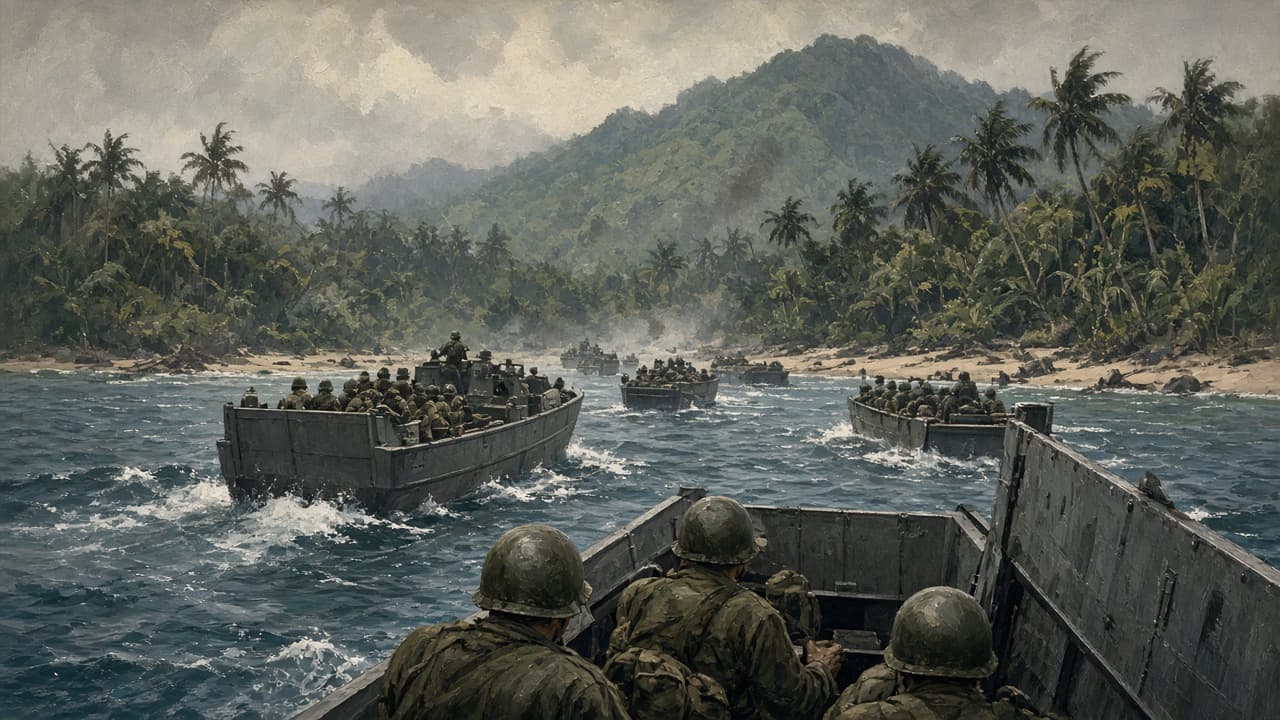
On 7 August 1942, US Marines waded ashore on Guadalcanal and Tulagi in the Solomon Islands. It was the first major Allied offensive of the Pacific war, and the six-month fight that followed turned an airstrip in the jungle into the turning point of the campaign.
On the morning of 7 August 1942, landing craft carrying about 11,000 men of the 1st Marine Division grounded on a beach on the north coast of Guadalcanal, a humid, malarial island in the Solomons that almost nobody in the United States could have found on a map. Another 3,000 Marines went ashore across the sound at Tulagi, Gavutu and Tanambogo. The operation was codenamed Watchtower, and the men who fought it renamed it Operation Shoestring, because almost nothing about it was adequately supplied. It was the first major Allied ground offensive against Japan, launched eight months after Pearl Harbor, and it committed the United States to a campaign it could not afford to lose in public.
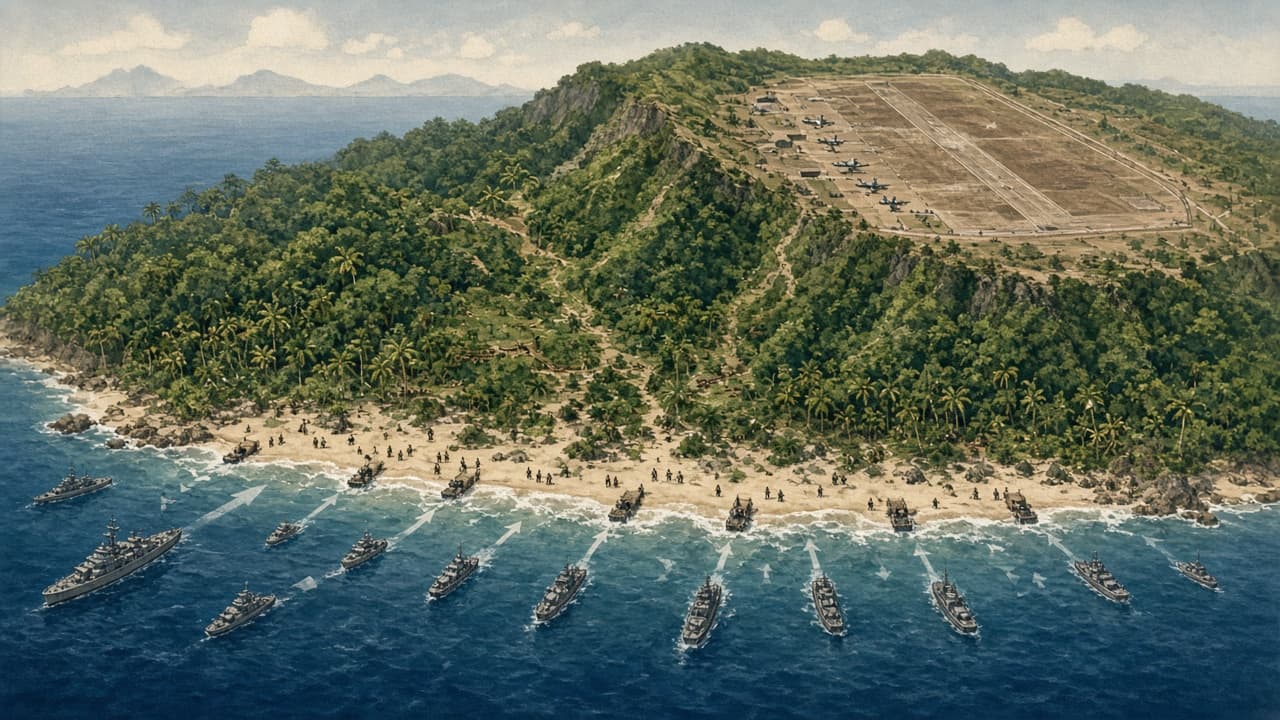
The reason for going was a strip of cleared ground. Japan had taken Tulagi in May 1942 and in early July began building an airfield on the Lunga plain on Guadalcanal. Aircraft from that field would have reached the sea lanes between the United States and Australia and put pressure on the American base at Espiritu Santo. Admiral Ernest King pushed for a pre-emptive landing, and the decision was taken quickly after reconnaissance flights spotted the construction. Planning was rushed, maps were poor, and the rehearsal in Fiji went badly enough that officers joked about it for years afterwards.
The first day went almost unopposed on Guadalcanal itself. The Japanese garrison on the Lunga plain was mostly Korean and Japanese construction labor, and it withdrew west, leaving behind rice, beer, bulldozers and a nearly finished runway. The Marines took the airfield on 8 August and named it Henderson Field for Major Lofton Henderson, a Marine dive-bomber pilot killed at Midway two months earlier. Tulagi was the opposite experience. The naval garrison there fought from caves and dugouts and was destroyed almost to the last man, a pattern of resistance the Americans would meet on every island for the next three years.
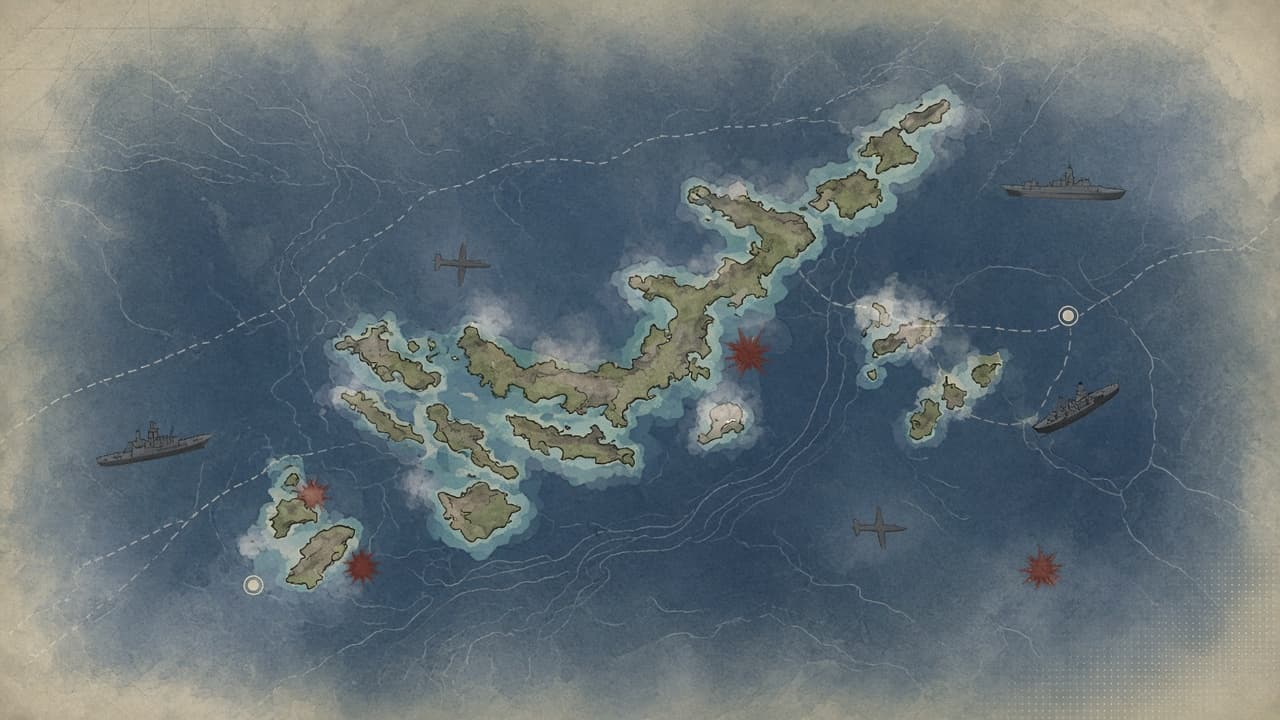
Two days in, the campaign nearly collapsed. On the night of 8 to 9 August a Japanese cruiser force under Admiral Gunichi Mikawa came down the Slot undetected and fell on the Allied screening ships off Savo Island. In about half an hour it sank the American heavy cruisers Quincy, Astoria and Vincennes and the Australian cruiser Canberra, killing more than 1,000 sailors, and withdrew without attacking the transports. Savo Island was one of the worst defeats in United States naval history. Admiral Frank Fletcher had already pulled the carriers back, and the surviving transports left on 9 August with much of the Marines ammunition, heavy equipment and food still in their holds.
That is how the ground fight became a siege in reverse. The Marines held a perimeter of a few square miles around Henderson Field, ate captured Japanese rice twice a day, finished the runway with captured bulldozers and waited. Japanese warships shelled them at night. Bombers came from Rabaul at midday with such regularity that men set their watches by Washing Machine Charlie and Louie the Louse, the nicknames given to the nuisance raiders. Malaria, dysentery and jungle rot put more men out of action than bullets did. The scratch air unit flying worn Wildcats and Dauntlesses from the field took the island code name and called itself the Cactus Air Force.
The Japanese command misread the situation for weeks, and the error was fatal. Believing only a raiding party had landed, it fed troops in piecemeal. Colonel Kiyonao Ichiki attacked the Marine line at the Tenaru, properly the Ilu, on 21 August with about 900 men and was annihilated. In September, General Kiyotake Kawaguchi assaulted the ridge south of the airfield, where Lieutenant Colonel Merritt Edson's raiders held through two nights of close fighting in a battle remembered as Edson's Ridge. A full-scale October offensive by the 2nd and 38th Divisions also broke against dug-in Marines and Army troops. Each defeat cost men Japan could not replace as easily as the United States could.
At sea the campaign was a grinding series of night actions and carrier battles. The Eastern Solomons in August, Cape Esperance in October, Santa Cruz later that month and the two nights of the Naval Battle of Guadalcanal in mid-November each cost ships on both sides. The waters between Guadalcanal, Savo and Florida Island swallowed so many hulls that sailors named it Ironbottom Sound, and dozens of wrecks lie there still. The November battles were decisive. Japan lost two battleships, Hiei and Kirishima, and failed to land a major reinforcement convoy. After that it could resupply the island only by destroyer runs and submarines, and the troops ashore began to starve.
The end came quietly and by decision rather than surrender. Under Operation Ke, Japanese destroyers evacuated roughly 10,650 men from the western beaches on the nights of 1 to 7 February 1943, and the Americans, expecting another offensive, did not realise for days that the enemy had gone. The human cost was one-sided in a way that set the pattern for the rest of the war. American dead across all services numbered about 7,100. Japanese dead reached roughly 31,000, and a large share of those men died of starvation and disease rather than combat. Japanese soldiers called the place Gatoshima, a pun that turns Guadalcanal into Starvation Island.
Strategically the campaign flipped the initiative and never gave it back. Before August 1942 Japan was expanding and the Allies were reacting. After February 1943 the movement in the Pacific was one way. Guadalcanal also taught both sides their trade. The Americans learned about amphibious logistics, radar-directed night gunnery, close air support and the medical management of tropical disease, and they built the doctrine used at Tarawa, Saipan and Iwo Jima on those lessons. Japan lost several hundred aircraft and, more importantly, a generation of trained naval aviators who could not be replaced at the rate they were being killed.
The island itself carries the memory in an understated way. Henderson Field is now Honiara International Airport, the capital of the independent Solomon Islands sits on the old Lunga perimeter, and local guides still lead visitors to Bloody Ridge and Alligator Creek. Solomon Islanders themselves were not bystanders. Coastwatchers such as Martin Clemens, working with local scouts including Jacob Vouza, who was tortured and left for dead by Japanese troops and walked back to the Marine lines with his intelligence, provided warning of raids that the Cactus Air Force depended on.
Eagle Frame's takeaway: 7 August 1942 matters because of what it cost to hold, not because of how easily it began. The landing was nearly unopposed, the navy left within two days, and the Marines then spent six months proving that one jungle airstrip was worth more than the fleets both sides sank trying to control it.