On this day: Elias Howe patents the lockstitch sewing machine
On 10 September 1846, Elias Howe received a U.S. patent for a lockstitch sewing machine that helped industrialize clothing.
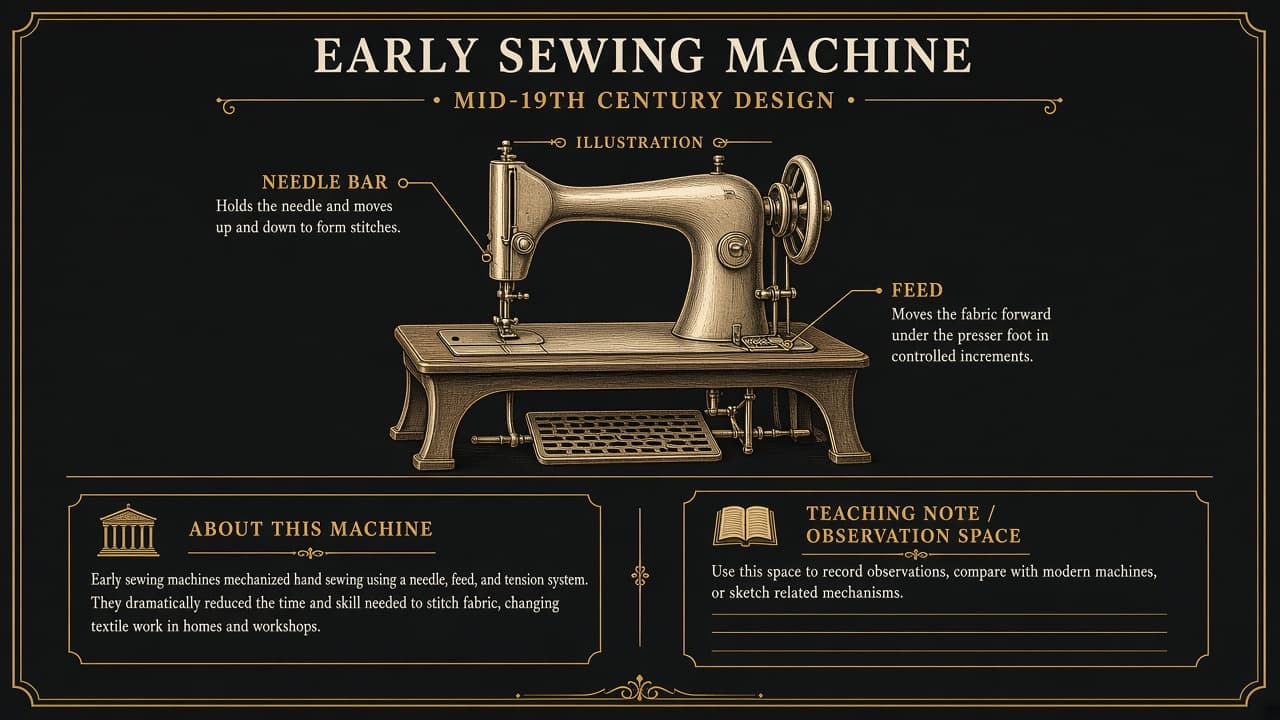
On 10 September 1846, the United States Patent Office issued Elias Howe a patent for an improved sewing machine. The design used a lockstitch: an upper thread from a needle eye near the point meets a lower thread from a shuttle, locking each stitch so it does not pull out as easily as a simple chain stitch.
If you only know sewing machines as kitchen-table appliances, start with the problem Howe attacked. Hand sewing limited how fast cloth could become shirts, sails and uniforms. Earlier inventors had tried mechanical needles. Howe’s practical combination—eye-pointed needle, shuttle lockstitch and a way to feed fabric—helped turn clothing into an industrial product.
Howe struggled to profit at first. Isaac Singer and other makers sold popular machines and fought long patent wars. Courts eventually recognized Howe’s rights and he earned royalties. The legal fight matters almost as much as the hardware: invention alone did not build the industry. Licensing, lawsuits and factory capital did.
The social effect was huge. Factories could cut and sew at new speed. Ready-made clothing expanded. Home machines later moved some work back into parlors. Labor conditions in garment shops became a lasting political issue because the machine made volume possible before labor law caught up.
Eagle Frame’s takeaway: 10 September 1846 is less about a single gadget and more about a stitch type that scaled. When a lock holds, cloth becomes inventory. That is how a patent date becomes an everyday wardrobe story.