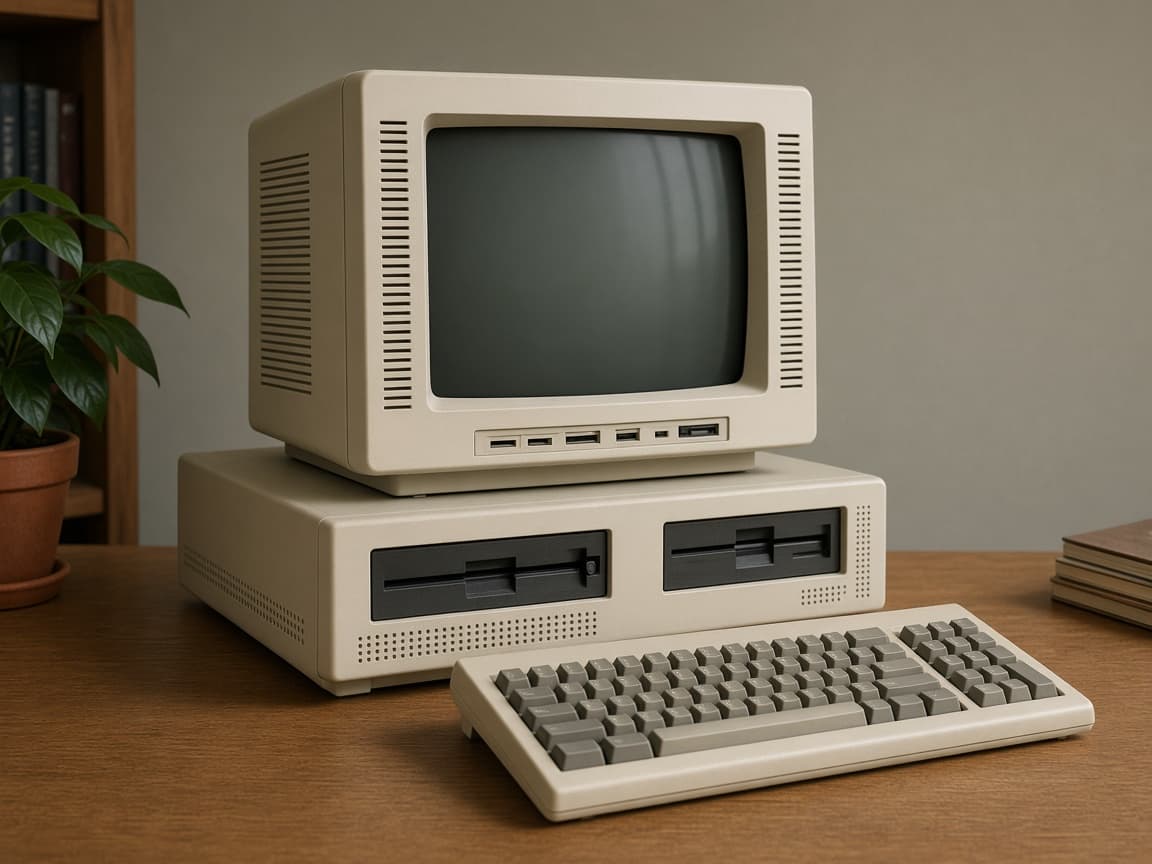
On this day: IBM introduces the Personal Computer
On 12 August 1981, IBM unveiled the Personal Computer Model 5150. An open-architecture business machine helped turn PCs from hobby kits into office fixtures.
On 12 August 1981, International Business Machines introduced the IBM Personal Computer, Model 5150. The announcement in New York presented a desktop machine aimed at businesses and serious home users who wanted something more standardized than kit-built hobby computers. IBM was already a giant in mainframes. Putting the IBM name on a small box told corporate buyers that personal computing had left the garage.
What is a personal computer, in plain language? It is a complete computer meant for one person at a desk: processor, memory, storage, keyboard and a display, with software you can change. Before the IBM PC, machines such as the Apple II, Commodore PET and Tandy TRS-80 had already proved the idea. IBM's entry mattered because of brand trust, dealer networks and a design choice that invited clones.
A cutaway of the early IBM PC shows why managers could finally picture a computer as office furniture. The system unit held the processor board, power supply and floppy drive. A separate CRT monitor sat on top or beside it. The keyboard plugged in as a familiar typing surface. Expansion slots meant a shop could add memory or a display adapter without redesigning the whole machine. That modular diagram is the hardware story behind spreadsheets replacing ledgers on beige desks across the 1980s.
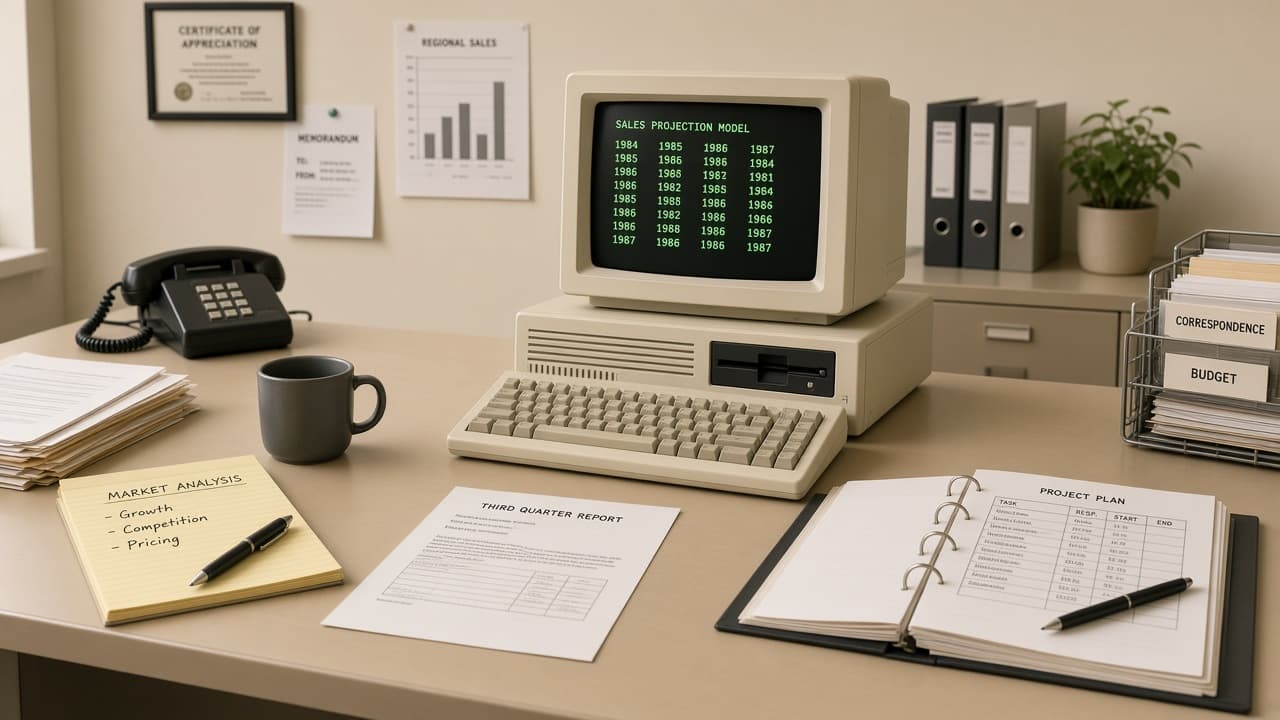
Office culture changed as fast as the silicon. Secretarial pools met word processors. Accountants rebuilt worksheets nightly. Managers who once waited for a mainframe report could iterate on their own screen. The aesthetic of the era (tan plastics, green or amber text, stacks of floppy sleeves) still signals a hinge between clerical paper and networked work. Clone makers later copied the form factor, but the 1981 desk scene explains the social adoption: the computer looked like something a company already knew how to buy and place.
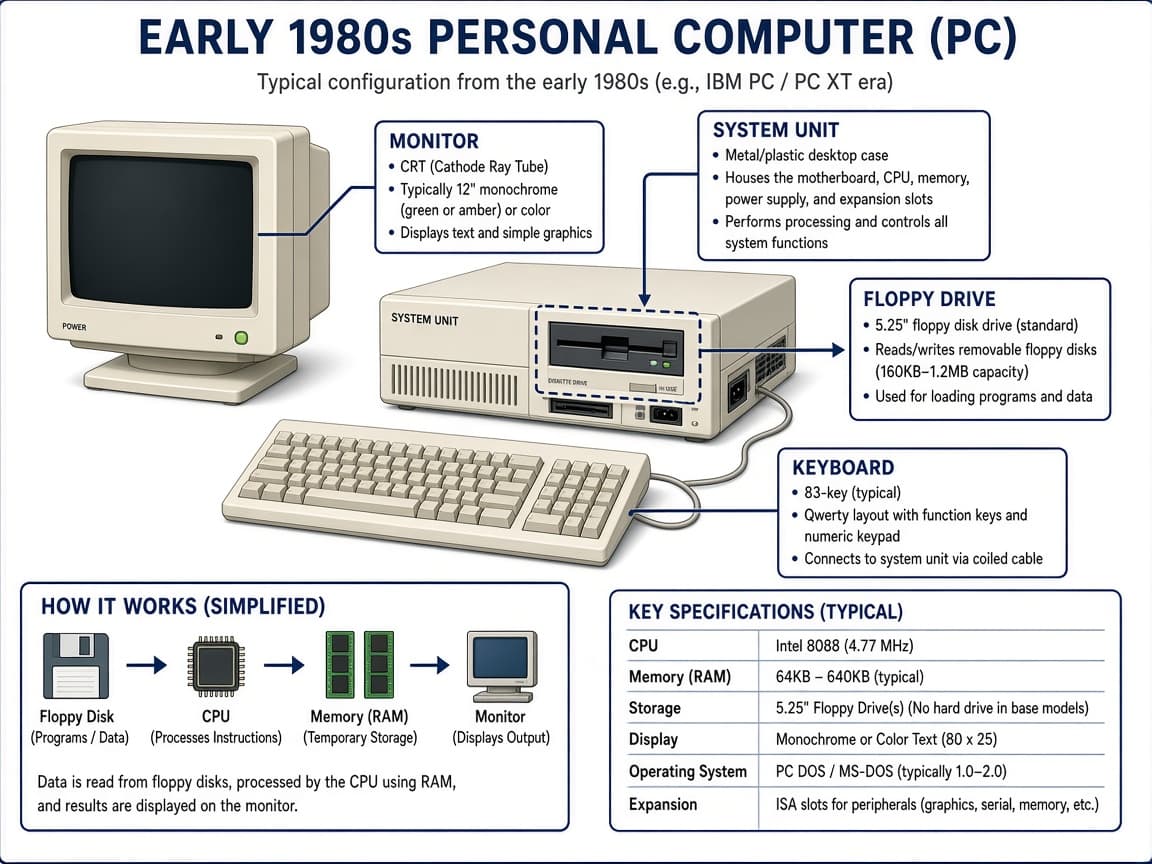
Inside the box sat an Intel 8088 microprocessor running at 4.77 MHz, optional floppy drives, slots for expansion cards and IBM's BASIC in ROM for simple programming. Users could buy PC DOS, supplied through a deal with Microsoft. Spreadsheets such as VisiCalc (already famous on Apple) and later Lotus 1-2-3 made the machine a business tool, not a toy. Word processors turned secretarial pools into keyboard labor of a new kind.
How the open design worked: IBM published technical references and used many off-the-shelf parts instead of locking everything behind proprietary silicon. Expansion slots let other firms sell graphics cards, memory and peripherals. That openness sped a market. It also let Compaq and others build compatible machines that ran the same software. The "IBM compatible" PC became an industry standard that outgrew IBM's own sales.
Microsoft's role grew from the DOS contract into a platform power. When clones shipped with Microsoft's operating system, software developers could write once for a huge installed base. Windows later layered a graphical shell on that world. The 1981 launch is therefore both an IBM product date and the seed of a software empire that IBM did not fully control.
Culture shifted with the beige boxes. Offices replaced typewriters. Students met computer labs. Games and bulletin boards grew a consumer life beside spreadsheets. Critics warned about job loss and desk isolation. Fans talked about empowerment. Both were partially right. The PC redistributed who could process information without asking a mainframe priesthood for time.
Compare 1981 with earlier computing. Mainframes filled rooms and served terminals. Minicomputers shrank the club somewhat. The personal computer put a programmable machine on an individual desk with a price that businesses could approve line by line. IBM's marketing and service reputation made purchasing agents less afraid. That psychological clearance may have mattered as much as clock speed.
Legacy is everywhere and easy to miss. USB ports and laptops look nothing like a 5150, yet the idea of a compatible hardware-software ecosystem still shapes PCs. When you install an application and expect it to run on machines from many brands, you are living in the world the IBM PC's openness accidentally locked in. 12 August 1981 is the birthday of that bet.
Corporate buyers who once feared incompatible hobby machines could now order IBM parts and service with a familiar invoice. That trust loop mattered as much as megahertz. Software publishers followed the installed base. Within a few years the phrase PC meant an IBM-shaped desk more than any single company's plastic. Even when IBM lost leadership to clone makers, the 1981 announcement had already taught the market what a standard looked like. Clone makers such as Compaq reverse-engineered the BIOS interface legally and sold compatible machines at lower prices. Microsoft licensed DOS broadly. IBM's own later PS/2 line tried to reclaim control with proprietary buses and met mixed success. The industry lesson from 1981 is that openness can grow a market faster than secrecy, then hand the largest share to partners who learn the interface first.
Eagle Frame's takeaway: 12 August 1981 is when IBM put its name on a desktop PC and helped standardize personal computing for offices. Know the 8088 box, know the open slots that invited clones and know why Microsoft's DOS deal outlasted IBM's early hardware lead.