On this day: India gains independence
On 15 August 1947, India became independent from British rule. Jawaharlal Nehru's midnight speech marked freedom as Partition violence tore across the subcontinent.
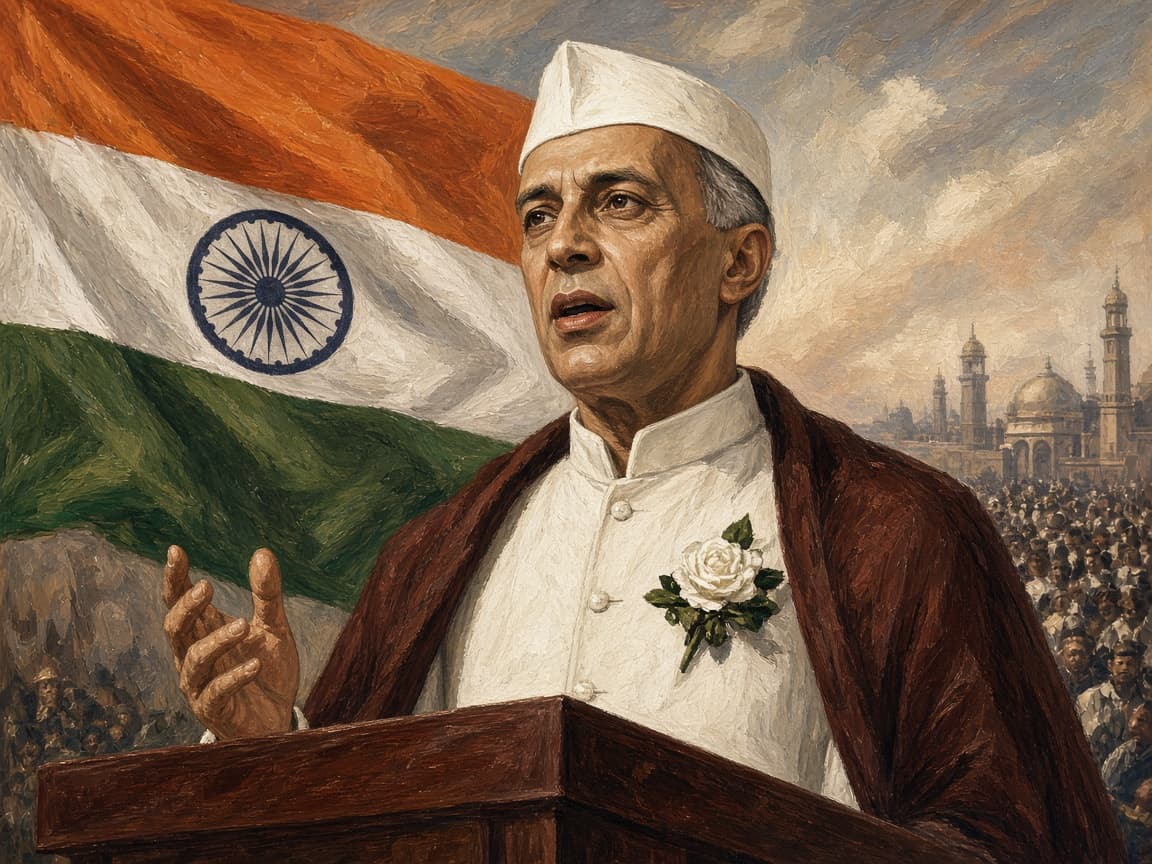
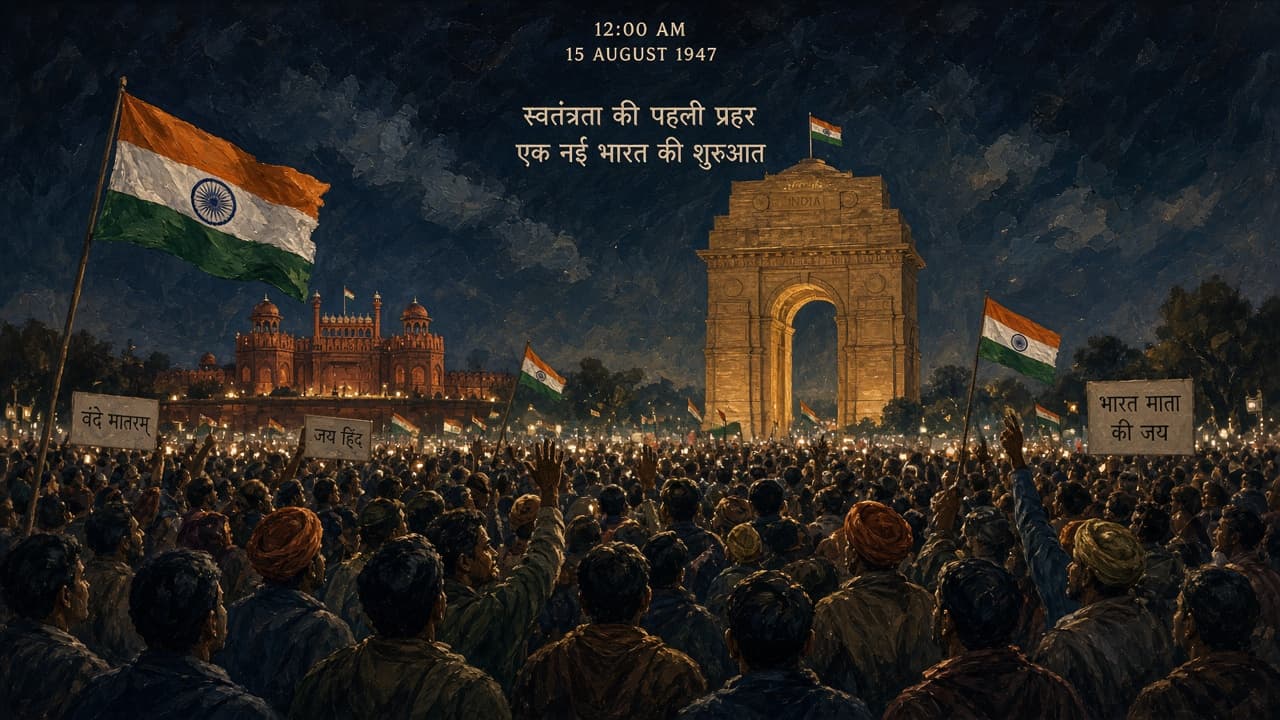
On 15 August 1947, India gained independence from British colonial rule. At midnight, Jawaharlal Nehru told a Constituent Assembly (and a listening world) that the country was making a tryst with destiny and awakening to life and freedom. The Union Jack came down. A new dominion took charge of its political future after roughly two centuries of expanding Company and Crown power. Celebration filled streets. So did dread. Partition into India and Pakistan had been announced with borders that cut villages, rail lines and hearts.
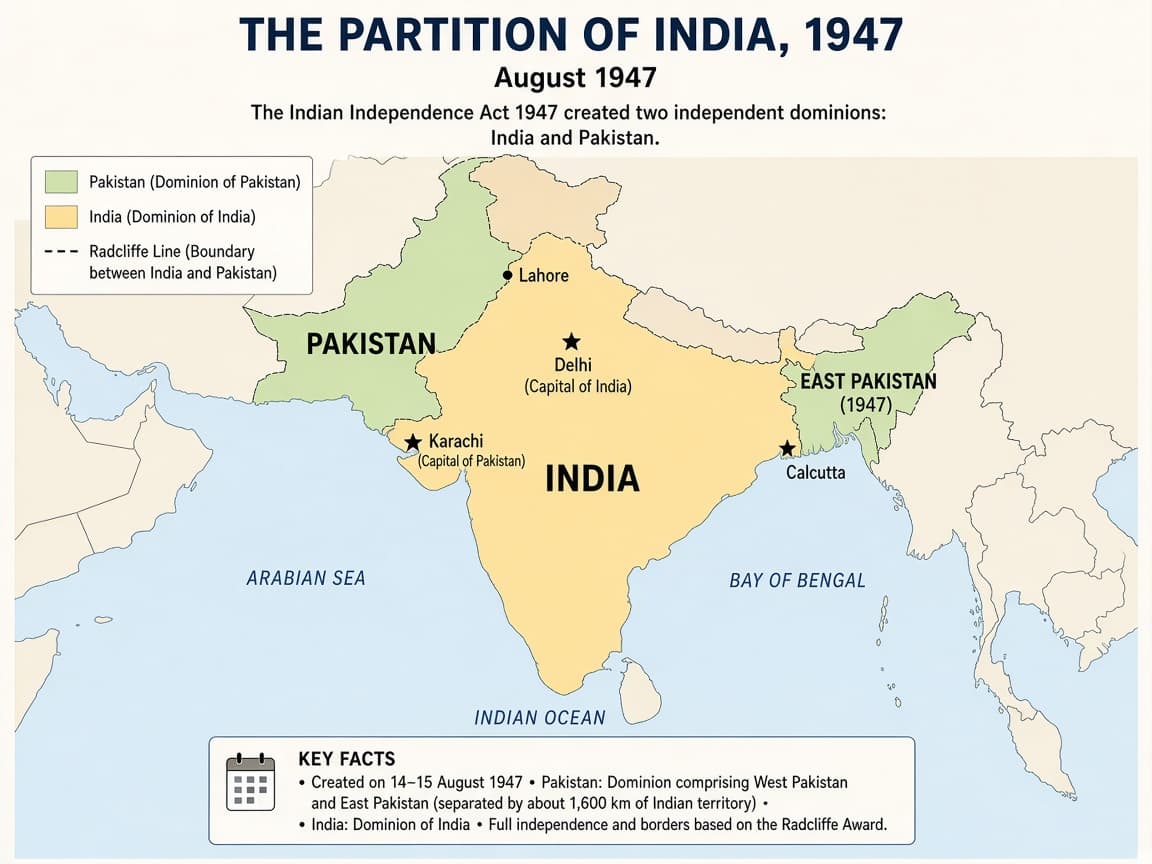
Independence at midnight on 14-15 August 1947 arrived with Partition: British India split into India and Pakistan along lines that cut provinces, rail nets and mixed neighborhoods. Maps of the new borders look clean in textbooks. On the ground, millions moved in fear as communal violence surged. Refugee columns, abandoned homes and contested princely states made the transfer of power a human emergency as well as a constitutional ceremony. Understanding Partition geography is required to understand why celebration and trauma share the same calendar date.
In Delhi, crowds gathered as Jawaharlal Nehru spoke of a tryst with destiny and a nation waking to life and freedom. The rhetoric promised democratic self-rule after nearly two centuries of British dominance. The speech cannot be separated from the blood already flowing along Partition routes. India's new government faced food, refugees and unfinished integration of states. Pakistan faced its own birth crises. The independence crowd image is real hope. The map image is the price structure that hope carried.
Nehru, a central leader of the Indian National Congress, became the first prime minister. Mahatma Gandhi's moral authority had shaped the independence struggle through nonviolent mass campaigns, yet Gandhi spent the season trying to stop communal killing rather than starring in Delhi's ceremony. Muhammad Ali Jinnah led the Muslim League's demand for Pakistan, inaugurated as a separate dominion on 14 August. Lord Louis Mountbatten oversaw the hurried British exit as the last viceroy. The calendar of freedom was also a calendar of division.
What was Partition? British India was split largely along religious demography into a Hindu-majority India and a Muslim-majority Pakistan (itself in two wings, west and east, a thousand miles apart). Boundary official Cyril Radcliffe drew lines under intense time pressure. Trains filled with refugees. Mobs attacked neighbors. Estimates of deaths run into the hundreds of thousands or higher; about 10 to 15 million people were displaced in one of the largest migrations in modern history. Independence and catastrophe arrived as twins.
Colonial context matters. The British East India Company had conquered and taxed large regions before the Crown took direct rule after 1858. Railways, civil services and English-language elites grew beside famines, racial hierarchies and political exclusion. The twentieth-century freedom movement mixed constitutional negotiation, civil disobedience, wartime pressure and the simple fact that Britain emerged from World War II too weak to hold the Raj as before.
15 August became India's official Independence Day; Republic Day on 26 January later marks the 1950 Constitution. Pakistan's main national day ties to 14 August. Bangladesh's later independence in 1971 from Pakistan adds another chapter to the unfinished map of 1947. Reading only fireworks on the Red Fort misses that longer chain.
Nehru's government faced refugee resettlement, princely-state integration, food shortages and the choice of a nonaligned path in the Cold War. Democracy with universal adult franchise in a vast poor country was a radical bet. It did not erase caste injustice, communal tension or poverty. It did create a political arena where those fights could continue under a constitution rather than a viceroy's decree.
Abroad, 1947 encouraged other colonies. Asian and African independence movements watched India carefully. The British Empire's retreat after the war had a flagship exit on the subcontinent, even as Britain fought to keep other possessions. Freedom here was contagious and incomplete at once.
For diaspora families, the date can mean pride and inherited trauma in the same conversation. Oral histories of train journeys and abandoned homes sit beside pride in a sovereign republic. Good remembrance lets both speak.
The Constituent Assembly that Nehru addressed kept meeting for years, turning revolutionary speeches into articles, schedules and fundamental rights. Princely states were integrated through negotiation, pressure and in Kashmir's case enduring dispute. Refugee camps on both sides of the new borders became cities in themselves. Independence was a legal fact at midnight. Nation-building was the harder work that followed in daylight. Gandhi's fasting and walking tours continued to shape moral politics even when he skipped the Delhi ceremony. Muslim and Sikh refugees carried stories that textbooks on both sides of the border still edit differently. Independence Day fireworks and Partition memorials belong in the same national calendar if memory is to stay honest. Anniversaries work best when readers return to primary sources, survivor testimony and later scholarship instead of trusting a single headline from the day.
Eagle Frame's takeaway: 15 August 1947 is India's independence day and Partition's open wound in the same sunrise. Know Nehru's midnight speech, know the Radcliffe lines and refuse any version of the story that celebrates freedom while erasing the refugees.