On this day: Iraq invades Kuwait
On 2 August 1990, Iraqi forces crossed into Kuwait and seized the country within a day. The invasion triggered the Gulf War, a decade of sanctions and a chain of consequences that ran through to 2003.
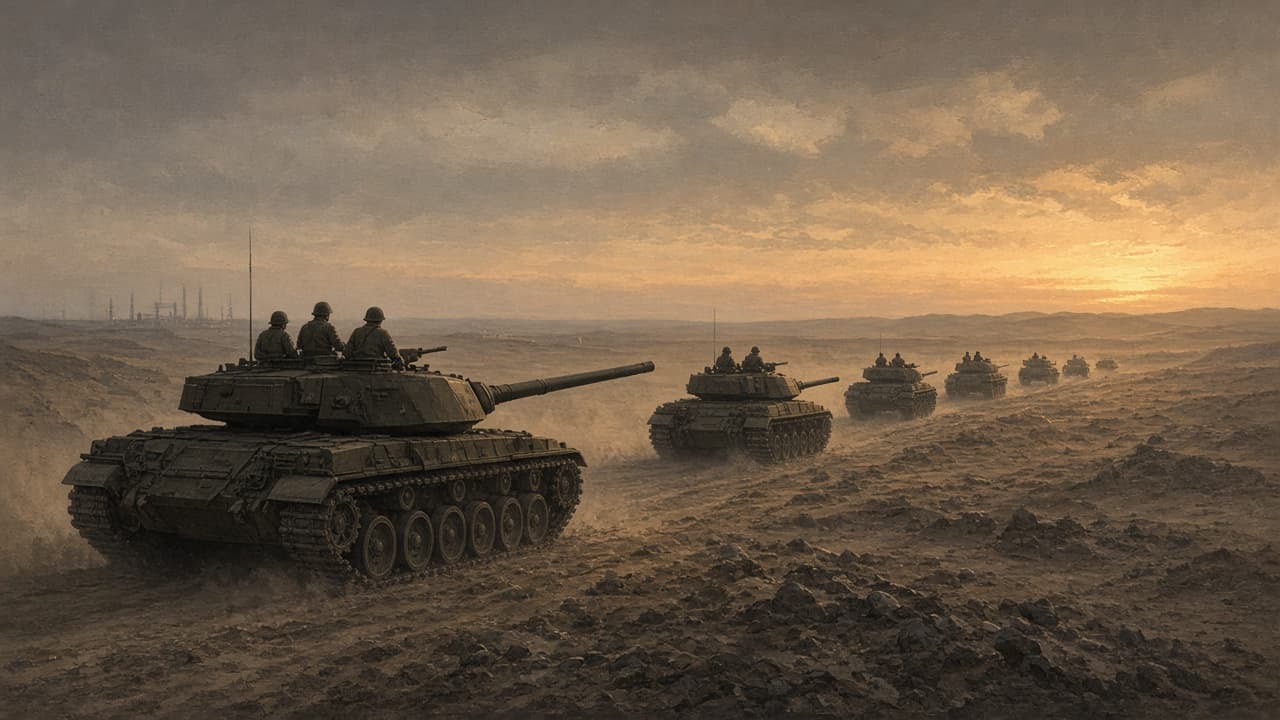
Shortly after two in the morning on 2 August 1990, Iraqi Republican Guard divisions crossed the border into Kuwait. Helicopter-borne commandos went straight for Kuwait City while armored columns drove down the main highways. The Kuwaiti armed forces numbered around 16,000 against an invading force estimated at 100,000. Resistance at Dasman Palace and a few air force sorties from Ali Al Salem could not change the arithmetic. Within twelve hours the capital was taken. Emir Jaber al-Ahmad al-Sabah escaped to Saudi Arabia. His half-brother Sheikh Fahad was killed at the palace.
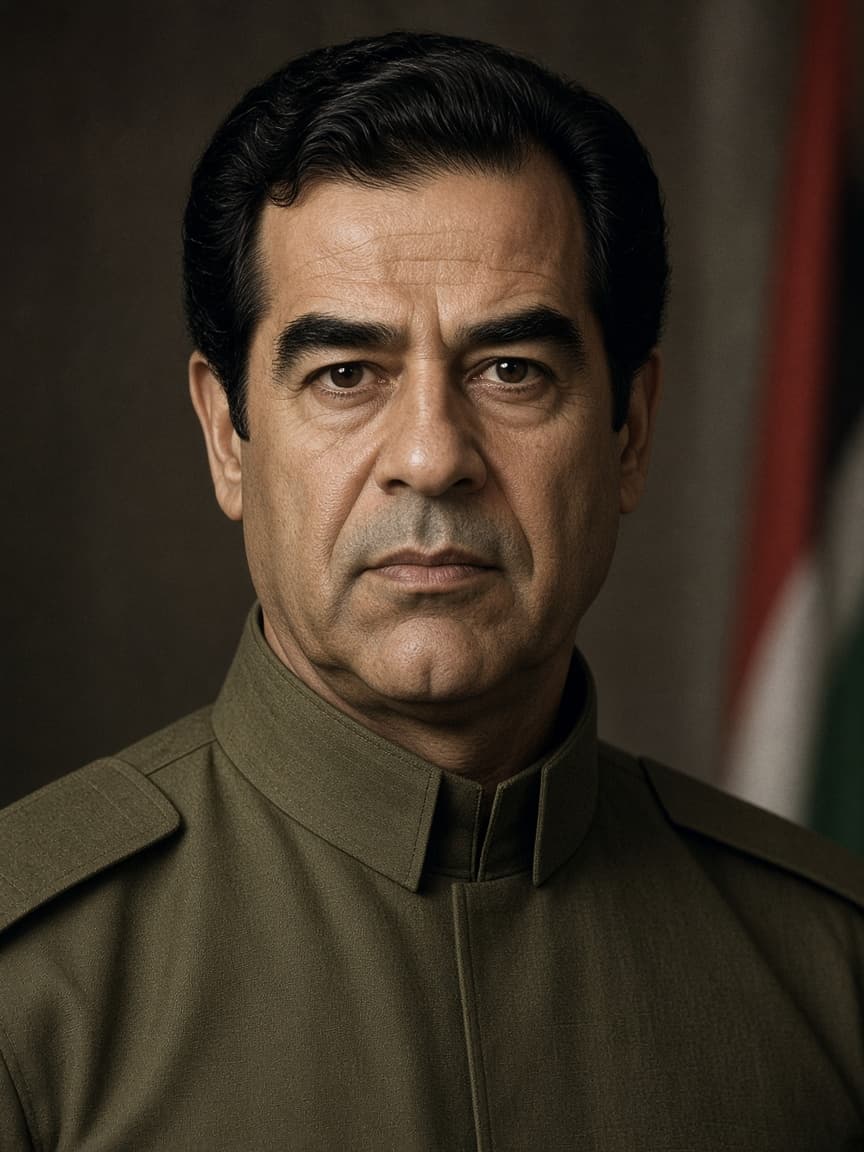
Saddam Hussein had ruled Iraq since 1979 and had just finished a war that nearly destroyed the country. The Iran-Iraq war ran from 1980 to 1988, killed hundreds of thousands on both sides and ended roughly where it started, with Iraq carrying about eighty billion dollars of foreign debt. A large share of that was owed to Kuwait and Saudi Arabia, which had bankrolled Baghdad as a barrier against revolutionary Iran. Saddam argued that Iraq had fought on behalf of the Arab world and that the debts should be forgiven. Kuwait declined.
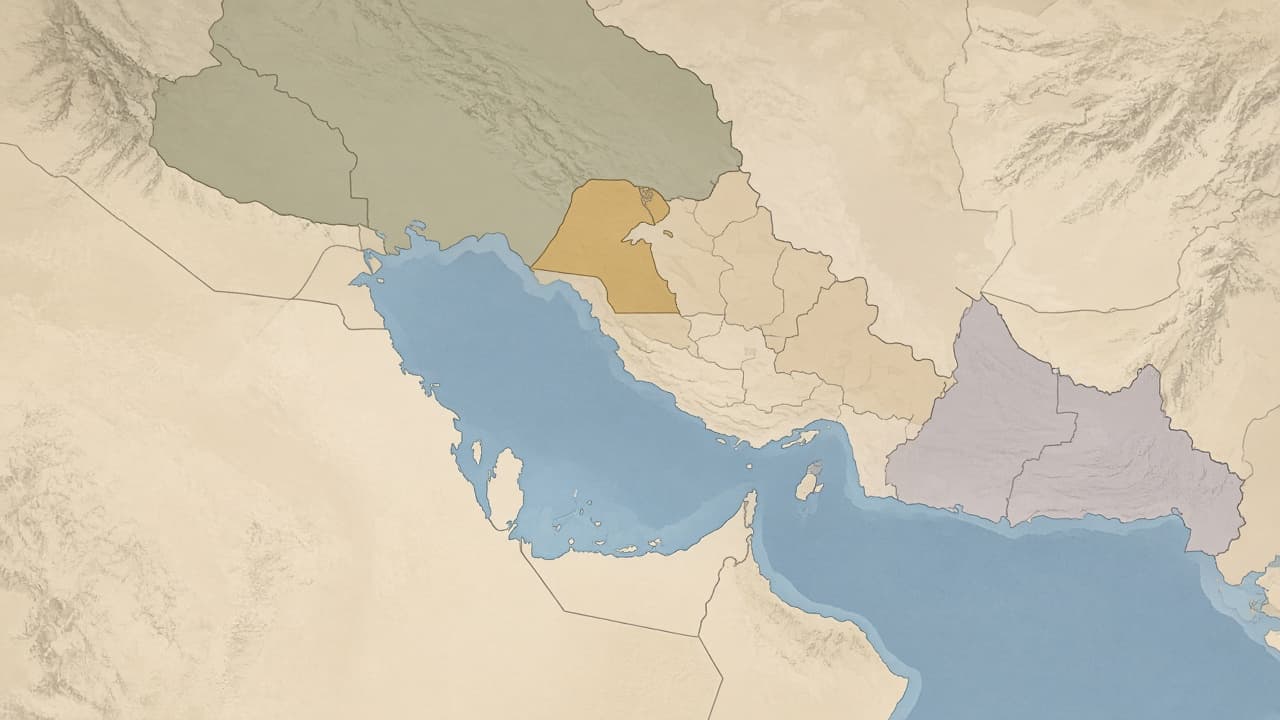
Oil prices made it worse. Kuwait and the United Arab Emirates were producing above their OPEC quotas in 1989 and 1990, which pushed prices down at exactly the moment Iraq needed revenue. Baghdad calculated that every dollar off the barrel price cost it a billion dollars a year. Iraq also accused Kuwait of slant drilling into the Rumaila field, a reservoir that straddles the border, and of stealing oil worth billions. Underneath all of it sat an older claim that Kuwait had historically been part of the Ottoman province of Basra and that its borders were a British colonial invention from 1922 and 1961.
There was a diplomatic prelude that people still argue about. On 25 July 1990, with Iraqi troops already massing on the border, the American ambassador April Glaspie met Saddam and said that the United States had no opinion on Arab-Arab conflicts such as the border disagreement with Kuwait. Whether that amounted to a green light is contested. The transcript reads more like standard diplomatic hedging than permission, and Washington had given no thought to the possibility of a full annexation. Arab mediation talks in Jeddah collapsed on 1 August. The tanks moved the next morning.
The international response was faster and more united than Baghdad expected. The United Nations Security Council passed Resolution 660 the same day, demanding immediate and unconditional withdrawal. Resolution 661 on 6 August imposed comprehensive economic sanctions. On 8 August Iraq announced that Kuwait had been annexed and would be administered as the nineteenth province, a claim no government recognized. The Cold War had just ended, which meant Moscow voted with Washington instead of vetoing, and that alignment is what made a genuinely global coalition possible.
Saudi Arabia was the pivot. King Fahd faced Iraqi divisions a short drive from the Saudi oil fields at Hafar al-Batin and, after an American briefing, accepted the deployment of foreign troops on Saudi soil. Operation Desert Shield began on 7 August. Over the following months a coalition of thirty-five countries assembled roughly 700,000 personnel in the Gulf, with contingents from Britain, France, Egypt, Syria, Saudi Arabia and others alongside the largest American expeditionary force since Vietnam. Resolution 678 in November authorized all necessary means if Iraq had not withdrawn by 15 January 1991.
Inside occupied Kuwait the seven-month occupation was brutal. Human rights investigators documented arbitrary detention, torture and summary executions. Hundreds of Kuwaitis and third-country nationals were taken to Iraq and never returned; remains of some were recovered in mass graves after 2003. Museums and the national archive were stripped. Saddam also held several thousand Western nationals in Iraq and Kuwait as human shields at strategic sites for four months, parading some of them on television, before releasing them in December under international pressure.
The air campaign began on 17 January 1991 and ran for five weeks. Coalition aircraft flew more than a hundred thousand sorties against Iraqi command networks, air defences and troop concentrations, while Iraq fired Scud missiles at Israel and Saudi Arabia in an attempt to break the coalition by drawing Israel into the war. Israel stayed out. The ground offensive started on 24 February and lasted one hundred hours. Kuwait City was liberated on 27 February and a ceasefire took effect the next day. Retreating Iraqi forces set fire to more than six hundred Kuwaiti oil wells, and the last of those fires was not capped until November 1991.
The coalition stopped at the Iraqi border rather than march on Baghdad, a decision President George H. W. Bush defended as staying within the United Nations mandate and avoiding an open-ended occupation. In the weeks that followed, Shia communities in the south and Kurds in the north rose against the government and were crushed, with hundreds of thousands of refugees driven toward the Turkish and Iranian borders. No-fly zones were imposed over both regions. Sanctions and weapons inspections continued through the 1990s, with sharp disputes about the humanitarian cost to ordinary Iraqis, and the unfinished business of 1991 became part of the case made for the 2003 invasion.
There is one more long consequence. The permanent stationing of American forces in Saudi Arabia after 1990 became the founding grievance in Osama bin Laden's public argument, and he cited it repeatedly in the years leading to 2001. A border dispute over oil quotas and a debt of eighty billion dollars therefore sits near the head of a chain that runs through the 1991 war, the sanctions decade, the 2003 invasion and the insurgency that followed. Few single mornings in modern history have such a long tail.
Eagle Frame's takeaway: 2 August 1990 is the day a debt-ridden Iraq tried to solve its finances by taking a neighbour and instead pulled thirty-five countries into the Gulf. Know the Rumaila dispute and the OPEC quota fight, know Resolution 660 on the same day and know that the 1991 ceasefire settled the border while leaving almost everything else open.