On this day: Japan accepts Allied surrender terms
On 14 August 1945, Japan accepted the Potsdam surrender terms after Emperor Hirohito intervened. Fighting in the Second World War moved toward a formal close.
On 14 August 1945, Japan accepted the Allied terms set out in the Potsdam Declaration. Emperor Hirohito broke an internal deadlock among military and civilian leaders who still argued over continuing the war after Hiroshima, Nagasaki and the Soviet invasion of Manchuria. The decision ended organized Japanese resistance in the Second World War's Pacific theater, though formal signing waited until 2 September aboard USS Missouri. In Japan, 15 August became the calendar day most people associate with the emperor's radio broadcast. In Washington and Allied capitals, 14 August was the day the acceptance arrived and celebrations began.
What were the Potsdam terms? In late July 1945, the Allies demanded Japan's unconditional surrender, promising "prompt and utter destruction" if leaders refused, while stating that Japan would not be enslaved or destroyed as a nation if it surrendered. Japanese hardliners wanted guarantees for the imperial system and rejected the note. Moderates saw no viable path after cities burned under conventional firebombing and two atomic bombs. Soviet entry on 8 August killed hopes that Moscow might broker a softer deal.
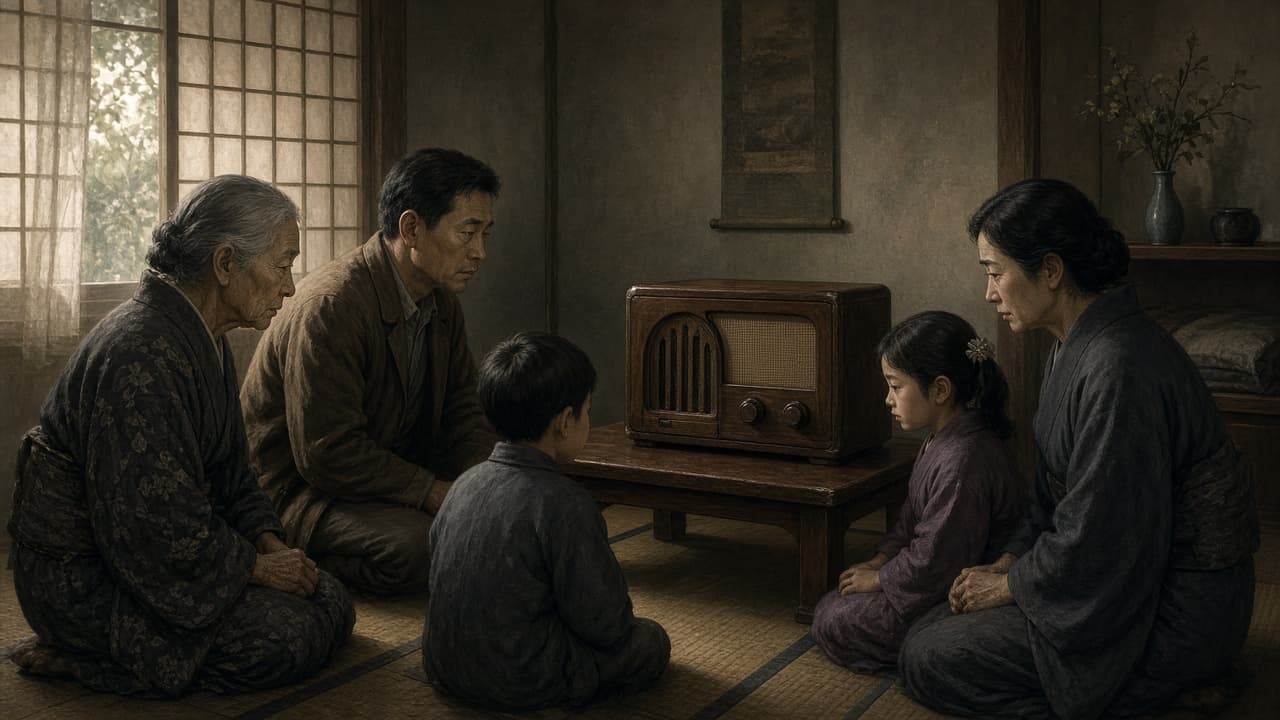
Emperor Hirohito's recorded address on 15 August 1945 told the Japanese people that the government would accept the Allied terms. The speech used formal language that never said the word surrender outright, yet the meaning was clear after Hiroshima, Nagasaki and the Soviet entry into the war against Japan. For a public raised on imperial divinity and total war rhetoric, hearing the emperor's voice on radio was itself a shock. The decision ended organized national resistance even before the formal signing in September.
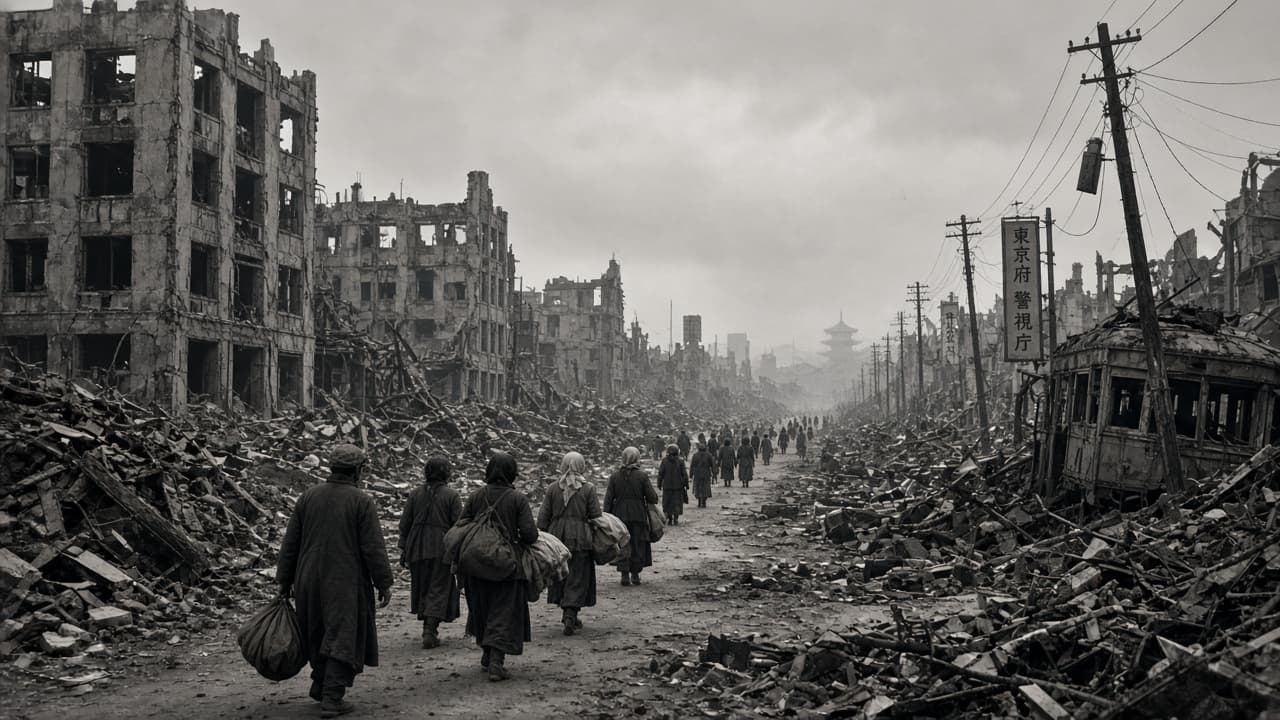
Tokyo and other cities already lay in burnt grids from months of firebombing. Survivors walked ruined streets looking for food, relatives and intact roofs. Acceptance of defeat did not instantly restore housing or medicine. It did stop further atomic and conventional attacks and opened the occupation period under Allied authority. Holding Hirohito's portrait beside the rubble image keeps both the political act and the civilian landscape in one frame: a throne deciding and a capital already paying the price of the war the throne had overseen.
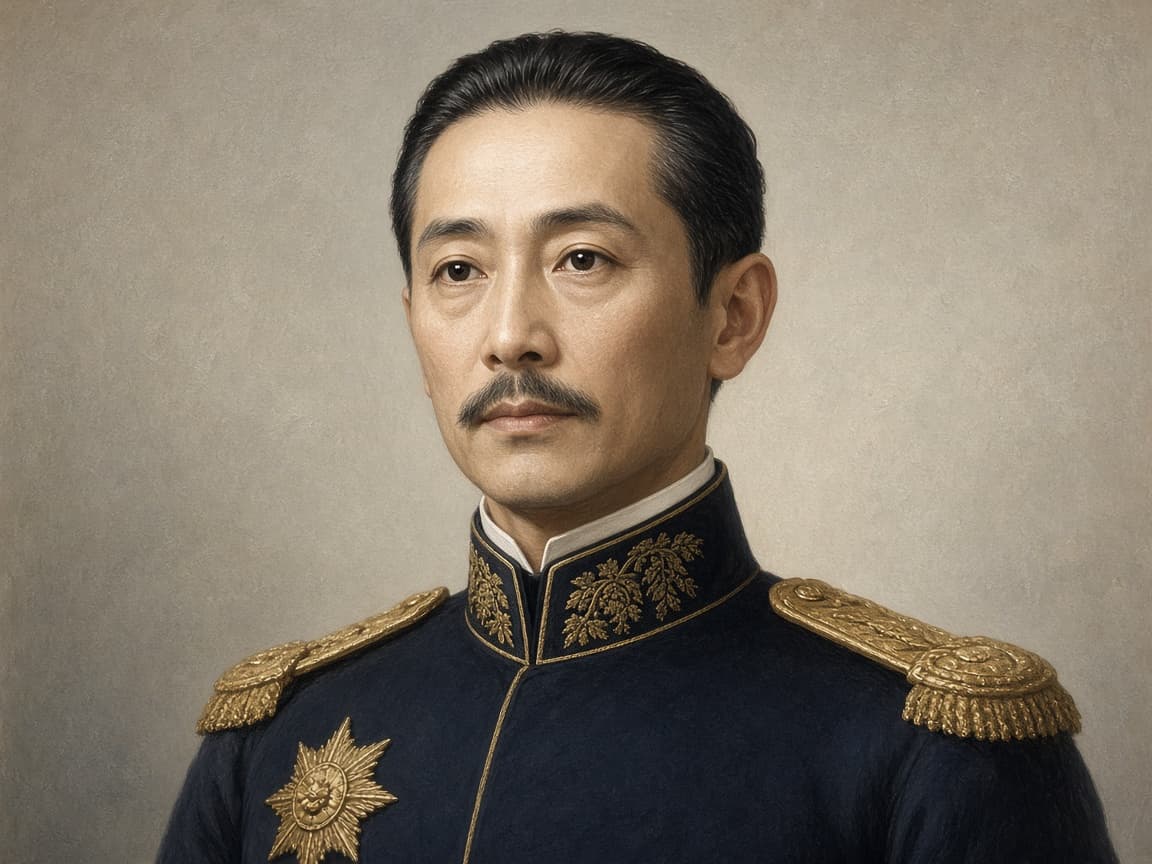
Hirohito's role was unusual in a system where emperors often reigned above open politics. In an imperial conference, he spoke for ending the war. Military officers who preferred death to surrender plotted briefly to block the broadcast. The coup attempt failed. Recording the Jewel Voice Broadcast (Gyokuon-hoso) and getting it on air became a drama of hidden discs and loyal staff. Citizens heard their emperor's classical language telling them to endure the unendurable.
Allied publics erupted in V-J celebrations, even as fighting and local surrenders took more days to finish across Asia. Prisoners of war waited for liberation. Colonial empires that Japan had shattered (and that Western powers hoped to reclaim) entered a new struggle over independence. In China, Korea, Vietnam and Indonesia, August 1945 was not a simple peace. It was a hinge into other wars and revolutions.
Responsibility questions still fill books. How much did the atomic bombs decide the outcome versus Soviet entry versus Japan's already collapsing logistics? Historians disagree on weights. What the 14 August decision clearly did was choose capitulation over a final homeland battle that Japanese militarists had threatened to make catastrophically costly. Millions of Asian civilians already dead in Japan's war of aggression stand beside Japanese dead in the calculus of that summer. No honest anniversary counts only one column.
Occupation followed under General Douglas MacArthur. Demilitarization, a new constitution, land reform and war-crimes trials reshaped Japan. Hirohito remained as a symbolic emperor under American preference for continuity. That choice remains controversial among those who wanted a clearer reckoning with wartime leadership.
For families, the date meant sons might come home or that ashes would confirm they would not. Food remained scarce. Cities were ash. The political word "surrender" sat on top of private hunger. Reading 14 August only as geopolitics misses that domestic wreckage.
Keep the calendar clear. Decision and Allied announcement: 14 August in many Western records. Emperor's broadcast to Japan: midday 15 August Japan time. Formal surrender ceremony: 2 September. All three belong to the ending. Confusing them produces avoidable arguments about which plaque is "correct."
Allied occupation policy mixed punishment with reconstruction: demobilization, food aid, constitutional drafting and trials for war leaders. Japanese society debated responsibility for aggression in Asia while rebuilding bombed cities. The 14 August decision did not answer every legal or moral question. It stopped the shooting that had killed millions and opened a new political order under American supervision that would reshape East Asia for generations. War-crimes trials in Tokyo and Allied capitals prosecuted leaders for aggression while ordinary veterans returned to rebuilt economies. Japanese textbooks and memorials still argue over how to teach empire, defeat and atomic bombing together. The August acceptance ended combat. It began a long domestic argument about what the nation owed its neighbors and itself.
Eagle Frame's takeaway: 14 August 1945 is when Japan accepted Potsdam's terms after Hirohito forced a choice. Know Hiroshima, Nagasaki and the Soviet attack as the week's pressures, know the radio broadcast that followed and know that formal peace still waited until September.