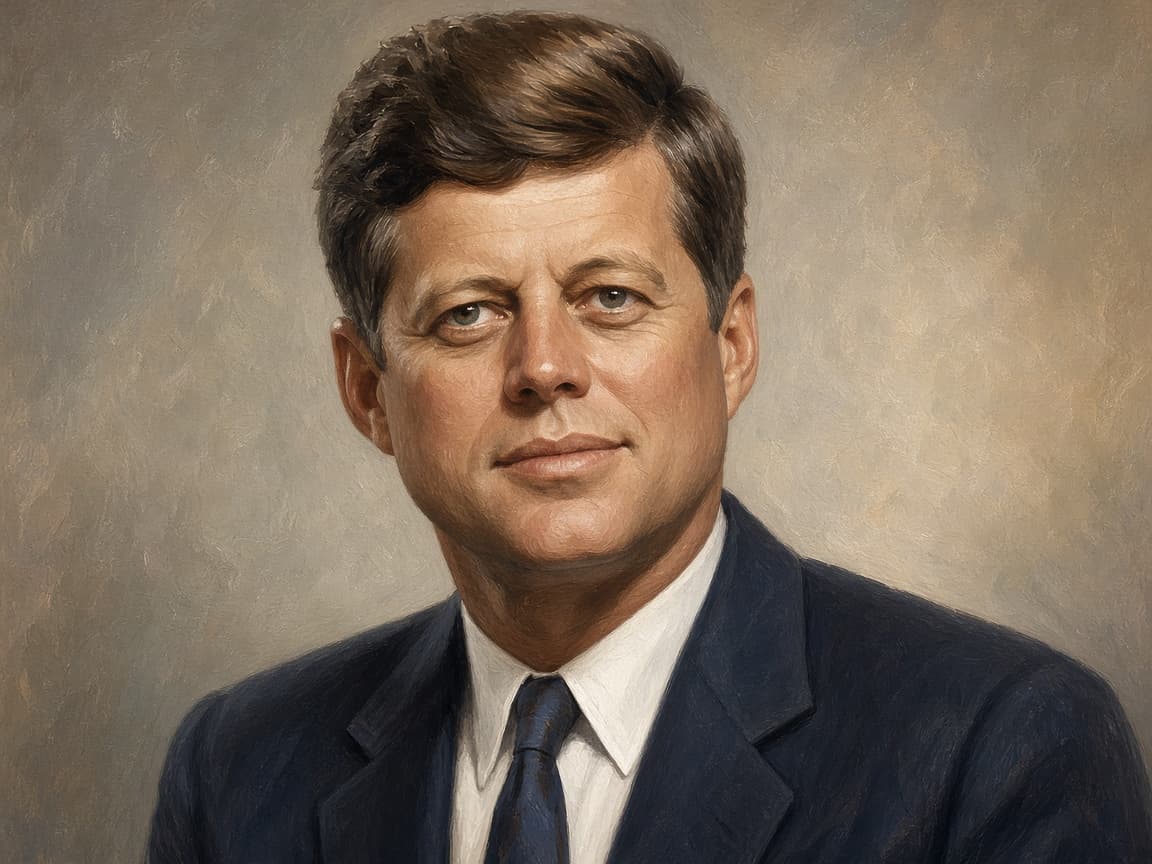
On this day: Kennedy tells Rice University America will go to the Moon
On 12 September 1962 in Houston, John F. Kennedy framed the Moon landing as a hard national goal. Here is what the speech asked for and how the race worked.
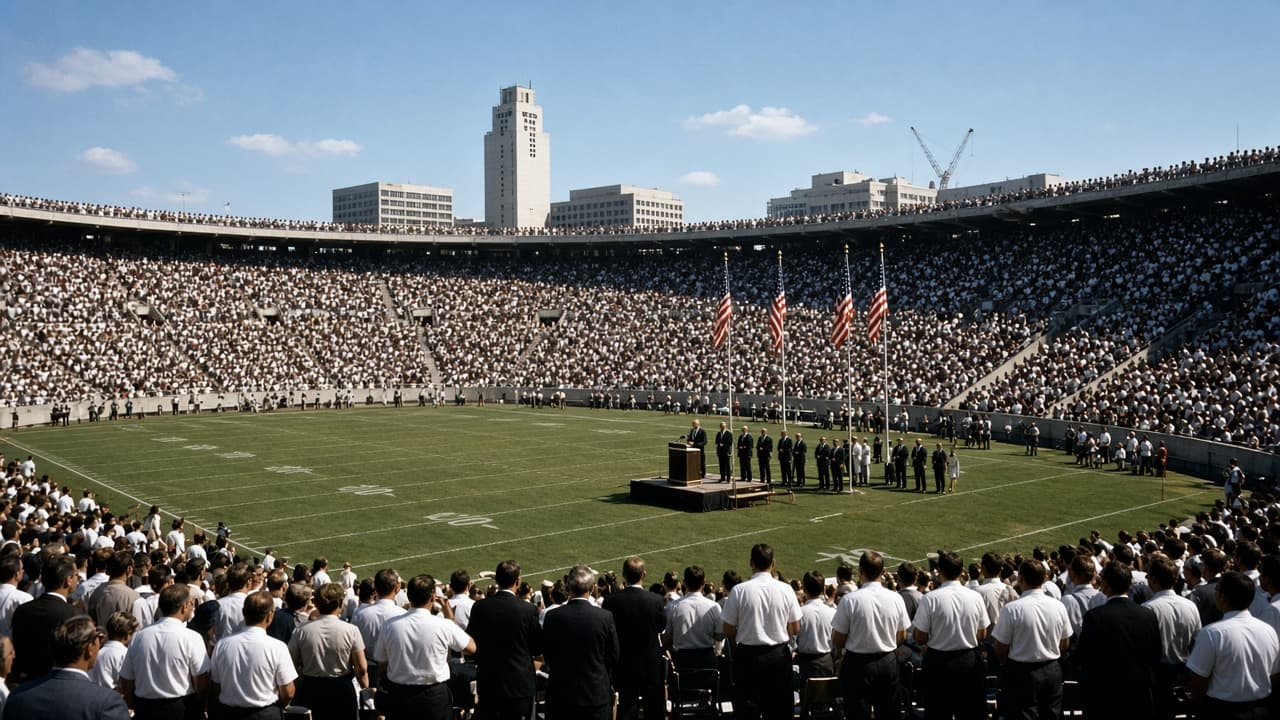
On 12 September 1962, President John F. Kennedy spoke at Rice University Stadium in Houston before tens of thousands of people. The address is remembered for one line: America would choose to go to the Moon in that decade, not because it was easy, but because it was hard. The speech was a public sales pitch for the Apollo program after the Soviet Union had already sent the first satellite and the first human into orbit. Kennedy needed Congress, contractors and voters to treat the deadline as real.
Start with what he was asking for. Landing people on the Moon and bringing them home meant rockets larger than anything then flying, new guidance computers, heat shields that could survive re-entry and a whole industrial network across the United States. Factories, universities and test ranges had to line up. Failures would be public. Success would still cost lives along the way, as the later Apollo 1 fire showed. The Rice speech made the political bet audible before the hardware was ready.
Houston’s Manned Spacecraft Center (later Johnson Space Center) was rising nearby. Rice was not a random campus visit. It was a speech aimed at the region that would help run human spaceflight: mission control, crew training and the engineering community that fed Apollo. Locals heard a president tell them their city sat on the path to the Moon. National listeners heard a deadline they could repeat in one sentence.
Why the Moon? Kennedy listed other hard goals people already understood: climbing the highest mountain, flying the Atlantic, even Rice playing Texas. The Moon was a finish line the public could picture. It organized money, talent and prestige in the Cold War. After Sputnik in 1957 and Yuri Gagarin’s orbital flight in 1961, U.S. leaders feared looking second in a contest that mixed science with national status. A lunar landing was harder than a brief hop into space. That hardness was the point.
Critics then and later noted the cost and the military shadow of rocket technology. The same booster families that lifted astronauts also grew out of ballistic-missile work. Supporters answered that science, industry and national morale needed a clear target. Both arguments were partly true. Apollo spent vast public money and employed hundreds of thousands of people at its peak. It also produced materials, computing and management methods that spilled into civilian life. The speech did not settle those trade-offs. It locked a deadline onto them.
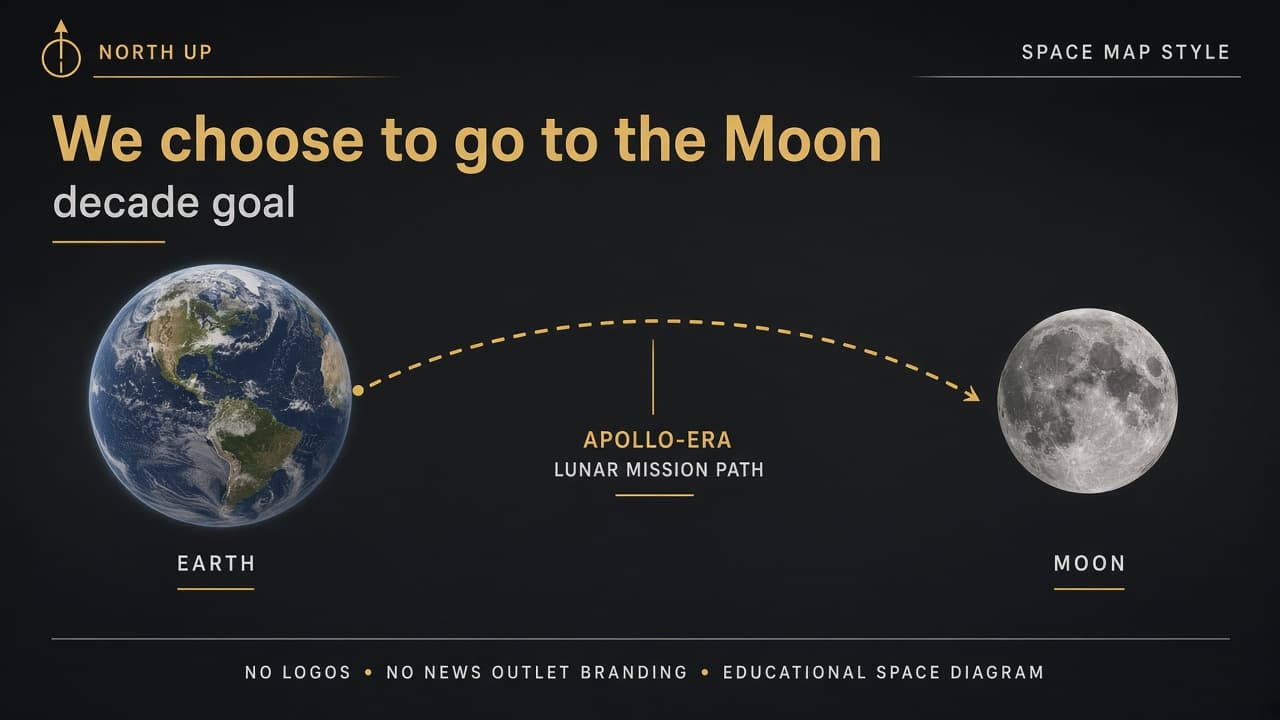
How the mission path works, in short: a giant rocket leaves Earth, a spacecraft coasts toward the Moon, a lander separates for the surface while a command ship waits in lunar orbit, then the crew reunites and re-enters Earth’s atmosphere at extreme speed. Kennedy’s speech did not invent those engineering steps. Lunar-orbit rendezvous and the Saturn V architecture matured through NASA debate after the speech. What Rice did was lock political will behind the goal when failure would have been public and measurable.
Money and schedule followed the rhetoric. NASA’s budget climbed through the mid-1960s as contractors built stages, capsules and test stands from Huntsville to Florida to California. Project Mercury and Gemini were the rehearsal flights that proved orbital work, spacewalking and rendezvous before Apollo risked a lunar landing. Rice was the public charter. Those earlier programs were the practice that made the charter believable.
Apollo 11 would land Neil Armstrong and Buzz Aldrin in the Sea of Tranquility in July 1969, with Michael Collins in lunar orbit, inside the decade Kennedy named. The president did not live to see it. Assassination in November 1963 cut his term short. Successors kept funding the program through crisis and triumph. The Rice sentence outlived the man who spoke it because agencies and contractors treated the decade end as a hard stop, not a slogan.
Read beside Mae Jemison’s 1992 flight on the same calendar date, the Rice speech is the earlier half of a long American space story: first a national bet on Apollo, later a more diverse shuttle-era crew doing science in orbit. Different machines. Same September day on the calendar. One date sold a destination. The other showed who might crew the next generation of vehicles.
Eagle Frame’s takeaway: 12 September 1962 is when a president turned a technical program into a sentence the public could repeat. Hard goals still need that kind of clarity. Know the speech, know Houston’s rising center and know that Apollo’s success did not erase the cost or the politics that paid for it.