On this day: Jimmy Hoffa disappears
On 30 July 1975, the former Teamsters president Jimmy Hoffa walked into a restaurant car park in suburban Detroit and was never seen again. He was declared dead in 1982, and half a century of searching has produced no body.
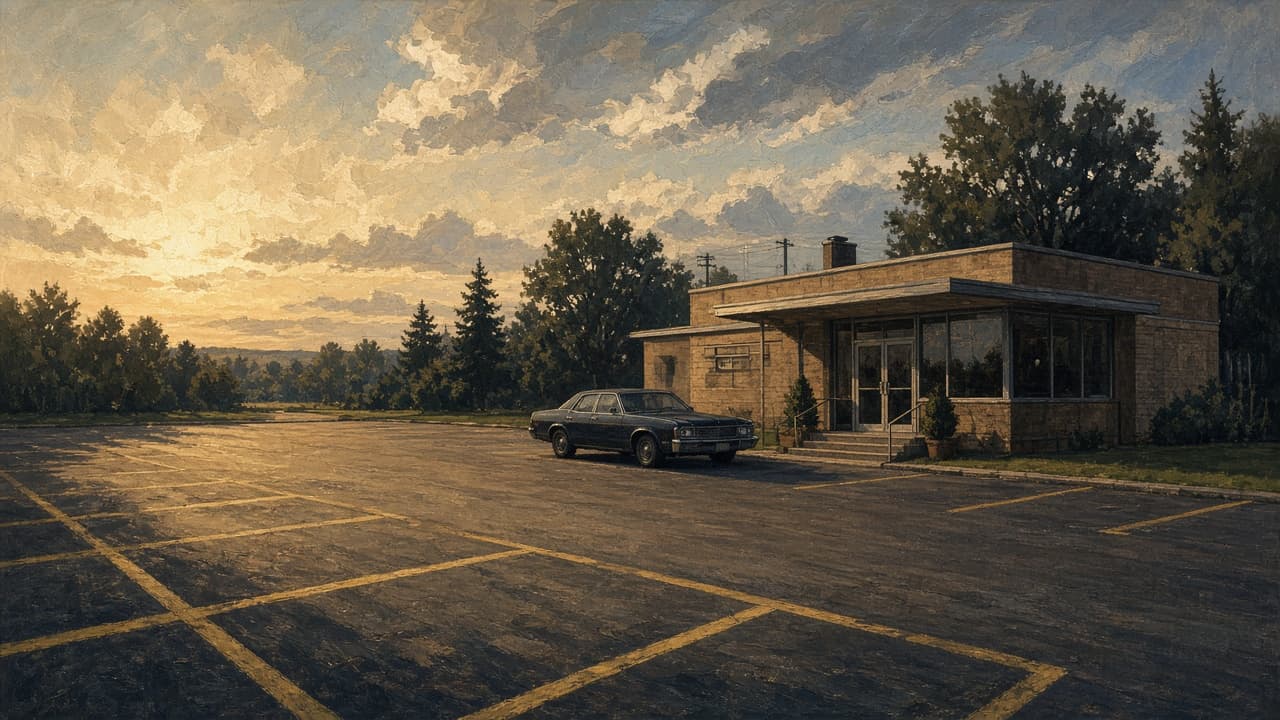
Jimmy Hoffa arrived at the Machus Red Fox restaurant in Bloomfield Township, north of Detroit, at about two in the afternoon on 30 July 1975. He was expecting to meet two men. When they had not appeared by around 2:15 he used a payphone to call his wife Josephine and complain that he had been stood up. Witnesses in the car park later described him standing outside, then getting into a maroon car with other people in it. His own unlocked Pontiac was still in the lot the next morning. Hoffa was 62. Nobody has produced credible evidence of what happened after that phone call.
To understand why the disappearance became a national obsession, you have to know how large Hoffa was in American life. He was born in Brazil, Indiana, in 1913, lost his father at seven and started organising as a teenager on a Kroger grocery loading dock in Detroit, where he led a walkout over strawberries thawing on a platform. He rose through the International Brotherhood of Teamsters and became its president in 1957. Under him the union grew past two million members and won the National Master Freight Agreement in 1964, the first contract to cover American truck drivers under a single national standard. For working drivers that meant a genuine jump in wages and conditions, and many of them adored him for it long after everything else.
The money is where the trouble sat. The Teamsters Central States Pension Fund held enormous sums, and Hoffa directed loans from it, including to Las Vegas casino projects with organised crime backing at a time when no ordinary bank would touch them. He never hid that he dealt with mobsters. His defence was that his industry was full of them and that a union which refused to talk to anybody unsavoury would lose.
That brought Robert F. Kennedy. As counsel to the Senate McClellan Committee from 1957 and then as attorney general, Kennedy pursued Hoffa with an intensity that struck even sympathetic observers as personal, and the hostility ran both ways. Kennedy assembled a unit inside the Justice Department known informally as the Get Hoffa squad. Prosecutions failed repeatedly until 1964, when Hoffa was convicted of jury tampering in Chattanooga and separately of fraud involving the pension fund in Chicago. He exhausted his appeals and entered the federal penitentiary at Lewisburg, Pennsylvania, in March 1967 to serve thirteen years.
He kept the union presidency in name for a while and handed day-to-day control to Frank Fitzsimmons, a loyal deputy he expected to keep the seat warm. In December 1971 Richard Nixon commuted the sentence, and Hoffa walked out after less than five years. The commutation carried a condition: he was barred from any union activity until 1980. Hoffa always insisted that restriction had been inserted without his knowledge, and he spent the next three and a half years litigating to overturn it while campaigning openly to take the presidency back. Fitzsimmons had by then settled into a comfortable arrangement with the organised crime figures who used the pension fund, and Hoffa's return threatened it.
The men he expected to meet were Anthony Giacalone, a Detroit crime figure known as Tony Jack, and Anthony Provenzano, a New Jersey Teamsters official and Genovese family member called Tony Pro who had fallen out with Hoffa in prison. Both denied any meeting had been arranged. Both had conspicuously public alibis for the afternoon, Giacalone at a Detroit athletic club and Provenzano playing cards in New Jersey, which investigators regarded as suspiciously tidy rather than exculpatory. An FBI summary written in January 1976, known as the Hoffex memo, laid out the working theory that Hoffa was lured to a meeting, driven a short distance and killed within hours. No charge was ever brought.
The suspect list has stayed roughly stable for fifty years. Charles O'Brien, Hoffa's foster son, had borrowed a maroon Mercury Marquis Brougham from Giacalone's son that day and gave shifting accounts of his movements. In 2001 the FBI reported that DNA testing found a hair in that car consistent with Hoffa, placing him inside it, though O'Brien denied involvement until his death in 2020. Frank Sheeran, a Teamsters official, claimed in the 2004 book I Heard You Paint Houses that he had shot Hoffa in a Detroit house, a confession dramatised in the 2019 film The Irishman and rejected by most of the investigators and journalists who have examined the forensic detail.
The searches have been relentless and uniformly fruitless. The story that Hoffa was buried under Giants Stadium in New Jersey is folklore with no evidence behind it, though it has outlived several of the people who repeated it. Agents dug up a horse farm in Milford Township in 2006, tore up a driveway in Roseville in 2012 after a tip and excavated a field in Oakland Township in 2013 on information from a former mobster. In late 2021 the FBI searched a former landfill under the Pulaski Skyway in Jersey City after a deathbed account from a landfill worker, and announced nothing. Hoffa was declared legally dead on 30 July 1982, seven years to the day after he vanished.
What the case actually changed was the union. Federal scrutiny of the Teamsters intensified through the 1980s, and in 1989 the union settled a racketeering suit brought by the government by accepting an independent review board and court supervision that lasted into the 2010s, along with direct election of its president by the membership. The pension fund abuses that Hoffa's era normalised also helped drive the Employee Retirement Income Security Act of 1974, which set federal standards for how private pensions must be managed and who may borrow from them.
Eagle Frame's takeaway: 30 July 1975 left American labour history with an unsolved ending, and the mystery has slowly replaced the man. Hoffa negotiated the first national freight contract and raised the living standards of hundreds of thousands of drivers, and he is remembered mainly as a body nobody can find.