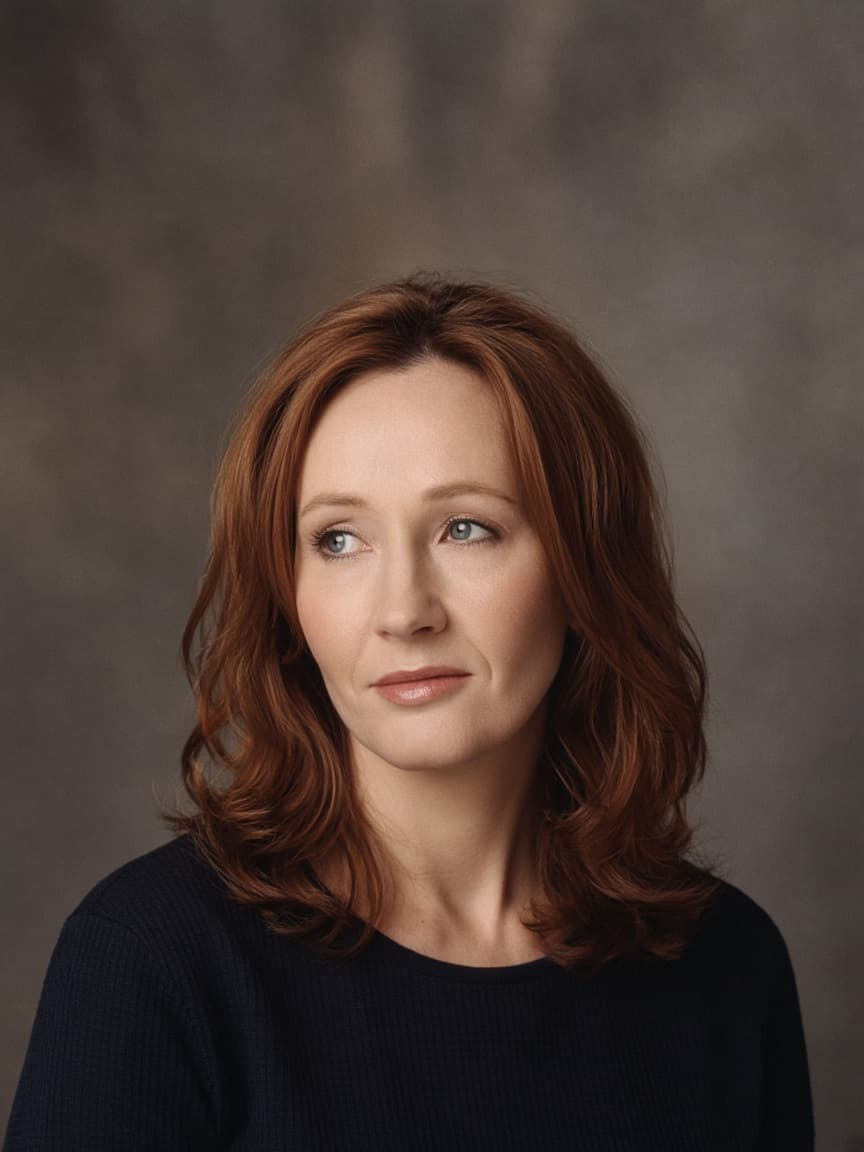
On this day: J.K. Rowling is born
Joanne Rowling was born on 31 July 1965 in Yate, near Bristol. The seven Harry Potter novels she began writing in the 1990s went on to sell more than 600 million copies and reshaped how children's books are published and sold.
Joanne Rowling was born on 31 July 1965 at Cottage Hospital in Yate, a town in South Gloucestershire just outside Bristol. Her parents, Peter and Anne, had met on a train to Scotland. The family moved to Winterbourne and then to Tutshill near Chepstow, on the Welsh border, where she went to Wyedean School. She read French and Classics at the University of Exeter, spent a year in Paris and afterwards worked as a researcher and bilingual secretary in London, including a stint at Amnesty International. None of that suggested a publishing phenomenon. The date is worth marking because of what followed and because of how narrowly it nearly did not happen.
The idea arrived in 1990 on a delayed Manchester to London train. Rowling has described a boy who did not know he was a wizard appearing in her head more or less complete, and having no working pen with her, so she spent four hours thinking rather than writing. She began drafting almost immediately. Later that year her mother died at 45 after years with multiple sclerosis, and the loss pushed its way into the books. The orphaned central character, the Mirror of Erised that shows the dead standing behind the living and the general refusal to treat grief as something children cannot handle all date from that period.
The next few years were difficult and are often smoothed over in the retellings. Rowling moved to Porto to teach English, married the Portuguese journalist Jorge Arantes in 1992, had a daughter, Jessica, in 1993 and returned to Britain that December with a suitcase, a baby and three chapters. She settled in Edinburgh near her sister, was diagnosed with clinical depression, lived on state benefits for a period and wrote in cafes partly because walking got the baby to sleep and partly because a cafe was warm. She has since been blunt that she was poor rather than picturesquely bohemian, and she finished the manuscript on a manual typewriter, typing the whole thing out twice.
Rejection was routine. The literary agent Christopher Little took her on after his office read the sample chapters, and then twelve publishers turned the book down. Bloomsbury, a small house at the time, said yes in 1996 after the chairman Nigel Newton passed the first chapter to his eight-year-old daughter Alice, who asked for the rest. The advance was about 1,500 pounds and an editor advised Rowling to get a day job, because children's books did not pay. Bloomsbury also suggested she publish under initials rather than an obviously female first name, on the theory that boys would be less likely to pick it up. She had no middle name and borrowed the K from her grandmother Kathleen.
Harry Potter and the Philosopher's Stone was published on 26 June 1997 in a first print run of about 500 copies, roughly 300 of which went to libraries. Those library copies are now among the most valuable modern first editions in English. The book won the Nestle Smarties Book Prize that year, and word of mouth among children did the rest. Scholastic bought American rights at auction for 105,000 dollars, an unusually large sum for an unknown children's author, and published it in September 1998 with the title changed to Sorcerer's Stone.
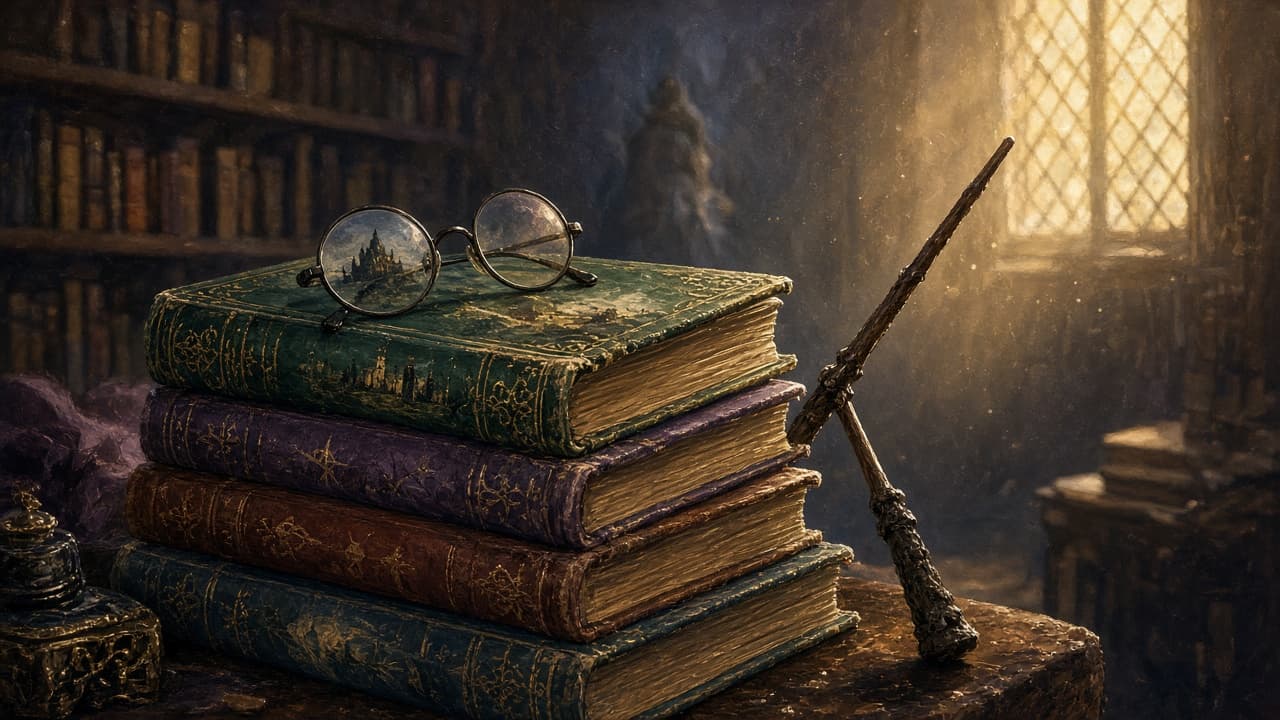
Seven novels appeared between 1997 and 2007, and the publishing machinery around them grew with each one. Embargoes were enforced by contract, warehouses were guarded and booksellers opened at midnight for queues of children in costume. The final volume, Harry Potter and the Deathly Hallows, was released on 21 July 2007 and sold roughly 11 million copies in the United Kingdom and the United States in its first 24 hours. The series has now sold more than 600 million copies and been translated into more than 80 languages, including Latin and Ancient Greek. Eight films released between 2001 and 2011 took in more than 7 billion dollars, and the Warner Bros. studio tour, the Universal theme park areas and the stage play Harry Potter and the Cursed Child extended the franchise well past the books.
The effect on the book trade was structural rather than sentimental. Publishers discovered that children would read 600-page novels, which changed acquisition policy across the sector and opened the way for the long young adult series that followed. Bookshops learned to treat a release as an event. The New York Times created a separate children's bestseller list in 2000, in part because the adult list had been occupied by the same three titles for more than a year. Reading research from the period is more mixed than the publicity suggested, but librarians in Britain and the United States consistently reported a measurable jump in borrowing among children of primary school age.
Rowling kept working after the series ended, and did it partly in disguise. The Casual Vacancy, a novel for adults set in a small English town, appeared in 2012. In 2013 she published The Cuckoo's Calling, a detective novel, under the pen name Robert Galbraith, and it sold modestly until a leak revealed the author. The Cormoran Strike series has continued since and has been adapted for television. She has also given away very large sums, founding the Volant Charitable Trust and the children's charity Lumos, and endowing the Anne Rowling Regenerative Neurology Clinic in Edinburgh in her mother's name.
There is a small coincidence readers still enjoy. Harry Potter's fictional birthday in the novels is also 31 July, in 1980, which means the character and the author share a date fifteen years apart. Fans mark it every year. Her public comments on subjects unrelated to her fiction have made her a divisive figure in the years since the series ended, and that argument sits outside the publishing record described here.
Eagle Frame's takeaway: 31 July 1965 produced an author whose manuscript was rejected twelve times and printed 500 copies at first. The useful lesson from the Harry Potter story is not that the books were destined to succeed but that the industry judging them had almost no idea what children would actually read.