On this day: the plot to kill Hitler fails
On 20 July 1944, Claus von Stauffenberg left a briefcase bomb under a map table at Hitler's headquarters in East Prussia. The bomb went off, Hitler survived, and the coup that depended on his death collapsed within hours.
At 12:42 on 20 July 1944, a bomb exploded inside a conference barrack at the Wolfsschanze, the Wolf's Lair, Adolf Hitler's field headquarters in a forest in East Prussia. Four people in the room died. Hitler was injured, with a perforated eardrum, burns and splinter wounds, and walked out. The man who had placed the briefcase, Colonel Claus Schenk Graf von Stauffenberg, was already on his way to the airfield, convinced that nobody in that room could have survived.
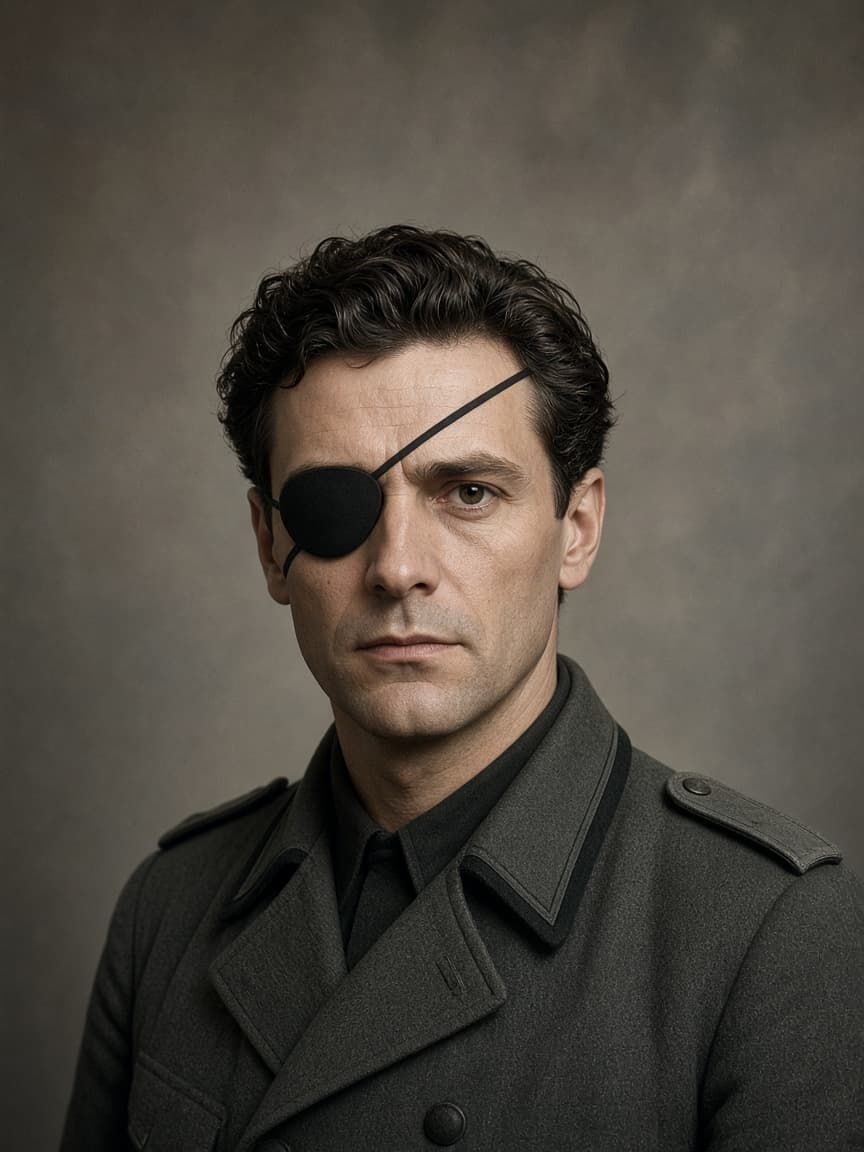
Stauffenberg was 36, an aristocratic Catholic career officer from Swabia. He had supported aspects of the regime early, including its territorial revisionism, and turned against it over the treatment of Jews and of civilians in Poland and the Soviet Union, and over Hitler's conduct of the war. He was severely wounded in Tunisia in April 1943, losing his left eye, his right hand and two fingers of his left hand. After recovery he was posted to the Replacement Army in Berlin, a job that gave him something the conspiracy had lacked: regular access to Hitler's briefings.
The plan, Operation Valkyrie, worked by turning a genuine emergency plan against the regime. Valkyrie was an existing authorized scheme for the Replacement Army to take control of Germany in the event of internal unrest, such as an uprising by the millions of foreign forced labourers in the country. The conspirators, principally Stauffenberg and General Friedrich Olbricht, rewrote its orders so that once activated it would have army units seize SS and Gestapo offices, ministries and communications rather than defend the regime.
The bomb was British-made plastic explosive with a chemical pencil fuse: a glass capsule of acid crushed to start corroding a wire that, once it snapped, released the striker. It was silent and took about ten minutes. Two packs had been prepared. Stauffenberg was interrupted while arming them in a side room by an orderly, and with three fingers on one hand he managed to prime only one before he had to go in. The second pack, still capable of doubling the blast, went into his aide's bag and was later thrown from the car.
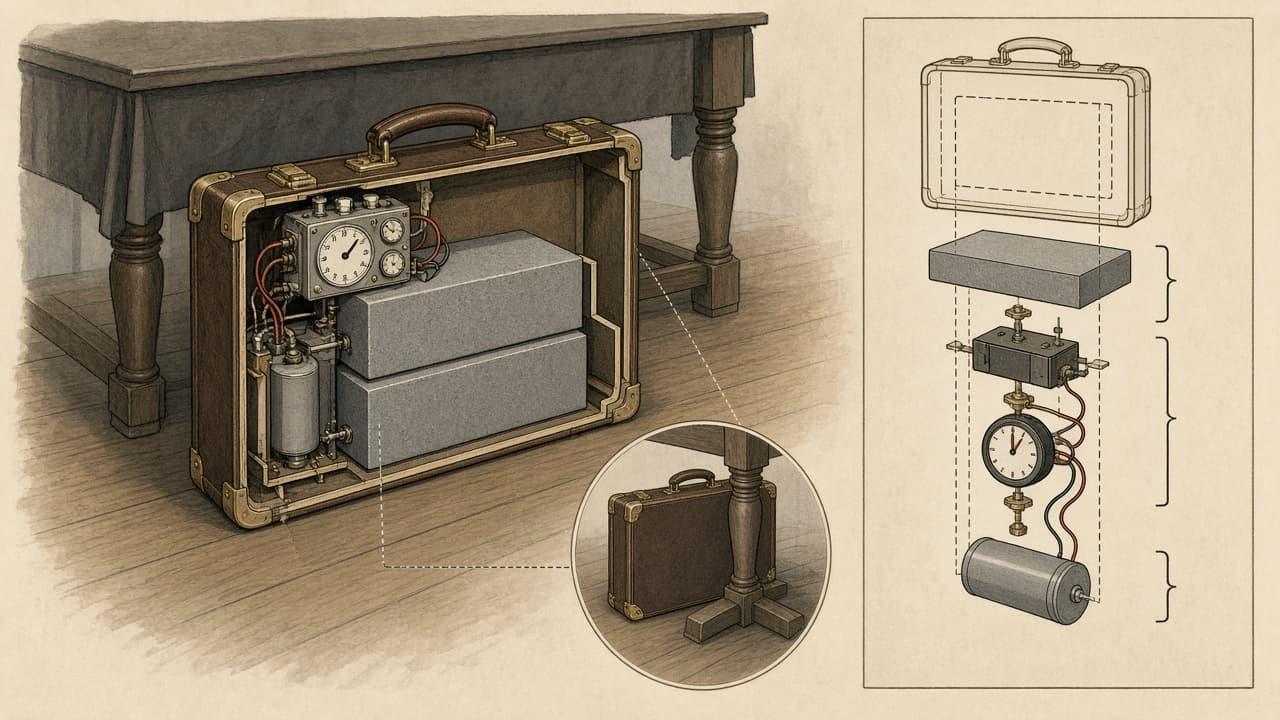
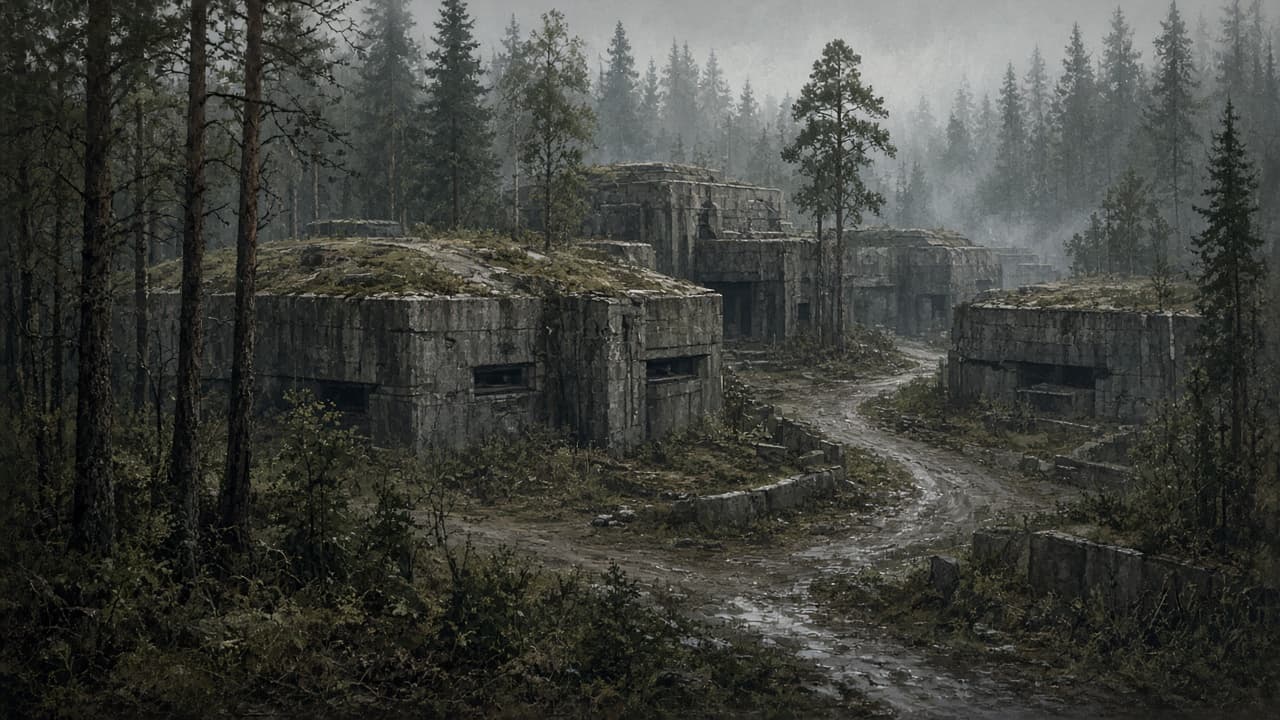
Two accidents of geometry saved Hitler. The briefing had been moved from the concrete bunker to a wooden barrack because of the summer heat, so the blast wave blew out through the windows and walls instead of reflecting back through the room. And after Stauffenberg left the briefcase beside the table leg and slipped out to take a telephone call, another officer found it in his way and moved it to the far side of a thick oak support. That support stood between the explosive and Hitler.
Stauffenberg saw the barrack destroyed from a distance, bluffed his way through three checkpoints and flew to Berlin, a journey of about three hours. That flight is where the coup was lost. In Berlin, Olbricht had waited for confirmation before issuing the Valkyrie orders. By the time Stauffenberg landed and insisted Hitler was dead, hours had gone and Wolfsschanze had begun telephoning Berlin to say the opposite. Officers who might have committed now had two contradictory accounts and chose the safer one.
The plotters held the Bendlerblock, the army headquarters on Bendlerstrasse, through the evening. Orders went out to Paris, where the military governor Carl-Heinrich von Stulpnagel actually arrested more than a thousand SS and SD men, and to Vienna and Prague. Everywhere else the machinery stalled. The decisive failure was in Berlin itself: Major Otto Remer, ordered to arrest Propaganda Minister Joseph Goebbels, was instead put on the telephone to Hitler by Goebbels, recognized the voice and turned his battalion against the conspirators.
By late evening General Friedrich Fromm, the commander of the Replacement Army who had known of the plot and kept his distance, arrested the plotters to protect himself. Shortly after midnight, in the courtyard of the Bendlerblock under the headlights of a truck, Stauffenberg, Olbricht, Albrecht Mertz von Quirnheim and Werner von Haeften were shot. General Ludwig Beck, who was to have been head of state, was allowed to attempt suicide and then finished by a sergeant. Fromm was executed anyway in 1945.
The revenge was systematic. The Gestapo arrested around 7,000 people and roughly 4,980 were executed, a number that extended far beyond anyone involved in the plot to include relatives under the principle of Sippenhaft, kin liability. Show trials before the People's Court under Roland Freisler were filmed, with defendants deliberately humiliated, their belts removed so they had to hold up their trousers. Field Marshal Erwin Rommel, implicated peripherally, was given the choice of suicide or a trial that would destroy his family and took poison in October 1944.
The plot was not the only German resistance and it was not morally simple. Communist and social democratic networks, the Kreisau Circle, the students of the White Rose and individuals who hid Jews had all acted earlier and at similar cost. Many of the 20 July conspirators were conservative nationalists who had served the regime for years and who wanted to save Germany from defeat and from Soviet occupation as much as to end its crimes. Several had been complicit in those crimes. Historians have argued about this since the 1950s without resolving it.
Postwar Germany argued about it too. In the 1950s the plotters were still widely called traitors by parts of the West German public and by veterans' groups. Their rehabilitation was gradual. The Bendlerblock courtyard is now a memorial, the German Resistance Memorial Center occupies the building, and new Bundeswehr recruits are sworn in there on 20 July each year. The point of that ceremony is the idea, contested in 1944 and central now, that a soldier's oath does not cover crimes.
Eagle Frame's takeaway: 20 July 1944 came down to a wooden hut instead of a concrete bunker, a briefcase moved a metre to the other side of a table leg and three hours in the air while Berlin waited for confirmation. The plot failed and the war ran another ten months. What survived it is the demonstration that Germans inside the system tried, at the cost of thousands of lives, and the argument over what they were trying to save.