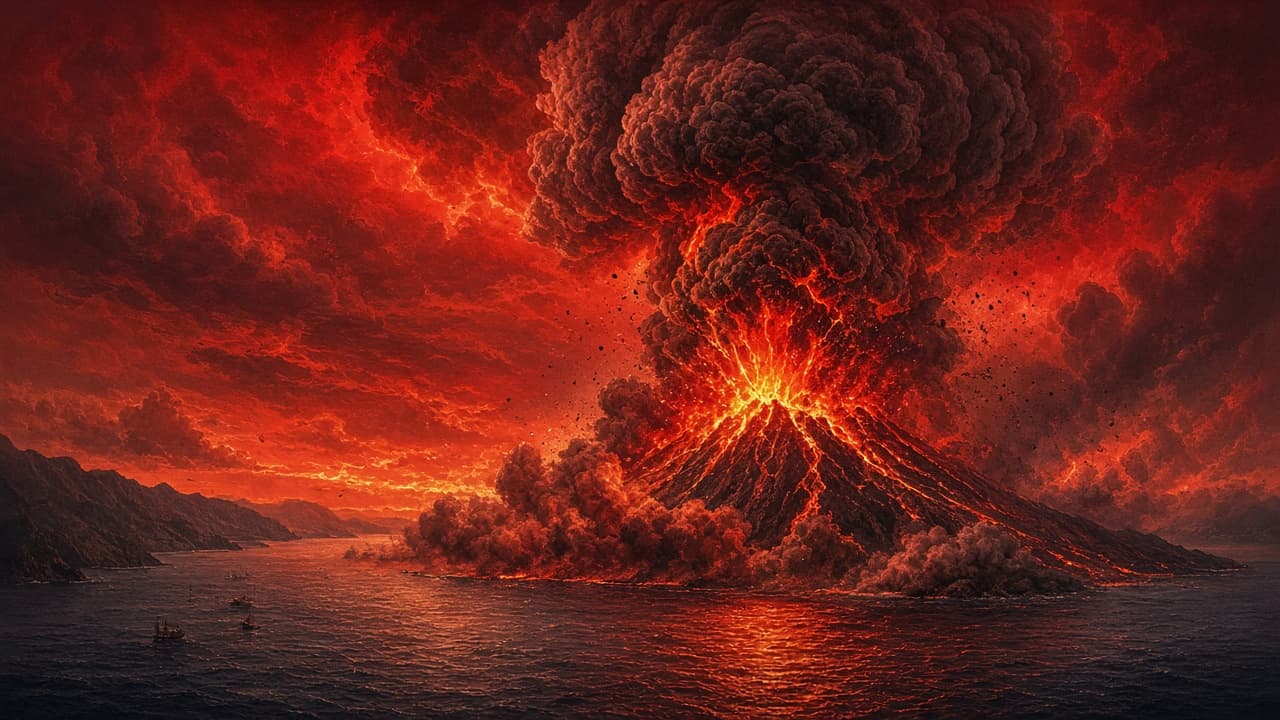
On this day: Krakatoa erupts catastrophically
On 26 August 1883, Krakatoa in the Sunda Strait entered its climactic phase. Explosions, tsunamis and ash killed tens of thousands and tinted skies around the world.
On 26 August 1883, the volcanic island of Krakatoa (also spelled Krakatau) in the Sunda Strait between Java and Sumatra entered the climactic stage of an eruption that had been building for months. Explosions on the 26th and early 27th destroyed most of the island, launched enormous ash columns and drove tsunamis that smashed coastal towns. Tens of thousands died, many from water rather than fire. Barometers and ears around the planet registered the blasts. Skies reddened for months as fine ash and aerosols circled in the stratosphere.
Start with the setting. Krakatoa sat in a volcanic arc where the Indian Ocean plate system pushes under Indonesia, melting rock and feeding magma chambers. An island volcano can look quiet for generations and still hold pressurized melt and gas. When water, collapse and fresh magma interact violently, eruptions become explosions rather than gentle lava flows. The 1883 events were among the loudest and deadliest in recorded history.
Krakatoa's climactic explosions drove ash and gas into the stratosphere while pyroclastic flows raced over water and shore. A cross-section diagram helps separate the pieces: rising plume, collapsing columns and lateral blasts that can skim a strait. Magma meeting seawater can flash to steam and intensify fragmentation. That mechanism chain is why an island volcano killed people tens of kilometers away who never saw lava. The sky itself became a hazard as darkness and falling pumice smothered coasts. Pumice rafts clogged shipping lanes and carried survivors' stories to ports that had only felt the boom.
Tsunami waves generated by collapse and displaced water erased coastal villages around the Sunda Strait. Ships reported walls of water and coasts stripped to mud. Death toll estimates climb into the tens of thousands, mostly from waves rather than ash alone. Global pressure pulses and vivid sunsets followed as aerosols circled the planet. Holding the plume diagram beside the wave image keeps the eruption honest: fire in the column, water on the shore, both from one geologic hour. Artists and scientists abroad recorded blood-red skies without yet knowing which volcano had painted them.
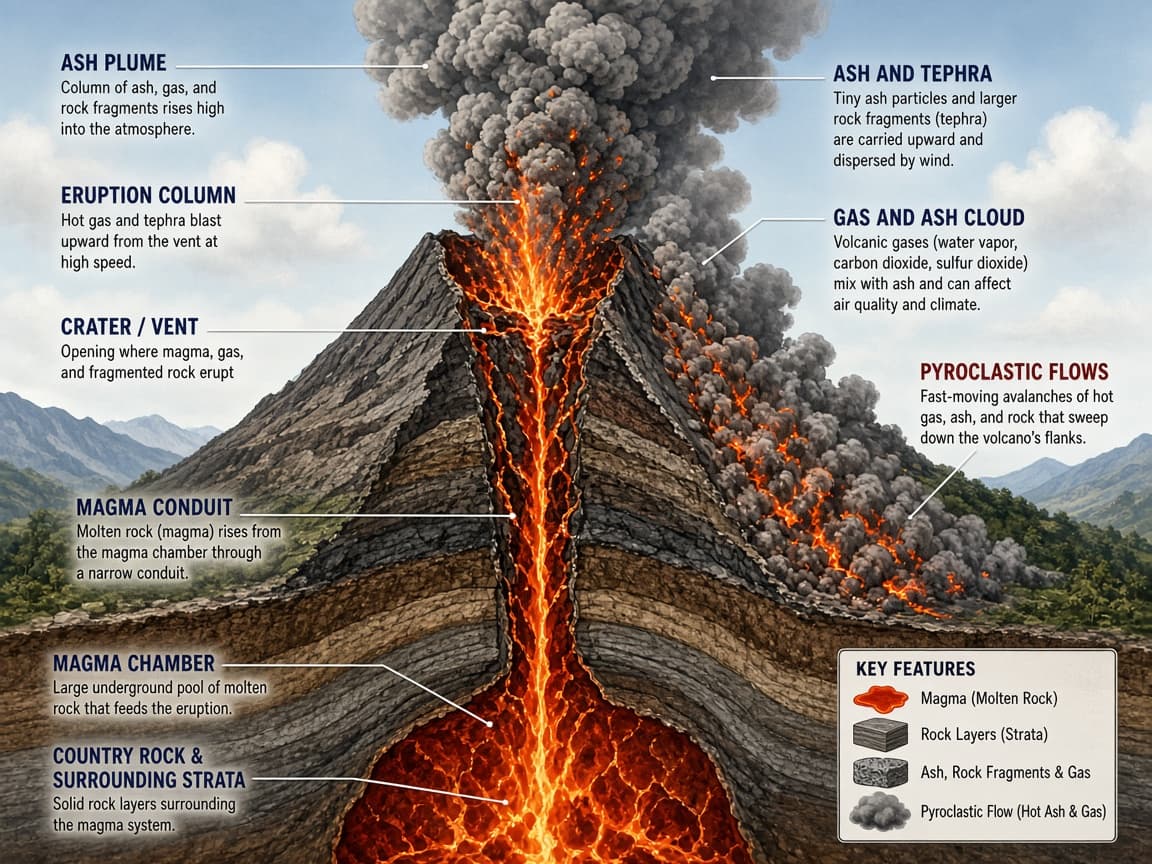
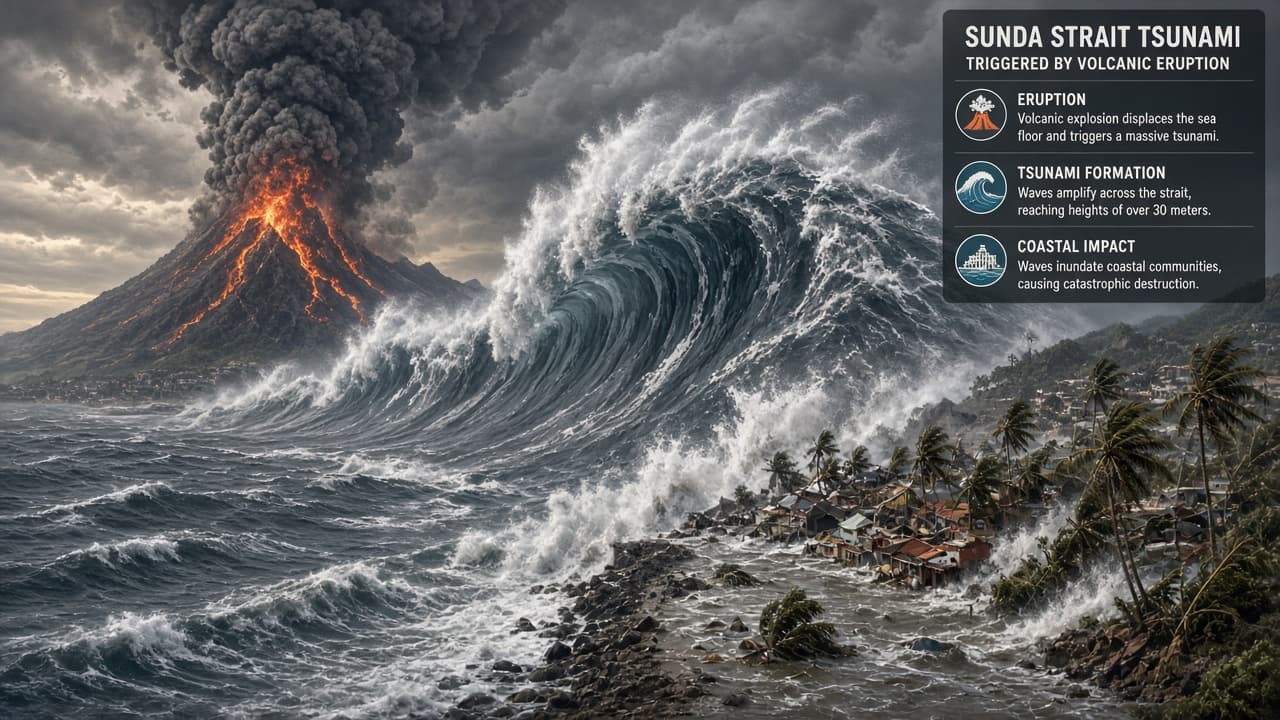
How the disaster killed, step by step. Magma fragmentation threw ash and pumice. Pyroclastic flows raced over sea and shore. Caldera collapse and displaced water sent tsunami waves into low coastal villages; those waves caused the majority of deaths. Ships reported darkness at noon and decks buried in ash. The sound of the main explosions carried thousands of kilometers. Telegraph cables and colonial newspapers turned local catastrophe into a global science story within days.
Why did sunsets change in London and New York? Powerful eruptions can loft sulfur dioxide into the stratosphere, where it forms sulfate aerosols that scatter light. Redder sunsets, cooler average temperatures for a year or more and odd optical effects followed 1883. Artists painted lurid evenings; farmers and scientists noticed weather shifts. The eruption became a case study in how a single mountain can nudge a planet's thin atmospheric skin.
Colonial Dutch authorities, local rulers and fishing communities faced relief with the limited tools of the 1880s. Survivor counts and damage reports filled official gazettes. Later geology mapped the ruined island and the new volcanic activity that eventually built Anak Krakatau ("Child of Krakatoa") in the caldera. That younger cone has erupted in modern times, including a deadly 2018 collapse-tsunami sequence, proof that the strait remains active. Scientists used 1883 to refine ideas about eruption columns, tsunami generation and global atmospheric transport. Pressure pulses recorded on weather instruments helped measure the energy of the blasts. The event sits beside Tambora 1815 in textbooks whenever teachers explain volcanic climate forcing. Popular culture borrowed the name for films and metaphors; the geology underneath the metaphor is denser and sadder.
For travelers who ferry through the Sunda Strait today, the horizon still holds volcanic cones and tourist boats. Memory should include the coastal dead of 1883, not only the postcard plume. A beautiful sky after a great eruption is often someone else's airborne grief.
Shipping in the Sunda Strait carried the first stunned reports: darkness, pumice rafts thick enough to slow hulls and coasts stripped of villages. Colonial administrators counted bodies imperfectly; modern tallies still range across tens of thousands. Muslim, Chinese and local communities around the strait absorbed losses that London laboratories later turned into graphs. Science globalized the event. Grief stayed local.
Compare Krakatoa with quieter eruptions that only dust a summit. The 1883 sequence combined magma fragmentation, seawater interaction, collapse and waves in a chain reaction that textbooks still unpack chapter by chapter. Students who learn "ash in the stratosphere" should also learn "water in the streets of Anjer." Mechanism and mortality belong on the same page.
Instruments far from Indonesia wrote their own subplot. Gasometers, pressure gauges and even the ears of people who heard distant booms became data points. Geophysics learned that the atmosphere is a drum a volcano can strike. That global sensor web, improvised from Victorian hardware, is why 1883 still appears in climate and acoustics papers rather than only in disaster anthologies. Anak Krakatau rose from the caldera and still reminds the strait that the same magma system can rebuild after total destruction.
Eagle Frame's takeaway: 26 August 1883 marks Krakatoa's climactic destruction of island, coast and ordinary life across the Sunda Strait. Know the tsunamis, know the global ash veil and you see how one volcano can rewrite both maps and sunsets.