On this day: the Large Hadron Collider sends its first beam
On 10 September 2008, CERN circulated protons through the LHC for the first time. Here is what the machine is and how a collider works.
On 10 September 2008, operators at CERN near Geneva sent the first beam of protons around the Large Hadron Collider. Control rooms applauded when the beam completed a full circuit. That day did not yet smash particles together for discovery physics. It proved that the world’s largest scientific instrument could guide a beam through its entire loop.
If you have only heard the name in headlines, start here. The Large Hadron Collider is a machine that accelerates tiny bits of matter to nearly the speed of light and steers them around a huge underground ring so they can meet head-on. Scientists study the debris of those meetings to learn what the universe is made of and which rules hold it together.
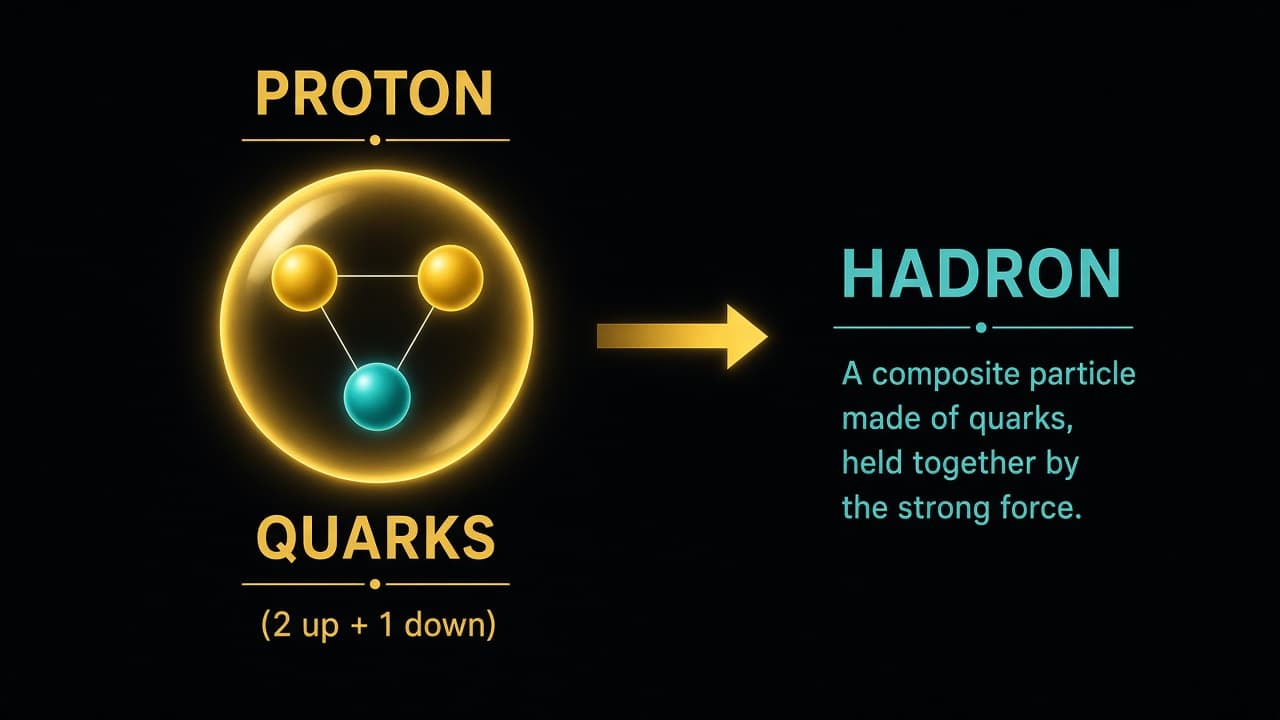
The middle word in the name matters. A hadron is a particle made of quarks held together by the strong force. Protons and neutrons are the familiar examples. The LHC mainly accelerates protons. Older machines sometimes collided electrons and positrons instead. Choosing hadrons lets physicists reach higher collision energies with a ring of a given size, at the cost of messier collisions that need clever detectors and a lot of data.
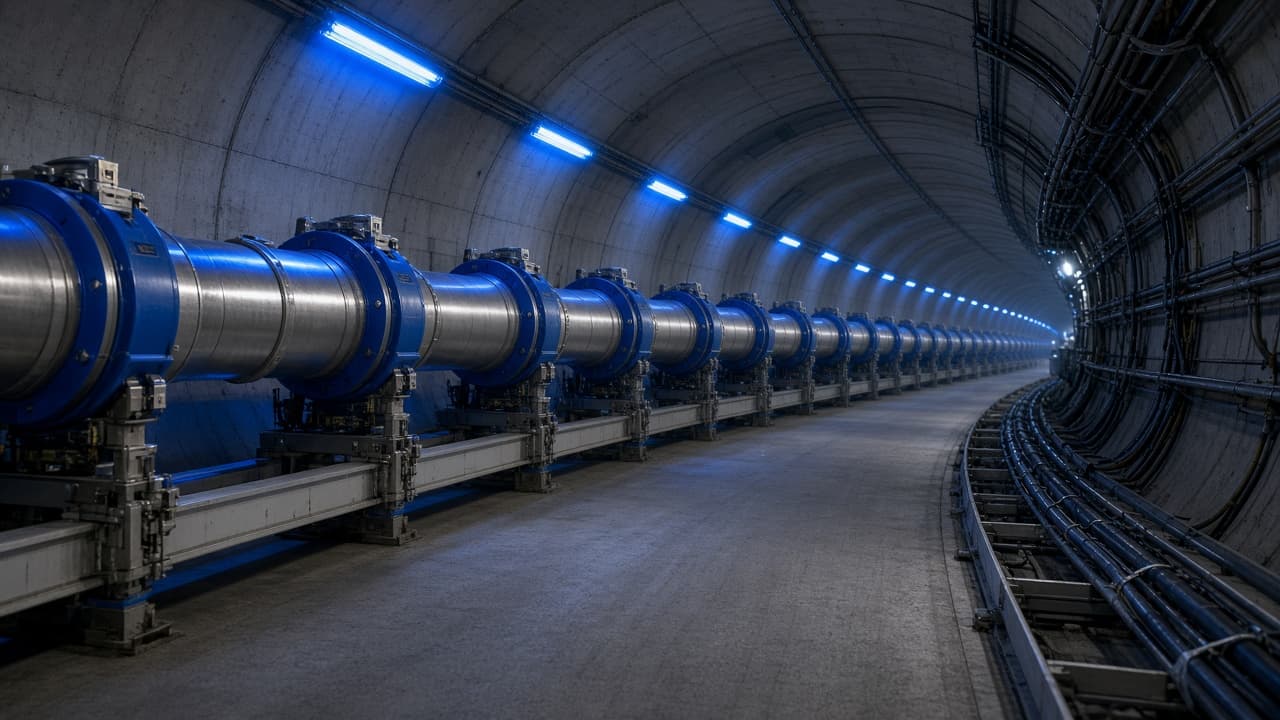
CERN is the European laboratory that hosts the collider on the French–Swiss border near Geneva. The LHC itself is a ring about 27 kilometers around, buried roughly 100 meters underground. Superconducting magnets bend and focus the beams. Radio-frequency cavities give the particles little pushes of energy on each pass until they are traveling so fast that a lap takes only tens of microseconds.
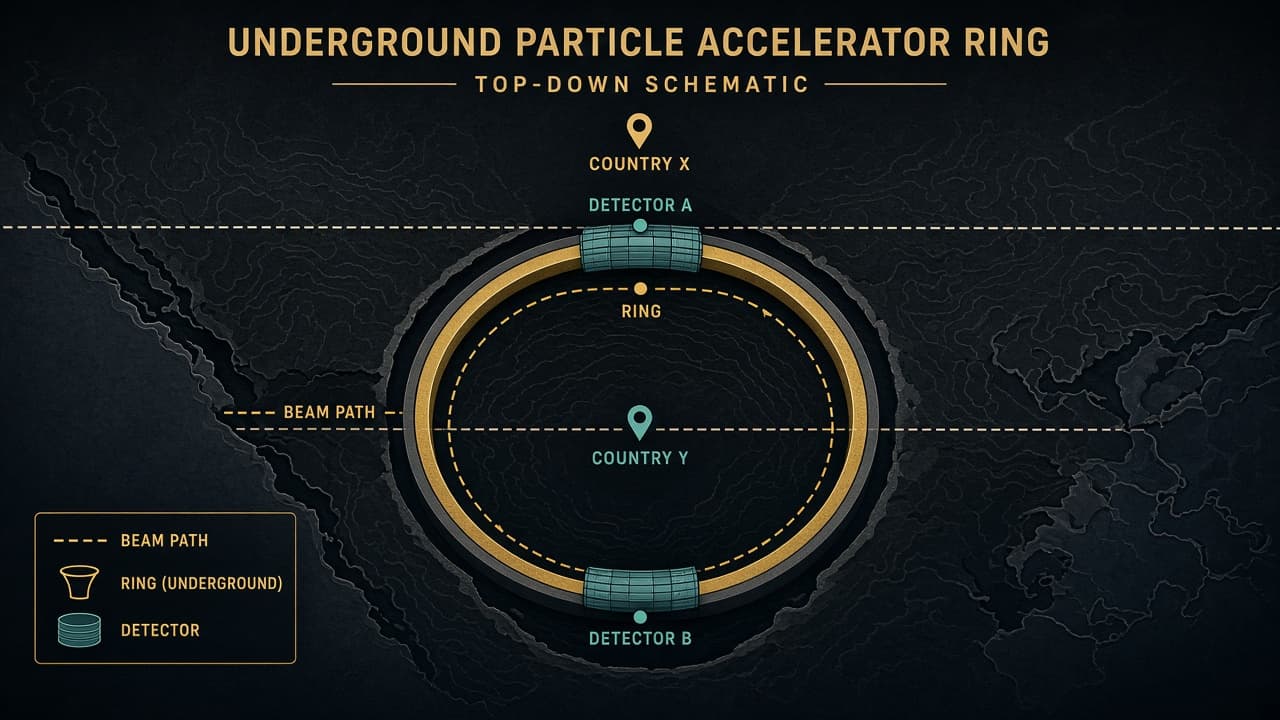
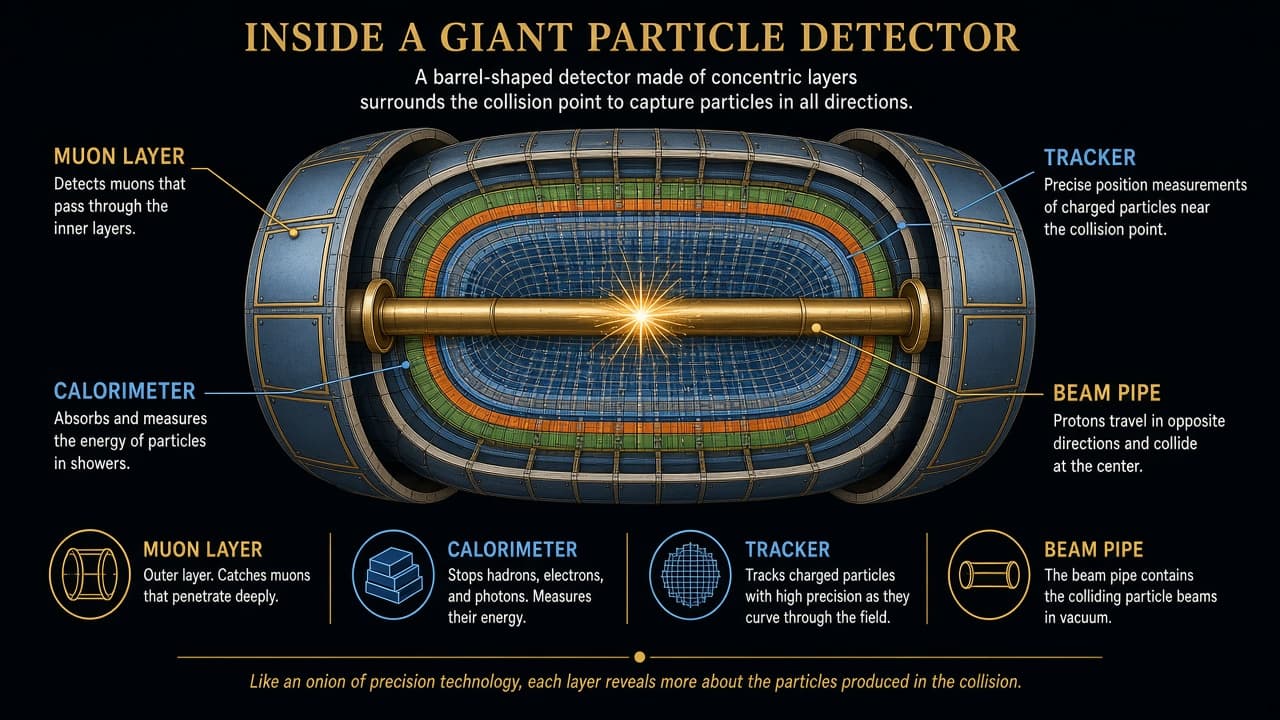
There are two beams, not one. They travel in opposite directions in separate beam pipes and only meet at a few points around the ring. At those points sit detectors with names such as ATLAS and CMS: cathedral-sized instruments built in layers that track charged particles, measure energy and catch muons that punch through the outer shells. When the beams cross, most protons miss. The rare hard collisions are the events physicists keep.
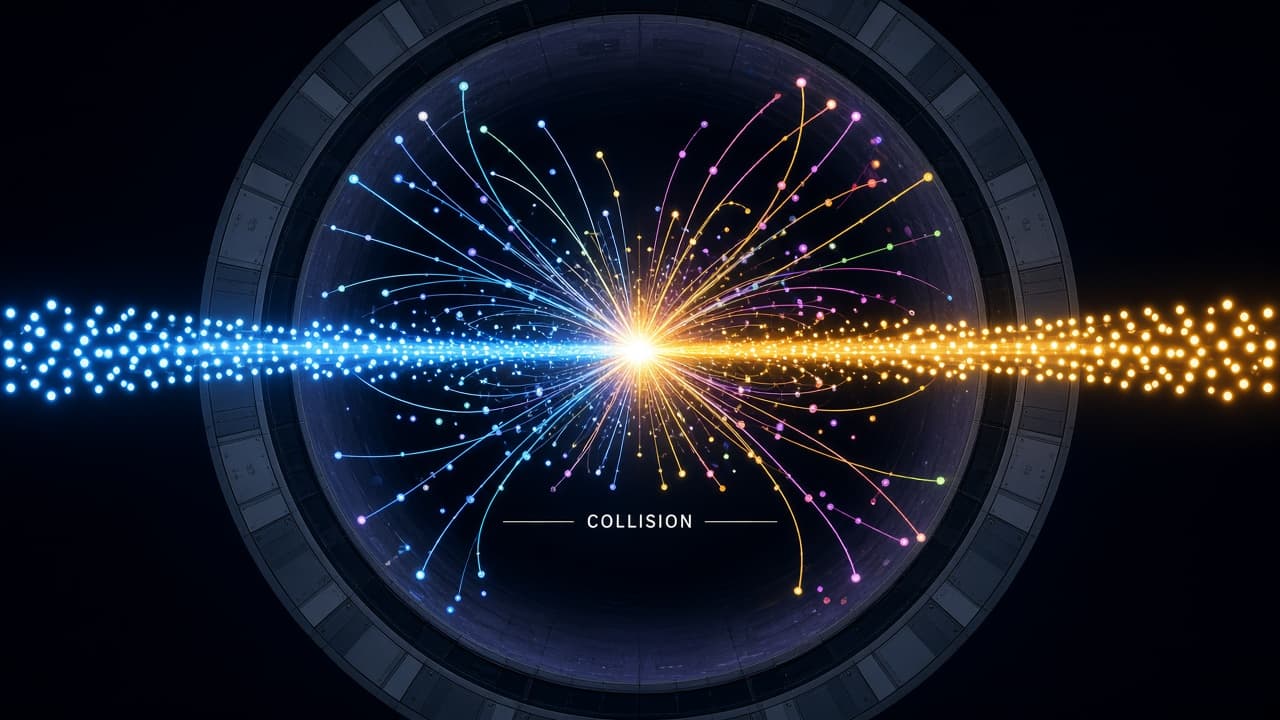
Why smash anything at all? Energy and mass are linked. Pack enough energy into a tiny volume and you can create particles that are too heavy to appear in ordinary matter today. The early universe was hot and dense enough to make them. A collider is a controlled way to recreate those conditions for an instant and photograph the result in electronic data.
On first-beam day in 2008 the goal was simpler: keep a low-intensity beam alive for a full turn without losing it into the magnets. That sounds modest until you remember the vacuum, the alignment tolerances and the fact that a misplaced beam can damage equipment. Within days a serious magnet failure and helium leak forced a long shutdown. Sustained physics running began in late 2009 and 2010.
When collisions resumed at high energy, the scientific payoff arrived. In 2012, ATLAS and CMS announced a new boson consistent with the Higgs particle predicted decades earlier. That result filled a central gap in the Standard Model, the theory that describes known elementary particles and three of the four fundamental forces. Later runs raised the energy further and set tighter limits on many speculative ideas such as simple forms of supersymmetry.
The LHC is still running campaigns today. Each fill of the ring is a shared project: accelerator operators, detector teams, computing centers and theorists who compare data with predictions. No single country could have built it alone. The first successful circuit on 10 September 2008 was the moment the partnership proved the machine could work as designed.
Eagle Frame’s takeaway for readers: the anniversary is not only a date on a physics calendar. It is a reminder of what a collider is for. Accelerate hadrons, cross the beams, read the spray and test whether our map of matter still holds. The tunnel under the Jura is still asking that question one collision at a time.