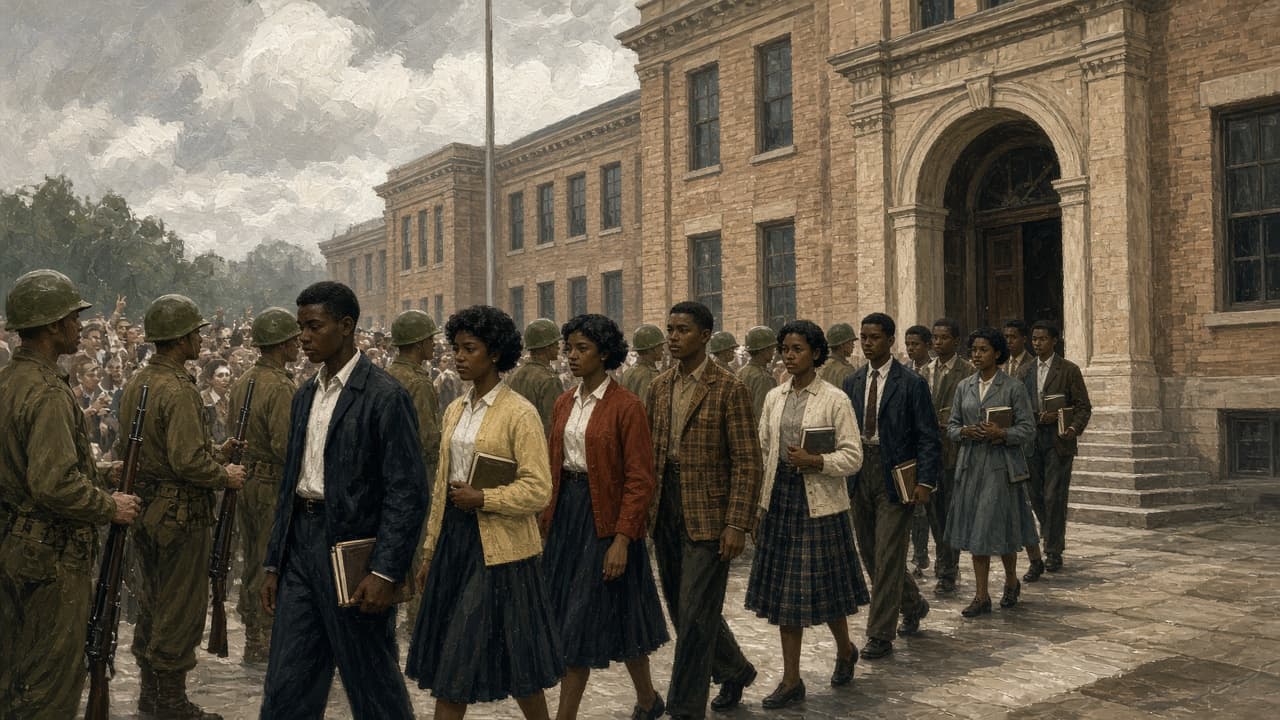
On this day: the Little Rock Nine are blocked from Central High
On 4 September 1957 in Little Rock, Arkansas, National Guard troops blocked nine Black students from entering Central High School. Elizabeth Eckford faced a hostile crowd alone. Federal power later enforced desegregation.
On 4 September 1957, nine Black teenagers tried to enter Little Rock Central High School and were turned away. Arkansas Governor Orval Faubus had ordered the National Guard to surround the school, claiming he needed to preserve order. The real effect was to block court-ordered desegregation. Cameras caught the confrontation. One image above all fixed the morning: Elizabeth Eckford walking alone past a screaming white crowd. The school year that followed tested whether a Supreme Court ruling could survive a governor's defiance and a city's rage.
The Supreme Court's 1954 Brown v. Board of Education decision had declared segregated public schools unconstitutional. Implementation was left to local districts with "all deliberate speed," a phrase that invited delay. Little Rock's school board adopted a limited plan to admit a small number of Black students to Central High. Segregationist politicians and mobs treated even that narrow step as intolerable.
Elizabeth Eckford became the most photographed of the Little Rock Nine when she faced a hostile white crowd alone outside Central High School on 4 September 1957, separated from the other students. Her calm walk through screamed insults made the crisis personal for newspaper readers worldwide. Naming Eckford resists turning the Nine into a faceless group. She was a teenager trying to enter a public school under court order while a mob denied her humanity. Daisy Gatson Bates and local NAACP leaders coordinated the students' schedules under constant threat.
When President Eisenhower sent the 101st Airborne and federalized the Arkansas National Guard, soldiers escorted the nine Black students into Central High. Bayonets and paratrooper helmets in a school doorway showed federal supremacy over a segregationist governor. Inside, the students still endured harassment while trying to learn. The escort image is the enforcement half of Brown v. Board. Eckford's portrait is the human face that made enforcement unavoidable on camera. Yearbook photos and classroom seats became contested ground long after the soldiers left the doorway.
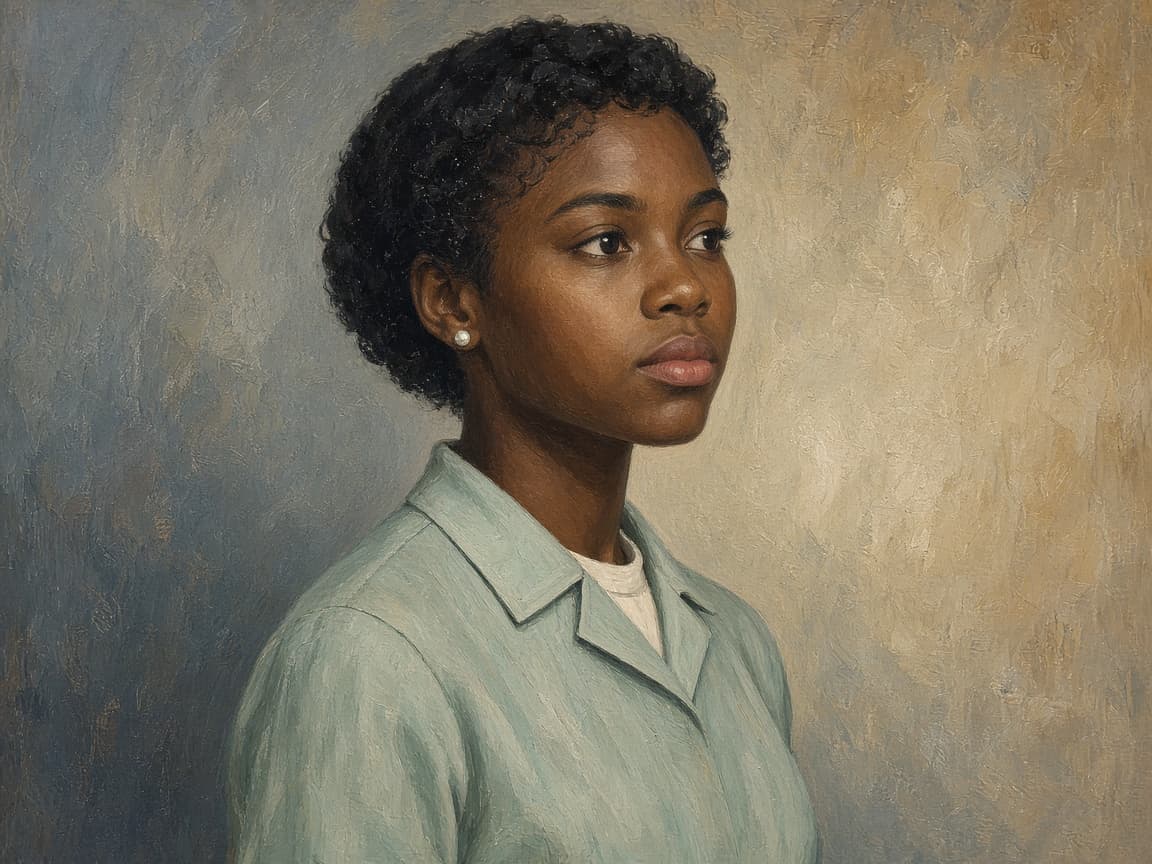
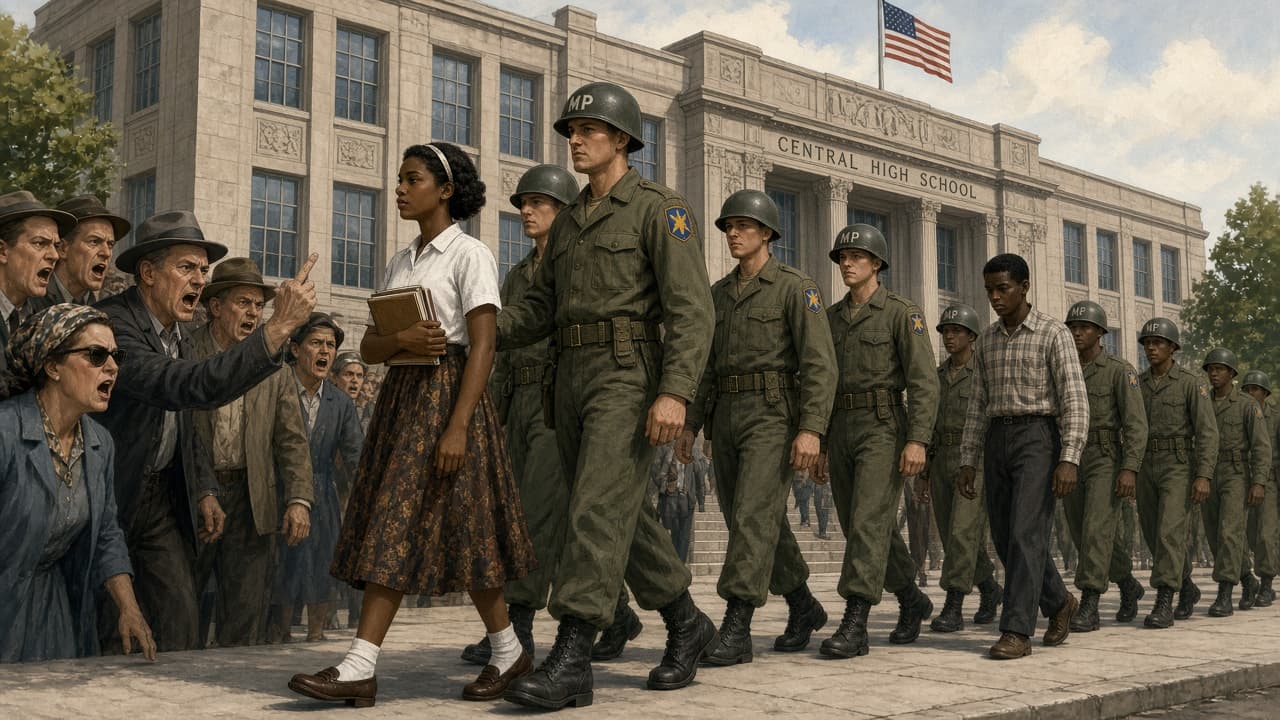
The nine students were Minnijean Brown, Elizabeth Eckford, Ernest Green, Thelma Mothershed, Melba Patillo, Gloria Ray, Terrence Roberts, Jefferson Thomas and Carlotta Walls. They had been selected through a careful process and coached for the pressure ahead. On the first morning, a communications mix-up left Eckford without the group. She faced the Guard bayonets and the crowd by herself before finding safety. Federal judge Ronald Davies ordered integration to proceed, setting up a direct clash between courtroom authority and the governor's troops at the schoolhouse door.
President Dwight D. Eisenhower eventually federalized the Arkansas National Guard and sent elements of the 101st Airborne Division to enforce the court order. The students entered under military escort. Inside the building they still faced harassment, spit, insults and isolation. Their courage was daily, not only photographic. Ernest Green became the first Black graduate of Central High in 1958.
Little Rock showed that court paper alone does not integrate a school. State defiance, local violence and national politics all weighed on one building. Television brought the faces of teenagers into living rooms that had treated Jim Crow as someone else's custom. The crisis also hardened white resistance in parts of the South even as it clarified federal responsibility to uphold constitutional rights. White Citizens' Councils organized economic pressure against anyone who aided the students, extending the fight beyond the campus gates. Faubus won short-term popularity among segregationists and later closed Little Rock high schools for a year in the "Lost Year" of 1958-1959 rather than continue integrated classes. The struggle over public education continued long after the airborne troops left. Token admission was not the same as equal schooling. For civil rights history, the Little Rock Nine sit beside bus boycotts, sit-ins and later voting-rights marches. They were adolescents asked to carry a constitutional principle through hallways. Their names belong in the story as people, not only as a collective label.
Eckford's composure in the photograph can mislead. She has spoken about fear, trauma and the long personal cost of that fame. Respecting the date means respecting the students' interior lives as well as the legal victory that followed federal intervention.
Daisy Gatson Bates of the Arkansas NAACP was a key adult organizer who coordinated the students, dealt with reporters and absorbed threats. Local white ministers and a minority of white moderates sometimes offered quiet help; many more stayed silent or joined the opposition. The crisis mapped the city's social fractures as clearly as it mapped the schoolhouse door.
Inside Central High the nine faced spitballs, insults in stairwells and social isolation designed to drive them out. Minnijean Brown was eventually expelled after conflicts that segregationist students provoked and administrators policed unevenly. Survival required discipline that no teenager should have had to carry. Their later memoirs make that daily cost plain.
National magazines printed the photographs. Overseas readers used Little Rock as evidence when they judged American democracy during the Cold War. Domestic politicians discovered that massive resistance could win state elections and still lose the constitutional argument once federal bayonets arrived.
Eagle Frame's takeaway: 4 September 1957 is when Guard bayonets and a mob tried to stop the Little Rock Nine at Central High, with Eckford walking alone into history's lens. Keep Brown's mandate and Eisenhower's later use of federal troops in view. Remember that desegregation was enforced classroom by classroom under pressure, not granted by a single court sentence.