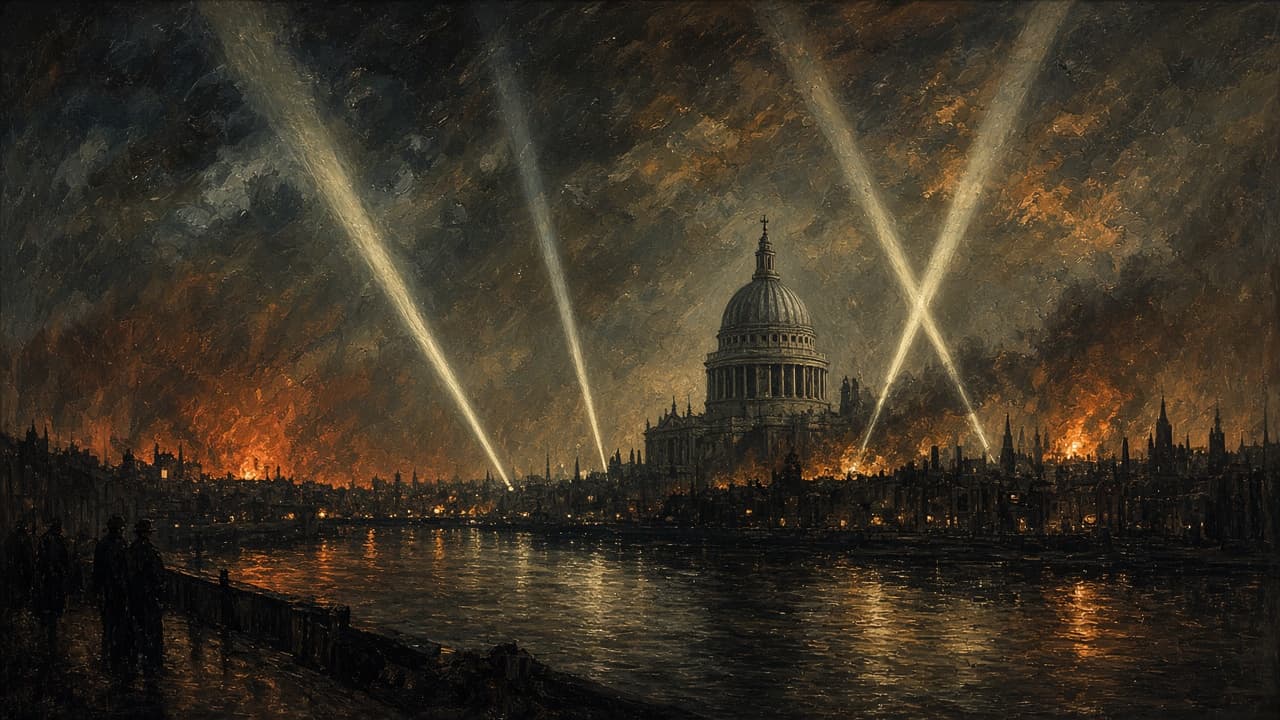
On this day: the London Blitz begins
On 7 September 1940, German bombers struck London in force and opened the sustained bombing campaign Britons called the Blitz. For months afterward, nights of air raids tested civilian shelters, fire services and the idea that modern war would spare cities.
On 7 September 1940, in the late afternoon and into the night, German Luftwaffe bombers hit London's docks and surrounding districts in numbers that made the raid feel like a new kind of war. Fires spread along the Thames. Sirens sent people into shelters, Underground stations and cellars. Historians conventionally treat that Saturday as the start of the London Blitz: not the first bomb on Britain and not the last, but the opening of a sustained campaign against the capital that continued, with varying intensity, into the following spring. Understanding the day means understanding what the Blitz was as a strategy and as a civilian experience.
The word Blitz comes from the German Blitzkrieg, lightning war, but Britons shortened it to name the bombing of their cities. In plain terms the Blitz was a prolonged aerial bombardment meant to destroy docks, factories, rail yards and morale. Earlier in the Battle of Britain, German attacks had focused heavily on airfields and radar to clear the way for a possible invasion. When that air superiority fight stalled, doctrine shifted toward cities. London, as the political and commercial heart of the United Kingdom and the British Empire, became the main target. Other cities were hit hard too, from Coventry to Liverpool, but 7 September is the date most associated with London's ordeal beginning in earnest.
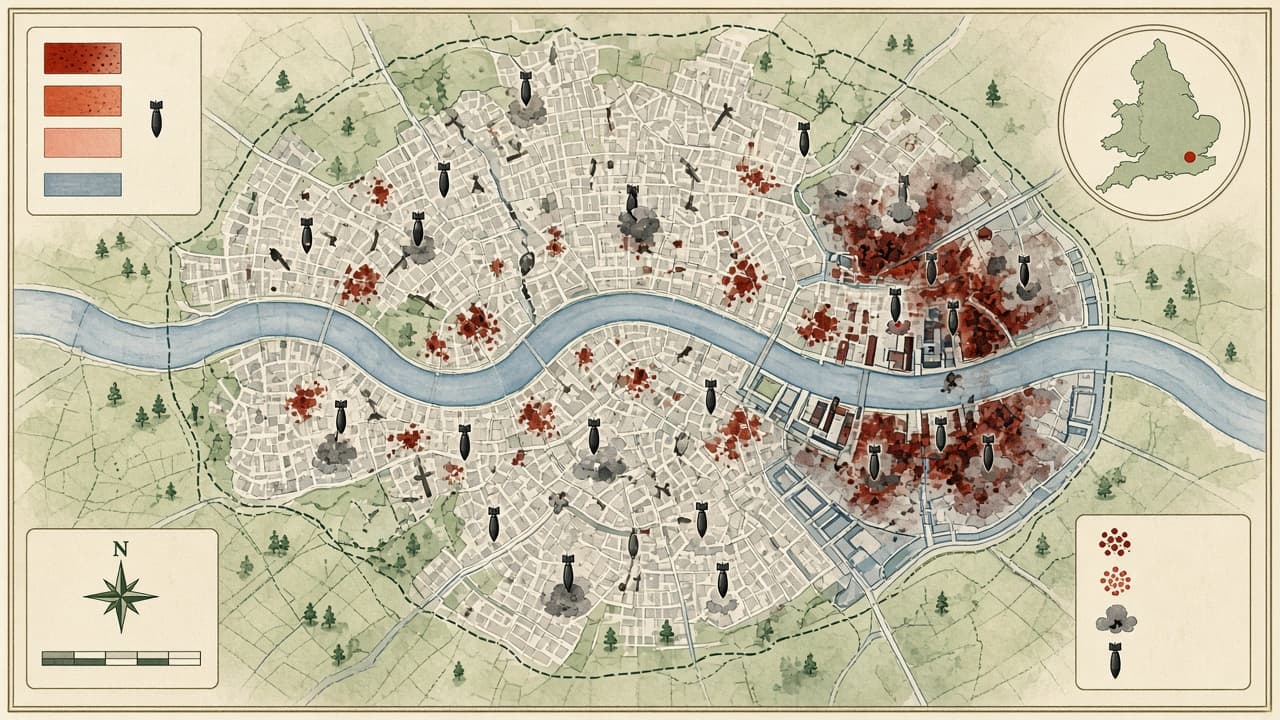
How did a Blitz night work, step by step? Pathfinder aircraft and main bomber streams approached from occupied Europe, often guided by radio beams and dead reckoning. British radar and Observer Corps reports fed Fighter Command and anti-aircraft guns. Blackout rules hid streetlights and window glow so navigators had fewer landmarks. When bombs fell, high-explosive loads blasted buildings and roads while incendiaries started fires that could join into firestorms if firefighters could not isolate them. Rescue parties dug for survivors. The Women's Voluntary Service and neighbors ran rest centers with tea, blankets and temporary beds. The mechanism of the campaign was industrial: aircraft, ordnance, shelters and human endurance repeated night after night.
The East End and the docklands took a brutal share of the first weeks because that was where timber yards, warehouses and food stores sat along the river. Working-class housing stood close to those targets. West End landmarks were hit later and more famously in photographs, but the social geography of early September mattered. People who owned cars could leave for the countryside. Others stayed because work, rent and family tied them to the bombed streets. Tube stations became dormitories despite official hesitation. Anderson shelters in gardens and Morrison shelters indoors offered partial cover. None of it was comfortable. All of it was an improvisation under fire.
Winston Churchill's government used the raids to argue for national solidarity. Newsreels showed king and queen visiting damaged streets. The phrase London can take it circulated as both propaganda and genuine defiance. At the same time, Mass Observation diaries and local reports recorded fear, exhaustion, looting disputes and anger about unequal shelter quality. A honest history holds both: courage was real and so was unequal risk. The Blitz did not dissolve class. It put class under shared sirens.
Strategically the campaign failed in its largest aims. Britain did not surrender. Invasion plans were shelved as the air war and naval realities made a Channel crossing too risky. German attention eventually turned toward the Soviet Union in 1941, even as bombing of Britain continued in waves. Later Vergeltungswaffen, the V-1 flying bombs and V-2 rockets, brought a different terror to London in 1944-45. Those weapons belong to a later chapter. The classic Blitz that began in September 1940 was about manned bombers, night after night, against a city that learned the sound of the alert by heart.
Numbers help scale the story without turning it into a spreadsheet. Tens of thousands of civilians in Britain were killed over the course of the bombing war. Hundreds of thousands of houses were damaged or destroyed. Millions of nights were spent in shelters. Exact tallies vary by period and city. What 7 September specifically marks is the shift to London as a sustained primary target after the summer air battles. Schoolbooks that jump from Dunkirk to D-Day in one leap miss this urban war in between, when the home front was the front.
The Blitz also remade urban planning and memory. Postwar rebuilding filled gaps with new housing estates. Memorials and museum galleries at the Imperial War Museum and local borough sites keep letters, gas masks and shelter tickets on display. Every generation inherits photographs of St Paul's Cathedral standing among smoke, images that can flatten a complex campaign into a single postcard. Pair those images with the dock map and the shelter schedules. The cathedral mattered as a symbol. The docks and the East End mattered as the place many Londoners actually endured the first weeks.
For readers outside Britain the date still teaches a general lesson about twentieth-century war. Once aircraft could carry heavy loads across seas, capital cities became battlefields whether or not armies stood in their streets. Civil defense, evacuation of children, blackout discipline and fire-watching became part of citizenship. The London Blitz was one of the clearest early demonstrations of that fact for an English-speaking audience, even though Guernica, Warsaw and other cities had already shown what bombing could do.
Eagle Frame's takeaway: 7 September 1940 is the conventional start of the London Blitz, when sustained German bombing turned the capital's docks and neighborhoods into a nightly front. Learn the mechanism (raid, fire, shelter, repeat) and the map of the Thames docks, not only the slogans about endurance.