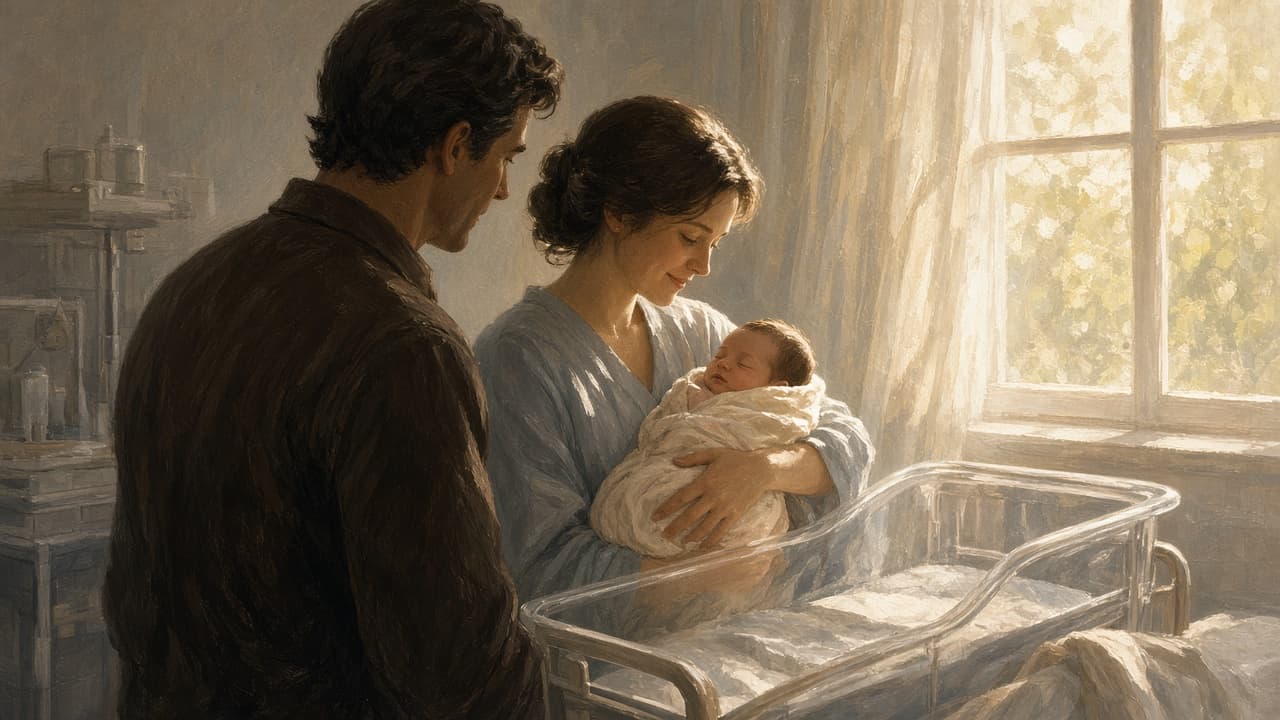
On this day: the first IVF baby is born
On 25 July 1978, Louise Joy Brown was born in Oldham, England, after an egg was fertilized outside her mother's body and returned to the womb. The technique developed by Patrick Steptoe, Robert Edwards and Jean Purdy has since produced millions of births.
At 11:47 on the night of 25 July 1978, at Oldham General Hospital in Lancashire, Lesley Brown delivered a daughter by caesarean section. Louise Joy Brown weighed five pounds twelve ounces. She was healthy and, in every respect that mattered medically, ordinary. What made her the most reported birth of the twentieth century was where conception had happened: in a glass dish in a laboratory, not inside her mother's body.
John and Lesley Brown had been trying to conceive for nine years. Lesley's fallopian tubes were blocked, which is a common and, at the time, largely untreatable cause of infertility. The tubes are the passage where sperm normally meets egg and where the early embryo travels to reach the womb. If they are blocked or scarred, the two cells cannot meet, regardless of whether both partners are otherwise fertile. The Browns were referred to a gynaecologist named Patrick Steptoe.
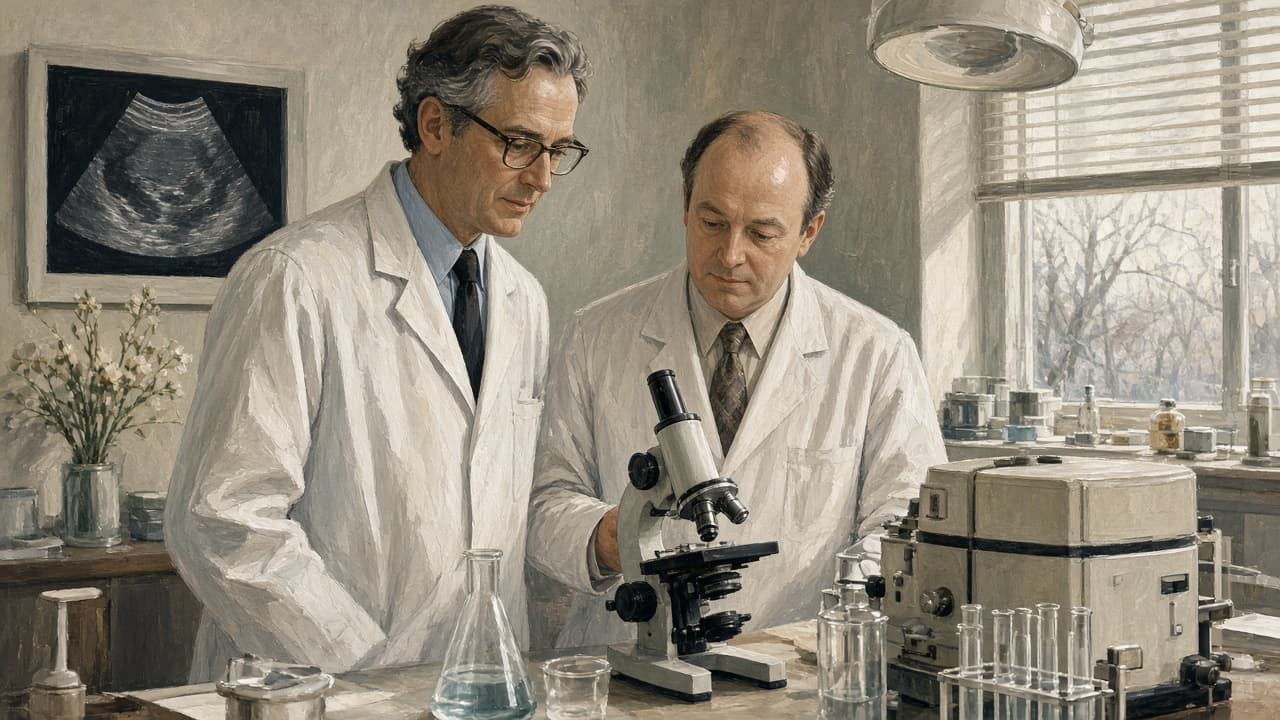
The work was a partnership of three people. Robert Edwards, a physiologist at Cambridge, had spent years learning how to mature and fertilize human eggs in the laboratory. Patrick Steptoe, working in Oldham, was a pioneer of laparoscopy, keyhole surgery through a small incision using a lighted instrument, which made it possible to reach the ovaries and retrieve eggs without major surgery. Jean Purdy was the embryologist and nurse who ran the laboratory side and kept the records. Her contribution was long under-credited and is now formally recognized.
In vitro means in glass. The procedure in 1978 had four steps, and modern IVF still follows the same outline. First, eggs are collected from the ovary. Second, they are placed in a dish with prepared sperm in a culture fluid that mimics conditions in the body, at 37 degrees Celsius, and fertilization is allowed to happen. Third, the fertilized egg is left to divide for a few days into an early embryo. Fourth, the embryo is transferred through the cervix into the womb, where it must implant in the lining to establish a pregnancy.
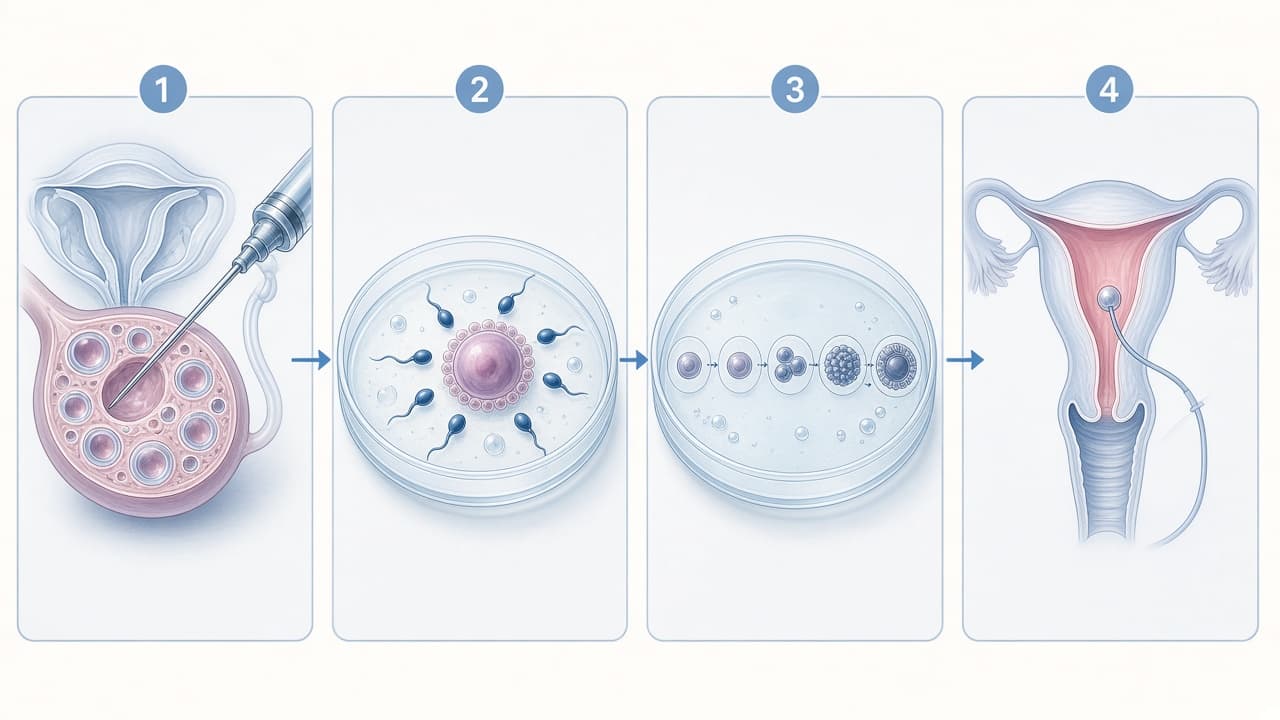
Louise Brown's conception differed from most IVF today in one important respect. Modern clinics use hormone injections to stimulate the ovaries to ripen several eggs at once. Steptoe and Edwards had tried stimulation and kept failing, so for Lesley Brown they worked with her natural cycle and collected a single egg at exactly the right moment. That meant monitoring hormone levels closely and operating in the middle of the night when the timing demanded it. There was one egg, one embryo and one chance.
The years before the success were mostly failure and hostility. Edwards and Steptoe had worked for a decade with more than a hundred women and achieved only brief pregnancies that miscarried. Britain's Medical Research Council refused them funding, partly on ethical grounds and partly because reviewers doubted the science. Much of the work was paid for privately. James Watson, co-discoverer of the DNA double helix, publicly warned about the implications. Religious authorities objected to conception outside the body.
The press coverage was intense and often ugly. "Test-tube baby" became the standard phrase even though no test tube was involved. Newspapers ran speculation about deformity and about babies being manufactured. The Browns were paid by a newspaper for their story, which was itself controversial, and Lesley spent the final weeks of the pregnancy in hospital partly to keep reporters away. Steptoe delivered by caesarean at night to keep the birth controlled and private.
Vindication was quick. A second IVF baby, Alastair MacDonald, was born in January 1979. Candice Reed followed in Australia in 1980 and Elizabeth Carr in the United States in 1981. Techniques accumulated: ovarian stimulation, freezing of embryos, intracytoplasmic sperm injection in 1992 for male infertility, blastocyst culture, preimplantation genetic testing. Success rates rose from near zero to, in favourable cases, roughly a third to a half per embryo transfer in younger patients.
The scale is now considerable. Estimates put the number of people born through IVF and related techniques at more than twelve million worldwide. In several countries, including Denmark, Japan and Australia, IVF accounts for somewhere between five and ten percent of all births. Robert Edwards received the Nobel Prize in Physiology or Medicine in 2010. Steptoe had died in 1988 and Purdy in 1985, and Nobel rules do not allow posthumous awards.
The ethical debate did not resolve, it moved. Britain set up the Warnock Committee in 1982, which led to the Human Fertilisation and Embryology Act of 1990 and a statutory regulator, a framework other countries copied. Current arguments concern the storage and disposal of frozen embryos, who may access treatment and at what cost, donor anonymity and the traceability of genetic parents, surrogacy and where genetic screening of embryos stops being medicine and starts being selection.
Louise Brown herself has lived a deliberately normal life in the west of England. She worked in a nursery and then for a shipping company, married in 2004 and conceived both her sons naturally. Her sister Natalie, born in 1982 and also conceived by IVF, became the first person born through the technique to have a child of her own.
Eagle Frame's takeaway: 25 July 1978 is the day fertilization outside the body produced a healthy baby and turned a contested laboratory technique into ordinary medicine. Hold on to the mechanism: retrieve an egg, fertilize it in a dish, culture the embryo, transfer it back. The science was settled within a few years. The questions about who may use it, and what may be selected, are still live.