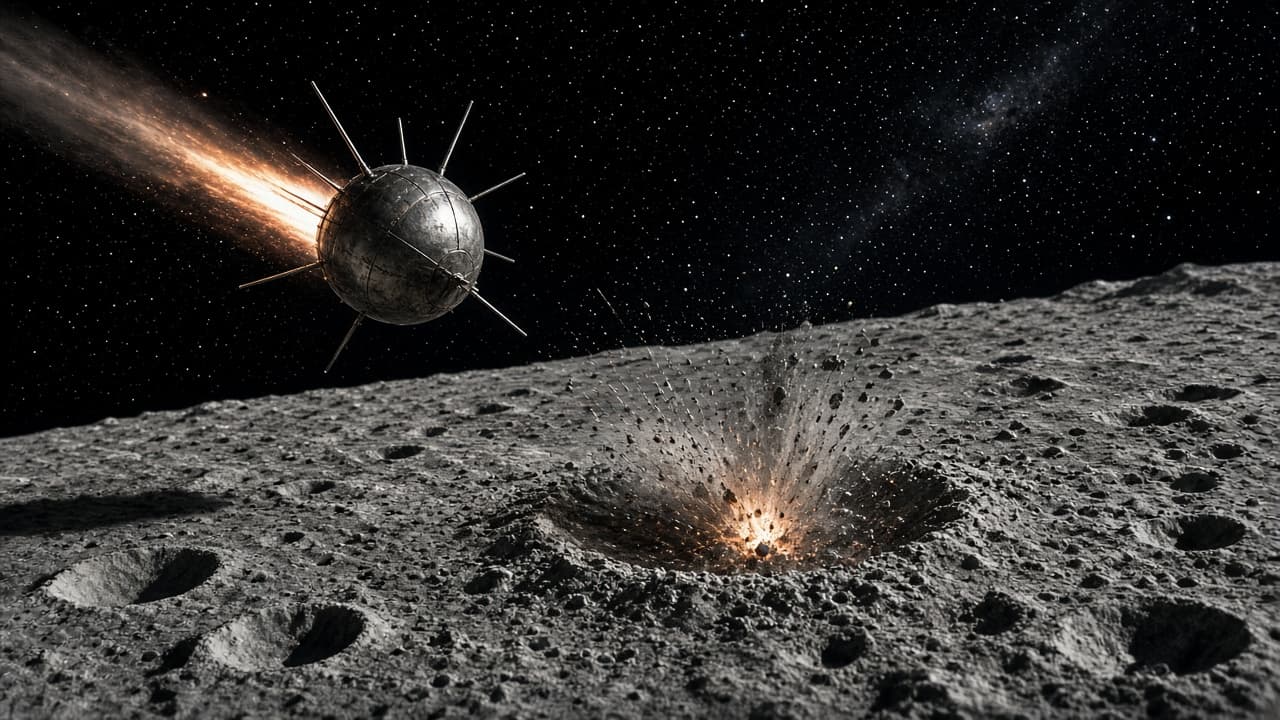
On this day: Luna 2 reaches the Moon
On 14 September 1959, the Soviet probe Luna 2 became the first human-made object to reach the lunar surface. It launched about two days earlier from Baikonur and ended in a hard impact during the Cold War space race.
On 14 September 1959 (UTC), the Soviet Union's Luna 2 struck the Moon. It was the first human-made object confirmed to reach the lunar surface. There was no gentle touchdown and no return capsule. The probe hit hard, on purpose for the technology of that moment and its radio signal stopped. In the Cold War space race, that silence was a public victory.
Dates need a careful note. Luna 2 lifted off from the Baikonur launch complex in Kazakhstan on 12 September 1959 by common UTC reckoning. In Moscow time the calendar labeling of launch and impact can shift by a day depending on the clock you use. Western tracking stations and Soviet announcements both became part of the story. The United States was racing on the same calendar of firsts after Sputnik in 1957.
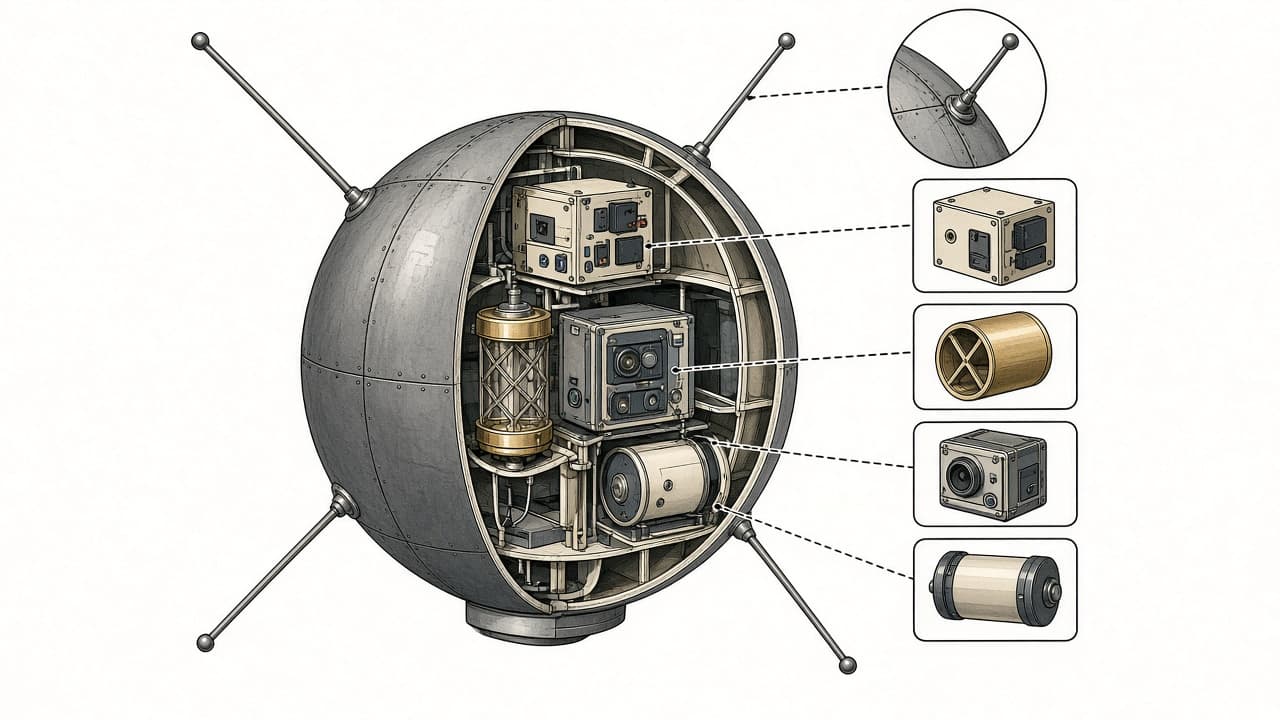
Start with what a lunar probe is. It is an uncrewed spacecraft built to leave Earth, travel to the Moon and gather data or prove a path is possible. Early probes were small metal packages with radios, simple instruments and sometimes metal pennants stamped with national emblems. They did not carry people. Their job was to survive launch, follow a planned path and report until they could not.
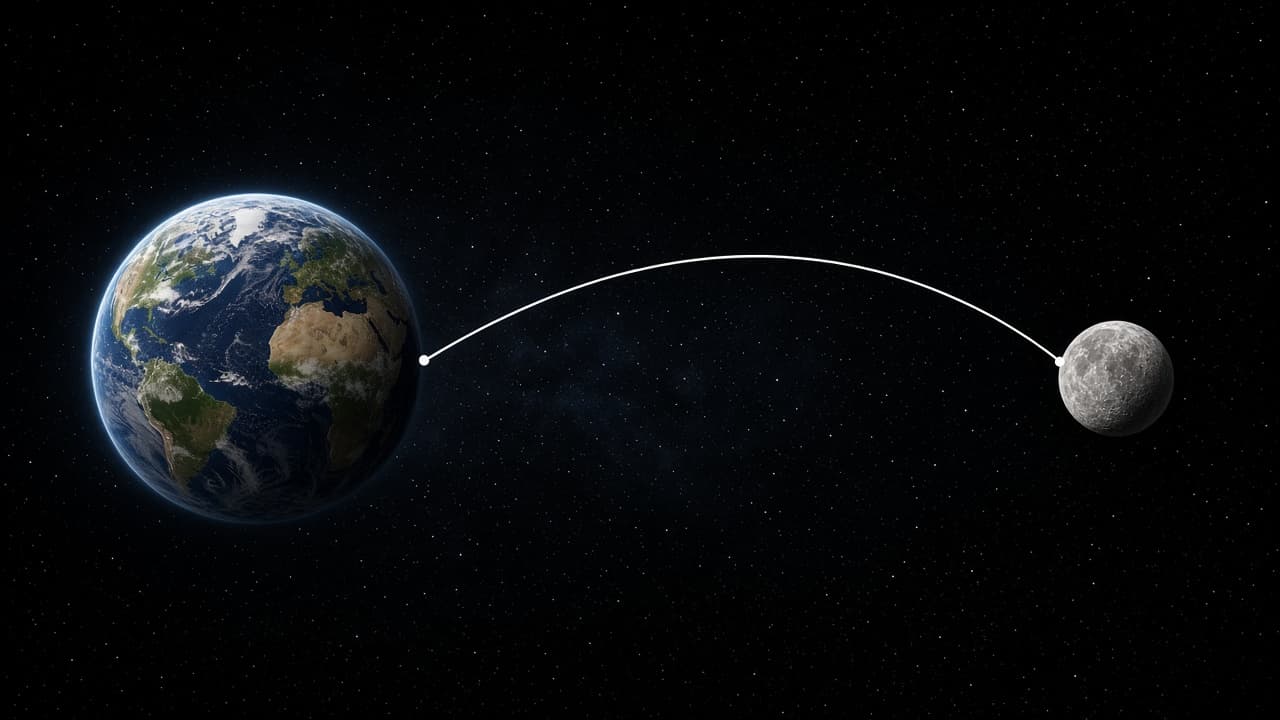
How the trip works, in plain steps. A rocket lifts the probe out of Earth's atmosphere and sets it on a path toward the Moon. For these early shots, engineers used a ballistic trajectory: basically a carefully aimed throw through space, with limited ability to steer after launch compared with modern craft. On the way, Luna 2 released a sodium vapor cloud that ground observers could track as a bright patch against the sky, a public proof that the vehicle was on course. The Moon's gravity and the probe's speed decide whether you miss, swing by or intersect the surface. Luna 2 was aimed to intersect.
Impact came in the region of Palus Putredinis, on the edge of Mare Imbrium, a lava plain on the near side. Hard impact versus soft landing is the key distinction for students of spaceflight. A soft landing needs rockets or other systems to slow down so the craft survives contact. That technology came later, including later Luna missions and other nations' landers. In 1959, reaching the Moon at all proved tracking, timing and rocketry. Hitting the surface showed the aim was good enough to close the gap from Earth to another world.
Science rode with the propaganda. Instruments reported on the space environment on the way and helped confirm that the Moon lacks a strong global magnetic field of the kind Earth has. That finding mattered for later theories of the Moon's interior and for how charged particles behave near the surface. The pennants were political: proof of presence for newspapers as much as for laboratories.
Follow-on flights moved the frontier again. Luna 3, launched weeks later in October 1959, flew past the Moon and returned the first images of the far side. The United States answered with its own hard-landing and flyby programs; the Ranger series in the early 1960s sent cameras toward intentional lunar impacts to photograph the surface before destruction. Each step taught the same lesson Luna 2 had framed: first you must arrive, then you must learn to slow down.
Baikonur's steppe launch pads were already the Soviet Union's deep-space doorway. Getting a probe onto a lunar impact path required knowing Earth's rotation, the Moon's position days ahead and how much error the rocket guidance would tolerate. Western radio telescopes and radar tracking helped confirm the Soviet claim when the signal died on schedule with the predicted arrival. Science and propaganda shared the same stopwatch.
Hard landing is easy to mock in hindsight. Soft landing is a different engineering problem: you must cancel most of the approach speed without tipping over or burying the craft. Luna 2 did not solve that. It solved a simpler question: can we hit the Moon on purpose and prove it? Every later lander, from Soviet soft landers to Surveyor and Apollo, is a reply to the slowing-down question this impact only framed.
Eagle Frame's takeaway: Luna 2 is the day hardware from Earth first touched another world, even if it arrived as a crash near Mare Imbrium. Know Baikonur, the sodium cloud and the difference between a ballistic impact probe and a soft lander and you can read Luna 3 and the Rangers as answers to problems this flight only began to name.