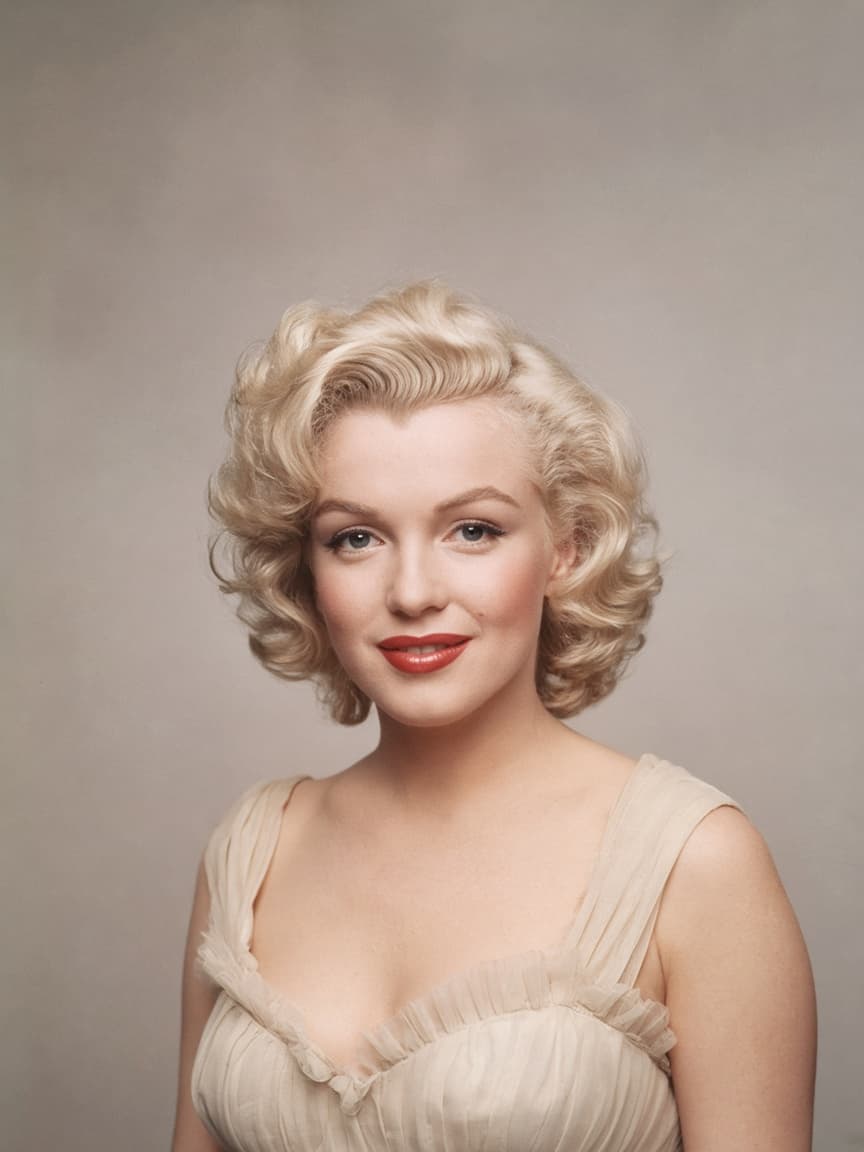
On this day: Marilyn Monroe is found dead
On 5 August 1962, Marilyn Monroe was found dead at her home in Brentwood, Los Angeles. She was 36. The coroner recorded a probable suicide, and the biggest film star of her generation became the subject of an argument that has never closed.
In the early hours of 5 August 1962, the housekeeper at 12305 Fifth Helena Drive in the Brentwood district of Los Angeles noticed a light under a bedroom door and a telephone cord running beneath it. Eunice Murray knocked, got no answer and telephoned Marilyn Monroe's psychiatrist, Ralph Greenson, who lived nearby. Greenson broke a window pane to get into the room. Monroe's physician, Hyman Engelberg, arrived and confirmed she was dead. Police were called at about 4:25 in the morning. She was 36 years old and had appeared in 29 films.
The woman who died that night had been assembled out of very little. She was born Norma Jeane Mortenson on 1 June 1926 at Los Angeles County General Hospital. Her mother, Gladys Baker, cut film negatives for a living and was hospitalized with severe mental illness when her daughter was a child. Norma Jeane grew up between foster families, the household of a family friend and about 21 months in the Los Angeles Orphans Home. She married a neighbour's son, James Dougherty, three weeks after turning 16. During the war she worked at the Radioplane factory in Van Nuys, where an Army photographer took her picture for a morale feature. That led to modelling, a new hair colour, a new name and a screen test at Twentieth Century-Fox in 1946.
The rise took six years and then happened all at once. After bit parts and a dropped contract she was noticed in two 1950 films, The Asphalt Jungle and All About Eve. Niagara and Gentlemen Prefer Blondes followed in 1953, then How to Marry a Millionaire the same year, The Seven Year Itch in 1955, Bus Stop in 1956 and Some Like It Hot in 1959, which won her a Golden Globe and still appears near the top of most lists of the best American comedies. The performances that survive best are the funny ones. Her timing was precise, her delivery was unhurried and Billy Wilder, who directed her twice and complained about her constantly, said nobody else could get a laugh the same way.
She also fought the studio system and won, which is the part of her story that gets left out. In 1954 she walked out on her Fox contract, moved to New York, set up Marilyn Monroe Productions with the photographer Milton Greene and enrolled with Lee Strasberg at the Actors Studio. Fox suspended her. A year of pressure later she signed a new deal that gave her director approval and the right to make films elsewhere, terms almost no actress of the period held. She produced The Prince and the Showgirl herself in 1957. The public read her as an accident of hair and voice. The contract file says she understood exactly what her name was worth.
The private record is harder. She married the retired baseball star Joe DiMaggio in January 1954 and the marriage lasted nine months. She married the playwright Arthur Miller in June 1956 and they divorced in January 1961. She wanted children, suffered from endometriosis and lost at least two pregnancies. The Misfits, which Miller wrote for her, was released in 1961 and was the last film she completed. In June 1962 Fox fired her from Something's Got to Give over missed days on set, then began negotiating her return. On 19 May she had sung happy birthday to President John F. Kennedy at a Democratic fundraiser in Madison Square Garden, in a dress that is now a museum piece.
Her health had been poor for years and the reason is not mysterious. She had chronic insomnia, took barbiturates to sleep and stimulants to work, and she collected prescriptions from more than one doctor, a practice nobody in the industry treated as unusual in 1962. She was seeing Greenson almost daily that summer and had been hospitalized twice in 1961, once in a psychiatric ward where she was placed on a locked floor and had to appeal to DiMaggio to get her out. Friends who saw her in the last week described someone working, planning films and sleeping badly.
The autopsy was performed on 5 August by Thomas Noguchi, then a deputy medical examiner. Toxicology found pentobarbital and chloral hydrate in her blood and liver at levels well above a therapeutic dose. The coroner, Theodore Curphey, recorded the cause as acute barbiturate poisoning and the mode as probable suicide, a finding reviewed by the Los Angeles Suicide Prevention Team, a panel of psychiatrists the county used for ambiguous deaths. No injuries were found. The word probable was doing real work, because there was no note and no way to separate intent from a fatal accumulation of sedatives.
The gaps in that night have kept the theories alive for more than 60 years. The hours between the discovery and the police call were never fully explained. Some organ samples were discarded before further tests could be run. Monroe had known both John and Robert Kennedy, a private detective claimed to have wiretapped her house and a succession of books argued for murder by the Kennedys, by the mafia, by the CIA or by some combination. In 1982 the Los Angeles County District Attorney's office reviewed the whole file at the request of the Board of Supervisors. It found factual sloppiness in the original investigation, found no credible evidence of homicide and declined to reopen the case. The coroner's finding still stands.
She was buried on 8 August 1962 at Westwood Village Memorial Park in a service of about 30 people arranged by DiMaggio, who kept the press out and sent roses to the crypt for the next 20 years. Andy Warhol began his silkscreen portraits within weeks, working from a publicity still for Niagara, and the Marilyn Diptych turned the face into a printing pattern. The American Film Institute later ranked her sixth among the greatest female screen legends. Her likeness is still licensed, still copied and still reproduced on things she never endorsed.
The uncomfortable part of the legacy is the mismatch. Monroe spent the second half of her career trying to be treated as an actress rather than a poster, and her death turned her permanently into a poster. The studio publicity she escaped in 1955 came back after 1962 in a form she could not negotiate with. The films are the reliable evidence of what she could do, and they are easy to watch and easy to underrate.
Eagle Frame's takeaway: 5 August 1962 is remembered for the mystery, which is the least interesting thing about it. The coroner's probable suicide has survived every official review since, and the more useful story is a woman who came out of foster homes, learned comedy better than almost anyone in Hollywood, broke her own studio contract and died at 36 with the prescription culture of her industry in her bloodstream.