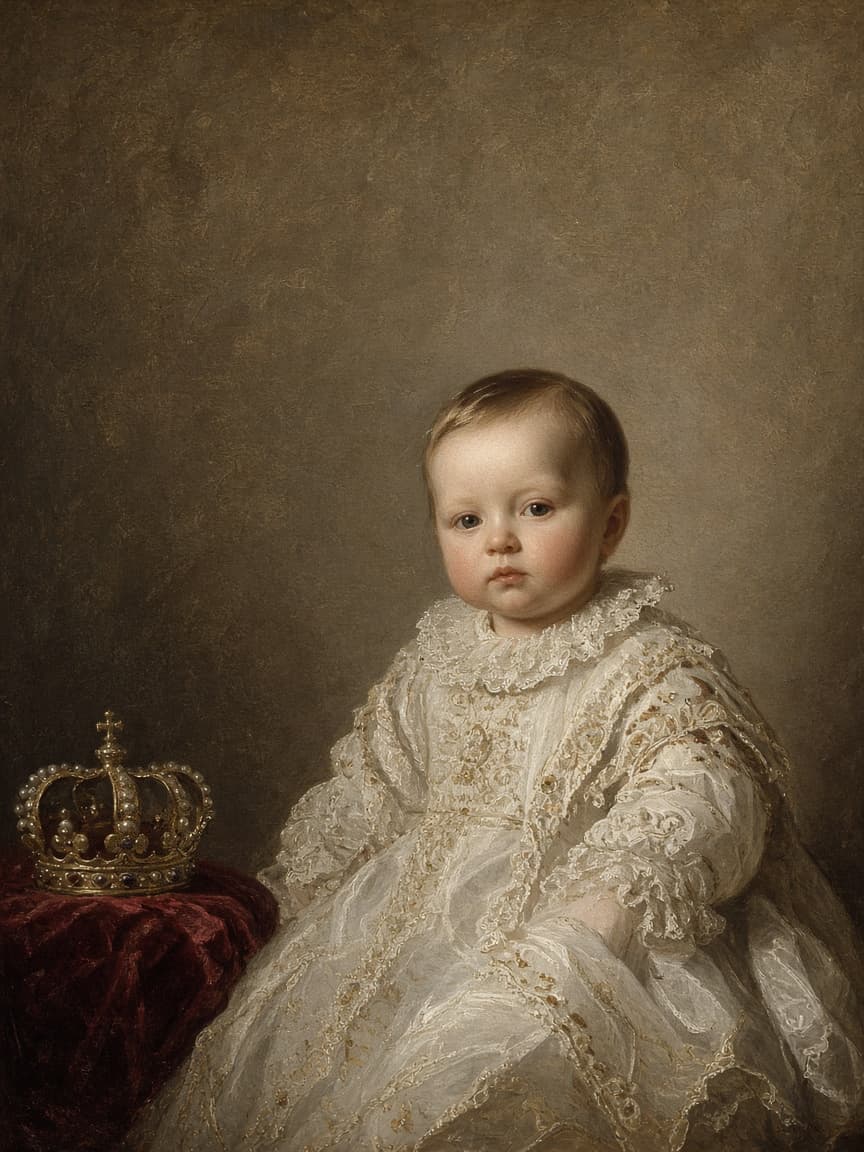
On this day: Mary, Queen of Scots is crowned at Stirling
On 9 September 1543, Mary Stuart was crowned Queen of Scots at Stirling Castle when she was only nine months old. The infant ceremony began a life of contested thrones, exile and a rivalry with Elizabeth I that still defines Tudor-Stuart history.
On 9 September 1543, at Stirling Castle in central Scotland, a nine-month-old girl was crowned Queen of Scots. Her name was Mary Stuart. She had inherited the throne days after birth when her father, King James V, died in December 1542. Crowning an infant was not a fairy tale. It was a political act meant to settle legitimacy while nobles, clergy and foreign courts argued over who would actually govern. The ceremony at Stirling placed a crown, a scepter and the weight of a kingdom on a child who could not yet walk steadily, let alone rule.
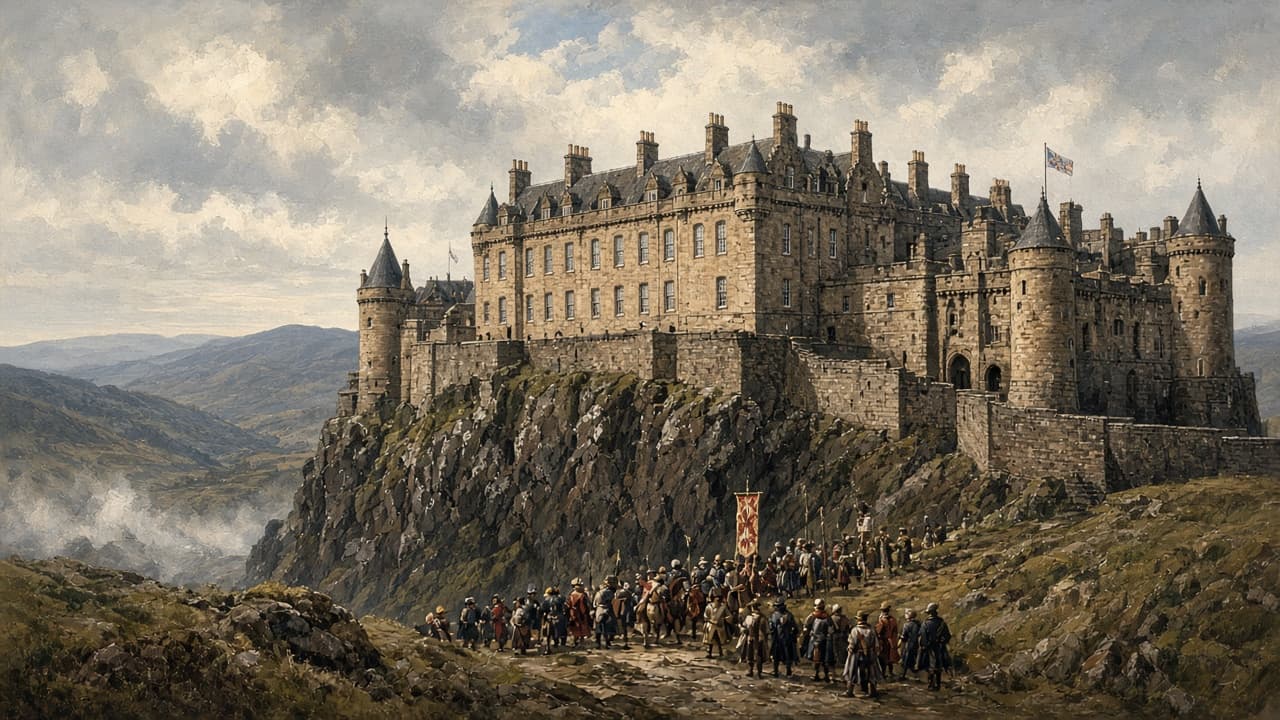
Stirling Castle sits on a volcanic rock above the River Forth, a fortress that controlled the narrow waist of Scotland between Highlands and Lowlands. Scottish kings had used it for centuries as a stronghold and a stage. Holding a coronation there, rather than only at Scone with its older inauguration traditions, signaled security as much as sacred theater. England under Henry VIII was pressing Scotland hard after the failure of marriage talks that would have betrothed Mary to Henry's son Edward. Scots called the resulting English raids the Rough Wooing. An infant queen needed walls, guns and a council that could negotiate without her voice.
Mary's mother was Mary of Guise, a French noblewoman who later served as regent. French alliance offered Scotland a counterweight to England. In 1548 the child queen was sent to France for safety and education, and she later married the French dauphin, who briefly became King Francis II. When he died in 1560 she returned to Scotland as a Catholic widow ruling a realm already deep into Protestant Reformation. John Knox and other reformers rejected her Mass. Nobles switched sides as advantage shifted. The girl crowned at Stirling had grown into a queen whose religion, marriages and foreign ties made every decision a factional crisis.
Her later life is why the 1543 date still appears on calendars. Mary's second husband, Lord Darnley, was murdered in 1567 amid scandals that stained her court. She married the Earl of Bothwell soon after, a choice that cost her Protestant and Catholic support alike. Forced to abdicate in favor of her infant son James, she fled to England in 1568 seeking help from her cousin Elizabeth I. Instead she spent nearly nineteen years as a closely watched prisoner. English councillors feared her as a Catholic claimant to Elizabeth's throne. Plots in her name, some exaggerated by spymasters and some real, ended with her trial for treason.
Elizabeth hesitated for years, then signed the death warrant. Mary was executed at Fotheringhay Castle in February 1587. The infant of Stirling had become a martyr in Catholic Europe and a warning in Protestant England. Her son James VI of Scotland inherited Elizabeth's English crown in 1603 as James I, uniting the crowns of the two kingdoms. That succession would have been harder to imagine without Mary's bloodline, even though she never ruled England and died as Elizabeth's prisoner.
Understanding the coronation requires setting aside later romance. Sixteenth-century monarchy rested on anointing, heraldry and public recognition as much as on adult competence. A baby on a throne kept the Stewart line intact while adults fought over the regency. French and English ambassadors watched who stood nearest the child. Coins, seals and proclamations went out in her name. The ritual said Scotland still had a lawful sovereign even when the sovereign needed a nurse.
Modern visitors to Stirling can walk the castle halls and see how geography made politics. Whoever held Stirling could threaten Edinburgh's approaches and command the Forth crossing. Mary's coronation there tied her legitimacy to that military geography. Guidebooks sometimes soften the day into a picturesque pageant. The sharper reading is that Scotland was already a prize in a Tudor-Valois contest, and a nine-month-old queen was the symbol both sides wanted to control.
Historians still argue how much agency Mary later showed and how far she was trapped by gender, religion and bad counsel. What is not in dispute is the arc that began on 9 September 1543: a crowned infant, a French upbringing, a troubled Scottish reign, English captivity and a death that haunted Elizabeth's last years. Popular culture filled the gaps with cinema and novels. The primary sources are letters, council minutes and ambassador reports that show a woman negotiating survival inside a system built for kings.
Religion sits under almost every turn of that arc. Mary's personal Catholicism collided with a Scottish kirk that had outlawed the Mass. Elizabeth's Protestant settlement made a Catholic cousin with a claim to England look like a standing invitation to rebellion. Continental Catholic powers watched both women and weighed invasion, marriage alliances and propaganda. The infant coronation of 1543 did not create those conflicts, but it locked Mary's body into a dynastic role before she could choose a faith community for herself. Later pamphlets turned her into either a martyr or a schemer. The archive supports a more ordinary reading: a queen with limited good options, surrounded by men who treated her reign as a prize.
For readers new to the period, hold three names together. Mary of Scotland, crowned at Stirling. Elizabeth of England, the cousin who kept her prisoner. James, the son who inherited both crowns. The baby at the 1543 ceremony sits at the start of that chain. Without her, the map of British monarchy after 1603 looks different. Standing in Stirling's great hall today, it is still possible to feel how a fortress town tried to make an infant's title look inevitable while England's army burned the Lowlands outside the walls.
Eagle Frame's takeaway: 9 September 1543 put a crown on a nine-month-old at Stirling Castle and opened one of the most contested royal lives in British history. Start with the fortress and the infant, then follow the line to France, Reformation Scotland and the long rivalry with Elizabeth I.