On this day: the Mayflower leaves England for America
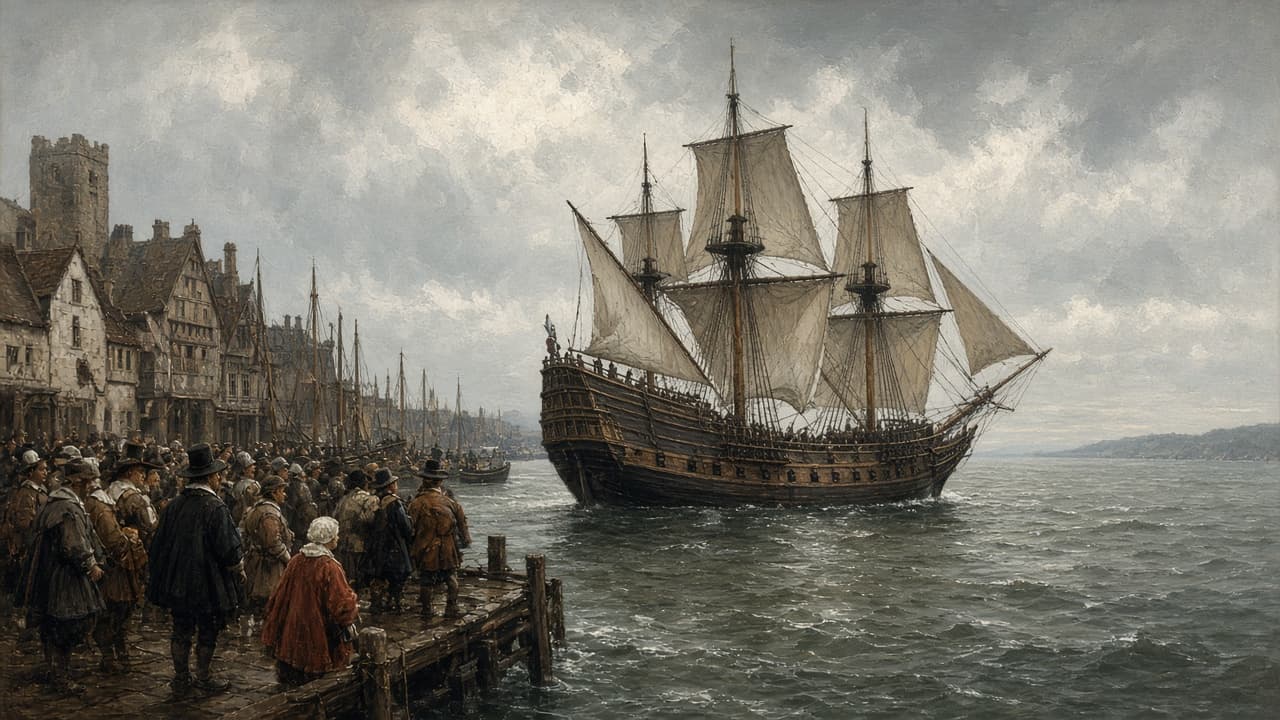
On 16 September 1620 (New Style), the Mayflower finally left Plymouth, England, with about 102 passengers bound for North America. The crowded voyage and the Compact signed at Cape Cod still shape how the Pilgrim story is told.
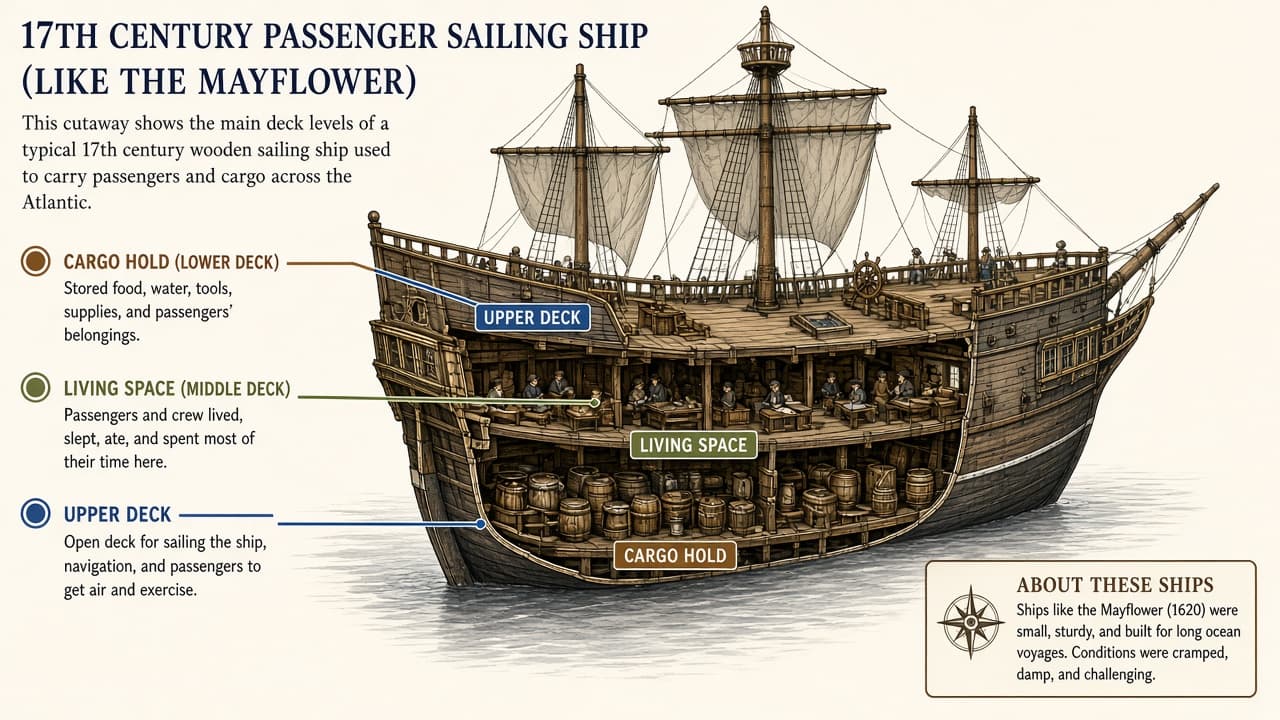
On 16 September 1620 by the modern (Gregorian) calendar, the cargo ship Mayflower left Plymouth, England, after earlier false starts from Southampton and delays that included a leaking companion ship, the Speedwell. About 102 passengers and a small crew faced the North Atlantic in a vessel never designed as a dedicated passenger liner. They sighted Cape Cod in November and anchored there before settling across the bay at Plymouth.
Older English sources often give the departure as 6 September 1620 under the Julian calendar then used in England. The same civil day shifts forward when converted to New Style dating. Eagle Frame follows the September date most readers meet in modern timelines while noting the calendar gap so the anniversary is not treated as a floating rumor.
Who was aboard? Roughly half were Separatist families who had lived in Leiden in the Dutch Republic and wanted a place to practice their congregational faith with English identity intact. The rest included merchants, servants and adventurers recruited by London investors. Later American memory flattened them all into Pilgrims. The passenger list was more mixed than the Sunday-school version.
Life below decks meant damp timber, little privacy and food that spoiled as weeks passed. Storms damaged a main beam that the crew braced to keep sailing. One passenger died at sea. A child was born on the crossing and named Oceanus. When the ship reached Cape Cod, the intended mouth of the Hudson region lay farther south under a patent the group did not cleanly hold. That legal snag helped produce the Mayflower Compact, a short agreement to form a civil body politic signed before disembarking for settlement.
The Compact was not a full constitution. It was a practical pledge among adult male signers to make and obey local laws in a place without clear English charter cover. It matters in civic education because it shows colonists improvising consent under pressure. It does not erase the fact that Wampanoag and other Indigenous nations already lived around Patuxet, the site the English called Plymouth, and that contact, alliance and conflict would define the next decades.
Winter 1620-21 killed roughly half the company. Survival depended on fishing, foraging and crucial help from Indigenous people, including Tisquantum (Squanto), who had earlier been kidnapped to Europe and returned speaking English. The 1621 harvest gathering later mythologized as the First Thanksgiving was a real shared meal in a fragile peace, not a national holiday template invented on the spot.
Why keep 16 September on a calendar? Because departure dates reveal logistics: investors, leaks, calendar math and a ship that was a tool, not a symbol, until later generations painted it that way. Reading the voyage as engineering and politics keeps the human cost visible. Romantic sails are easier to print than scurvy and probate inventories.
Eagle Frame's takeaway: 16 September 1620 (New Style) is when the Mayflower finally cleared England for a crowded Atlantic crossing. Know the Julian date shift, the mixed passenger list, the Compact as a stopgap and the Indigenous world already on shore before treating the ship as a simple origin myth.