On this day: Michael Brown is killed in Ferguson
On 9 August 2014, 18-year-old Michael Brown was shot and killed by a police officer in Ferguson, Missouri. Protests, a national debate on policing and a lasting Movement for Black Lives moment followed.
On 9 August 2014, Michael Brown Jr., an 18-year-old Black teenager, was shot and killed by Ferguson, Missouri, police officer Darren Wilson. Brown was unarmed. The encounter on Canfield Drive followed a stop related to a reported store theft and quickly escalated into a fatal shooting. Brown's body remained in the street for hours under the summer sun while neighbors watched. That public aftermath, as much as the gunfire, ignited rage in Ferguson and then across the United States.
The killing of Michael Brown, an 18-year-old Black teenager, by a white police officer in Ferguson, Missouri, on 9 August 2014, ignited nights of protest that local and national cameras followed for weeks. Demonstrators demanded names, body-camera rules and an end to policing that treated Black neighborhoods as revenue and threat zones. Investigations later documented patterns of discriminatory fines and force in Ferguson. The street response was not only grief for one young man. It was a public indictment of everyday municipal practice.
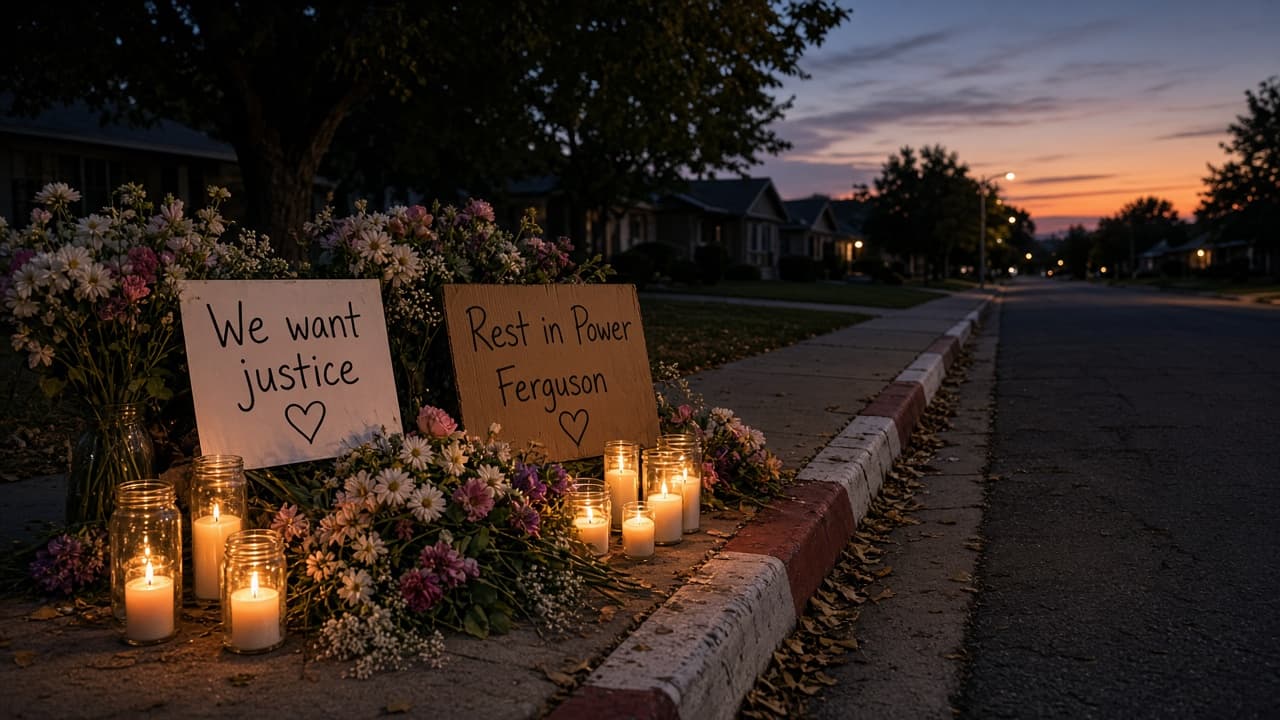
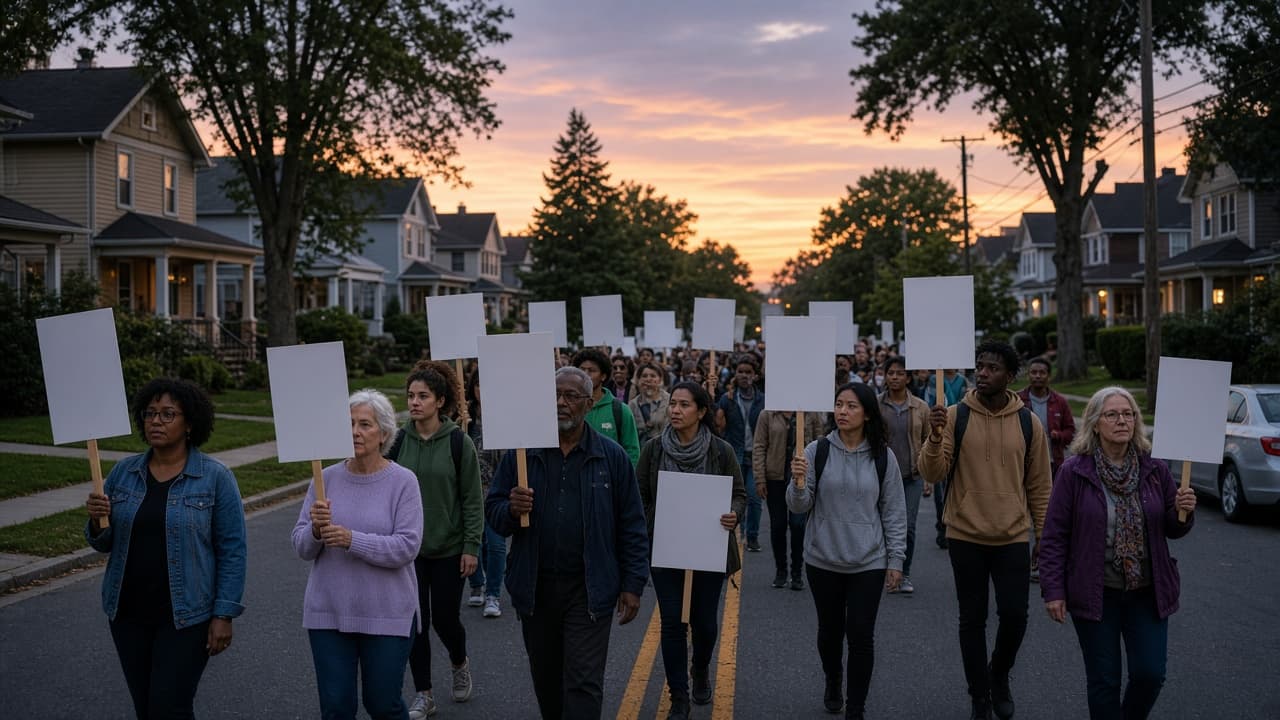
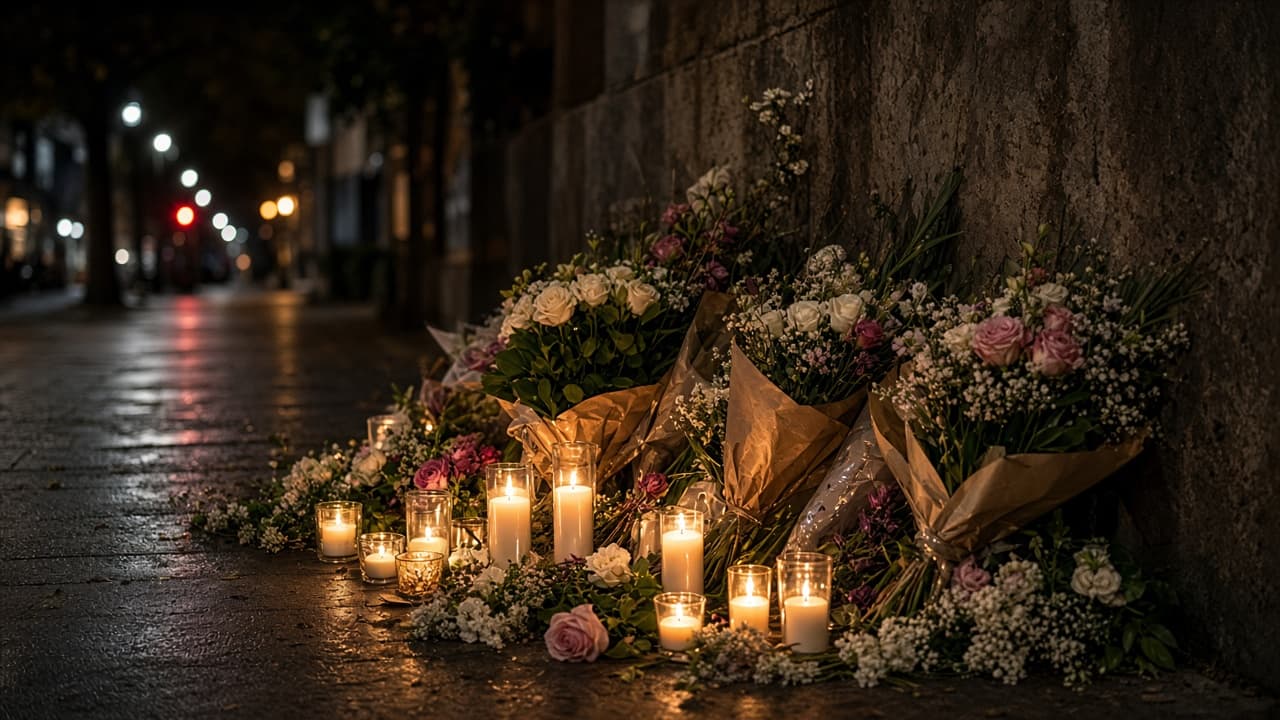
Candle memorials on Canfield Drive and elsewhere kept Brown's name in place while legal arguments moved through grand juries and federal reviews. Peaceful marches, tense standoffs and viral video all traveled together under the growing banner of Black Lives Matter. Aftermath included consent-decree style reforms in some departments, political careers remade by the crisis and a lasting argument over how America counts police violence. Holding the memorial image beside the protest image keeps the human scale next to the policy fight.
Who was Michael Brown? Friends and family described a recent high-school graduate preparing for college and technical training. He was large in stature, a fact later used in competing narratives about threat and force. Reducing him to a symbol erases the person. Keeping him only as a private name erases why strangers marched. Honest history holds both: a young man who died and a case that exposed policing patterns far beyond one suburb of St. Louis.
What happened on the street remains contested in details. Witness accounts differed on whether Brown's hands were raised, how a struggle at the police vehicle unfolded and how many shots came after any pause. A St. Louis County grand jury declined to indict Wilson in November 2014. A separate U.S. Department of Justice review of the shooting concluded it could not disprove Wilson's self-defense claim under federal criminal standards. Those legal outcomes did not settle public judgment. They became part of the argument.
Ferguson's streets filled with mourners, protesters, journalists and militarized police responses. Tear gas, curfews, National Guard deployments and nightly standoffs made suburban Missouri look like a war zone on television. The phrase "Hands up, don't shoot" became a chant even as investigators disputed the exact gesture Brown made. Hashtags and livestreams carried local grief into a national conversation about race, policing and whose deaths count as news.
A parallel Justice Department investigation into Ferguson's police department and municipal courts found a pattern of constitutional violations: policing shaped by revenue goals, excessive ticketing of Black residents and practices that eroded trust. That civil-rights report mattered because it shifted the story from one disputed shooting to a documented system. Consent-decree reforms and political change in Ferguson followed years of work, not a single news cycle.
Brown's death joined a sequence of high-profile cases that fed the Movement for Black Lives, including earlier organizing after Trayvon Martin's killing and later attention to Eric Garner, Tamir Rice and others. Activists demanded body cameras, independent prosecutors, demilitarized police equipment and accountability for lethal force. Opponents warned about crime, officer safety and rush-to-judgment media. The country argued in parallel dialects that rarely translated cleanly.
Media ethics became part of the wound. Early coverage sometimes leaned on Brown's appearance or unverified claims while treating official statements as default truth. Other outlets centered family grief and structural racism. Readers should treat first-day narratives with caution in any police shooting: video, forensics and multiple witnesses take time. Speed without care can harden myths on every side.
A decade later, Ferguson remains a landmark date for how Americans talk about policing. Some reforms spread. Many departments still face the same trust gaps. Anniversaries bring vigils on Canfield Drive and arguments online. The useful habit is to name Michael Brown, state what courts and investigators concluded and still ask what kind of public safety a community can believe in when a teenager dies in the street at midday.
Body cameras, civilian review boards and consent decrees spread partly because cases like Ferguson made abstract policy feel local. Training on de-escalation and racial bias entered more departments, though implementation varies widely. Voters elected new city leaders in Ferguson. National politicians cited the name in speeches. None of that brings Michael Brown back. It does show how one afternoon on Canfield Drive can rewrite what communities demand from the people licensed to use lethal force.
Eagle Frame's takeaway: 9 August 2014 is when Michael Brown's killing in Ferguson forced a national reckoning with race and police force. Know the disputed street facts, know the DOJ's findings on Ferguson's court-and-ticket machine and refuse cartoon versions that erase either the person or the pattern.