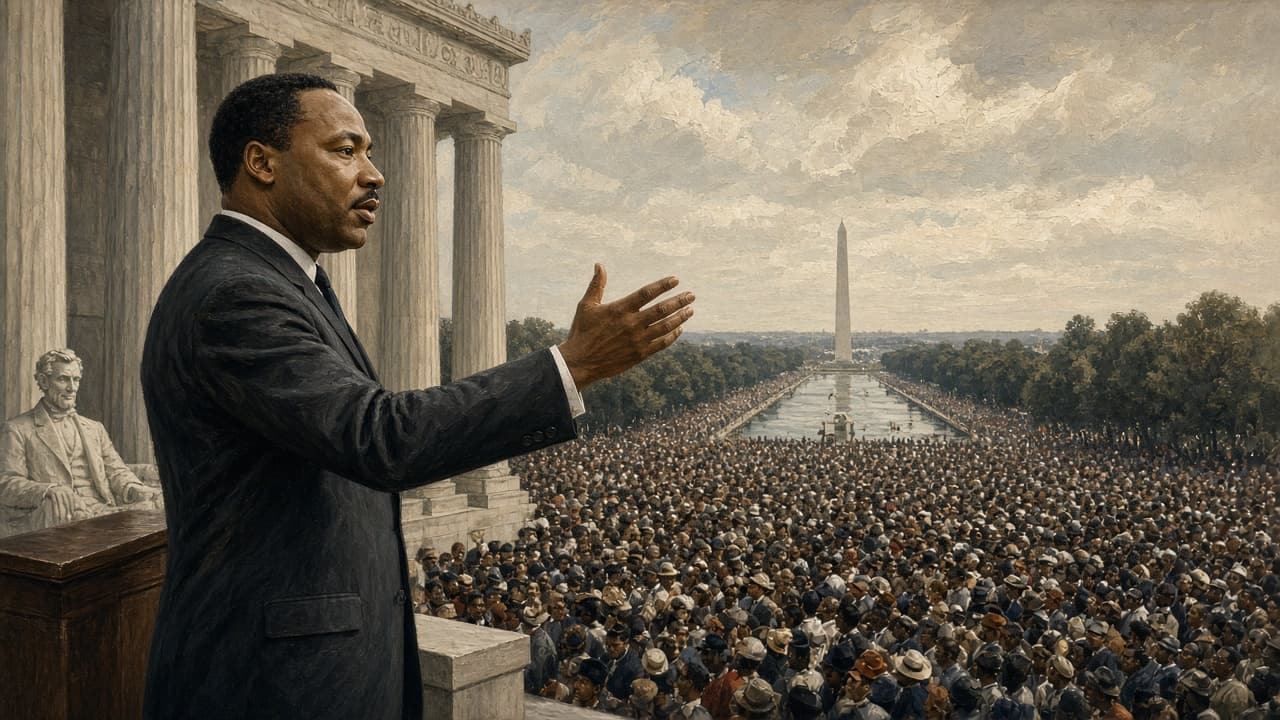
On this day: Martin Luther King Jr. delivers “I Have a Dream”
On 28 August 1963, at the March on Washington for Jobs and Freedom, Martin Luther King Jr. spoke from the Lincoln Memorial to roughly a quarter of a million people. The "I Have a Dream" address became a defining text of the civil rights movement.
On 28 August 1963, the March on Washington for Jobs and Freedom filled the National Mall. Labor leaders, clergy, students and families gathered to demand civil rights legislation, an end to segregation and economic dignity. From the steps of the Lincoln Memorial, Martin Luther King Jr. delivered the address remembered as "I Have a Dream." Estimates put the crowd near 250,000. Television and radio carried his voice far beyond the reflecting pool.
King was 34, a Baptist minister already known for the Montgomery bus boycott, the Southern Christian Leadership Conference and nonviolent protest under pressure. The march itself was a coalition project: A. Philip Randolph and Bayard Rustin were central organizers; John Lewis of SNCC spoke as a younger militant voice; national unions and religious groups supplied people and planning. King's speech closed the formal program and became the day's emblem, but it sat on top of that wider logistics and argument.
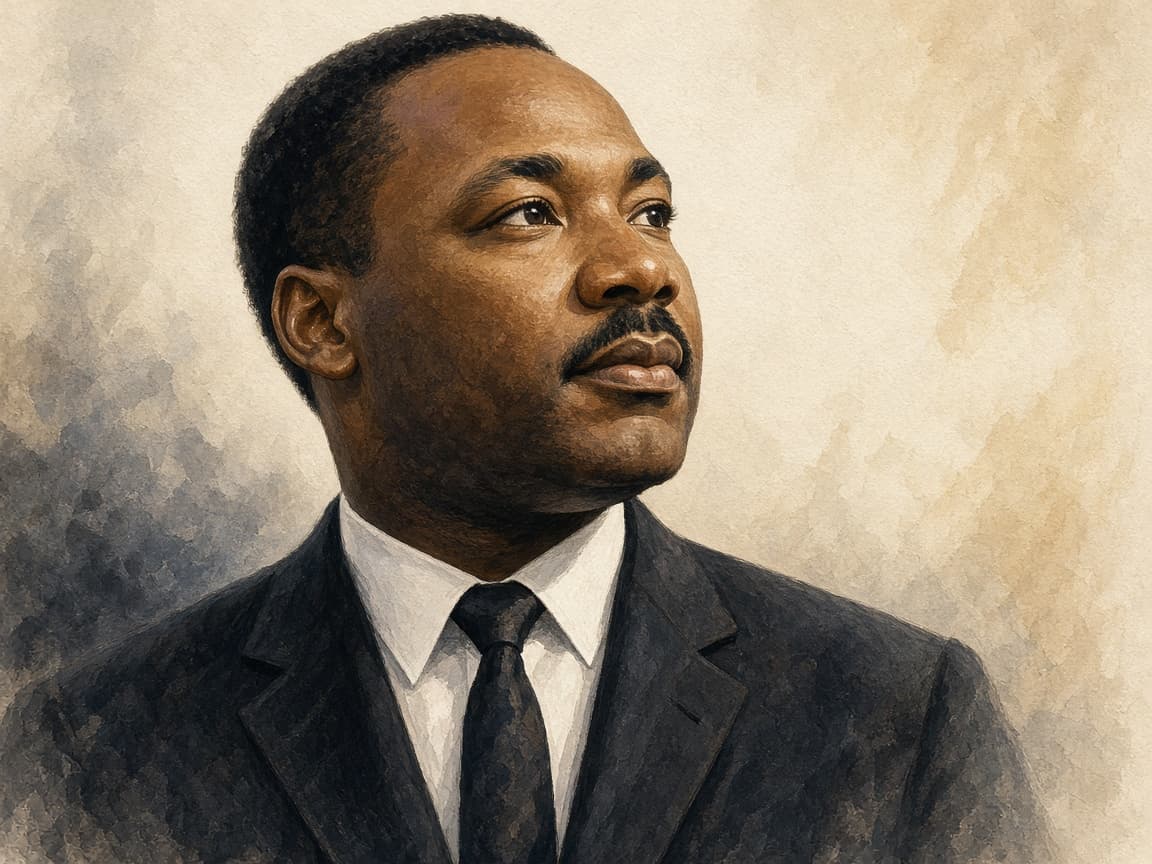
Martin Luther King Jr. delivered the "I Have a Dream" portion of his speech at the March on Washington on 28 August 1963, speaking from the Lincoln Memorial to a crowd demanding jobs and freedom. King's portrait belongs at the center because the day fused his preacher's cadence with a national television audience. He named segregation's broken promises and sketched a future of interracial solidarity. The speech did not end racism. It set a moral soundtrack for legislation still to come.
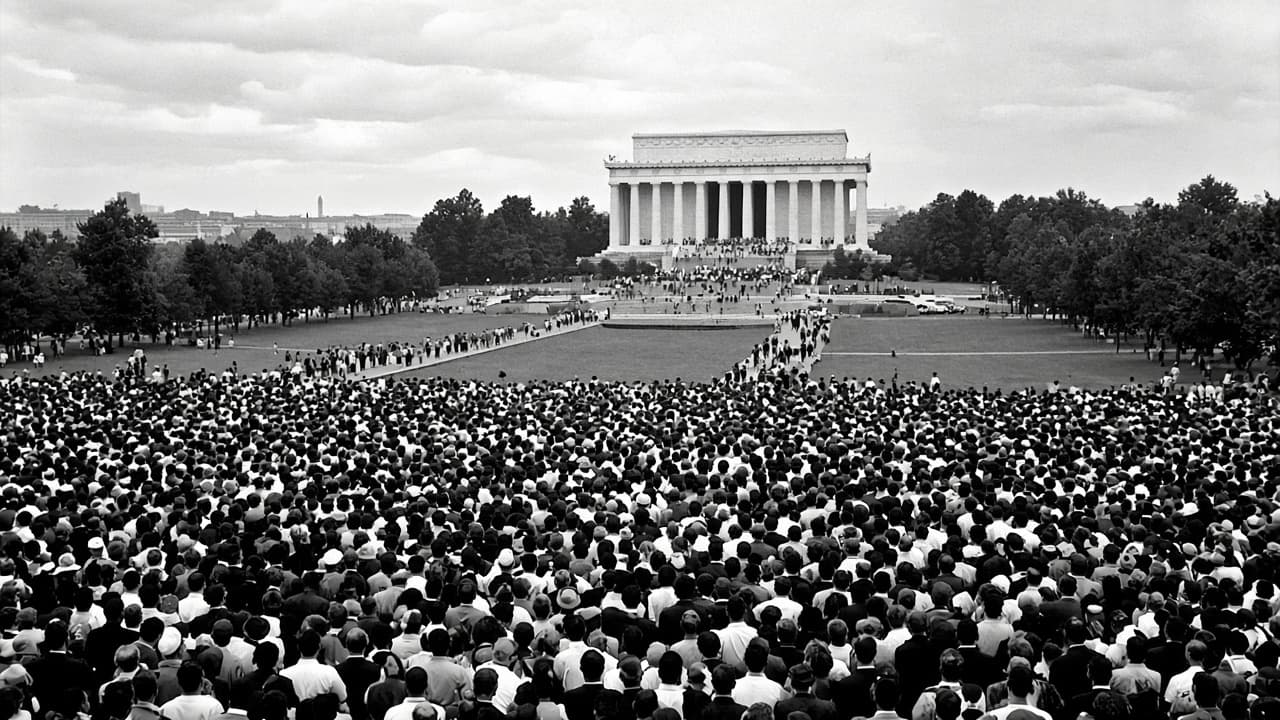
The Mall crowd (estimated in the hundreds of thousands) was the other half of the event's power: unions, students, churches and families who traveled to stand in the heat and be counted. Organizers insisted on discipline to deny segregationists a riot narrative. Photographs of the mass facing the Memorial explain why Congress felt pressure afterward. King's voice carried. The people's bodies on the grass made the voice impossible to file away as only a sermon. Network news cut into afternoon programming, giving King an audience far beyond the Mall's edges.
The speech wove scripture, the American founding promise and the urgent present of police dogs, closed schools and blocked ballots. King named the gap between the Emancipation Memorial setting and ongoing injustice a century after Lincoln. The "dream" passages, partly improvised from material he had used before, envisioned freedom ringing across states still structured by Jim Crow. Mahalia Jackson famously urged him toward the dream language as he spoke. Craft and call-and-response met a live crowd.
Jobs belonged in the march title for a reason. Organizers linked racial justice to wages, hiring and union power, not only lunch-counter etiquette. Signs on the Mall mixed demands for a civil rights bill with economic planks. Later retellings sometimes soften that labor edge into a vague unity anthem. Reading the full program restores the harder ask: freedom with a paycheck and a ballot.
Political impact was not instant magic. President John F. Kennedy had proposed civil rights legislation that still faced congressional walls. The march raised moral pressure and national attention. The Civil Rights Act of 1964 and the Voting Rights Act of 1965 followed after further protest, murders of activists and political bargaining. King's later work on poverty and Vietnam showed the dream was not finished in 1963. Anniversaries that stop at the applause miss the years of grinding work after the cameras left. Security fears beforehand were intense; the day remained overwhelmingly peaceful, which mattered for public persuasion. FBI surveillance of King continued anyway. Mythmaking later sanded him into a consensus mascot. Primary audio and the wider movement cast (women organizers often sidelined on the program, student radicals, local NAACP branches) keep the history three-dimensional.
For readers encountering the speech only as a school excerpt, the useful anniversary habit is to hear the whole argument: unpaid promissory notes, police brutality, the refusal to believe the bank of justice is bankrupt. Then connect Mall poetry to county registrar offices and factory gates. That is how 28 August still teaches.
Women's leadership in the march logistics often went undercredited on the stage program. Dorothy Height and other organizers shaped strategy while speaking slots skewed male. Remembering King's voice without the wider bench of planners repeats an old omission. The Mall was full of people whose names never entered the anthology.
Listen again to the promissory-note metaphor. King accused the nation of defaulting on a check marked "insufficient funds" for Black citizens. That financial image made racism concrete for listeners who understood banks better than theology. It also set a standard against which later policy could be measured: had the check cleared or were communities still waiting in line?
School curricula often isolate the dream refrain and skip King's indictment of gradualism and police violence. Teachers who play the full recording give students the sharper speech. Anniversaries work the same way: quote the hard middle, not only the lyrical end and the Mall crowd's urgency returns. The Civil Rights Act of 1964 and the Voting Rights Act of 1965 still sit downstream of the moral pressure that march helped build, even though neither passed that August afternoon.
Eagle Frame's takeaway: 28 August 1963 is when King's Lincoln Memorial address gave the March on Washington its most lasting public words. Know the coalition behind the Mall, know the jobs demand beside the dream and know the laws that still had to be won afterward.