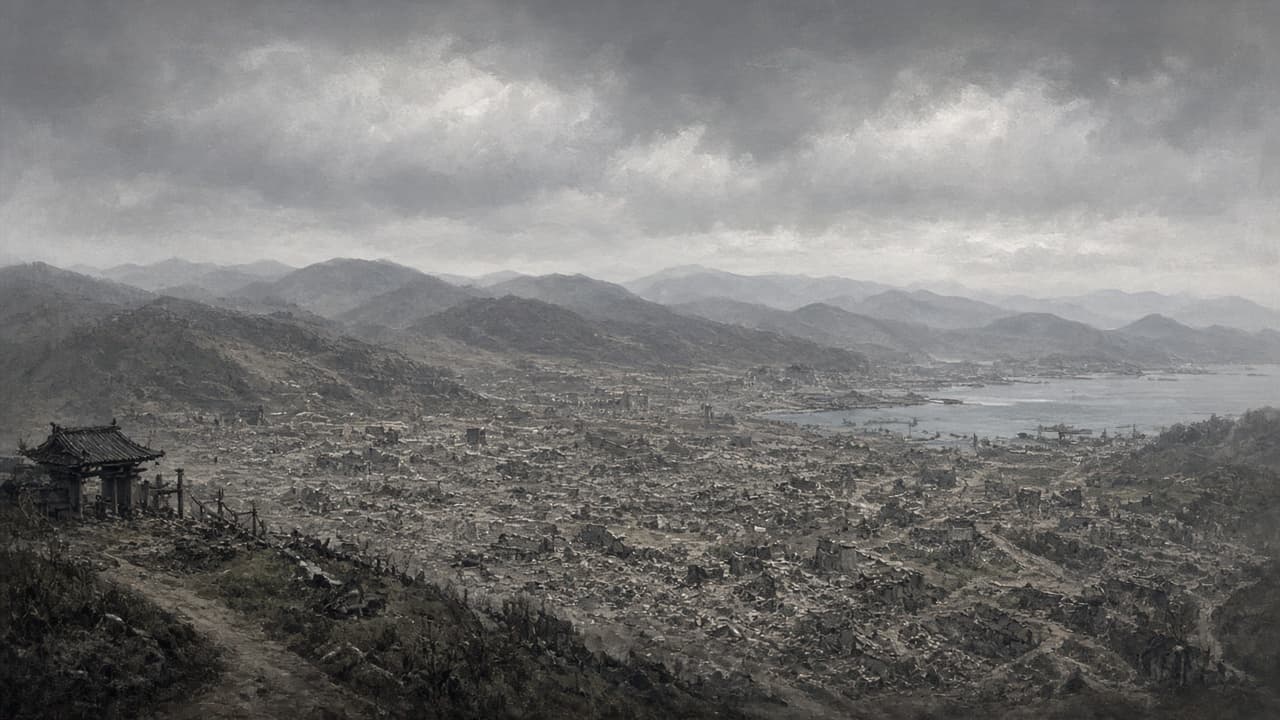
On this day: the atomic bombing of Nagasaki
On 9 August 1945, a U.S. B-29 dropped the plutonium bomb nicknamed Fat Man on Nagasaki. The attack came three days after Hiroshima and helped push Japan toward surrender later that month.
On 9 August 1945, a U.S. Army Air Forces B-29 named Bockscar dropped an atomic bomb on Nagasaki, Japan. The weapon, nicknamed Fat Man, used a plutonium implosion design different from the uranium bomb used over Hiroshima three days earlier. The blast and firestorm killed tens of thousands of people that day and in the weeks that followed. Japan's government was already under crushing pressure from conventional bombing, naval blockade, Soviet entry into the Pacific war and the Hiroshima shock. Nagasaki made the new weapon feel like a pattern, not a single horror.
Start with what an atomic bomb of that era was, in plain language. Ordinary explosives release chemical energy by rearranging molecules. A fission bomb splits heavy atomic nuclei (uranium-235 or plutonium-239) so that a chain reaction frees enormous energy from a small mass. Fat Man's core was plutonium. Explosive lenses around it compressed the core inward until it reached a supercritical state and the chain reaction ran away. The result was a fireball, blast wave, intense heat and ionizing radiation. Survivors later faced cancers and other illnesses linked to that exposure.
The B-29 Superfortress that carried Fat Man was itself a system of range, pressurization and bomb-bay design built for long Pacific missions. Crews trained for high-altitude release, then relied on ballistics tables that assumed clear aiming points. Over Nagasaki, cloud and a secondary target scramble complicated the run. The plutonium device used shaped explosive lenses to crush a core into a supercritical mass in microseconds. That engineering detail matters because it shows the bombing as industrial process layered on older air-war habits: find a city, drop a weapon, photograph the result.
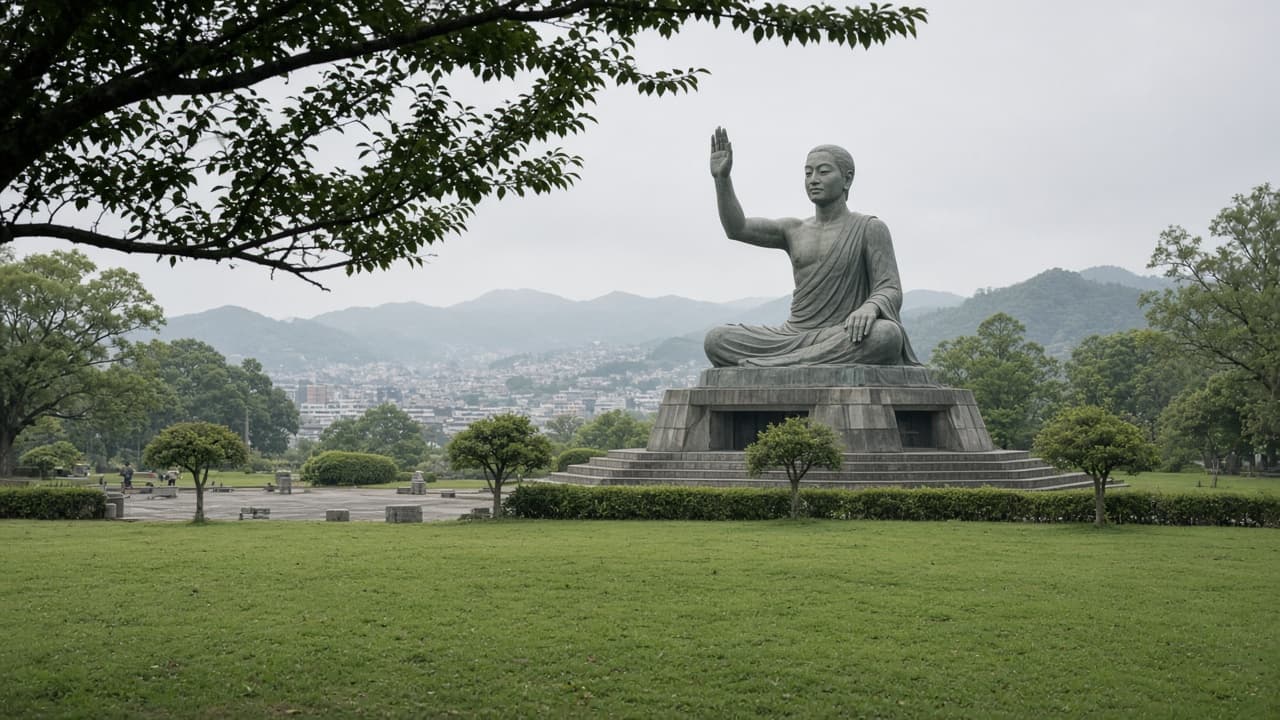
After the war, Nagasaki's Peace Park and related memorials became places where survivors, families and visiting students keep names and faces in public view. The park does not erase military chronology. It adds the aftermath that casualty tables alone cannot carry: ruined neighborhoods, lingering illness and annual remembrance on 9 August. Readers who only remember Hiroshima should still hold Nagasaki as a second city struck three days later, with its own geography of Urakami valley industry and a distinct memorial culture that insists the human cost remain visible beside any strategic argument.
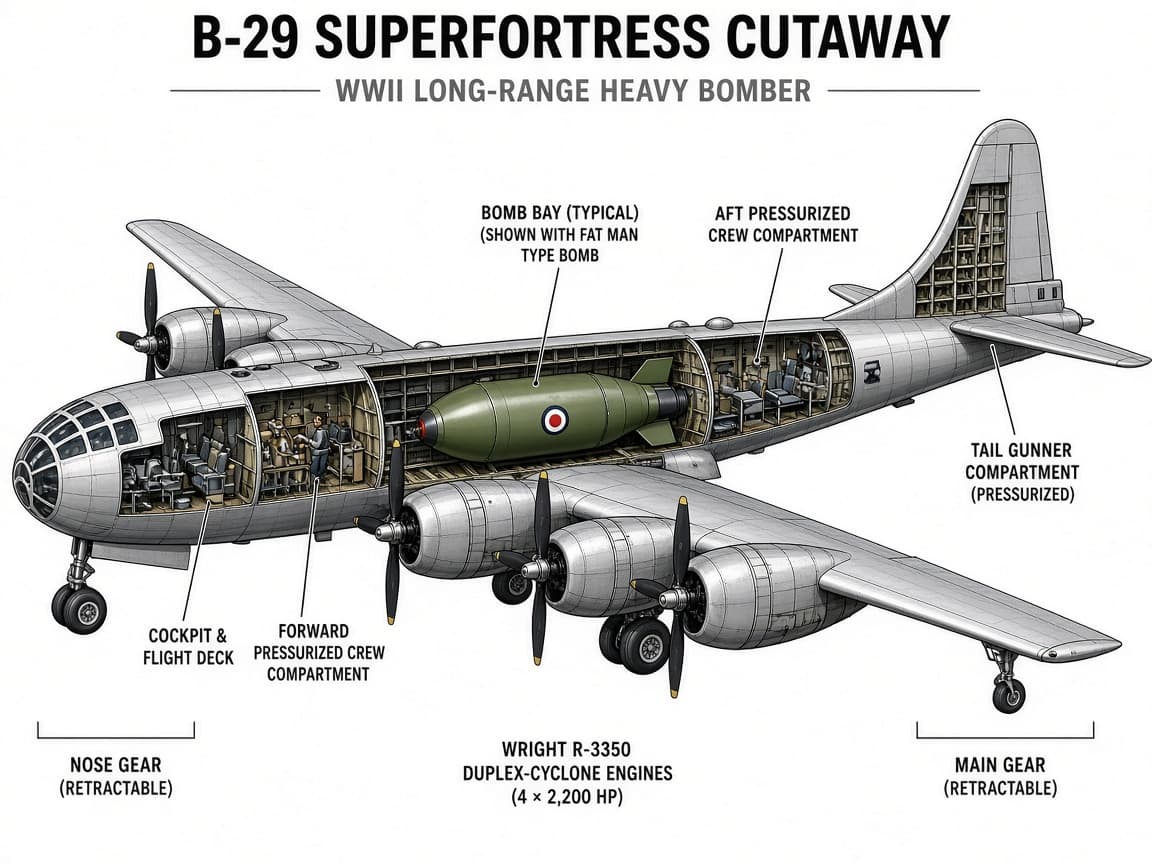
Bockscar flew from Tinian in the Mariana Islands with Major Charles Sweeney in command. The primary target that morning was Kokura, but smoke and haze blocked a clear visual drop under the mission rules then in force. The crew diverted to Nagasaki. Clouds still complicated the run. The bomb was released shortly before noon local time and detonated above the Urakami Valley, north of the city's older commercial center. Hills shielded some districts and concentrated destruction in others. Geography shaped who lived and who died as much as the physics did.
Numbers for death and injury remain estimates because records burned, families scattered and radiation effects unfolded over years. Immediate deaths in Nagasaki are commonly placed in the tens of thousands, with total fatalities by the end of 1945 often cited near 70,000 or higher depending on the source. Hospitals, schools, factories and neighborhoods vanished in seconds. The Mitsubishi shipyards and related industry that had drawn military attention were among the zones hit. So were civilian homes, churches and clinics with no connection to weapons work.
Context matters for honest reading. By summer 1945, U.S. firebombing had already destroyed large parts of Tokyo and other Japanese cities. Okinawa had shown how costly an invasion of the home islands might be. On 8 August the Soviet Union declared war on Japan and invaded Manchuria, ending any hope that Moscow might mediate a softer peace. American leaders presented the bombs as tools to force surrender without a full-scale invasion. Historians still argue about necessity, alternatives, racial attitudes and how much each factor weighed inside Tokyo's final decision.
What is not in serious dispute is the human texture of the day. People were commuting, working, schooling children and treating patients when the flash came. Blindness, burns, crushed buildings and fires followed. Water was scarce. Medical staff died with their patients. Hibakusha (atomic bomb survivors) carried physical scars and social stigma for decades. Their testimony remains primary evidence that turns abstract megatonnage into faces and streets.
Diplomatically, Nagasaki sat between Hiroshima and Japan's acceptance of Allied terms later in August. Emperor Hirohito and senior officials wrestled over whether to continue fighting after Soviet entry and two nuclear cities. On 14-15 August Japan moved to surrender; formal signing came on 2 September aboard USS Missouri. The bombs did not invent the end of the Pacific war alone. They compressed the calendar of collapse.
Memory politics followed. In Japan, peace museums in Hiroshima and Nagasaki teach the cost of nuclear war while also facing hard questions about Japan's own wartime aggression across Asia. In the United States, schoolbooks often stress ending the war and saving Allied lives. Both frames can erase inconvenient halves of the truth if left alone. A careful reader holds the victims of Nagasaki, the war Japan had waged and the later nuclear arms race in one field of view.
Technology lessons traveled faster than moral consensus. Fat Man's implosion method became a template for later designs. Secrecy, testing and stockpiling defined the Cold War. Treaties later limited some testing and deployments, yet nuclear weapons still exist in several national arsenals. Nagasaki's date is therefore both a local tragedy and a global hinge: the second time a city was chosen to demonstrate fission as a weapon of war.
Eagle Frame's takeaway: 9 August 1945 is when a diverted B-29 mission turned Nagasaki into the second atomic target in three days. Know the plutonium bomb's mechanism, know Kokura's weather and know the human cost in the Urakami Valley. Read the surrender that followed as a crowded decision, not a single-cause slogan.