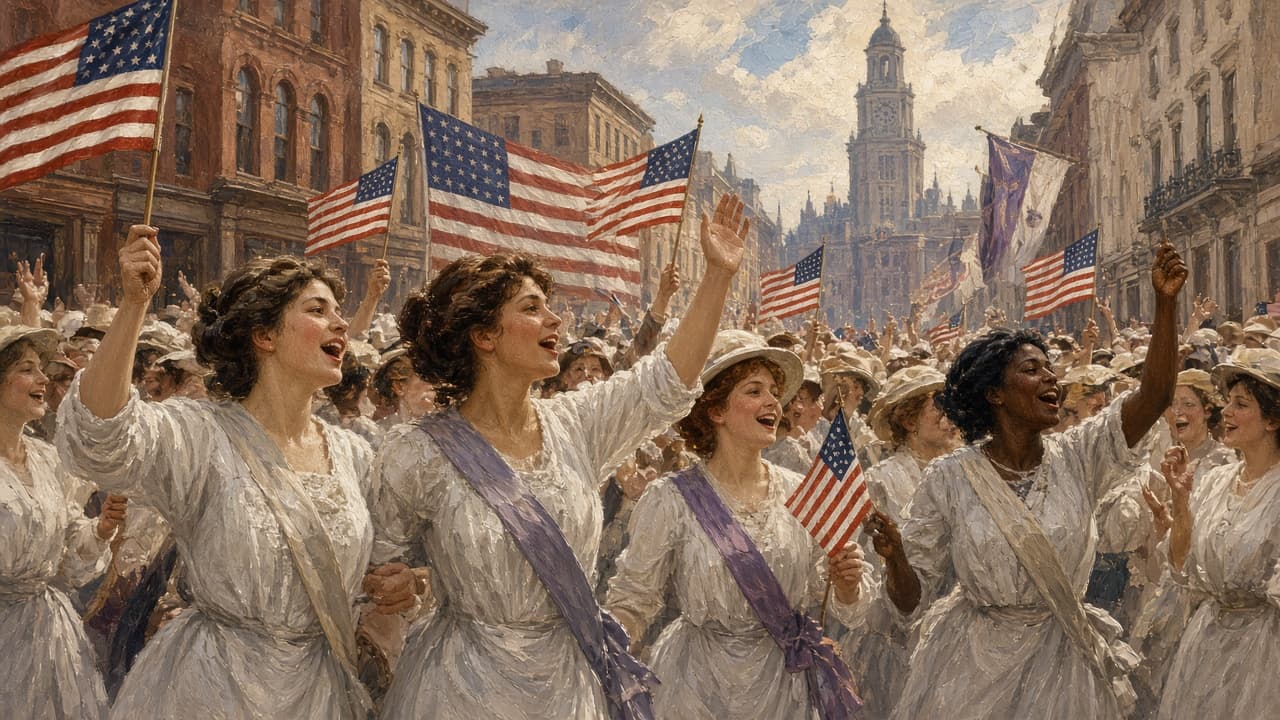
On this day: the 19th Amendment is ratified
On 18 August 1920, Tennessee's ratification supplied the final state needed for the 19th Amendment. Women's suffrage entered the US Constitution after decades of campaigning.
On 18 August 1920, the Tennessee General Assembly approved the 19th Amendment to the United States Constitution. That vote supplied the 36th state ratification required by the Constitution's amendment process. After more than seventy years of organized struggle, women's right to vote on equal terms with men, as a matter of federal constitutional text, crossed a decisive finish line in Nashville.

Alice Paul and the National Woman's Party pushed a militant federal strategy: pickets at the White House, hunger strikes and insistence on a constitutional amendment rather than only state-by-state campaigns. Paul's tactics divided suffrage organizations yet kept national pressure on President Woodrow Wilson and Congress during World War I. Prison force-feedings became scandals that embarrassed the administration. When the Nineteenth Amendment cleared the last state hurdles in 1920, it capped decades of organizing that included both Paul's confrontational wing and broader moderate coalitions.
Suffrage parades in white dresses and sashes had already taught Americans to see women as a political marching body, not only as petitioners in parlors. Black women organizers fought for the vote while facing racism inside and outside the movement. Ratification did not deliver equal polling access everywhere. Literacy tests, violence and local barriers continued, especially in the Jim Crow South. The amendment still changed the formal electorate and forced parties to court women as voters. Parade and portrait together name strategy and spectacle.
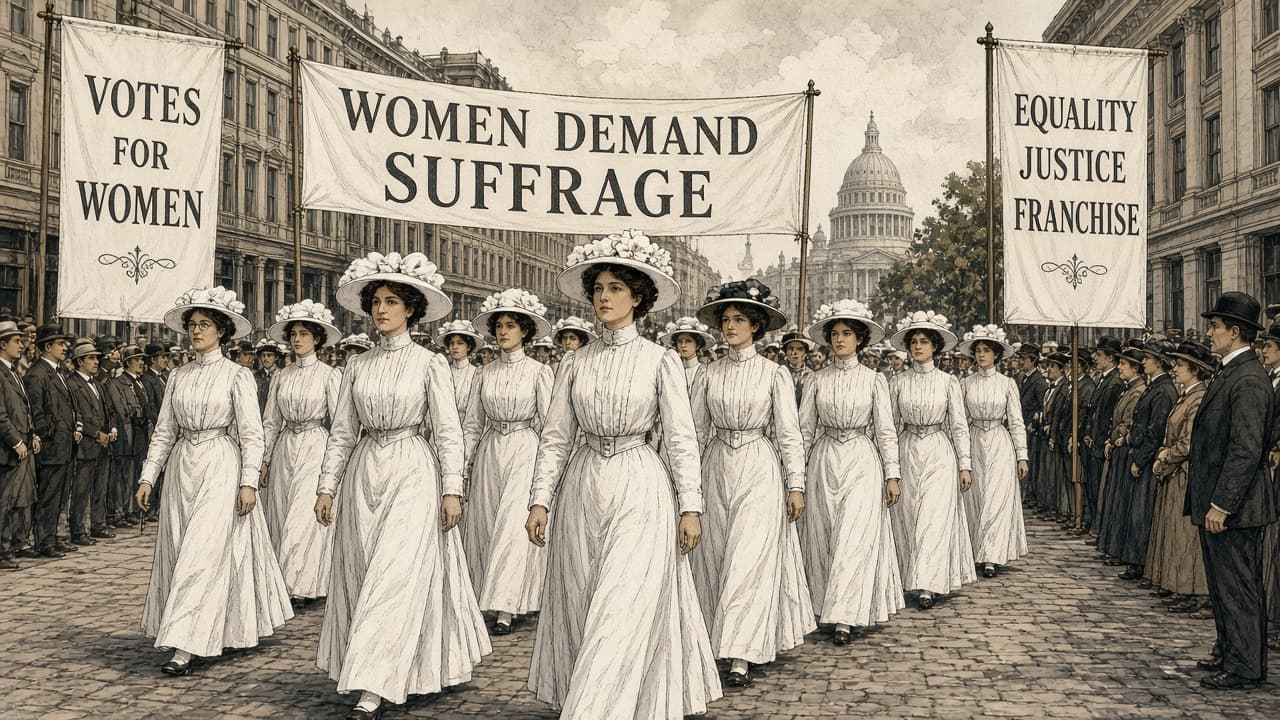
Alice Paul and the National Woman's Party had made suffrage impossible to ignore in Washington. They picketed the White House, endured arrests and hunger strikes and kept public pressure on a federal amendment rather than only a state-by-state patchwork. Carrie Chapman Catt and the larger National American Woman Suffrage Association ran a different style of lobbying, coalition work and state campaigns. The tactics often clashed. Both streams fed the same constitutional goal of writing sex out of the voting-rights barriers in the national charter.
The amendment's wording is short. It bars denying or abridging the right to vote on account of sex and gives Congress power to enforce that rule. It did not, by itself, dismantle every barrier at the courthouse door. Literacy tests, poll taxes, intimidation and racist election practices continued to block many Black women and men, especially under Jim Crow, until later civil-rights statutes and court fights. Ratification was a landmark expansion of democracy. It was not an automatic key for every citizen.
Tennessee's fight was raw and theatrical. Lobbyists packed Nashville hotels. Legislators flipped under pressure from both sides. Popular memory often highlights young representative Harry T. Burn switching to "aye" after a letter from his mother. The fuller record includes procedural brinkmanship, anti-suffrage organizing and frantic vote counting. When the amendment cleared the legislature, opponents still tried last maneuvers. Suffragists guarded the legal victory until federal certification followed.
Secretary of State Bainbridge Colby certified the amendment on 26 August 1920. That later date is now observed as Women's Equality Day. The 18 August ratification remains the political hinge: without Tennessee, the amendment was still short of the required states. Certification made the change official across the Union and cleared the way for women to vote in the November 1920 elections under the new constitutional rule.
Deeper roots run to the 1848 Seneca Falls meeting, through Reconstruction-era debates about whose citizenship counted, through Western states and territories that enfranchised women earlier and through World War I's strain on old arguments about public roles. Women had already voted in parts of the country long before 1920. The federal amendment nationalized a right that had been a patchwork and left unfinished work about race, class and registration in practice.
Modern readers should hold both truths without flattening either. Constitutional suffrage for women was hard-won and transformed party politics, juries and campaigns. Enforcement and inclusion remained contested, especially for women of color. Paul, Catt, Ida B. Wells and countless local organizers belong in the same long story even when their strategies and access to power differed sharply.
In classrooms the date is sometimes reduced to a single celebratory poster. Keep the sequence instead: decades of organizing, congressional passage in 1919, state-by-state ratifications, Tennessee on 18 August and certification on 26 August. That sequence shows how constitutional change actually moves in the United States: not by mood alone, but by votes counted under pressure.
New voters registered in the thousands for the November 1920 elections. Party machines adjusted platforms and precinct strategies. Some women ran for office themselves. Others organized issue campaigns on labor, peace and education. The ratification vote did not end sex discrimination in law or custom. It did remove the explicit constitutional bar that opponents had used for decades to keep women from ballots they had already earned in several states. Anti-suffrage groups that had warned of family collapse adjusted tactics after defeat, shifting toward labor regulation and moral politics. Suffrage leaders split over next goals: equal rights amendments, labor law, peace. The 1920 ratification closed one constitutional fight and opened a wider field of citizenship debates that continue today.
Eagle Frame's takeaway: 18 August 1920 is Tennessee's ratification day for the 19th Amendment. Know Alice Paul's pressure campaign, know the limits Jim Crow still imposed and know that certification on 26 August sealed what Nashville made possible.