On this day: Richard Nixon resigns the presidency
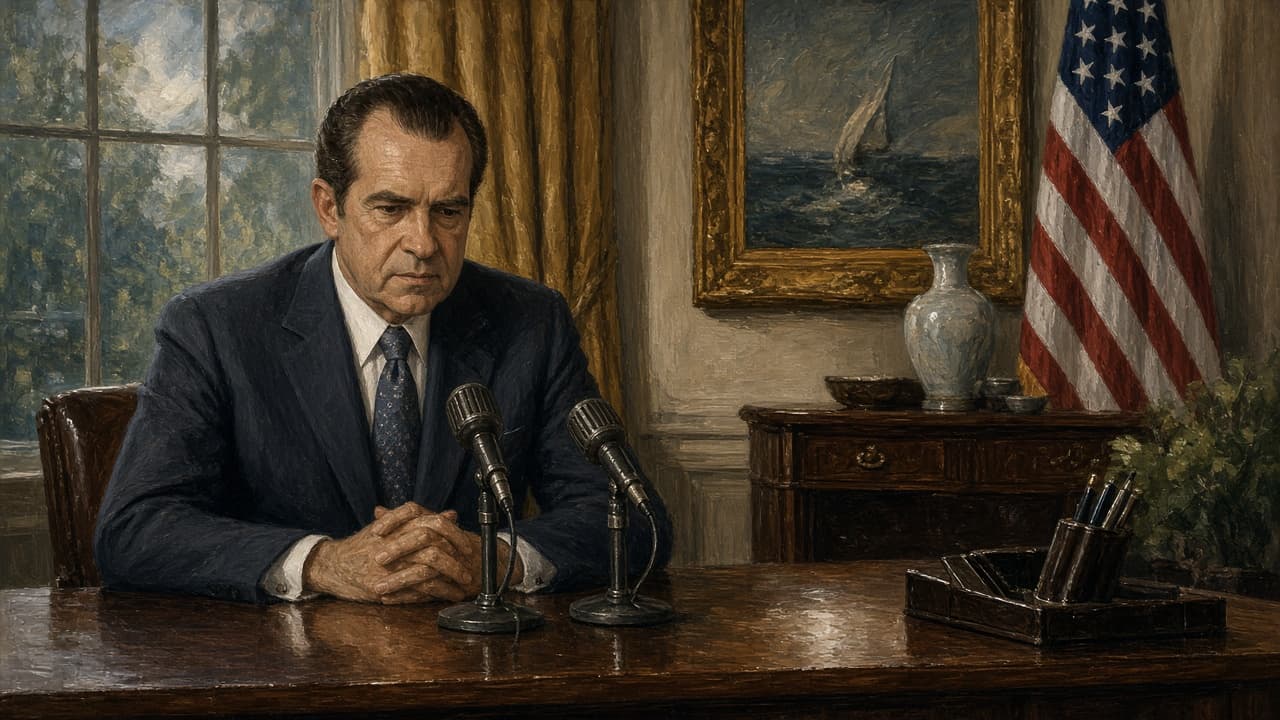
On 8 August 1974, Richard Nixon told a television audience that he would leave office the next day. Watergate had stripped him of support in Congress and made him the first US president to resign.
On the evening of 8 August 1974, Richard Nixon sat at the desk in the Oval Office, looked into a television camera and told the country he would resign the presidency at noon the following day. The speech ran about 16 minutes. He did not confess to a crime. He said he had lost the political base in Congress he needed to govern, and that continuing to fight would consume months the nation could not spare. At noon on 9 August his letter of resignation reached Secretary of State Henry Kissinger, Gerald Ford took the oath in the East Room, and the United States changed presidents without an election, an assassination or a death in office for the first time in its history.
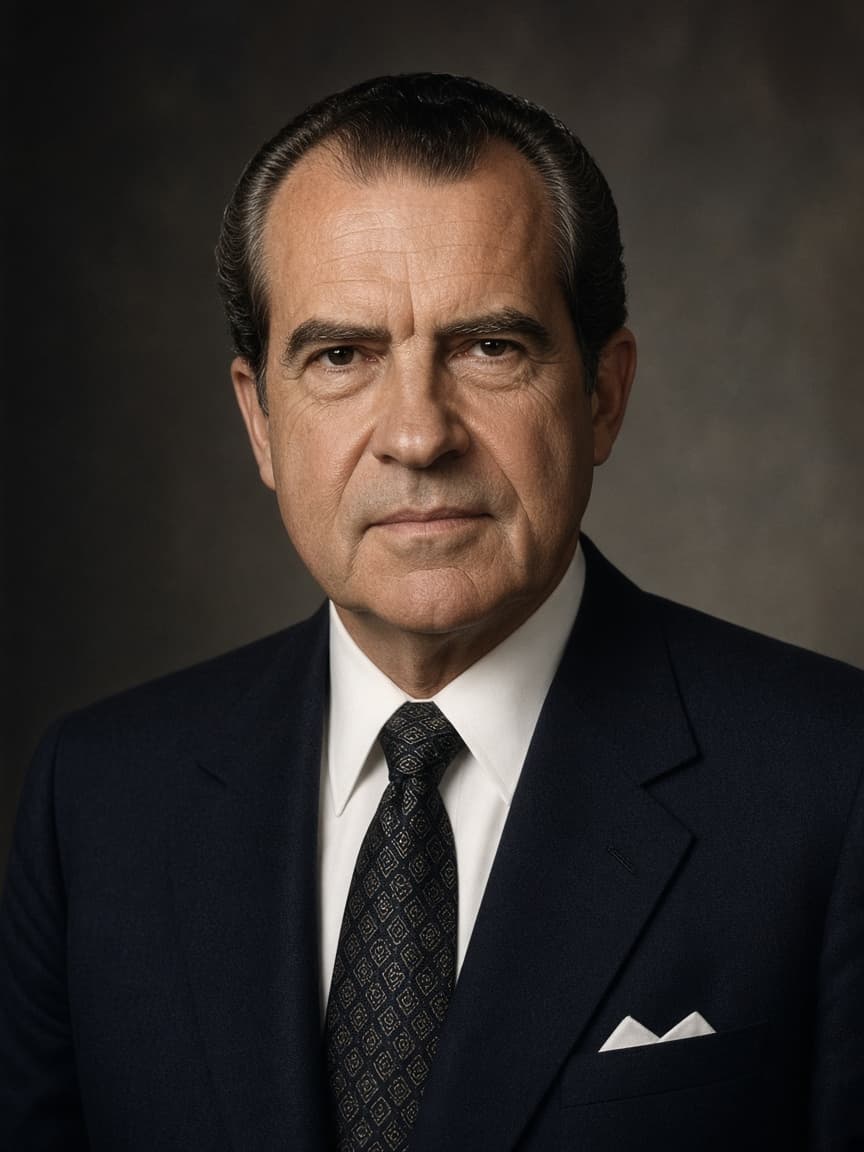
Nixon was 61 that summer and had spent almost three decades in national politics. Born in Yorba Linda, California, in 1913, he won a House seat in 1946, moved to the Senate in 1950 and served two terms as Dwight Eisenhower's vice president. He lost the 1960 election to John F. Kennedy by a hair, lost a California governor's race in 1962, told reporters they would not have him to kick around any more, then came back to win the White House in 1968. In November 1972 he was re-elected in one of the largest landslides ever recorded, carrying 49 states. Twenty-one months later he was finished.
His record was not thin, which is part of why the collapse still fascinates. Nixon opened relations with the People's Republic of China in 1972, signed the first strategic arms limitation agreements with the Soviet Union, ended the draft, withdrew American ground troops from Vietnam and signed the laws that created the Environmental Protection Agency and the Occupational Safety and Health Administration. Historians who dislike his methods still concede the foreign policy shift. The resignation is what almost every account leads with anyway, because of how the second term came apart.
Watergate needs explaining rather than assuming. In the early hours of 17 June 1972, five men were arrested inside the Democratic National Committee offices at the Watergate complex in Washington. They were carrying bugging equipment, cash and camera gear. Two of them had worked for the Committee for the Re-Election of the President, Nixon's campaign organization, and money in their pockets traced back to campaign accounts. The break-in was one piece of a wider operation that included wiretaps, forged documents, political sabotage and a unit of operatives known inside the White House as the plumbers, created after the Pentagon Papers leak in 1971.
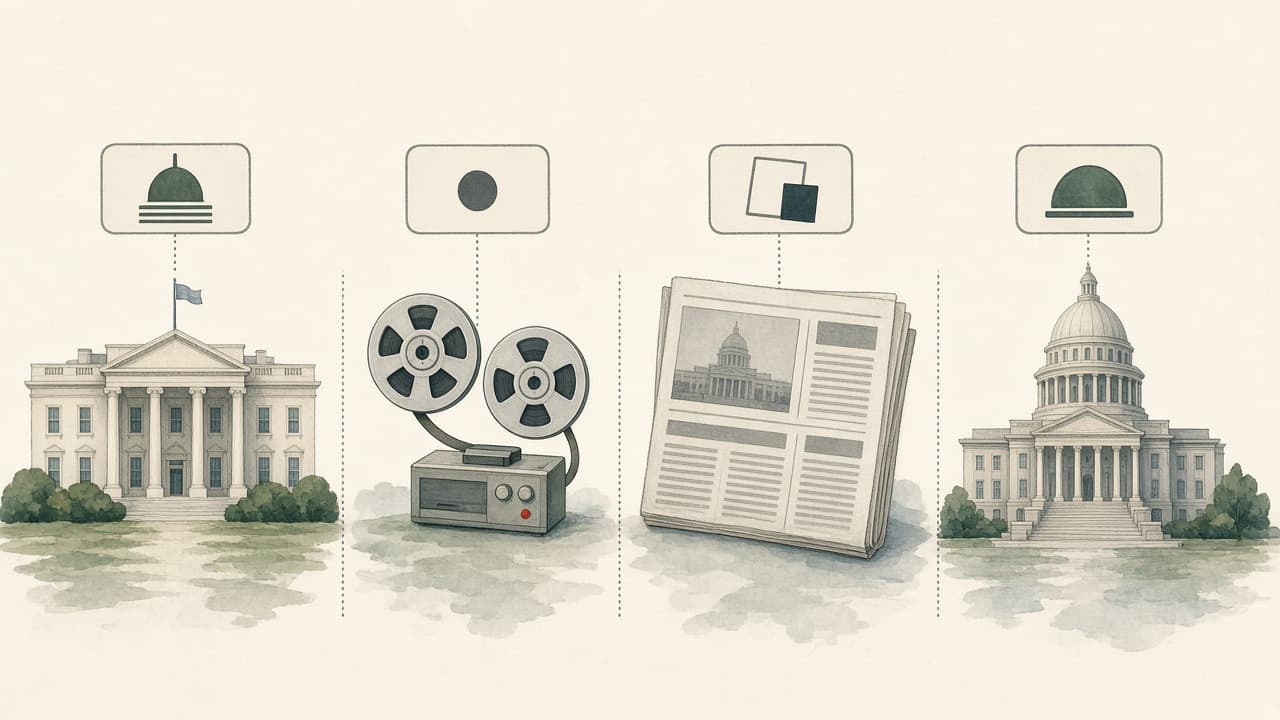
The cover-up mattered more than the burglary. Hush money went to the defendants. Officials lied to investigators. The White House pressed the FBI and the CIA to slow the inquiry. Reporting by Bob Woodward and Carl Bernstein at The Washington Post kept the money trail in public view through the 1972 campaign. In 1973 a Senate committee chaired by Sam Ervin held televised hearings, White House counsel John Dean testified that he had discussed the cover-up with the president, and aide Alexander Butterfield revealed that Nixon had been secretly taping conversations in his own offices. From that moment the case had a documentary record that no witness could talk away.
The fight then became a fight over the tapes. Special prosecutor Archibald Cox subpoenaed them. Nixon ordered him fired in October 1973, and Attorney General Elliot Richardson and his deputy William Ruckelshaus resigned rather than carry out the order, an episode the press called the Saturday Night Massacre. Public opinion turned hard. A new prosecutor, Leon Jaworski, pressed on. On 24 July 1974 the Supreme Court ruled 8-0 in United States v. Nixon that executive privilege did not shield the recordings from a criminal subpoena. Days later the House Judiciary Committee approved three articles of impeachment covering obstruction of justice, abuse of power and contempt of Congress.
What ended it was a single recording. On 5 August 1974 the White House released a tape of 23 June 1972, six days after the break-in, in which Nixon agreed to have the CIA ask the FBI to back off on national security grounds. The press called it the smoking gun, because it placed the president inside the cover-up almost from the start. Republican support evaporated in 72 hours. On 7 August a delegation of Senator Barry Goldwater, Senate Republican leader Hugh Scott and House Republican leader John Rhodes told Nixon he had perhaps 15 votes in a Senate that needed 34 to acquit him. The arithmetic was the message.
The next morning Nixon said goodbye to staff in the East Room in a rambling, emotional talk about his mother, his father and the need never to be petty. He boarded a helicopter on the South Lawn, turned at the door and raised both arms in his familiar V sign. Gerald Ford, who had become vice president only in December 1973 after Spiro Agnew resigned over an unrelated corruption case, told the country that our long national nightmare is over. On 8 September Ford granted Nixon a full pardon for any federal crimes committed in office. The pardon spared the country a trial of a former president and probably cost Ford the 1976 election.
The wreckage produced law. Congress passed campaign finance limits and strengthened the Federal Election Commission, tightened the Freedom of Information Act, created an independent counsel mechanism in the Ethics in Government Act of 1978 and wrote new rules on presidential records after fights over who owned the tapes. More than 40 people connected to Nixon's administration or campaign were convicted or pleaded guilty, including Attorney General John Mitchell and aides H. R. Haldeman and John Ehrlichman. Trust in government, measured by pollsters since the late 1950s, fell through the 1970s and never fully recovered.
The lasting argument is about what actually worked. Nixon left because courts enforced a subpoena, a congressional committee did its job on camera, career investigators followed money rather than headlines, reporters kept asking questions when the story was unpopular and members of his own party finally counted votes and told him the truth. None of those steps were automatic. Each could have failed. That is the reason the date still gets cited in every later dispute about executive power, from the release of documents to the limits of privilege.
Eagle Frame's takeaway: 8 August 1974 is the night a landslide winner told the country he was out of votes. Remember the sequence rather than the drama, because the burglary was small, the cover-up was the crime, the tapes were the proof and ordinary institutions doing unglamorous work are what ended it.