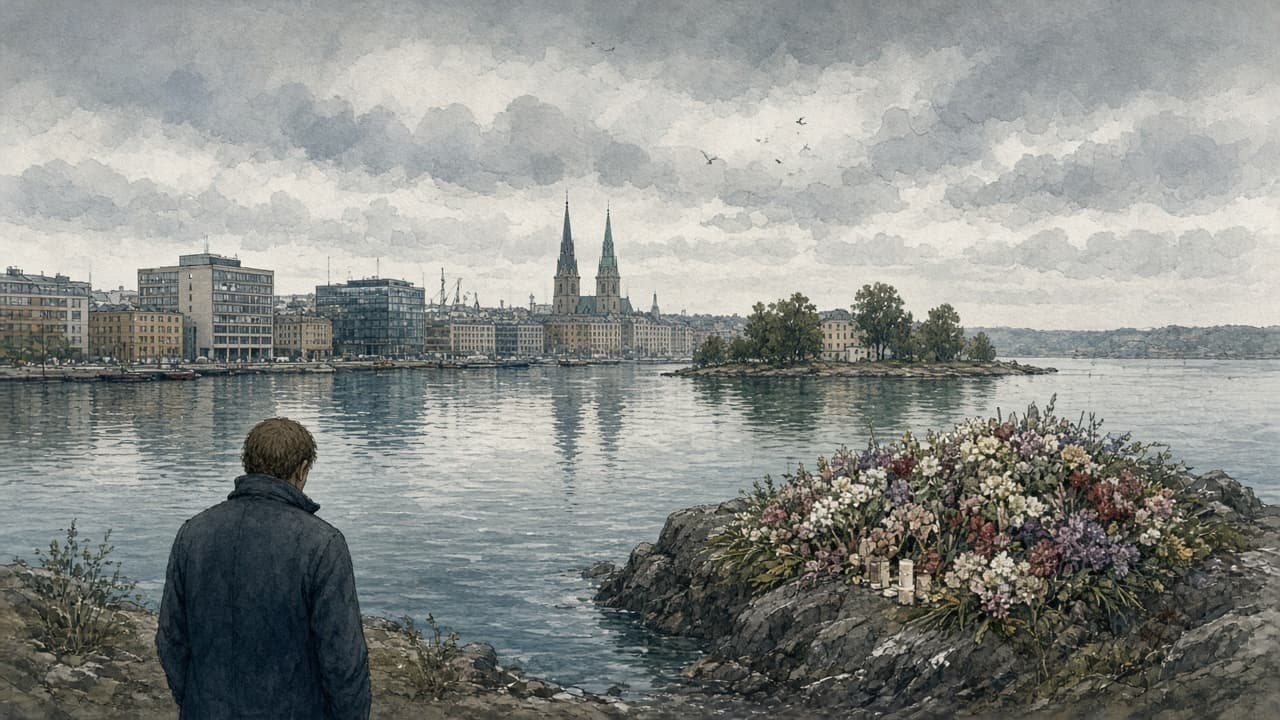
On this day: terror attacks strike Norway
On 22 July 2011, a far-right extremist bombed the government quarter in Oslo and then shot people at a Labour Party youth camp on the island of Utoya. Seventy-seven people were killed, most of them teenagers. Norway's response became a study in democratic restraint.
At 15:25 on Friday 22 July 2011, a car bomb exploded outside the high-rise that housed the Norwegian prime minister's office in the government quarter of central Oslo. Eight people were killed. Two hours later, on the small wooded island of Utoya in a lake about 40 kilometres northwest of the city, a man in a police uniform began shooting at the summer camp of the Labour Party's youth wing. Sixty-nine people died there, most of them teenagers. The total death toll was 77.
This account keeps the detail of the shooting itself deliberately brief. What happened on Utoya was a prolonged attack on young people who had nowhere to go, and the specifics are documented in the official commission report for anyone who needs them. The purpose here is to explain how the attacks happened, who carried them out and what Norway did afterward.
The attacker was Anders Behring Breivik, a 32-year-old Norwegian. He was not connected to any foreign group. He had spent years on the far right of Norwegian politics, had been a member of the populist Progress Party and its youth wing before leaving, and had immersed himself in an online subculture organized around the belief that European elites were deliberately permitting Muslim immigration to replace native populations. Hours before the bombing he emailed a long document setting out that worldview to more than a thousand addresses.
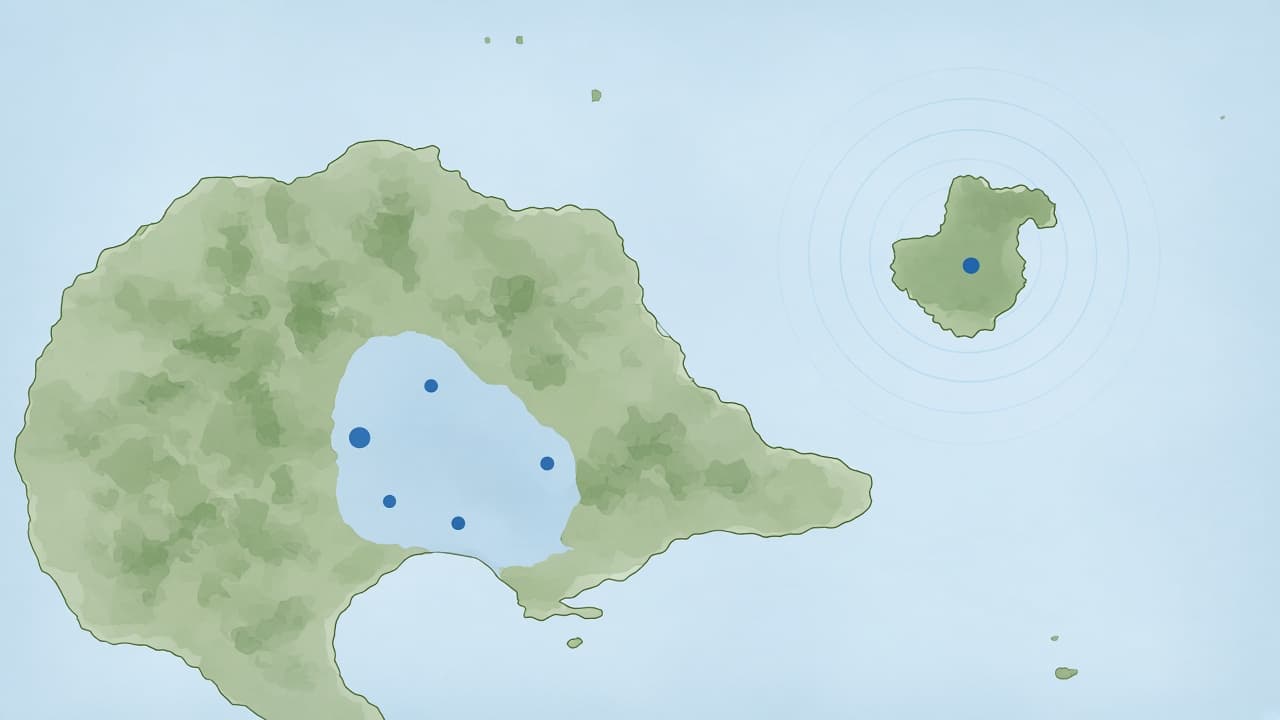
The two targets were chosen for the same reason. The government quarter was the seat of the Labour-led government. Utoya held the party's future: the AUF summer camp brings together politically active teenagers from across Norway every year, and former Norwegian prime ministers had attended as young people. Breivik's stated aim was to attack the party he blamed for immigration policy, in both its present and its coming generation.
He built the bomb from fertilizer on a farm he had rented for the purpose, which gave him a legitimate reason to buy agricultural chemicals in quantity. He obtained his firearms legally, using membership of a shooting club to qualify for a pistol licence and a hunting licence for the rifle. Both of those routes were later examined closely. Norwegian gun law was tightened in the years that followed, including a ban on semi-automatic rifles that took effect in 2021.
The police response failed and Norway said so in public. The official 22 July Commission, reporting in August 2012, found that the bombing could probably have been prevented by security measures already recommended and not implemented, that the police response to Utoya was too slow and badly coordinated, that a helicopter was unavailable and that the boat first used by the response unit was overloaded and broke down. It took roughly an hour from the first emergency calls until police reached the island. Breivik surrendered without resistance when they did.
The national response set the tone that the country is now known for. Prime Minister Jens Stoltenberg said Norway's answer would be more democracy, more openness and more humanity, and that the country would not be bombed into silence. Days later, an estimated 200,000 people filled central Oslo holding roses. There was no state of emergency, no suspension of civil liberties and no mass surveillance law passed in the immediate aftermath.
The trial in 2012 tested that commitment. Two psychiatric evaluations reached opposite conclusions, the first finding paranoid schizophrenia and the second finding him legally sane. The court accepted the second. He was convicted of terrorism and mass murder and given Norway's maximum sentence of 21 years of forvaring, preventive detention, with a minimum of ten years. Forvaring can be extended in five-year increments indefinitely while a person is judged dangerous, so in practice he may never be released. He has sought parole and been refused.
The prison conditions became an international argument in themselves. He is held in a multi-room unit with exercise facilities and has sued the state twice over his isolation, winning partially on one human rights point in 2016 before that ruling was overturned on appeal. Norwegian officials have made the same reply each time: the country's penal principles do not change for the worst offender, because that is precisely what the principles are for.
Survivors and bereaved families have carried a heavier burden than the public ceremonies suggested. Many faced online harassment and conspiracy claims that the attacks were staged. Several, including AUF members who were on the island, entered Norwegian politics directly. Research in the following decade found high rates of post-traumatic stress among survivors and their parents, and a repeated complaint that the country moved to reconciliation faster than the people who were there could.
Norway also had a delayed argument about the ideology. In the first years after 2011 there was reluctance to examine how far the attacker's core ideas circulated in mainstream political language. Ten years on, the AUF and researchers pushed that debate into the open, and Norwegian security services now list far-right extremism alongside Islamist extremism as a primary domestic threat. Similar attacks elsewhere, including Christchurch in 2019, cited Breivik directly, which is why his manifesto and his name are handled carefully in reporting.
Eagle Frame's takeaway: 22 July 2011 is the day a single far-right extremist killed 77 people in Norway, most of them teenagers at a political summer camp. Two things are worth carrying from it. A country can investigate its own police failures honestly and publish the result, and it can refuse to dismantle its legal norms in response. The harder lesson, which Norway took a decade to face, concerns the ideas that made the attack thinkable.