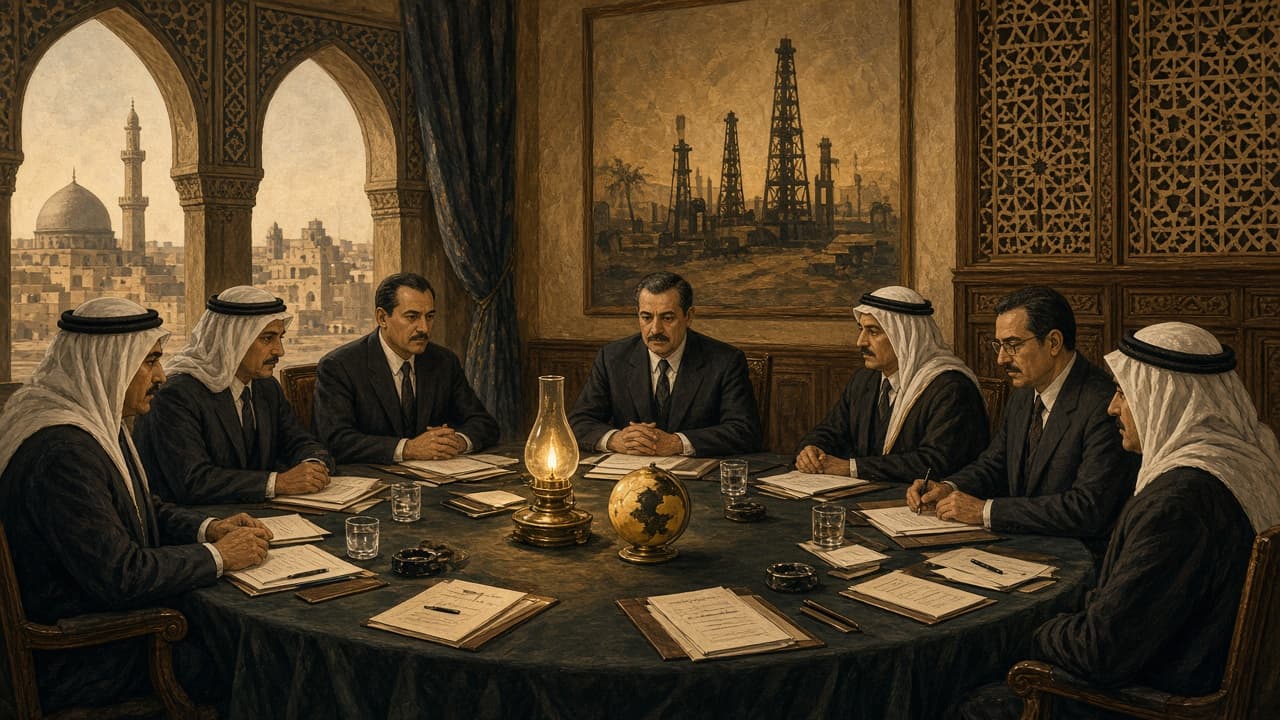
On this day: OPEC is founded
On 14 September 1960 in Baghdad, Iran, Iraq, Kuwait, Saudi Arabia and Venezuela founded OPEC to coordinate petroleum policy after posted-price cuts by major oil companies.
On 14 September 1960, representatives meeting in Baghdad founded the Organization of the Petroleum Exporting Countries, better known as OPEC. The five founding members were Iran, Iraq, Kuwait, Saudi Arabia and Venezuela. Their shared aim was to coordinate petroleum policy so producer governments had a stronger voice opposite large international oil companies and consumer markets.
Oil politics then ran through concession contracts. A handful of giant firms, often nicknamed the Seven Sisters, dominated much of production, shipping and marketing outside the Soviet bloc. Posted prices set by companies shaped what exporting states earned even when the oil came from their territory. When those companies cut posted prices in 1959 and again in 1960, producing countries felt the hit in budgets and bargaining power. Baghdad was the place they answered with a permanent club rather than one-off complaints.
What a producer organization tries to do, in plain terms: members discuss output and pricing strategy so they are not undercutting one another while buyers play them off. OPEC is an organization of governments, not a single company. It cannot magically set the world oil price alone. Leverage depends on how much spare production members control, how united they stay, how quickly non-members can raise supply and how demand moves with growth, recessions and new technology.
Membership grew after 1960 as other exporters joined and some later suspended or left. The organization's headquarters eventually settled in Vienna, Austria, which became the familiar backdrop for ministerial meetings in later decades. The Baghdad founding was about principle and solidarity as much as about a finished rulebook. The tools of coordination (quotas, production targets, public signals) matured as markets and politics changed.
A decade later, the 1973 oil shock made OPEC a household word in importing countries. After the October war that year, Arab exporters used production cuts and embargo measures aimed at supporters of Israel. Prices jumped. Fuel costs, inflation debates and energy policy entered daily politics from Europe to North America. The mechanism was supply coordination under political stress, not a single button labeled "raise prices." Those later crises were not written into the 1960 communiqué, but the institution that could coordinate producers was.
For readers today, oil still mixes geology, tankers, refining and diplomacy. U.S. shale, other non-OPEC supply, efficiency standards and alternative energy have changed leverage compared with the 1970s. Petroleum remains central to transport, plastics and industry. When ministers signal cuts or increases, markets still listen because collective producer decisions can move barrels on a calendar traders watch. The Baghdad meeting is the origin story of that standing table.
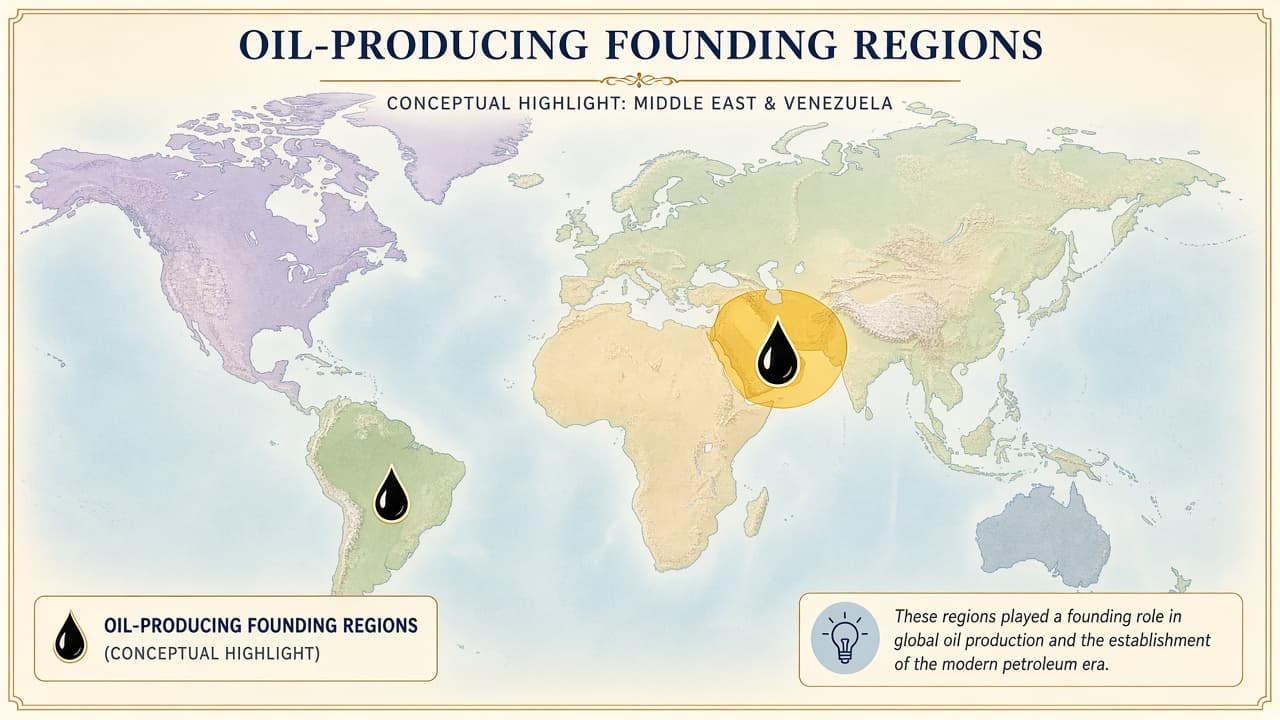
Name the founders again because the geography of leverage mattered. Iran, Iraq, Kuwait and Saudi Arabia sat on the Persian Gulf's giant reserves. Venezuela brought a major Western Hemisphere exporter into the same room. Together they argued that posted prices and production decisions should not be unilateral company choices. The 1960 meeting did not nationalize the industry overnight. It created a standing diplomatic instrument for producer states.
Cartel talk needs a cool definition. Economists use the word for producers who try to manage supply to influence price. Success is never automatic. Members cheat quotas when budgets demand cash. New fields outside the group dilute control. Recessions cut demand. OPEC's history is a long argument with those limits, punctuated by moments (such as the early 1970s) when spare capacity and political unity lined up and importing countries felt the shock at the pump.
Today's relevance is quieter than slogan versions suggest. Ministerial meetings still move futures markets when cuts look credible. Producer alliances have also widened at times to include partners outside the original membership. The Baghdad date remains useful because it marks when exporters chose coordination as policy, not because every later price spike has a single cause.
Before Baghdad, producer anger had already shown itself in smaller meetings and public complaints. The 1959 and 1960 posted-price cuts were the spark that turned complaint into an organization with a name, a secretariat path and a claim to speak as a bloc. Company boards still held enormous operational power in 1960. What changed was the expectation that exporter governments would answer together the next time prices or quotas moved against them.
Eagle Frame's takeaway: 14 September 1960 is when major exporters built a forum after posted-price cuts by the old concession system. Know the five founders, know later Vienna meetings and the 1973 supply shock and you can see why cartel leverage still depends on spare capacity, unity and the wider energy market.