On this day: the Panama Canal opens to traffic
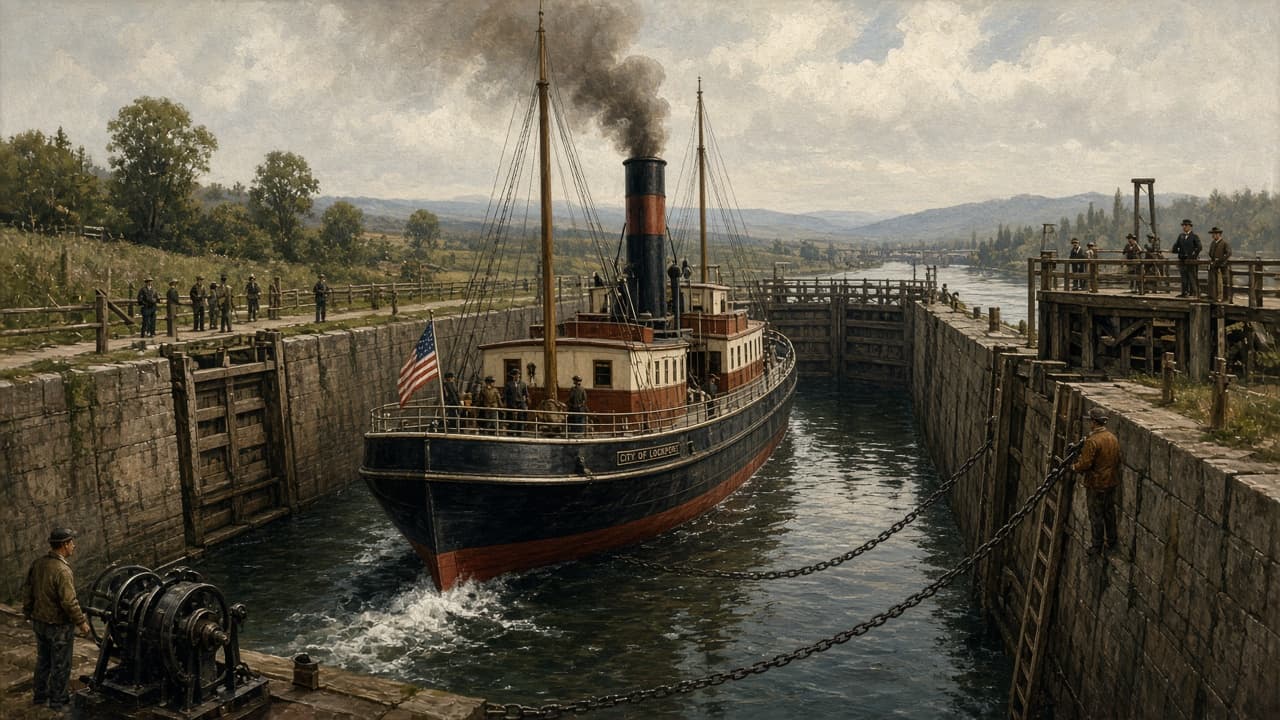
On 15 August 1914, the steamship Ancon made the first official transit of the Panama Canal. A lock-and-lake system linked the Atlantic and Pacific across the isthmus.
On 15 August 1914, the SS Ancon made the first official transit of the Panama Canal. The crossing linked the Atlantic and Pacific Oceans across the narrow Isthmus of Panama and cut thousands of miles off journeys that once had to round Cape Horn. World War I had begun in Europe days earlier, so the opening was quieter than planners once imagined. The engineering remained loud enough: locks, a dammed lake and a dug cut through continental divide rock.
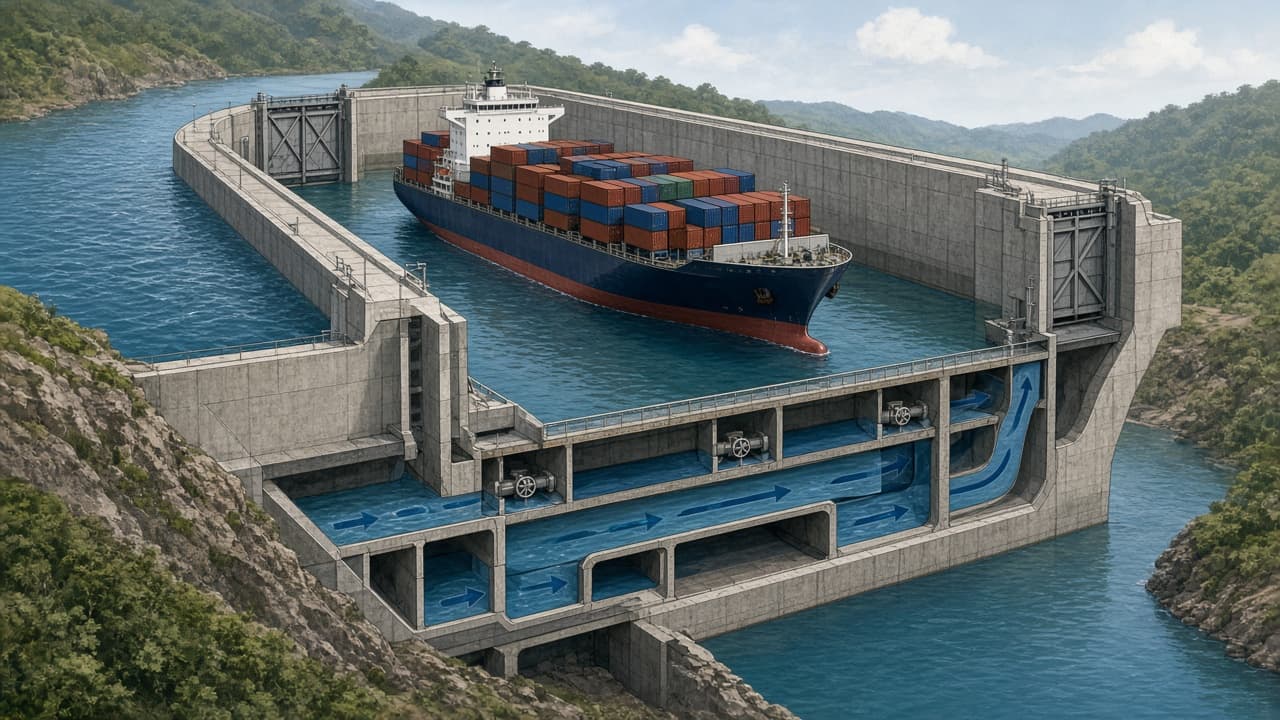
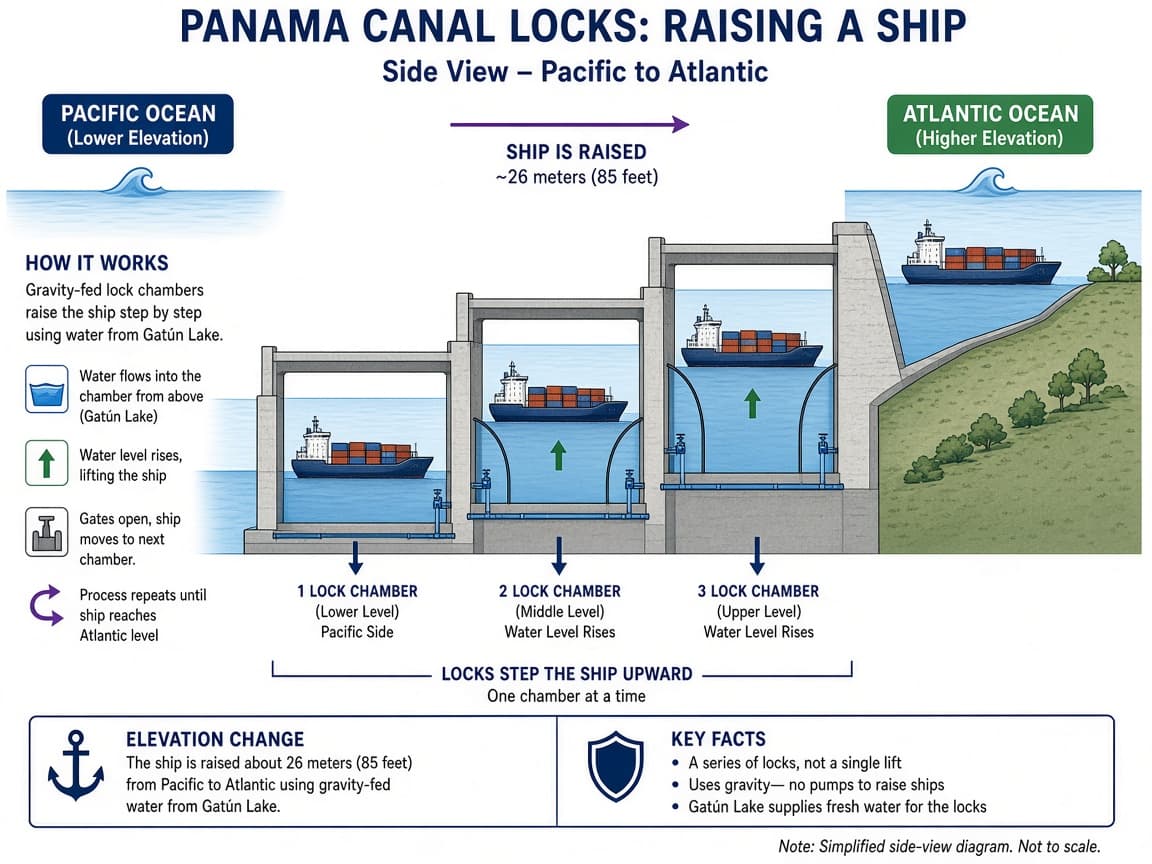
How the canal works, in plain language: ships do not sail uphill through a continuous sloping ditch from sea to sea. They enter lock chambers at the coasts. Gates close and water from higher levels fills (or empties) the chamber so the ship rises or lowers like an elevator. A series of locks lifts vessels to Gatun Lake, an artificial lake created by damming the Chagres River. Ships cross the lake, pass through the Gaillard (Culebra) Cut and descend locks on the other side to the opposite ocean.
Lock transit is a water elevator. A ship enters a chamber, gates close and culverts flood or drain the box until the ship sits at the next lake or ocean level. At Panama, vessels climb from sea level to Gatun Lake, cross the continental divide zone, then descend to the opposite ocean. The design avoids a sea-level cut through unstable hills. Every official opening photograph of a hull between lock walls is really a picture of that stepwise water budget at work.
SS Ancon's 1914 transit made the engineering public: steam, steel and a route that deleted the long haul around Cape Horn for many voyages. Navies and freight companies recalculated schedules within weeks. The Canal Zone's segregated labor camps and U.S. political control remained contested facts beside the engineering pride. Caribbean and European workers had dug and died for a channel their pay grades did not equally reward. Later treaties returned the waterway to Panama, but the lock diagram from Ancon's day still explains why captains talk about scheduling water as carefully as fuel.
French attempts under Ferdinand de Lesseps in the 1880s failed amid disease, rain-soaked slides and financial scandal. The United States took on the project after backing Panama's 1903 separation from Colombia and securing canal-zone rights under treaties that later generations of Panamanians contested. Colonel William Gorgas led mosquito control against yellow fever and malaria, a public-health campaign as decisive as any dredge. Chief engineers including John Stevens and George Goethals drove the excavation and lock construction.
Labor came from Caribbean islands, southern Europe, the United States and Panama itself, under a segregated wage and housing system that paid white American workers more and housed them better. Thousands died from disease and accidents across the French and American eras. Monument plaques that celebrate locks should also imply graves. The canal's "progress" story is incomplete without that cost.
Strategically, the canal let navies and merchants move faster between oceans. U.S. influence in the Canal Zone became a flashpoint for Panamanian nationalism. Treaties in 1977 under Jimmy Carter and Omar Torrijos set a path to Panamanian control; the canal transferred fully on 31 December 1999. Expansion locks opened in 2016 for larger "Neo-Panamax" ships, proving the route's continuing commercial value.
Mechanically, every transit is a water budget. Fresh water from Gatun Lake fills locks and then mostly drains to the sea. Droughts now threaten that budget as traffic and climate patterns change. Engineers who once fought slides in the Cut now also watch rainfall totals. The 1914 machine still runs on gravity, gates and a lake that must be replenished.
Compare the Cape Horn route: storms, ice risk and weeks of extra sailing. The canal turned geography into a toll booth with enormous time savings. Freight rates, naval deployments and migration patterns all bent around that shortcut. Globalization before the word was popular already depended on isthmus mud and concrete.
Standing at Miraflores locks today, visitors watch ships rise as water boils in through culverts. The spectacle is the same physics Ancon used. 15 August 1914 is when that physics opened to scheduled traffic and remade maritime maps.
Shipping companies recalculated routes the week Ancon transited. Navy planners redrew deployment times between oceans. Panama's economy tied itself to tolls, ports and services around the locks. The 1914 opening did not end arguments about who controlled the zone or who profited from the cut. It did prove the lock-and-lake design could move commerce at scale through a rainy isthmus. Panama Canal pilots still board ships to guide each transit through narrow locks and tight schedules. Tolls fund maintenance of gates, locomotives that position vessels and the water system feeding Gatun Lake. The 1914 opening built a machine that must be operated daily, not only admired in history class. Anniversaries work best when readers return to primary sources, survivor testimony and later scholarship instead of trusting a single headline from the day.
Eagle Frame's takeaway: 15 August 1914 is when the Panama Canal opened with Ancon's transit. Know the lock-and-lake elevator idea, know the disease and labor costs behind the cut and know why water supply still decides how many ships can climb between oceans.