On this day: Paris is liberated
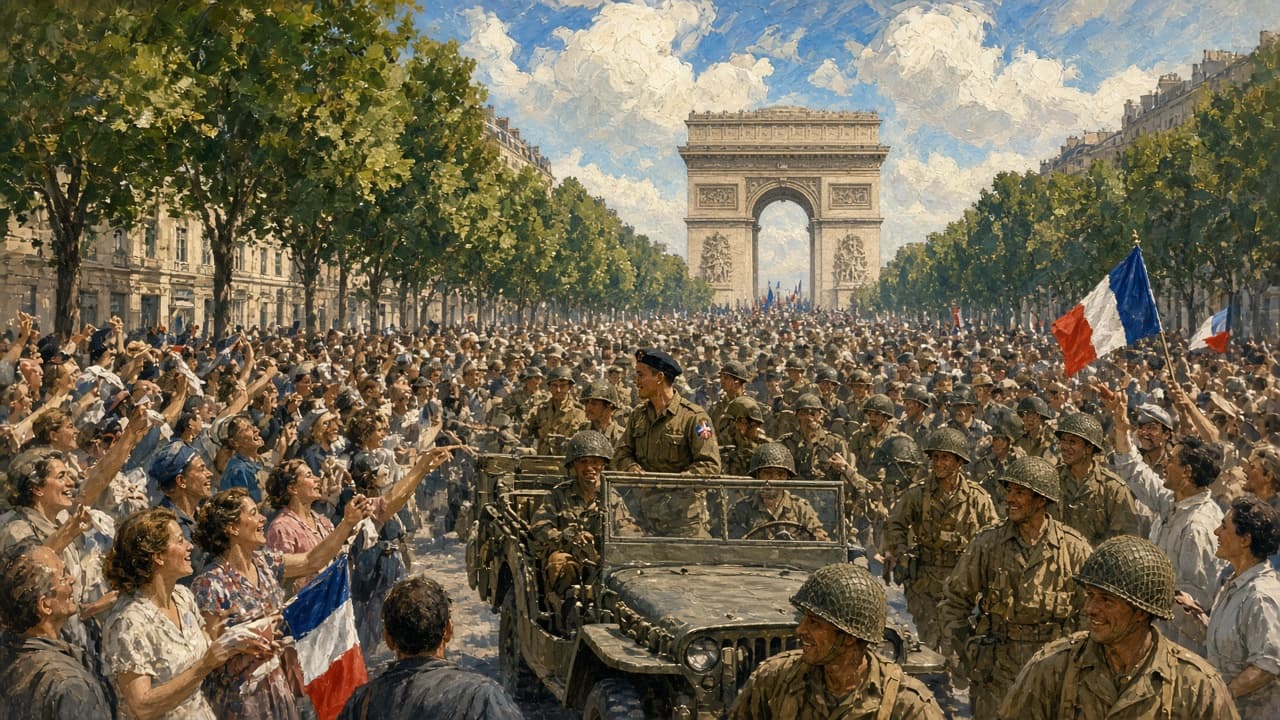
On 25 August 1944, Free French and Allied forces entered Paris as the German garrison surrendered after an uprising. Charles de Gaulle walked the city's symbolic heart and claimed France's capital for the Republic.
On 25 August 1944, Paris was liberated from German occupation after more than four years under Nazi control. Free French units of the 2nd Armored Division under General Philippe Leclerc, supported by U.S. forces and by Parisians who had risen in revolt, forced the German garrison toward surrender. Church bells and cheering crowds filled streets that had lived under curfew, yellow-star edicts and the daily fear of deportation. The war in Europe was not over. For France, the capital's freedom was a political rebirth as well as a military event.
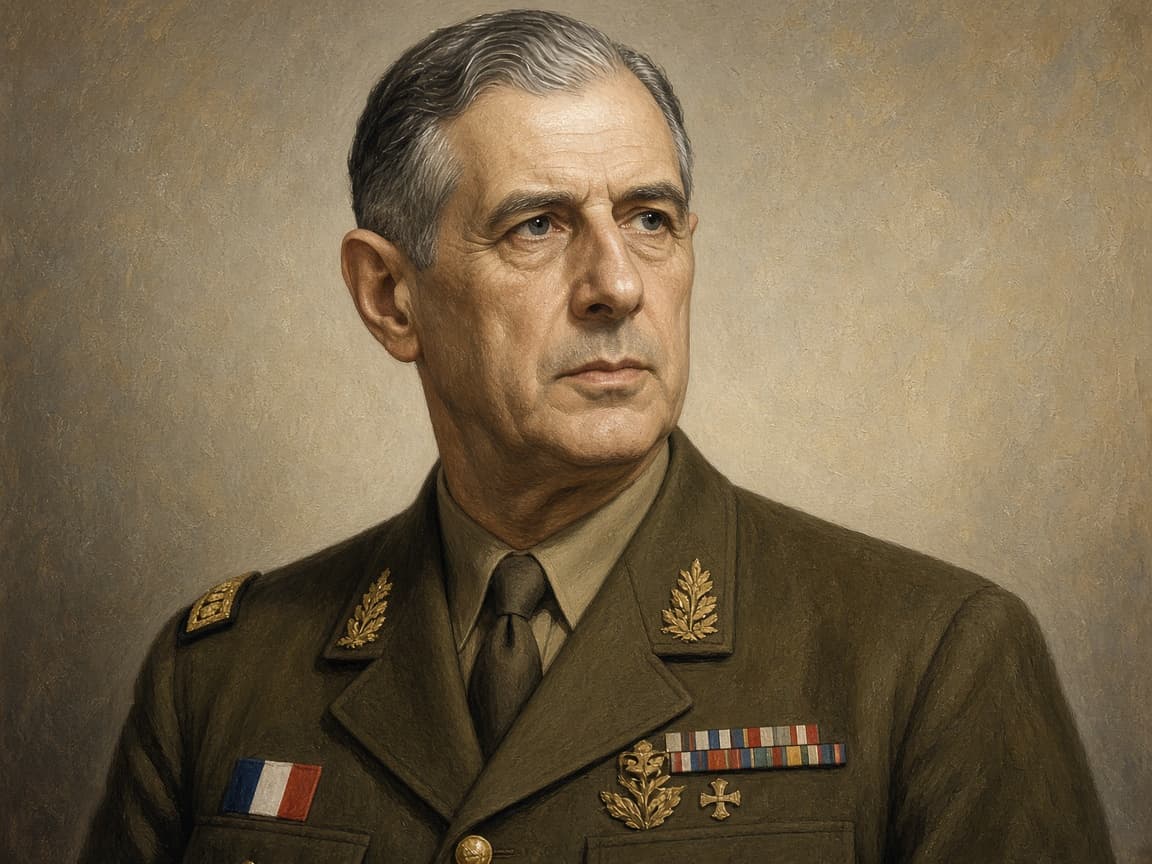
Charles de Gaulle had led the Free French from exile since 1940, insisting that France remained a combatant nation even after the armistice and the Vichy regime. On liberation day and the marches that followed, he walked among crowds from the Arc de Triomphe toward Notre-Dame, using presence as policy. His aim was clear: French forces must be seen reclaiming Paris so that liberation did not look like a purely American gift and so that communist-led Resistance currents would not alone define the new order. Symbol and rifle moved together.
Charles de Gaulle entered liberated Paris in August 1944 as the face of Free France, determined that French forces and French political authority would be seen reclaiming the capital, not only Allied armies. His uniformed presence on the boulevards asserted continuity of a republic after occupation and Vichy collaboration. The liberation week mixed street fighting, German surrender talks and ecstatic crowds packing the avenues. De Gaulle's speeches framed victory as national resurrection under his leadership rather than as a gift alone.
Crowds along the Champs-Élysées and side streets kissed soldiers, climbed vehicles and wept in public as German authority collapsed block by block. Not every Parisian had resisted. Settling scores, shaving collaborators' heads and hunting leftover snipers darkened the joy in alleys. Still, the mass celebration remains the emotional core of 25 August memory for France. Pairing de Gaulle's portrait with the crowd scene shows both the political claim and the popular release that made liberation feel like a city's own act.
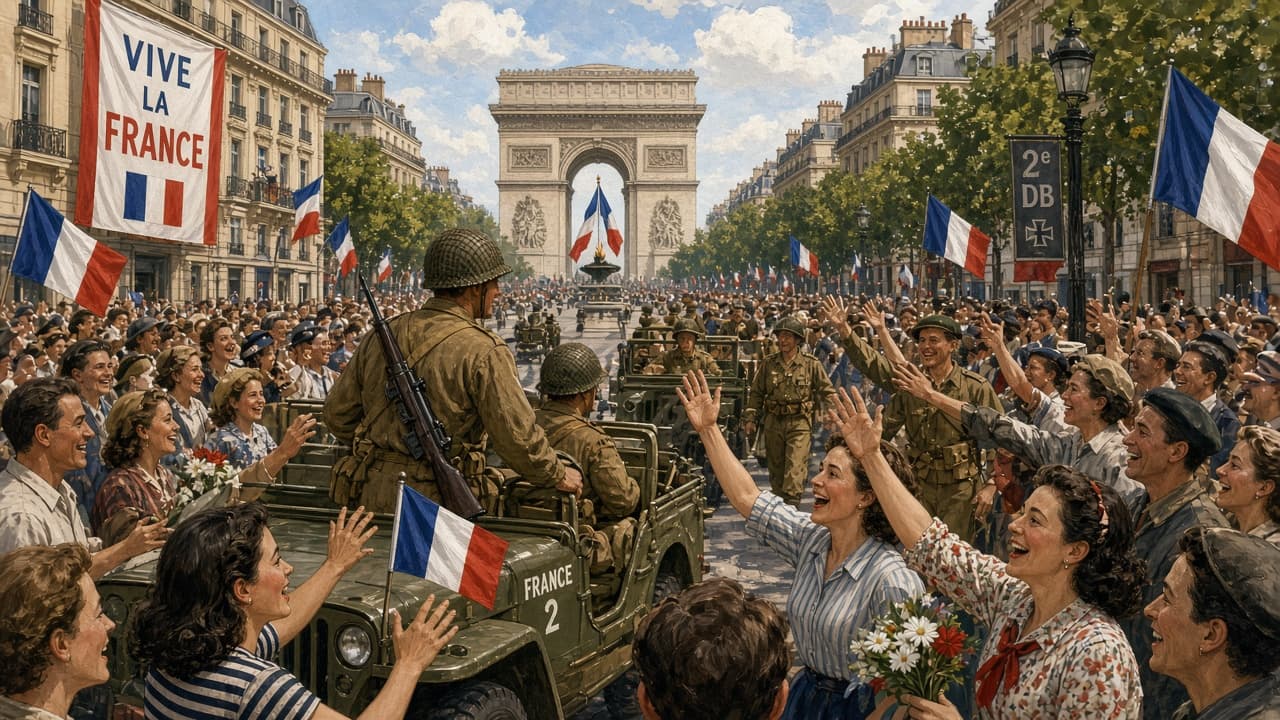
The path to 25 August began days earlier. On 19 August, Paris police and Resistance groups launched an uprising, seizing buildings and raising barricades. German commander Dietrich von Choltitz faced orders that could have wrecked the city's bridges and monuments. Negotiations, pressure from Swedish consul Raoul Nordling and the approach of Allied armor shaped a surrender that spared wholesale demolition. Historians still argue over motives and myths. What is firm is that street fighting was real, casualties were real and the garrison's capitulation on the 25th opened the city.
Allied high command had debated bypassing Paris to chase German armies toward the Rhine and to avoid feeding a hungry metropolis. Free French insistence and the uprising changed the calculus. Leclerc's tanks rolled in from the south and southwest. U.S. 4th Infantry Division elements backed the push. Snipers and die-hard pockets still fired as celebrations began. Joy and gunfire shared the same afternoon.
Occupation had remade daily life: ration cards, propaganda, the roundups that sent Jews and resisters toward camps and the moral compromises of collaboration. Liberation did not erase those years in a parade. Purges, trials and quiet score settling followed. De Gaulle's provisional government worked to restore state authority while Allied armies still needed French ports, rails and manpower for the drive east. Paris free was a beginning, not a finish line.
Photographs of kissing couples, flower-covered tanks and de Gaulle's tall silhouette became the world's memory of the day. Less framed in postcards were the dead of the uprising, the destroyed vehicles and the empty apartments of deportees who would not come home. Holding both images keeps the anniversary honest. A city can cheer and mourn in the same week.
For modern France the liberation calendar remains civic scripture: speeches at City Hall, readings of Resistance names and arguments over how to teach Vichy. Visitors who only know cafe lights can still feel why 25 August matters. It is the day the capital stopped being an occupied showcase and became again a seat of claimed sovereignty.
Food, power and transport had to restart while armies still fought east of the city. Parisians who cheered tanks on Monday still faced ration lines on Tuesday. Allied logistics officers worried about feeding a metropolis even as photographers framed victory kisses. Liberation was a switch in sovereignty and a long repair job at once.
Memory politics still argue over who liberated whom: Free French columns, American divisions, communist Resistance fighters, ordinary strikers and police who switched sides mid-uprising. Honest anniversaries name the coalition without pretending every faction wanted the same France afterward. De Gaulle won the symbolic main avenue. Others had bled on side streets that never made the newsreel. The next spring Allied armies still had to cross the Rhine. Paris free did not end the war, but it restored a capital that Vichy had never fully owned in spirit.
Eagle Frame's takeaway: 25 August 1944 is when uprising, Free French armor and Allied support reopened Paris. Know de Gaulle's politics of presence, know Leclerc's division and know that liberation was both parade and unfinished reckoning.