On this day: NASA launches the Perseverance rover
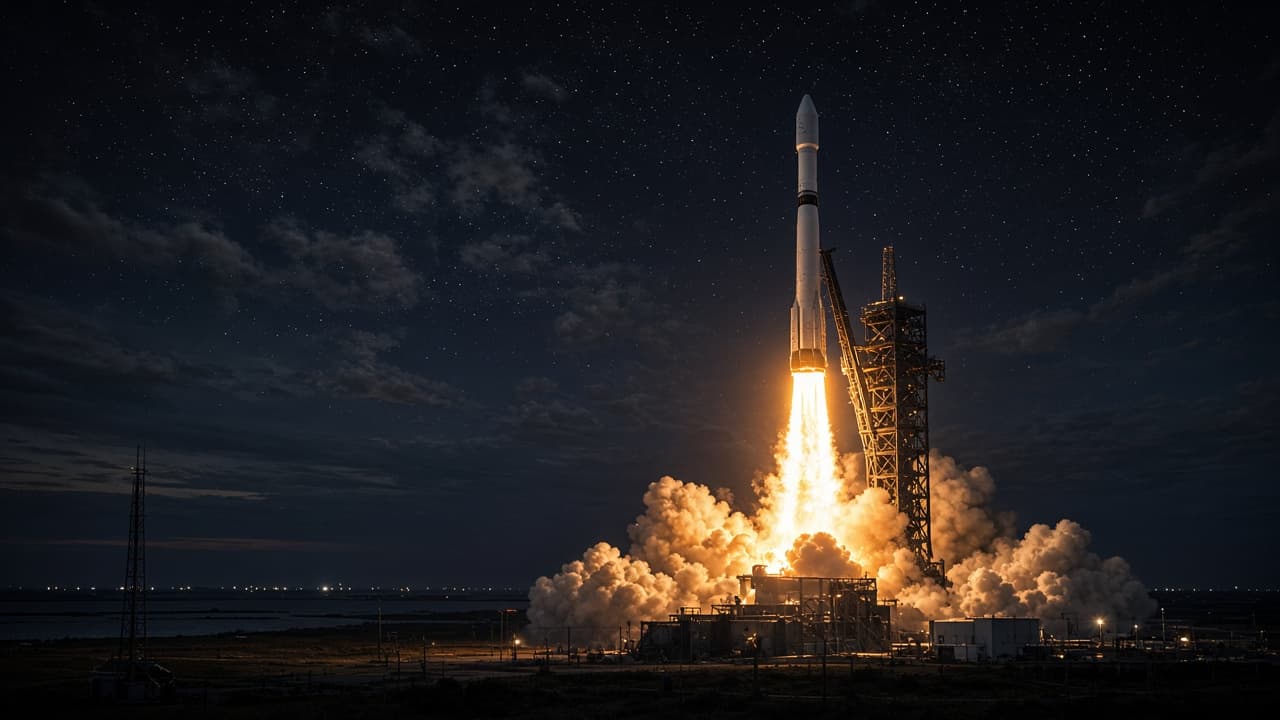
On 30 July 2020, an Atlas V rocket lifted the Perseverance rover and the Ingenuity helicopter off a pad in Florida. The mission was built to look for chemical traces of ancient life on Mars and to leave sealed samples behind for a later flight to collect.
At 7:50 in the morning on 30 July 2020, an Atlas V rocket left Space Launch Complex 41 at Cape Canaveral carrying a one-tonne robot to Mars. The launch happened in the middle of a pandemic, with a skeleton crew in the control room and no public viewing areas open, and it could not be postponed by more than a few weeks. Earth and Mars line up for an efficient transfer only about every 26 months, and missing the 2020 window would have meant waiting until late 2022. Two other spacecraft had already gone through the same door that month, the United Arab Emirates orbiter Hope on 19 July and China's Tianwen-1 on 23 July.
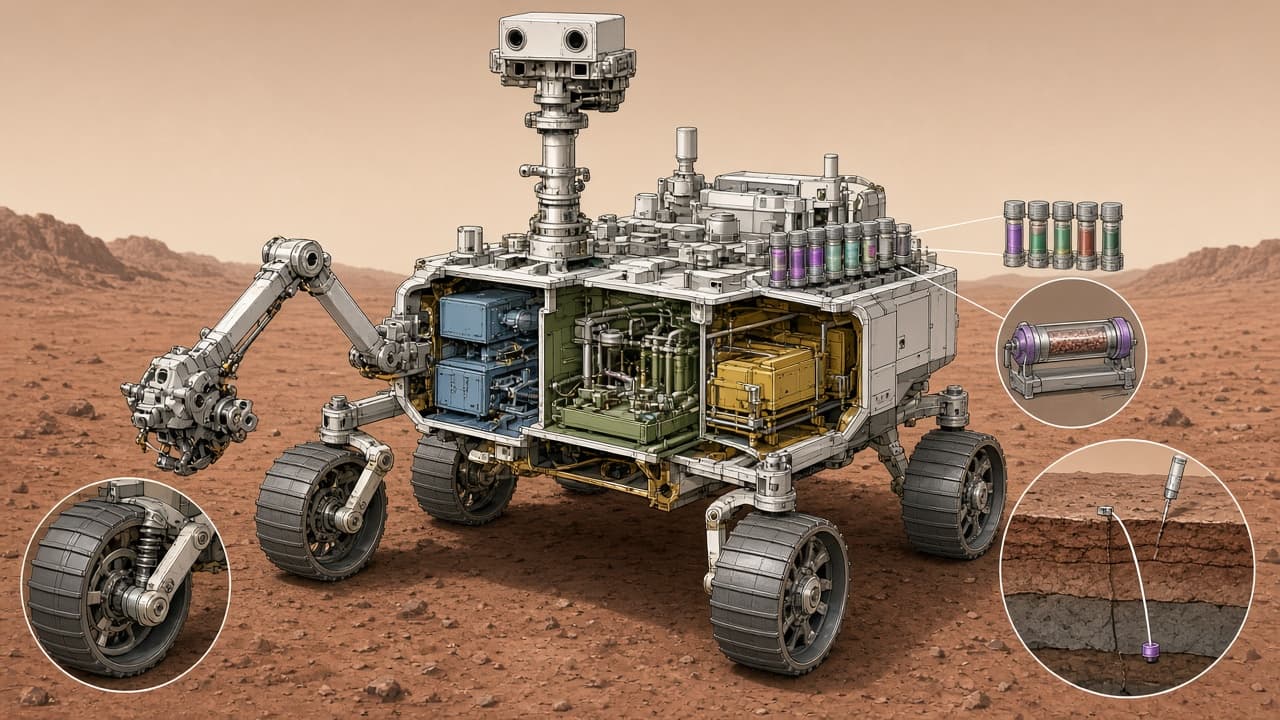
Start with what a Mars rover is, because the word suggests something smaller than the reality. Perseverance is about the size of a small car, three metres long and just over a tonne, running on six aluminium wheels with a rocker-bogie suspension that lets it climb over obstacles taller than the wheels themselves without tipping. It has a two-metre robotic arm with a rotating turret of instruments on the end, a mast with cameras at roughly human eye height and a separate smaller arm inside its body for handling rock samples. It is not remote-controlled in real time. Radio signals take between five and twenty minutes each way depending on planetary positions, so the rover receives a plan for the day and executes it with a good deal of onboard autonomy.
Its power source is worth explaining because it is unusual. Perseverance does not use solar panels. It carries a multi-mission radioisotope thermoelectric generator, a sealed canister holding about 4.8 kilograms of plutonium-238 dioxide. The plutonium decays and gets hot, thermocouples convert part of that temperature difference directly into electricity with no moving parts, and the waste heat is piped around the rover to keep the electronics from freezing at night. The output is modest, roughly 110 watts, about the draw of a bright old-fashioned light bulb, but it arrives day and night, through dust storms and through winter, and it declines only slowly over years. Solar-powered rovers like Spirit and Opportunity eventually died when dust covered their panels.
The science payload was assembled around a single question: did microbial life ever exist on Mars, and would we recognise the chemical residue if it did. Mastcam-Z takes high-resolution colour stereo images and can zoom. SuperCam fires a laser at rocks up to seven metres away, vaporises a pinhead of material and reads the colours in the resulting flash to identify the elements present. PIXL maps the chemistry of a rock surface at a scale smaller than a grain of salt, and SHERLOC hunts for organic molecules using ultraviolet light. RIMFAX is ground-penetrating radar that images layers beneath the wheels, and MEDA is a weather station.
One instrument was a bet on the future rather than the past. MOXIE was a toaster-sized box that made breathable oxygen out of the Martian atmosphere, which is about 95 percent carbon dioxide. It heated gas to roughly 800 degrees Celsius and pushed it through a ceramic cell that splits each carbon dioxide molecule, pulling the oxygen atoms through the ceramic as charged particles and leaving carbon monoxide behind. It first ran on 20 April 2021 and produced around five grams of oxygen an hour, roughly ten minutes of breathing for one person. That is small on purpose. The point was to prove the chemistry works in real Martian conditions, because a crewed return trip needs oxygen as rocket propellant in quantities far too heavy to carry from Earth.
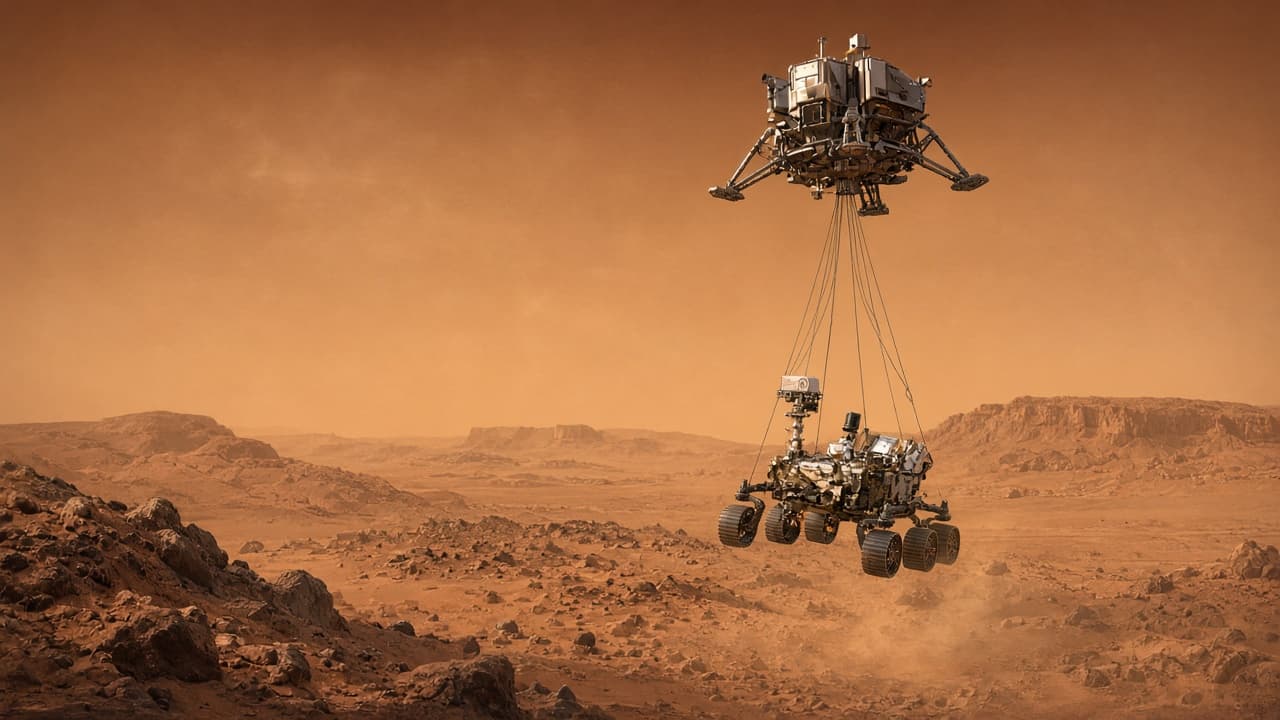
The landing site was chosen after years of argument among geologists. Jezero Crater holds an obvious river delta, a fan of sediment laid down where water ran into what was once a lake around 3.5 billion years ago. Deltas are good places to look for ancient life because slow water drops fine clay particles that trap and preserve organic material. Reaching it meant landing inside a crater strewn with boulders and cliffs, so the mission flew a system called terrain-relative navigation, in which the descending spacecraft photographed the ground, compared the images to an onboard map and steered itself towards a safe patch during the descent. Touchdown came on 18 February 2021, after the sequence engineers call the seven minutes of terror, ending with a rocket-powered sky crane that hovered and lowered the rover on cables.
Perseverance also carried a passenger. Ingenuity was a 1.8-kilogram helicopter strapped to the rover's belly, built as a technology demonstration with a budget of about 85 million dollars and a target of five flights. Flying on Mars is hard because the atmosphere is roughly one percent as dense as Earth's at sea level, so the blades have to be long, light and extremely fast. Ingenuity used two counter-rotating carbon fibre rotors spinning at around 2,400 revolutions per minute, about five times faster than a helicopter on Earth. It first flew on 19 April 2021 and kept going for nearly three years and 72 flights before rotor damage during a landing in January 2024 ended its career. It became a scout, flying ahead to photograph routes for the rover.
The part of the mission that is still unfinished is the sample cache. Perseverance carries 43 ultra-clean titanium tubes. It drills a core about the width of a pencil, seals the tube and either stores it or lays it on the surface in a marked depot. Ten tubes were deposited at a site called Three Forks in early 2023 as a backup. The plan has always been that a later mission collects them and flies them to Earth, where laboratory instruments far larger than anything a rover can carry could analyse them. Mars Sample Return has since run into serious cost and schedule problems and has been restructured more than once, so the tubes may sit on the surface for a long while. They will keep.
Eagle Frame's takeaway: 30 July 2020 sent a nuclear-powered laboratory to a dried-up river delta with a helicopter in its belly and a box that turns Martian air into oxygen. The rover has done its half of the job and filled its sample tubes, and whether the mission ultimately answers the life question now depends on a return flight that has not yet been built.