On this day: the Battle of the Plains of Abraham
On 13 September 1759, British troops under James Wolfe defeated French forces under Louis-Joseph de Montcalm outside Quebec City. Both commanders were mortally wounded in a short fight that helped decide New France.
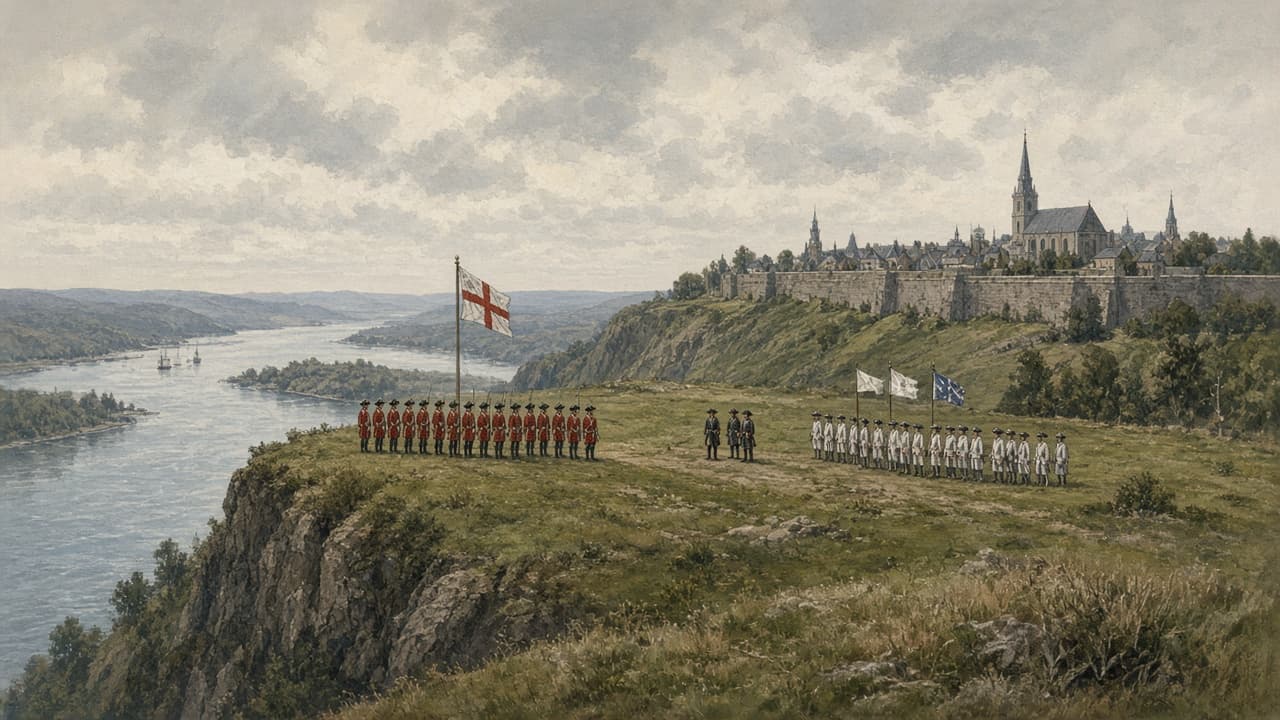
On 13 September 1759, British and French armies met on a plateau just west of Quebec City known as the Plains of Abraham. Major General James Wolfe commanded the British. Lieutenant General Louis-Joseph de Montcalm commanded the French. The close musket fight lasted only about a quarter of an hour, yet it became one of the decisive days of the Seven Years' War in North America.
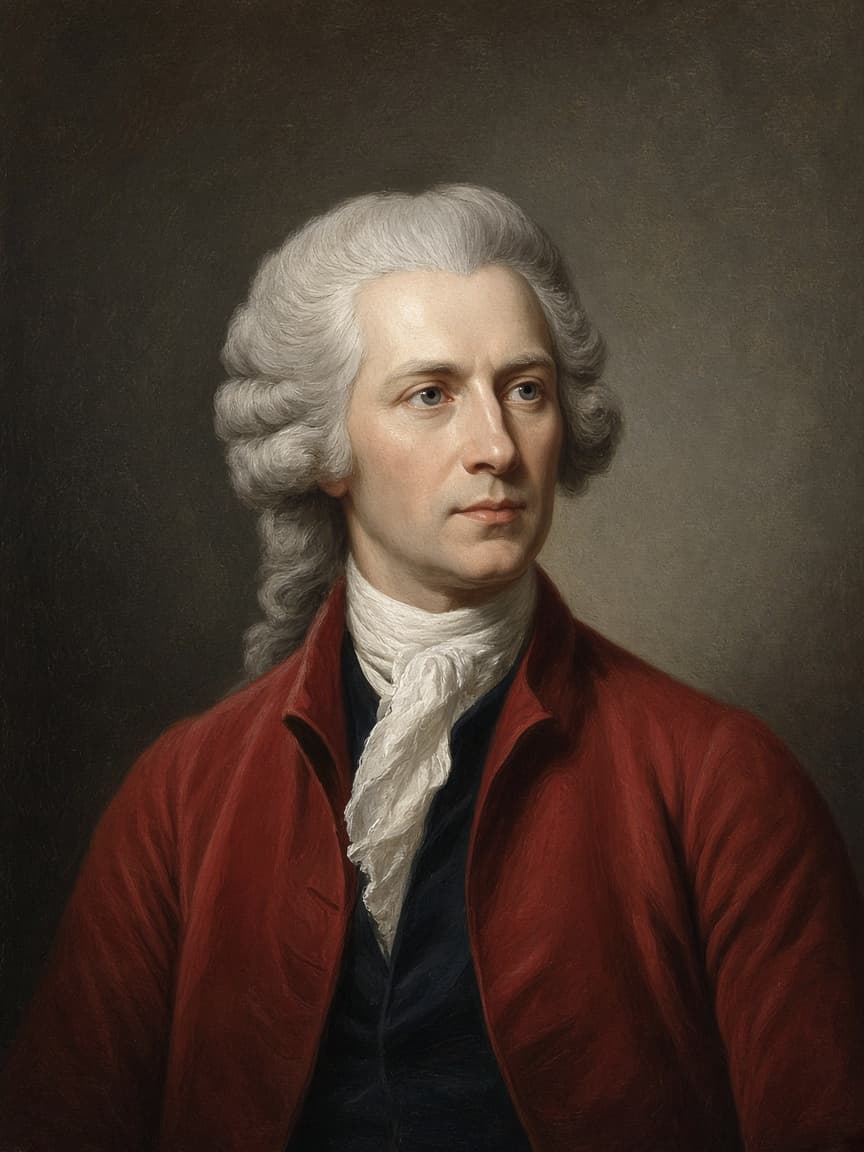
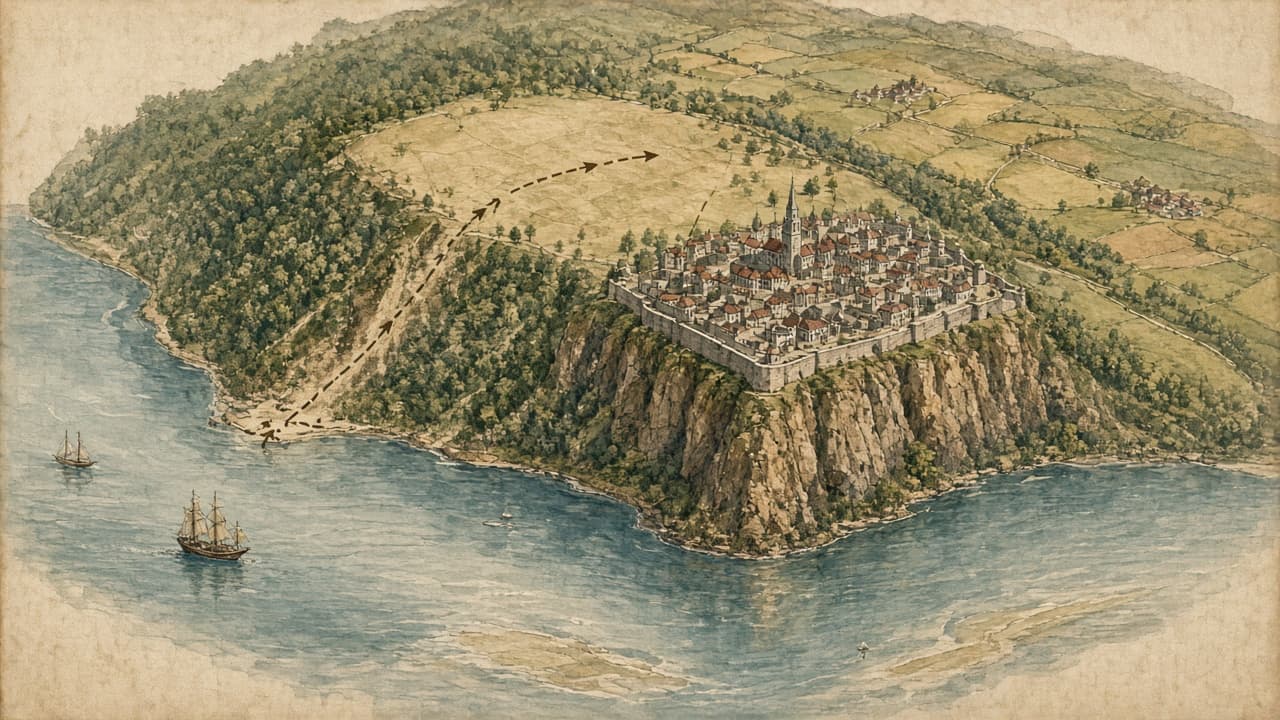
Wolfe was 32, a career officer already known for hard campaigning. Montcalm was 47, a veteran of European wars sent to defend New France with limited reinforcements. Their ages and careers mattered less to the day than the ground under their feet. Quebec sits on high ground above the St. Lawrence River. French guns and cliffs made a direct river assault costly. Through the summer of 1759 Wolfe's force had probed the shoreline, bombarded the city and searched for a way onto the heights.
The wider war was a global contest among European empires for trade routes, colonies and prestige. In North America the same conflict is often called the French and Indian War. Britain and France both relied on Indigenous allies and colonial militia as well as regular troops. Diplomacy, raids and supply lines ran through Indigenous nations whose own aims were not identical to either empire's. The Plains fight was a European-style set-piece battle, but it sat inside that larger web of alliances and rivalry for the St. Lawrence valley.
On the night of 12-13 September, British boats slipped downriver to a cove known as Anse-au-Foulon (later often called Wolfe's Cove). Troops climbed a narrow path up the cliffs west of the city and formed on the open plateau before dawn. Estimates put roughly 4,500 British soldiers on the field. Montcalm marched out from Quebec with a field force of similar size rather than wait behind walls. He chose open battle on ground that favored Wolfe's disciplined volley fire.
Both sides fought in eighteenth-century line tactics: packed ranks, volleys of musket fire and bayonets once the lines closed. Wolfe was hit more than once and died of his wounds on the field. Montcalm was also mortally wounded and died the next day. Command losses of that kind were rare and shocking. The French field army broke. Quebec itself surrendered later in September 1759, though French forces still held Montreal and other posts into 1760.
Taking Quebec cracked the political heart of New France, but it did not instantly erase French presence. Montreal fell in September 1760 after further campaigns and negotiations. Formal peace followed in the Treaty of Paris in 1763, when France ceded most of its mainland North American claims to Britain. Spain and other powers shuffled colonial titles in the same settlement. For mapmakers the continent changed color. For people who already lived along the river, language, law, religion and land tenure became the long argument.
For French-speaking communities in Canada, 13 September remains a wound as well as a history lesson. For British imperial memory it became a triumph of nerve and seamanship. Modern readers can hold both facts without turning either into a cartoon. A tactical gamble on the heights worked because night river craft, a cliff path and steady infantry fire lined up for a few hours. The human cost included two dying generals, dead and wounded soldiers on both sides and Indigenous communities who had to renegotiate survival under a new imperial landlord.
The battle's aftermath still shapes identity debates in Quebec and across Canada: language rights, civil law traditions and how schools teach conquest versus continuity. Knowing the Anse-au-Foulon climb, the short volley fight and the 1760-1763 endgame keeps the date honest. It was not only a plaque name. It was a hinge between New France and British North America.
British sea power mattered as much as the musket volley. Wolfe's army depended on the Royal Navy to move up the St. Lawrence, land troops and keep supply flowing while French relief struggled. Montcalm had asked for more regulars from France and received too few for the scale of the threat. Colonial Canadian militia and Indigenous allies still fought hard in the wider campaign, yet on the open plateau the British line's discipline decided the quarter-hour of fire.
After the field broke, the siege logic returned. Quebec could not hold indefinitely once the heights were lost and the river remained under British control. The capitulation later in September handed the city to Britain while French commanders farther west prepared the next season's defense. The 1760 advance on Montreal closed the continental war in New France; the 1763 treaty made the transfer of sovereignty formal among European courts.
Eagle Frame's takeaway: 13 September 1759 is the day geography, cliff paths and a short musket fight redirected an empire in the St. Lawrence valley. Know Wolfe and Montcalm, know Quebec's surrender and Montreal's fall and know that the Treaty of Paris closed a war while leaving language and identity questions that Canadians still live with.