On this day: the Smithsonian Institution is founded
On 10 August 1846, the U.S. Congress established the Smithsonian Institution from James Smithson's bequest. A British scientist's gift became America's sprawling museum and research complex.
On 10 August 1846, President James K. Polk signed legislation establishing the Smithsonian Institution. The act settled years of argument over how the United States should use a surprising inheritance from James Smithson, an English scientist who had never visited America. Smithson left his estate to the United States to found an establishment for the increase and diffusion of knowledge among men. Congress had to turn that phrase into buildings, staff, collections and rules. The law of 10 August created a Board of Regents and a framework for what became the world's largest museum and research complex of its kind.
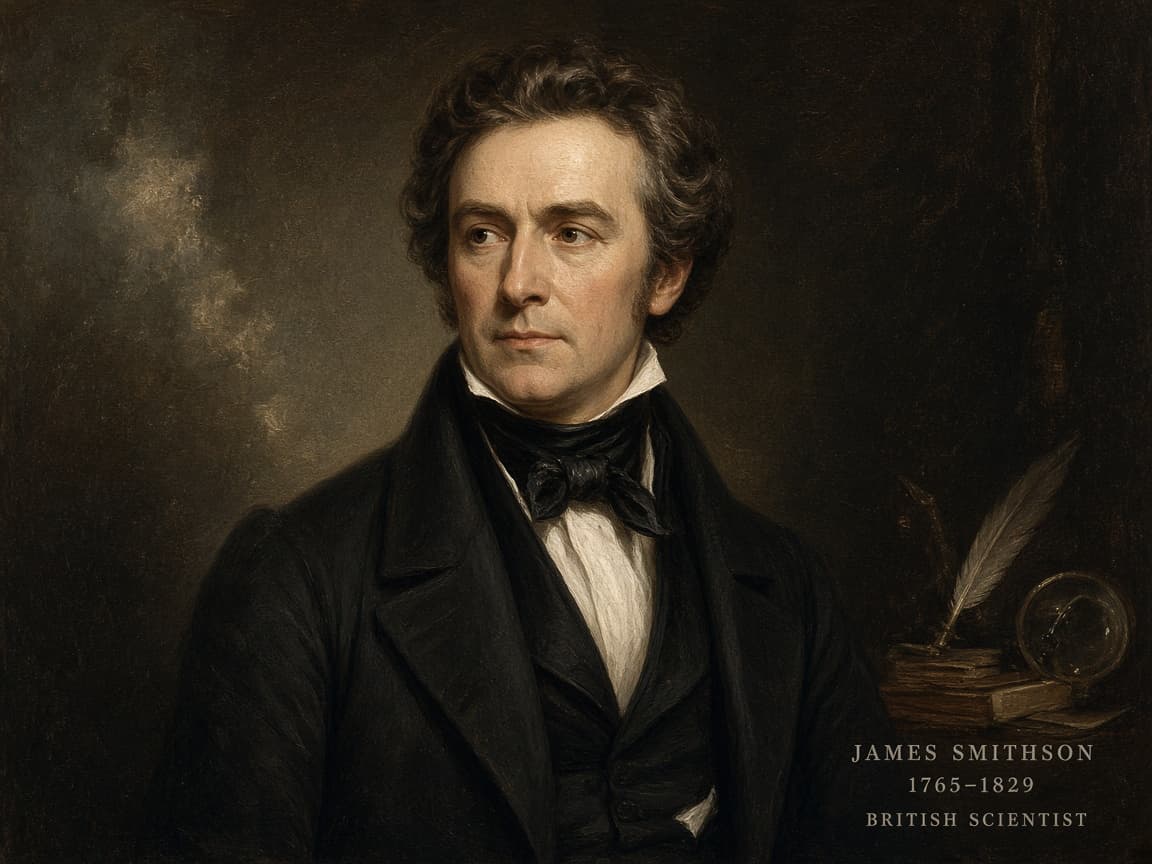
Who was Smithson? Born around 1765 as James Lewis Macie, he was the illegitimate son of Hugh Smithson (later the Duke of Northumberland) and Elizabeth Hungerford Keate Macie. He studied at Oxford, worked in chemistry and mineralogy and published on scientific topics. The mineral smithsonite was later named for him. He died in Genoa in 1829. His will directed the estate first to a nephew; if that line failed, the United States would receive the fortune for the knowledge institution. The nephew died without heirs. American diplomats then faced the strange task of claiming a British scientist's money for a republic that still argued about federal power.
James Smithson's will left his fortune to the United States for an establishment dedicated to the increase and diffusion of knowledge. He had never lived in America. Congress argued for years over whether the gift should fund a library, a university, a museum or something else entirely. The 1846 act created a hybrid: a board of regents, a secretary and a public institution that could collect, research and teach. That compromise still shapes how Smithsonian museums mix scholarly work with free public galleries.
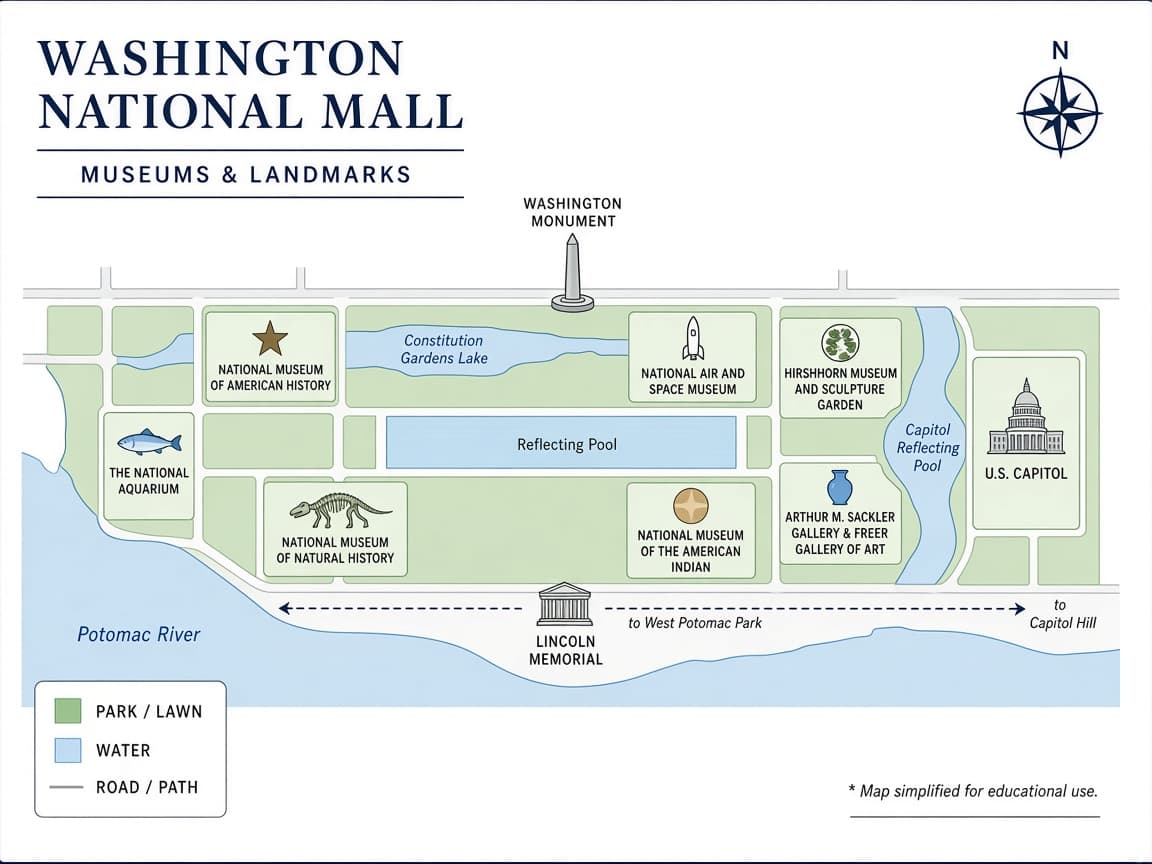
Walk the National Mall today and the Smithsonian appears as a chain of museum buildings rather than a single temple. The Castle, natural history halls, air and space galleries and art museums all descend from that founding charter. Educational maps help visitors see the cluster as one institution with many doors. The political fight of the 1830s and 1840s was really about what a republic owes curiosity: whether knowledge belongs behind tuition walls or in rooms anyone can enter. Smithson's unexpected bequest forced the United States to answer in brick and statute.
Money arrived in gold sovereigns and became a political football in Washington. Some lawmakers wanted a national university. Others preferred a library, an observatory or agricultural aid. Sectional politics and suspicion of centralized culture slowed the bill. Joseph Henry, a leading American physicist, became the first secretary after the institution formed and pushed research alongside collecting. The early Smithsonian was as much a laboratory and publication house as a public gallery. Diffusion of knowledge meant journals and specimens, not only tourist halls.
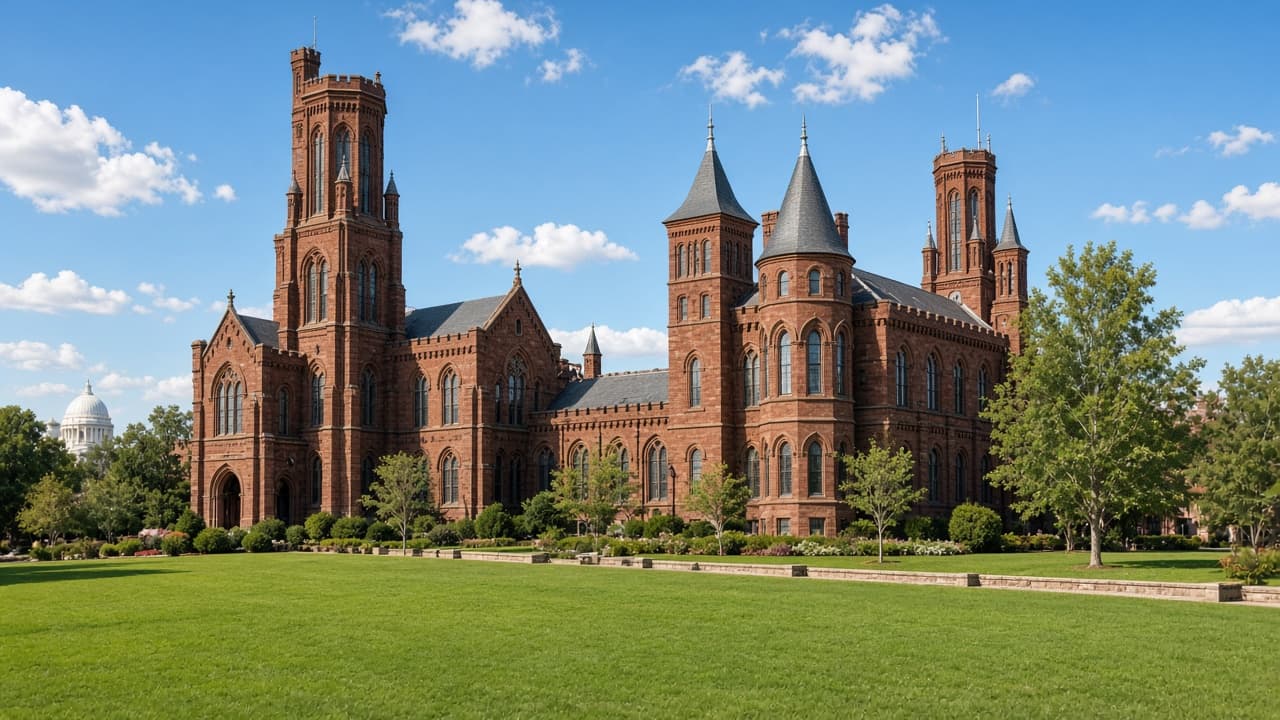
The Smithsonian Castle, completed in the 1850s from James Renwick Jr.'s design, gave the project a visible home on the National Mall. Red sandstone towers made the young institution look older than it was. Collections grew through exploration, donations and later through world's fairs and federal surveys. Over time the single Institution sprouted specialized museums: natural history, American history, air and space, art galleries, the National Zoo and research centers from astrophysics to tropical biology. Free admission on the Mall became part of the civic idea: knowledge as a public good, not a ticketed luxury.
That idea still has edges. Museums choose what to display and what to store. Contested objects, human remains and colonial-era collecting practices force modern curators to renegotiate older acquisitions. Research arms wrestle with funding, politics and public trust. Yet the core bet from 1846 remains readable: a democratic capital would host a permanent engine for learning that outlasted any single administration.
Smithson's bones later traveled too. In the early twentieth century his remains were moved from Genoa to a crypt in the Castle after cemetery disturbance abroad. Visitors who walk past the plaque meet a physical reminder that the Smithsonian began as a personal will, not a committee slogan. A man without direct American ties trusted a young country to do something serious with money and curiosity.
For travelers today, the Smithsonian often means a day of dinosaurs, spacecraft and presidential artifacts. Underneath the foot traffic sits the 1846 legal act: regents, a secretary and a mission statement borrowed from one donor's English prose. Understanding that origin keeps the Mall museums from feeling like a random cluster. They are chapters of one institutional story that started when Congress finally accepted the gift's obligations.
Compare the founding fight with later expansions. Each new museum required political will, fundraising and a theory of what the public needed to see. Air and space rose with the Cold War. Cultural museums rose with fights over whose America counts as national. The Institution's breadth is not an accident of real estate. It is the long echo of increase and diffusion applied to whatever fields Americans thought mattered next.
Eagle Frame's takeaway: 10 August 1846 is when Congress turned James Smithson's bequest into a working Institution. Know the English scientist's will, know the Castle on the Mall and know that free public museums there still rest on that day's legal bet for knowledge.