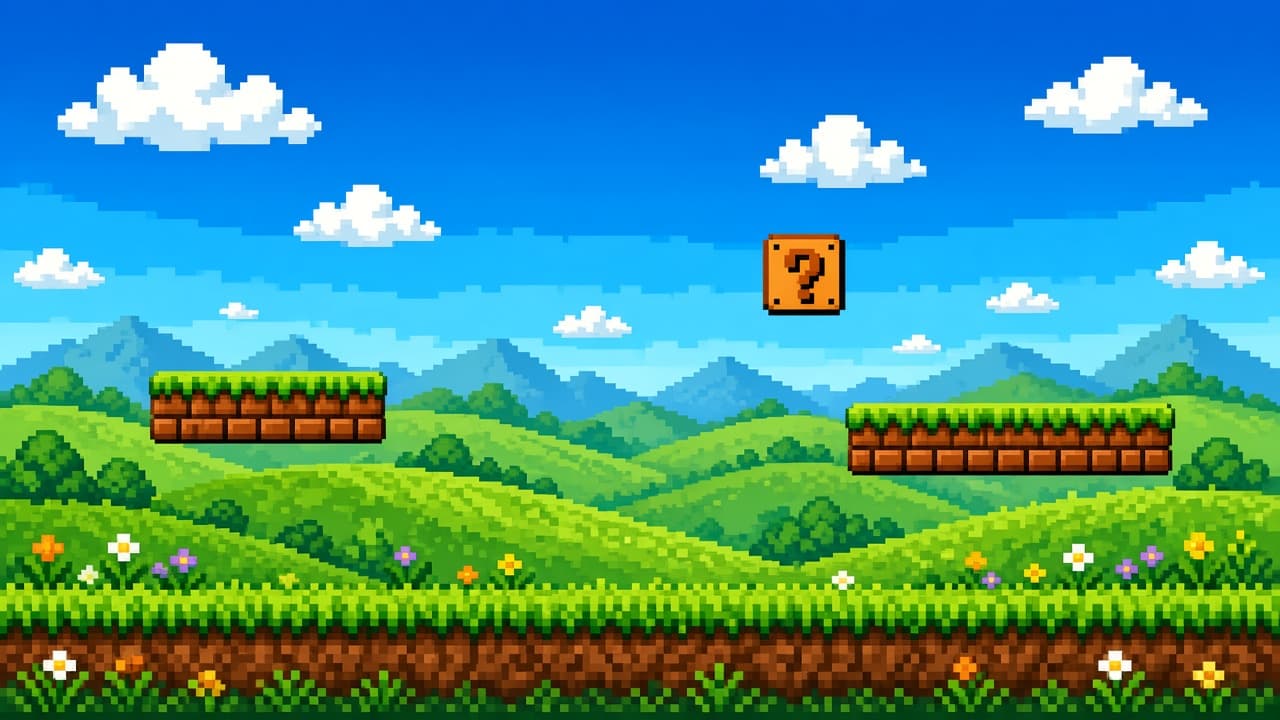
On this day: Super Mario Bros. launches in Japan
On 13 September 1985, Nintendo released Super Mario Bros. for the Famicom in Japan. The side-scrolling platformer helped rebuild trust in home consoles after the 1983 crash and made precise jumping a living-room skill.
On 13 September 1985, Nintendo released Super Mario Bros. for the Family Computer or Famicom, in Japan. Shigeru Miyamoto directed the design with Takashi Tezuka as a key collaborator. Koji Kondo wrote the music that still lives in millions of heads: short themes that teach mood as clearly as the brick patterns teach danger. The game looked simple on a store shelf and felt exact once you held the controller.
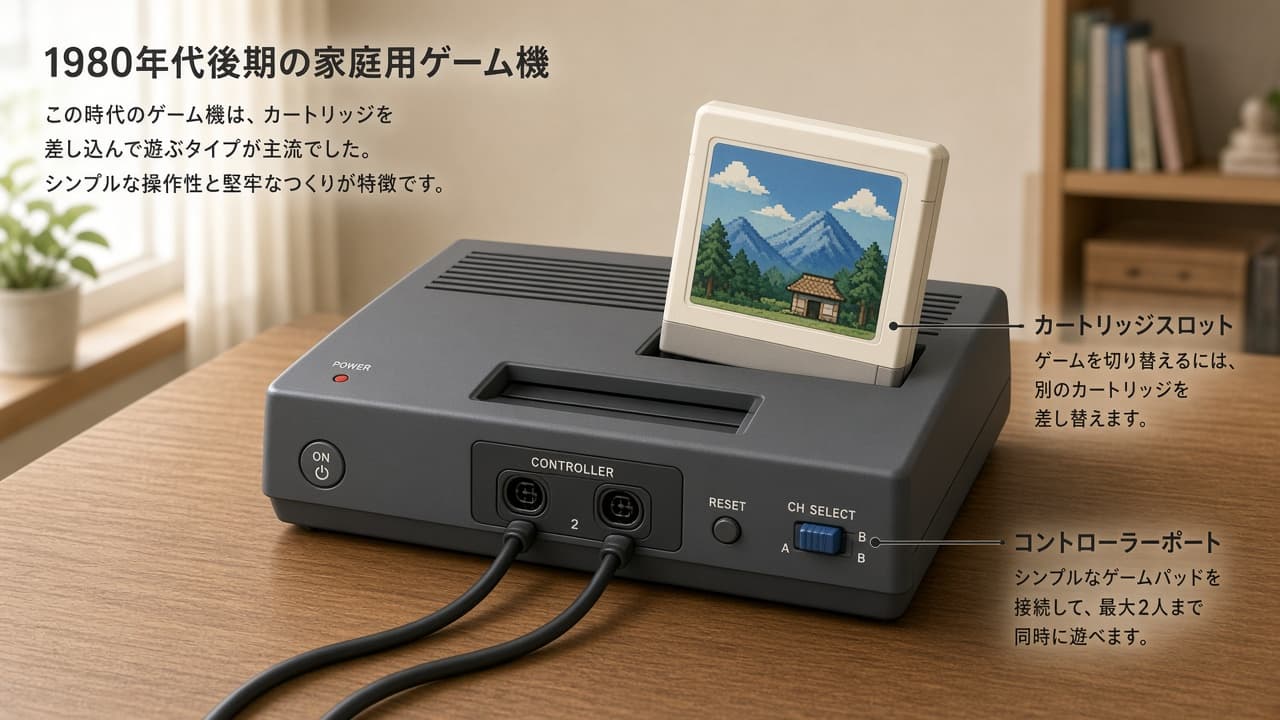
If you grew up after smartphones, start with the hardware. The Famicom was a cartridge console you plugged into a television. Games lived on plastic cartridges you swapped in and out. There was no download store. A hit cartridge could define a living room for years. In North America the same machine arrived redesigned as the Nintendo Entertainment System or NES, with a different shell and a marketing push built to survive retailer distrust after the crash.
That distrust had a date. In 1983 the North American home video game market collapsed under a flood of weak products, price wars and burned shoppers. Consoles looked like a fad that had ended. Nintendo entered carefully, stressing quality control and a few flagship titles. Super Mario Bros., released in Japan in September 1985 and reaching North America with the NES push through late 1985 and 1986 (often bundled with the hardware), proved that polished console play could sell again.
What is a side-scrolling platformer, in plain language? The camera follows the character as the world moves sideways and sometimes up or down. Your main verbs are run and jump. Timing matters more than long menus. Platforms, gaps, enemies and power-ups turn each screen into a small puzzle of motion. Super Mario Bros. made that grammar feel fair: when you died, you usually knew which jump you mistimed.
Power-ups taught risk and reward without a manual. A mushroom grows Mario larger so he can take a hit and smash certain bricks. A fire flower lets him throw fireballs. A star grants brief invincibility. Coins buy extra lives. Pipes hide shortcuts and secrets. Hidden blocks and warp zones (pipes that skip whole worlds) rewarded players who poked at the scenery. The design assumed curiosity. It paid curiosity with spectacle and speed.
Jump timing was the soul of the craft. Acceleration, gravity and the length of a button press had to feel readable. Miyamoto's team tuned collisions so a near miss taught you something. That precision is why the game still works on reissues decades later: the skill is in your hands, not in a cutscene. Kondo's score kept pace with the action so failure stung and success felt musical.
Mario was already known from Donkey Kong arcade cabinets, but Super Mario Bros. fixed him as Nintendo's flagship character: red cap, mustache, plumber fantasy, endless sequels. The game also taught a generation how a controller maps to on-screen action. Direction pad, jump button, risk and reward. That lesson still sits under most action games. Living rooms shared a language of levels, lives and "just one more try" that crossed language barriers more easily than many films of the same year.
Cultural impact followed the cartridges. Mario became one of the most recognizable fictional faces on Earth. Speedrunners later treated the same eight worlds as a competitive sport. Designers still cite the first game when they talk about teaching players through level layout instead of text dumps. The 1985 Japan launch is therefore both a product date and a culture date: the day a jump-and-run fantasy helped pull home consoles out of a crash and into a long second life.
Compare the two shells of the same machine. The Famicom in Japan had a bright family look and hardwired controllers on early models. The NES in the United States wore a VCR-like front loader and a marketing campaign that treated games as toys retailers would stock again. Inside, the same 8-bit hardware ran Mario's worlds. Outside, packaging and trust were the product as much as pixels.
Secrets became folklore. Players traded rumors about infinite lives, underground coin rooms and which pipe skipped ahead. Nintendo did not need a modern wiki for the game to feel deep. The cartridge rewarded poking every block. That habit (try the ceiling, enter the pipe, rerun the level for coins) is still how many designers teach exploration without a tutorial dump.
Eagle Frame's takeaway: 13 September 1985 is when Super Mario Bros. put precise jumping, power-ups and secret pipes into Famicom living rooms. Know the crash that made trust scarce. Know the craft of Miyamoto, Tezuka and Kondo and you can see why a cartridge still explains how home games won people back.