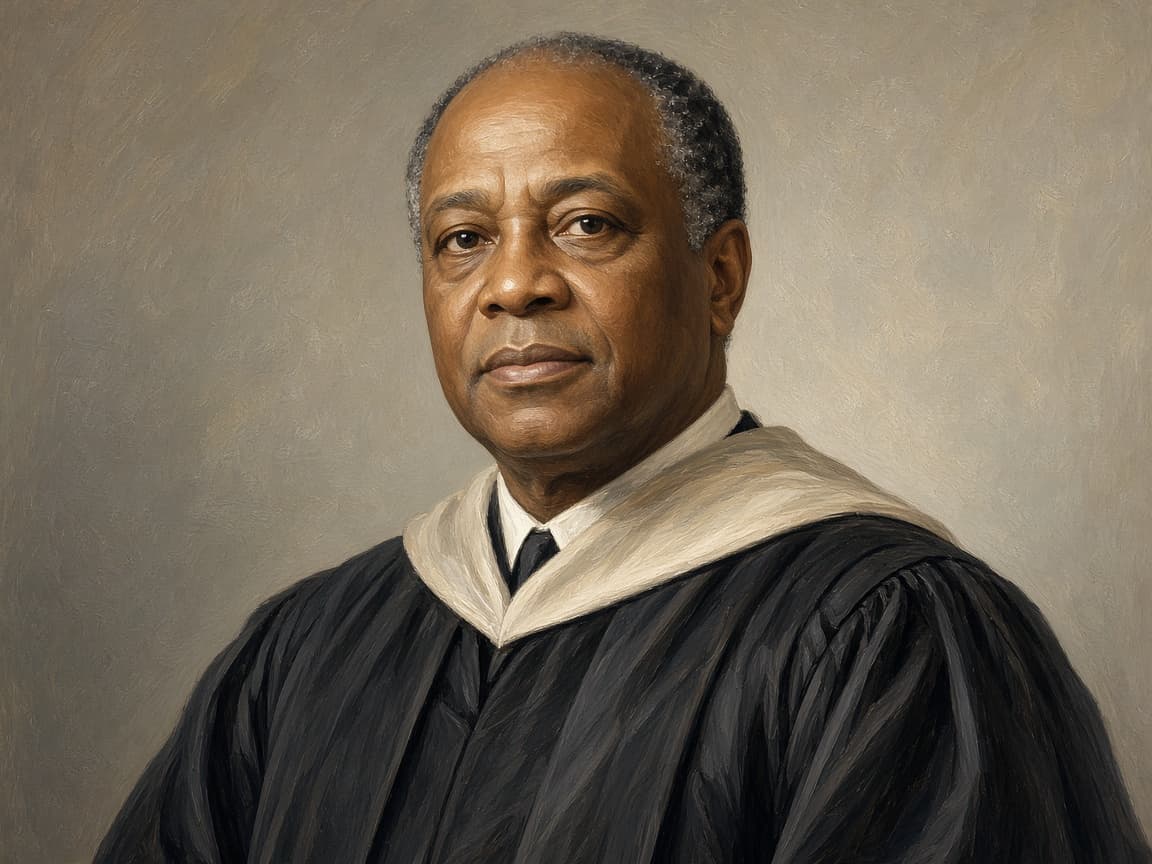
On this day: Thurgood Marshall is confirmed to the Supreme Court
On 30 August 1967, the U.S. Senate confirmed Thurgood Marshall as an Associate Justice of the Supreme Court. He became the first Black justice after a career that reshaped civil rights law.
On 30 August 1967, the U.S. Senate confirmed Thurgood Marshall to the Supreme Court by a vote of 69 to 11. President Lyndon B. Johnson had nominated him to succeed Justice Tom C. Clark. Marshall took the oath that October and served until 1991. He was the first Black American to sit on the Court. The confirmation capped a legal career already equal to several lifetimes of precedent.
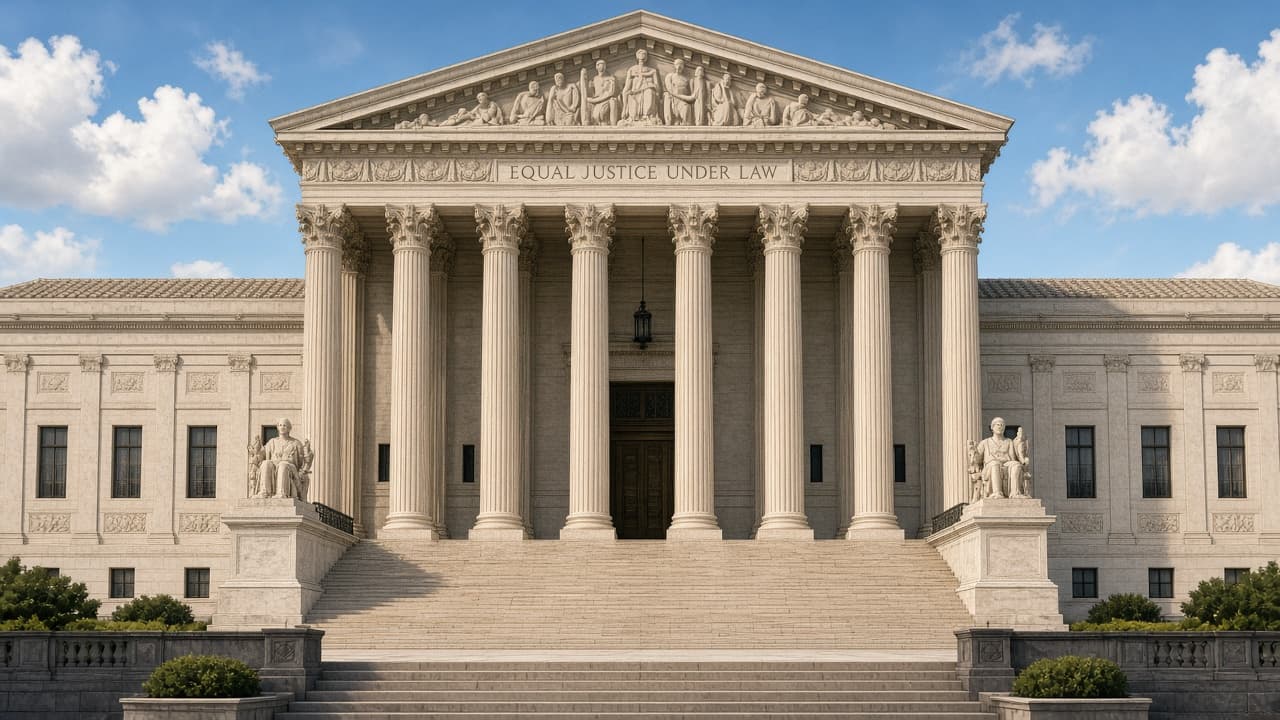
On 30 August 1967, the Senate confirmed Thurgood Marshall as the first Black justice of the U.S. Supreme Court. The Court's columned facade became the backdrop for a career that had already remade constitutional law from the counsel table. Marshall's appointment signaled that the bench itself, not only the docket, could reflect the civil-rights revolution. Opponents fought the nomination. The confirmation still planted a lasting marker in Court history. Southern senators used the hearings to relitigate desegregation even as confirmation looked likely.
Before the robe, Marshall had argued Brown v. Board of Education and other NAACP cases that attacked segregated schooling and Jim Crow legal architecture. Courtroom scenes of Black lawyers at counsel tables in the 1950s were themselves acts of defiance in hostile jurisdictions. Those trials built the record and the reputation that made his Supreme Court seat thinkable. Pairing the marble exterior with the civil-rights counsel table shows the path: litigator of equality, then justice who interpreted it. Marshall's chambers later became a workplace where clerks saw civil-rights history wearing a robe.
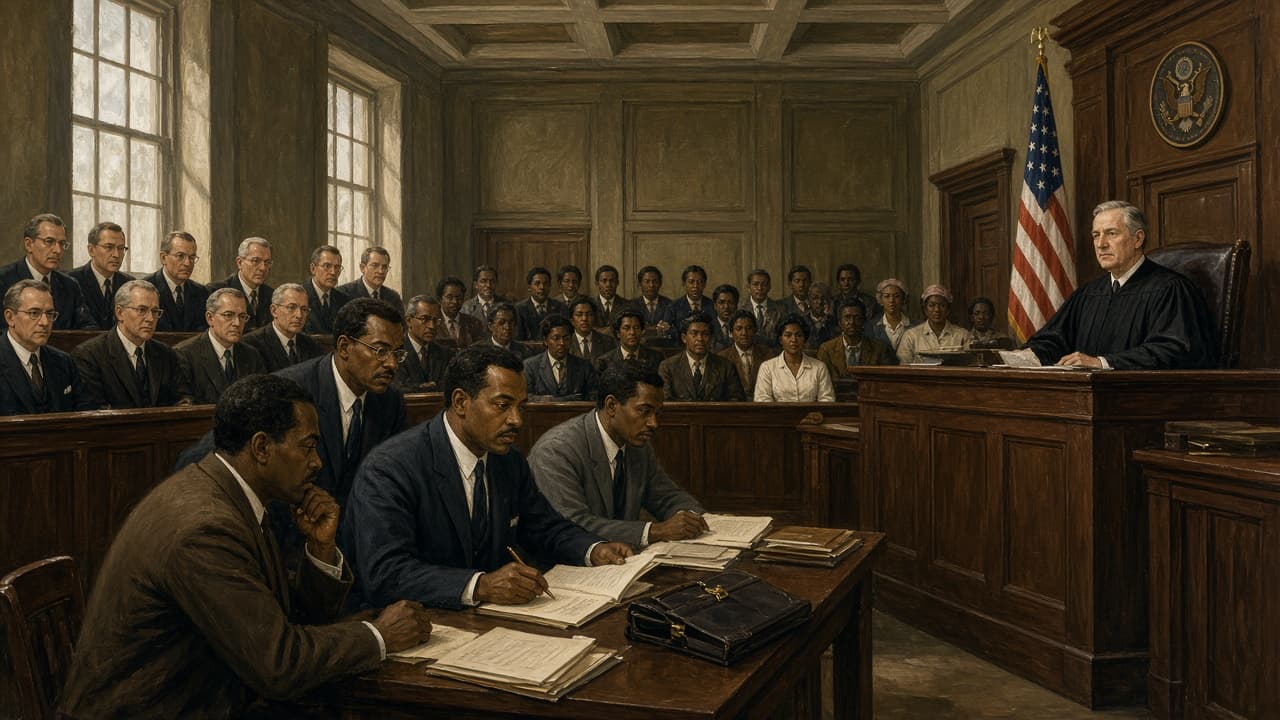
Before the robe, Marshall was the NAACP Legal Defense Fund's lead architect in the fight against segregation. He argued and won Brown v. Board of Education (1954), in which the Court held that segregated public schools were inherently unequal. He rode circuits through hostile Southern courthouses, built records on unequal facilities and tied Equal Protection doctrine to lived harm. Colleagues called him a meticulous fact lawyer as much as a soaring orator.
Johnson's nomination was a civil rights milestone and a political calculation in a year of urban uprisings and Vietnam strain. Senate opponents dug into Marshall's record with thinly veiled hostility; supporters framed the vote as proof the Constitution could expand who interprets it. Confirmation did not end racism in American institutions. It did place a Justice with firsthand knowledge of Jim Crow's legal machinery on the highest bench.
On the Court, Marshall consistently defended individual rights, due process and a broad reading of equality guarantees. He dissented as the Court's majority grew more conservative in later decades, warning against eroding protections he had spent his youth winning. His opinions and dissents remain assigned reading in law schools when teachers want students to hear moral clarity in legal prose.
Biography matters for readers who meet him only as a textbook name beside Brown. Born in Baltimore in 1908, barred from the University of Maryland Law School by segregation, he graduated from Howard University School of Law under Charles Hamilton Houston's rigorous training. Houston's creed that a lawyer is an engineer of social change shaped Marshall's docket. Personal exclusion became professional method. The anniversary invites a double focus: celebrate the barrier broken on 30 August and reread the cases that made the seat possible. Courts do not float above politics; they are staffed by people with histories. Marshall's history ran through Pullman cars, county clerks who lost voter files and classrooms that told Black children they were lesser. He carried that map into conference. Later Justices of many backgrounds cite his trail even when they disagree with his jurisprudence. Representation is not a sufficient theory of justice, yet exclusion had been a deliberate theory of injustice. Confirming Marshall answered exclusion with a vote count.
Marshall's years as a federal appeals judge and as Solicitor General trained him in the federal government's own courtroom voice before he joined the Court. Johnson valued that dual fluency: civil rights legend and institutional insider. Critics who wanted a quieter nominee underestimated how thoroughly Marshall had already mastered both protest docket and government brief.
Public memory sometimes freezes him at Brown and the 1967 vote. The longer arc includes death-penalty skepticism, free-press defenses and warnings about rolling back desegregation remedies. Reading a late Marshall dissent beside an early NAACP brief shows a mind that stayed stubborn about equality while the Court's center of gravity shifted.
Newspaper editorial pages split along familiar regional lines when the nomination was announced. Some praised the symbolism; others pretended the issue was temperament or "judicial activism" while recycling racial codes. Marshall answered with a record of opinions and argument transcripts too thick to caricature. The Senate vote finally had to face that paper trail.
Law students still moot the oral arguments Marshall delivered as an advocate because they model how to marry record facts to constitutional text. The justice's later conference notes and clerks' memories show the same habit: start with who is hurt, then ask what the charter requires. Confirmation day put that habit on the Court for twenty-four years.
Eagle Frame's takeaway: 30 August 1967 is when the Senate confirmed Thurgood Marshall as the first Black Supreme Court Justice. Know the Brown lawyer behind the robe, know the 69-11 vote and know why his dissents still argue with the future of equality law.