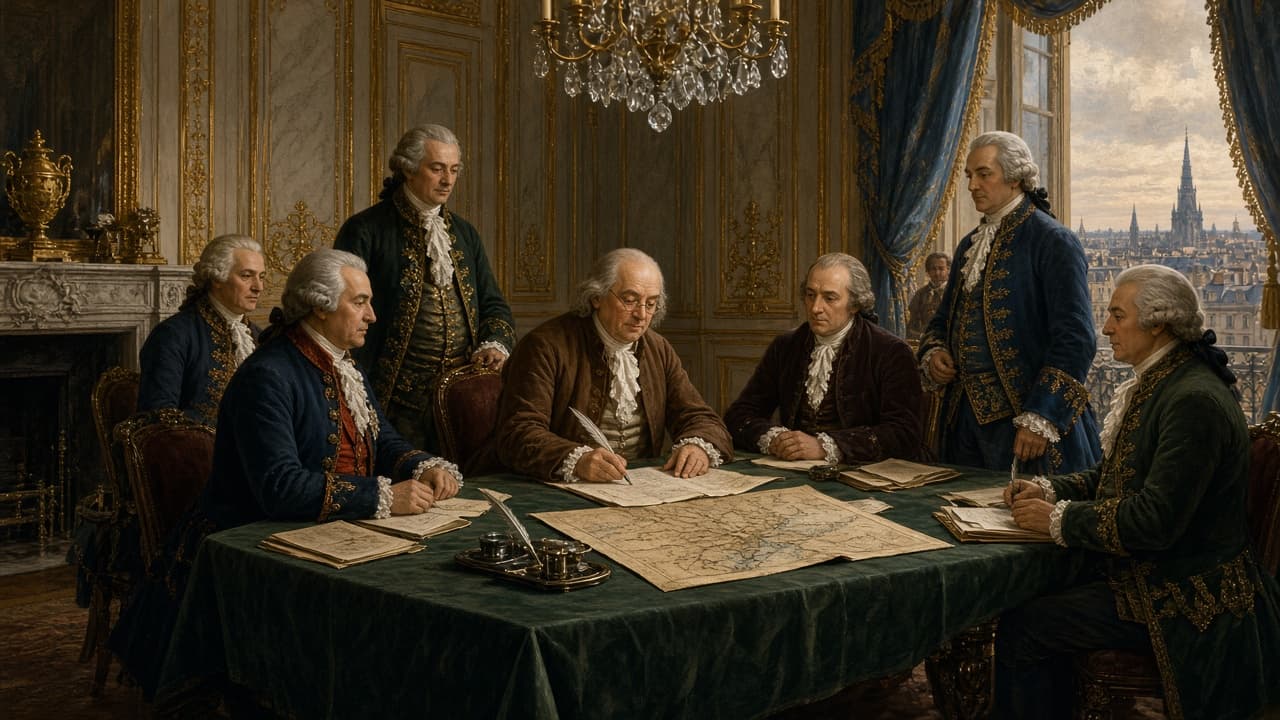
On this day: the Treaty of Paris ends the American Revolution
On 3 September 1783, Britain and the United States signed the Treaty of Paris. Britain recognized American independence and set borders, fishing rights and other terms that closed the Revolutionary War on paper.
On 3 September 1783, British and American negotiators signed the Treaty of Paris that ended the War of American Independence. Britain recognized the United States as a sovereign nation. The fighting had largely wound down after Yorktown in 1781 and preliminary articles in 1782, but the formal treaty fixed borders, debts, fishing rights and the legal fact of independence in the eyes of Europe's great power.
The American commission included Benjamin Franklin, John Adams and John Jay. Franklin's long stay in France had already secured the alliance that made victory possible. Jay pushed hard for direct dealings with Britain rather than filtering every clause through French preferences. Adams brought New England's concern for fisheries. Together they bargained with British representatives in a Europe still reshuffling after a global war that had also involved France, Spain and the Dutch.
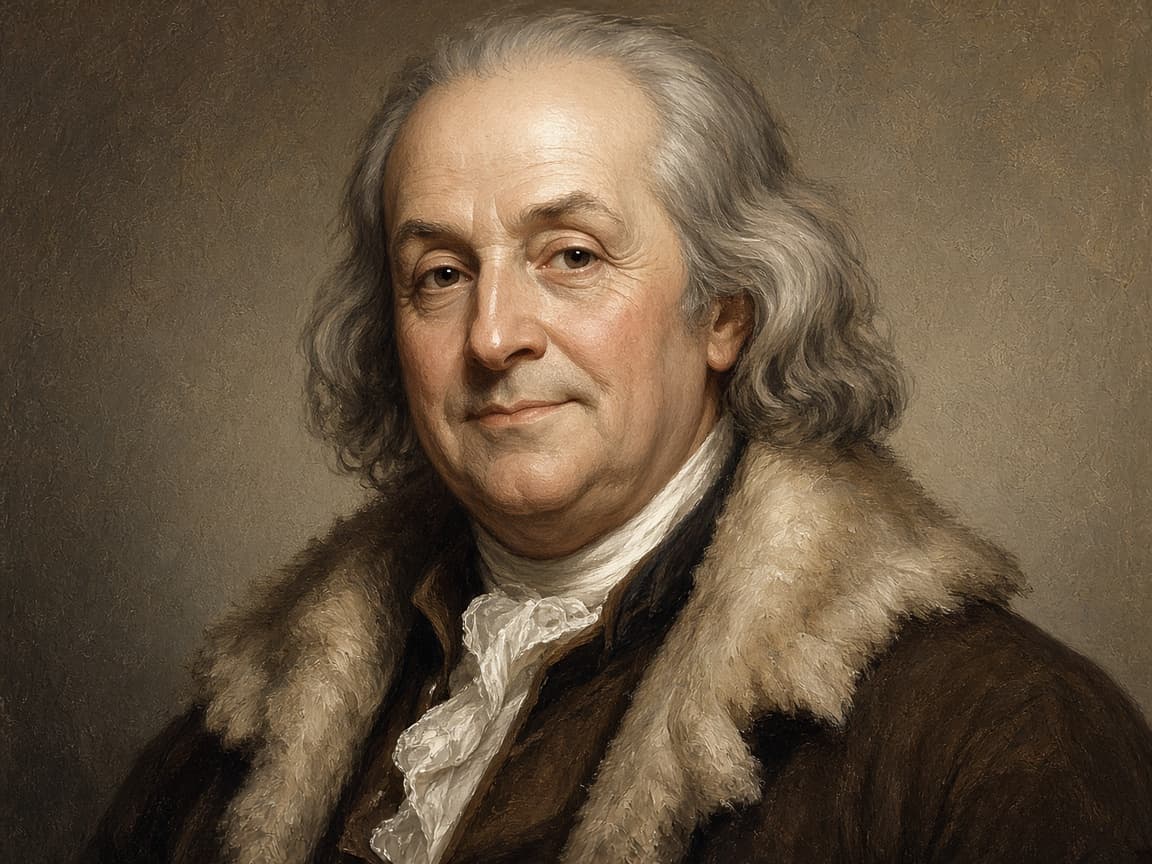
Benjamin Franklin, already famous as scientist and diplomat, helped negotiate the 1783 Treaty of Paris that ended the American Revolutionary War with Britain. Working with John Adams and John Jay, he pressed for borders and fishing rights that gave the new United States room to grow. Franklin's salon diplomacy in France had already secured crucial alliance support. The treaty table finished what Yorktown's guns had made possible. His portrait belongs on any honest telling of independence made legal. Franklin's celebrity in Paris salons greased access that Adams's bluntness alone might not have won.
The 1783 map settlement pushed U.S. claims west to the Mississippi River, north toward the Great Lakes and south toward Florida's unsettled edges, while British recognition of independence closed the war on paper. Native nations who had not surrendered their lands were not true parties to the European peace. Implementation fights over Loyalist property, debts and western forts dragged on. Still, the border sketch after Paris is the cartographic birth certificate of the United States as a recognized Atlantic state.
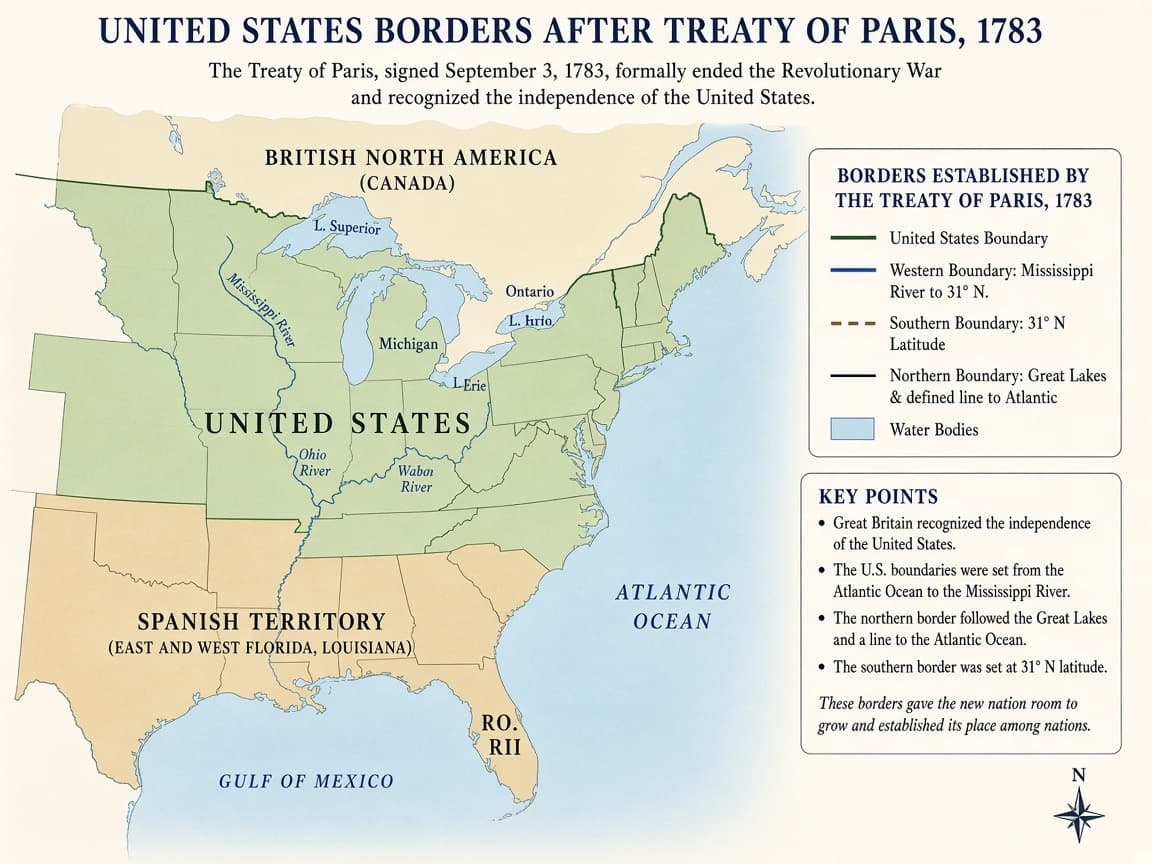
What the treaty did, in concrete terms: it set U.S. boundaries roughly to the Mississippi River on the west, to Spanish Florida on the south and to British North America on the north, with details that later maps would still argue over. Americans kept fishing rights on the Grand Banks and other northern waters. Creditors on both sides were supposed to find lawful ways to recover debts. Congress was to recommend that states restore property taken from Loyalists, a soft promise that often disappointed refugees who had backed the Crown. Preliminary articles signed in 1782 had already sketched most of the settlement; the September ceremony made the peace definitive and public among the courts of Europe.
Recognition mattered as much as acreage. Without British acknowledgment, American diplomats remained rebels in many courts' eyes. The treaty told merchants, insurers and foreign ministries that a new republic existed on the Atlantic seaboard. Trade could rebuild on that legal ground even while western forts and Indigenous nations complicated the interior.
Indigenous peoples were not equal parties at the Paris table. Borders drawn for empires cut across Native homelands and alliance systems. British withdrawal promises and American expansion pressure set up decades of conflict in the Ohio Valley and beyond. A clean end to a colonial rebellion was not a clean settlement for everyone who lived on the land. Implementation was messy. Britain was slow to evacuate some western posts. States resisted Loyalist restitution. Debts and trade disputes lingered into the 1790s and helped produce later diplomacy such as Jay's Treaty. The 1783 text still stands as the founding international receipt of U.S. independence: imperfect, bargained and binding enough to close the war. Franklin's celebrity in Paris (scientist, printer, diplomat) gave the American cause a human face Europeans already trusted. That soft power sat beside French loans and fleets. Readers who only remember battlefield winters should also remember salon politics and treaty clauses. Independence was won with muskets and then secured with signatures.
Compare 1783 with later "Treaty of Paris" dates in other wars so the name does not blur. This Paris settlement is the American Revolution's close. It belongs beside Yorktown and the 1781-1782 preliminary peace as the diplomatic finish, not as a substitute for the fighting that made Britain willing to deal.
French foreign minister Vergennes wanted a settlement that protected French and Spanish interests as well as American ones. Jay's suspicion that France might trade American western claims for other bargains pushed the U.S. team toward separate preliminary articles with Britain in 1782. The final 1783 treaty ratified a deal that was generous on western boundaries compared with what some European mediators might have preferred.
Merchants in London, Bristol and American ports read the text for insurance and credit clues. Was American debt collectible? Would West Indian trade reopen? Peace on paper still left commercial friction that the weak Confederation Congress struggled to manage. Economic history of the 1780s is partly a footnote to these clauses.
Loyalist diaspora communities in Nova Scotia, Quebec and Britain nursed grievances about lost homes and thin restitution. Their story is part of the treaty's human ledger. Revolution created winners, exiles and Indigenous losers who never signed.
Eagle Frame's takeaway: 3 September 1783 is when Britain recognized the United States in a Paris treaty that set borders and fishing rights. Keep Franklin, Adams and Jay at the table in view. Remember what the text promised Loyalists and creditors and that Native nations were left outside a peace that redrew their world.